BeginnerPeacefulReef Safe
Half-and-Half Chromis
Chromis iomelas
Family: Pomacentridae · Chromis & Damselfish
Also known as: Half-and-Half Puller, Two-Tone Chromis
(c) Bob Edgar, all rights reserved
Max Size
3"
Min Tank
30 gal
Lifespan
5-8 years
Origin
Indo-Pacific, Indonesia
Diet
Omnivore
Swims
Middle
About
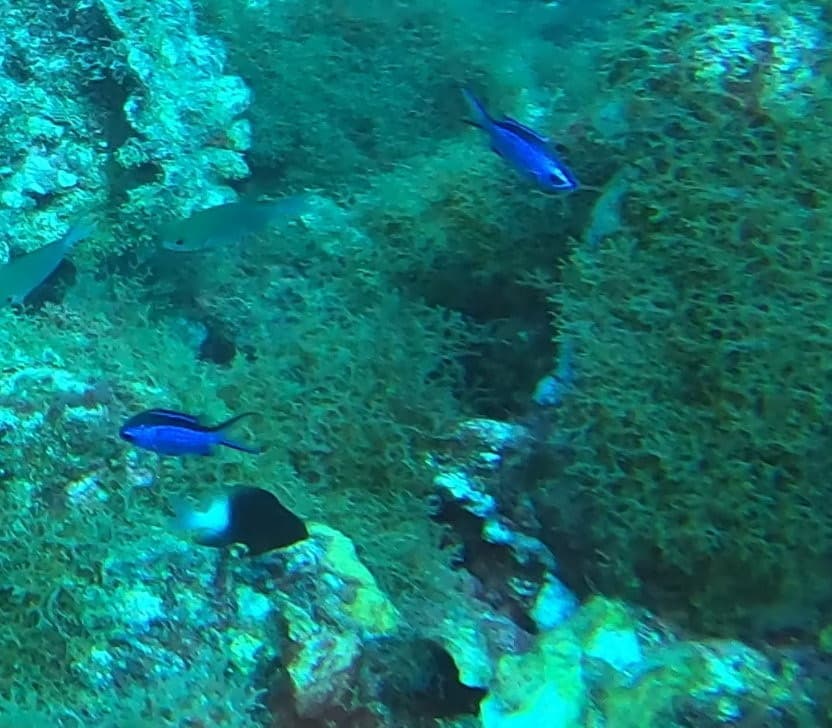
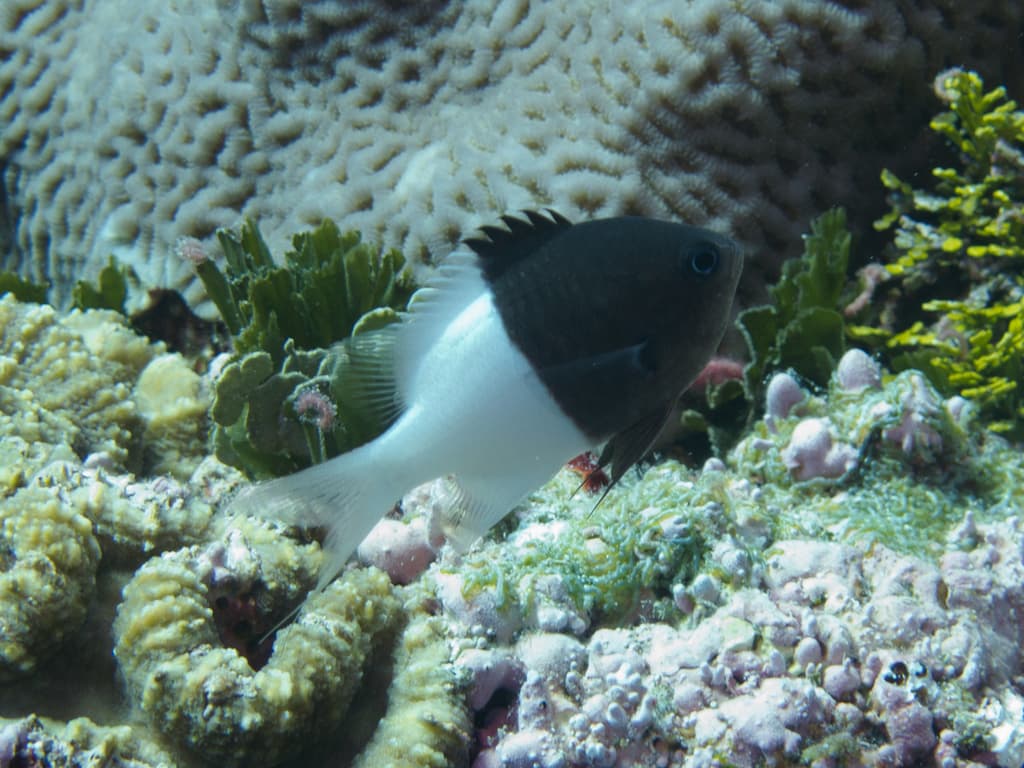
The Half-and-Half Chromis is one of the most distinctively patterned Chromis species, with a clean two-tone coloration that divides the body almost exactly in half. The anterior and dorsal portion of the body is dark brown to black, while the posterior and ventral half is bright white to pale cream, creating a striking and instantly recognizable appearance. This bold pattern is maintained throughout their lives and is visible from a distance, making a school of these fish an eye-catching display.
Native to the Indo-Pacific, Half-and-Half Chromis are found on outer reef slopes and drop-offs where they form small to moderate-sized aggregations in the water column. They typically hover above coral structures at moderate depths, feeding on zooplankton carried by currents. Their natural habitat preference for areas with moderate flow and coral shelter is easily replicated in the home aquarium.
In captivity, Half-and-Half Chromis are hardy and easy to care for, suitable for beginning marine aquarists. They are best kept in small groups of three to five individuals in tanks of 30 gallons or more. Their manageable adult size of 3 inches and peaceful temperament make them versatile community fish. They are completely reef-safe and their unique black-and-white pattern provides an interesting visual contrast to the more typically colorful reef fish in a mixed community.
Feeding & Diet
Omnivore
Half-and-Half Chromis are omnivores that feed on zooplankton and small organisms in the wild. In captivity, they readily accept marine flakes, pellets, frozen mysis shrimp, enriched brine shrimp, and cyclops. Feed two to three times daily.
Compatibility
reef-safepeacefulschooling-fishcommunity-safebeginner-friendly
Half-and-Half Chromis are peaceful and compatible with most reef community fish. They mix well with clownfish, tangs, wrasses, gobies, blennies, and other peaceful species. Their small size means they should not be housed with large aggressive fish.
Check CompatibilityBreeding
Moderate
Half-and-Half Chromis are substrate spawners with male parental care. The male guards the nest until the eggs hatch. Spawning may occur in captivity, but rearing larvae requires specialized live food cultures.
Special Requirements
- Best kept in groups of 3-5 individuals
- Provide open swimming space with coral shelter
- Moderate water flow preferred
- Multiple daily feedings recommended
Water Parameters
Temperature72–82°F
Specific Gravity1.02–1.026 sg
pH8–8.4
Alkalinity8–12 dKH
Coloration
blackwhitecreambrown
Tags
reef-safepeacefulschooling-fishcommunity-safebeginner-friendly