BeginnerPeacefulReef Safe
Black Chromis
Chromis xanthura
Family: Pomacentridae · Chromis & Damselfish
Also known as: Paletail Chromis, Yellow-Tail Black Chromis
(c) Jens Sommer-Knudsen, some rights reserved (CC BY-NC)
Max Size
6"
Min Tank
75 gal
Lifespan
8-12 years
Origin
Indo-Pacific, Indonesia
Diet
Omnivore
Swims
Middle
About
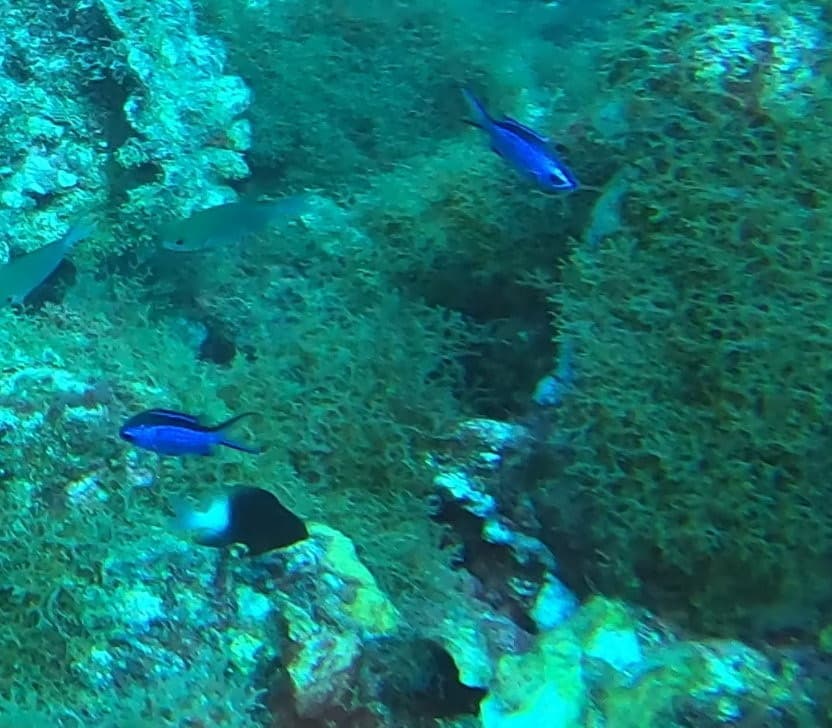
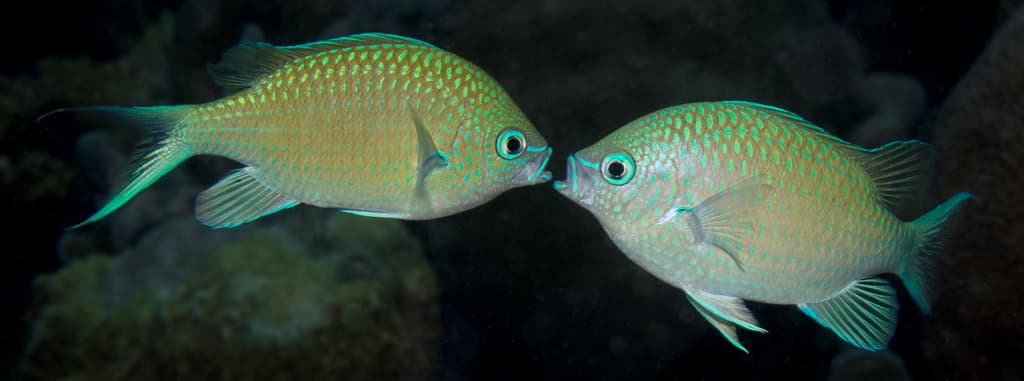
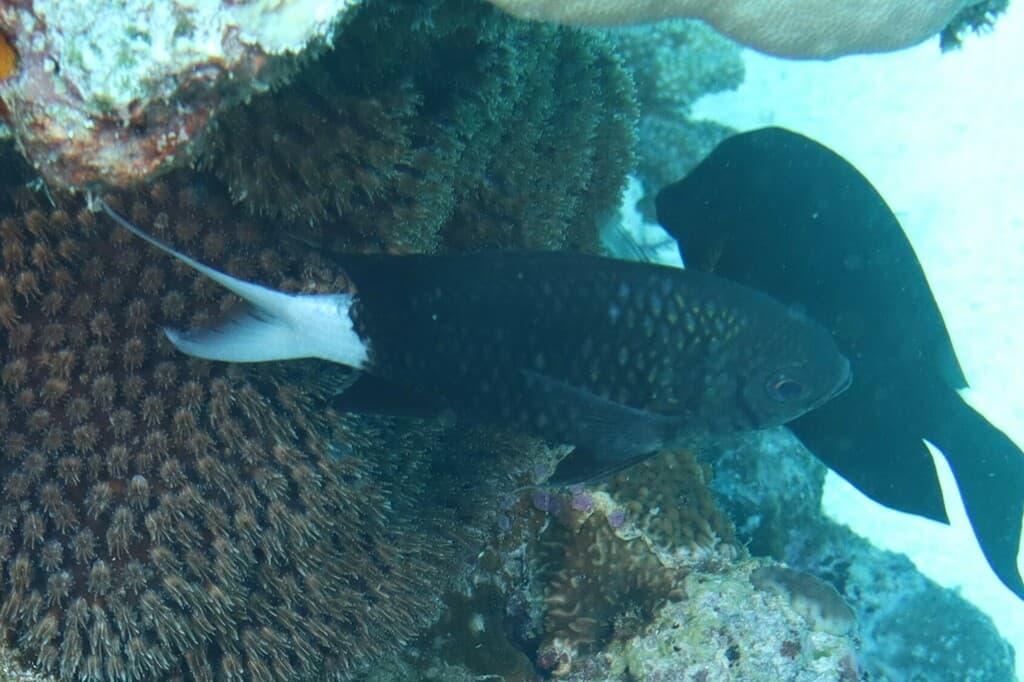
The Black Chromis is a larger Chromis species characterized by its striking dark brown to black body contrasted with a bright yellow to white tail. This bold two-tone color pattern creates a distinctive and attractive appearance, particularly when a school of these fish moves together through the aquarium. Adults can reach up to 6 inches, making them one of the larger commonly kept Chromis species.
Found throughout the Indo-Pacific on outer reef slopes and lagoons, Black Chromis form aggregations in the water column where they feed on zooplankton carried by currents. They are often found in areas with moderate to strong water movement, using coral formations as shelter when threatened. Their natural hardiness and widespread distribution contribute to their availability and adaptability in captivity.
In the aquarium, Black Chromis are hardy and easy to care for, typical of the Chromis genus. Their larger adult size requires a more spacious tank of at least 75 gallons, especially when keeping a group. Maintain five or more individuals to promote natural schooling behavior and distribute any social hierarchy stress. They are completely reef-safe and their dramatic dark and yellow coloration provides an appealing contrast to the brighter colors of other reef fish in a mixed community.
Feeding & Diet
Omnivore
Black Chromis are omnivores feeding primarily on zooplankton in the wild. In captivity, they readily accept marine flakes, pellets, frozen mysis shrimp, enriched brine shrimp, and chopped seafood. Feed two to three times daily for optimal health and coloration.
Compatibility
reef-safepeacefulschooling-fishcommunity-safebeginner-friendly
Black Chromis are peaceful and compatible with most reef community fish. Their larger size means they hold their own better against semi-aggressive tankmates compared to smaller Chromis species. Good tankmates include tangs, wrasses, clownfish, angelfish, and other community reef fish.
Check CompatibilityBreeding
Moderate
Black Chromis are substrate spawners. Males prepare a nest and guard the eggs until hatching. Spawning may occur in captivity, but successfully rearing larvae requires rotifer cultures and phytoplankton. Not commonly bred in home aquariums.
Special Requirements
- Requires a larger tank (75+ gallons) due to adult size
- Best kept in groups of 5 or more for schooling behavior
- Provide open swimming space with moderate to strong flow
- Multiple daily feedings recommended
Water Parameters
Temperature72–82°F
Specific Gravity1.02–1.026 sg
pH8–8.4
Alkalinity8–12 dKH
Coloration
blackdark brownyellowwhite
Tags
reef-safepeacefulschooling-fishcommunity-safebeginner-friendly