BeginnerPeacefulReef Safe
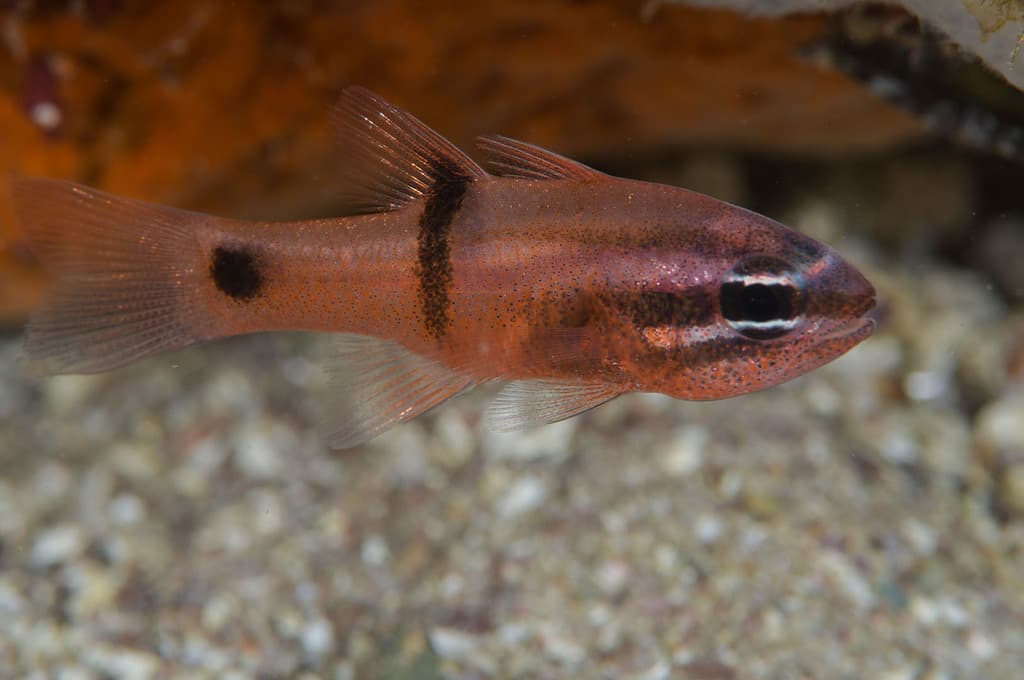
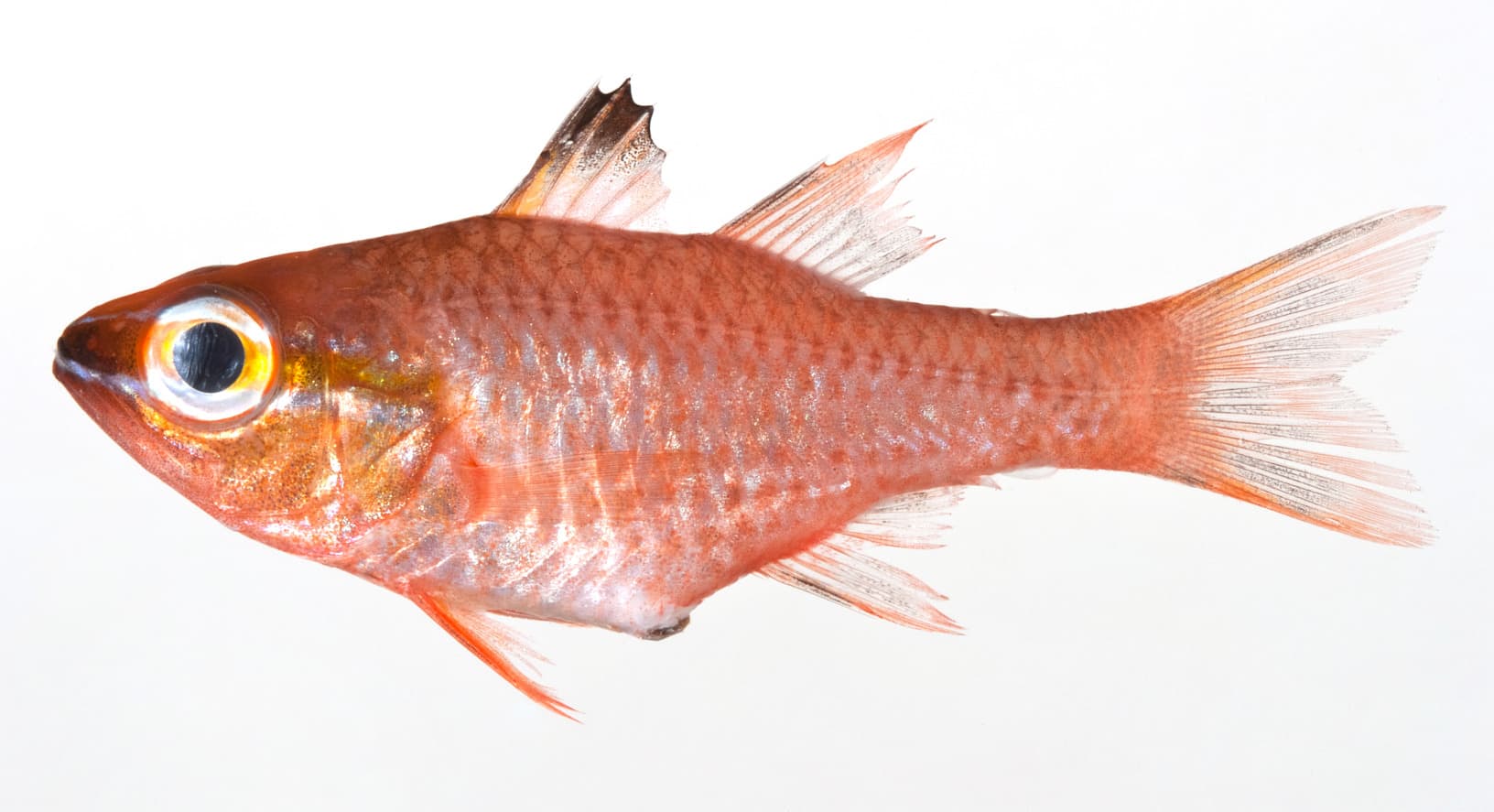
Goldbelly Cardinalfish
Ostorhinchus apogonides
Family: Apogonidae · Cardinalfish
Also known as: Goldbelly Cardinal, Gold-bellied Cardinalfish, Short-tooth Cardinal
Williams, Jeffrey T.
Max Size
4"
Min Tank
30 gal
Lifespan
4-6 years
Origin
Indo-Pacific
Diet
Carnivore
Swims
Middle
About
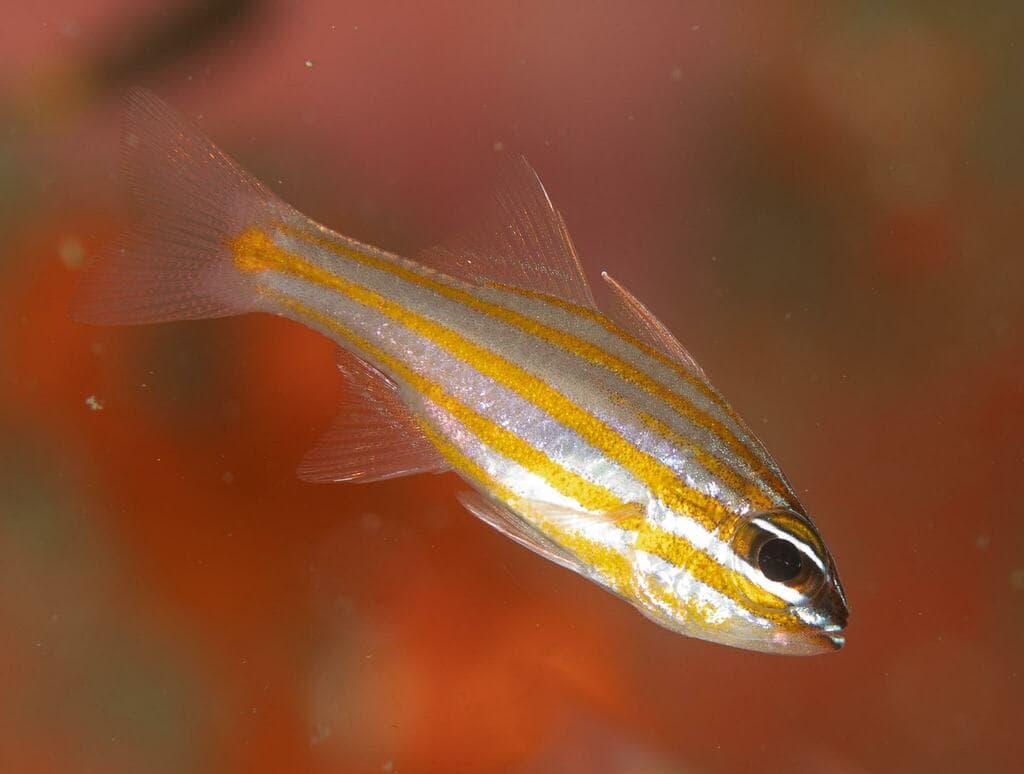
The Goldbelly Cardinalfish is an appealing species recognized by the warm golden-yellow hue of its ventral area that contrasts beautifully with its silvery upper body. Widespread across the Indo-Pacific region, this species is found on coral reefs and in lagoon habitats where it shelters in sizable schools among branching corals, sea urchin spines, and rock formations. Its golden belly coloration adds a warm touch of color that makes it stand out among the more uniformly colored cardinalfish species.
In the aquarium, the Goldbelly Cardinalfish is a hardy and adaptable species that thrives under standard reef conditions. It is an ideal choice for beginners due to its tolerance of minor parameter fluctuations and its willingness to accept commercially available foods from the outset. This social species is at its best when kept in groups of three or more, where it will display coordinated schooling behavior. A 30-gallon tank provides adequate space for a small group with proper rockwork.
The Goldbelly Cardinalfish is completely reef-safe, posing no risk to corals, anemones, or invertebrates. Its peaceful nature ensures compatibility with a broad spectrum of community reef fish. This species is particularly recommended for aquarists who want to add a touch of warm color to their reef tank without introducing an aggressive or demanding species. The golden belly is most prominent in healthy, well-fed specimens.
Feeding & Diet
Carnivore
The Goldbelly Cardinalfish feeds on small crustaceans, copepods, and zooplankton in the wild. In captivity, it readily accepts frozen mysis shrimp, enriched brine shrimp, and marine pellets. A varied diet enhances its golden coloration.
Compatibility
reef-safepeacefulcommunity-friendlybeginner-friendly
The Goldbelly Cardinalfish is extremely peaceful and mixes well with clownfish, gobies, blennies, tangs, and other community reef fish. Avoid large aggressive species that may bully this gentle fish.
Check CompatibilityBreeding
Moderate
A paternal mouthbrooder. The male carries the eggs in his mouth for approximately two to three weeks until hatching. Breeding in captivity is achievable with bonded pairs in well-maintained aquariums.
Special Requirements
- Provide rockwork with caves and overhangs for shelter
- Keep in groups of 3 or more for schooling behavior
- Nocturnal - dim lighting preferred
- Varied diet enhances golden belly coloration
Water Parameters
Temperature72–80°F
Specific Gravity1.02–1.026 sg
pH8.1–8.4
Alkalinity8–12 dKH
Coloration
silvergoldyellow
Tags
reef-safepeacefulcommunity-friendlybeginner-friendly