BeginnerPeacefulReef Safe
Frostfin Cardinalfish
Ostorhinchus hoevenii
Family: Apogonidae · Cardinalfish
Also known as: Frostfin Cardinal, Hoeven's Cardinalfish, Frost-finned Cardinalfish
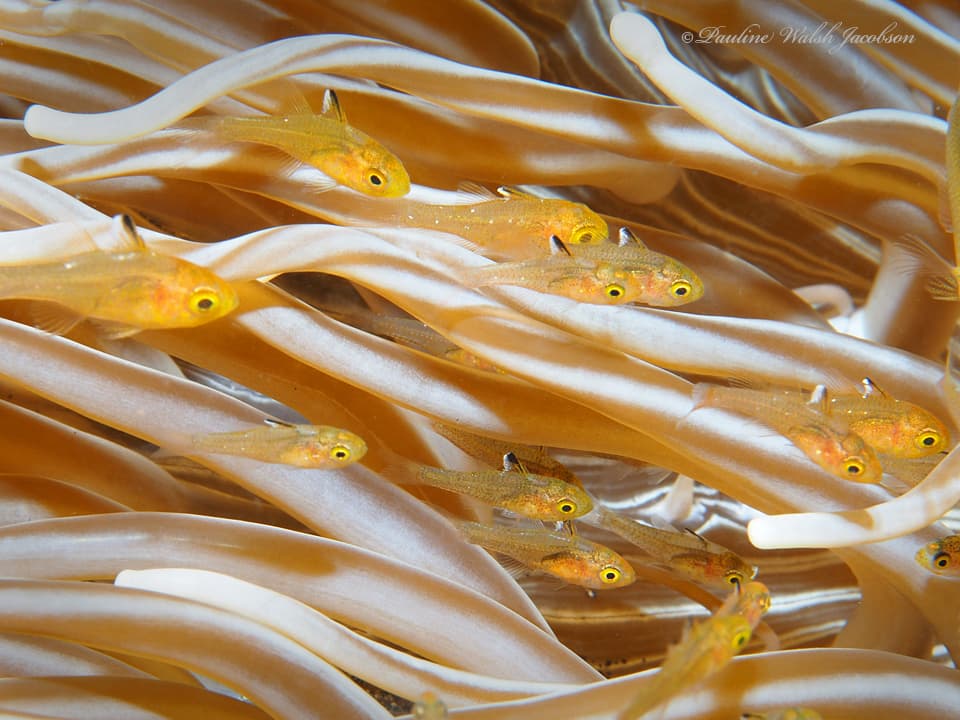
(c) Pauline Walsh Jacobson, some rights reserved (CC BY)
Max Size
3.5"
Min Tank
20 gal
Lifespan
4-6 years
Origin
Western Pacific
Diet
Carnivore
Swims
Middle
About
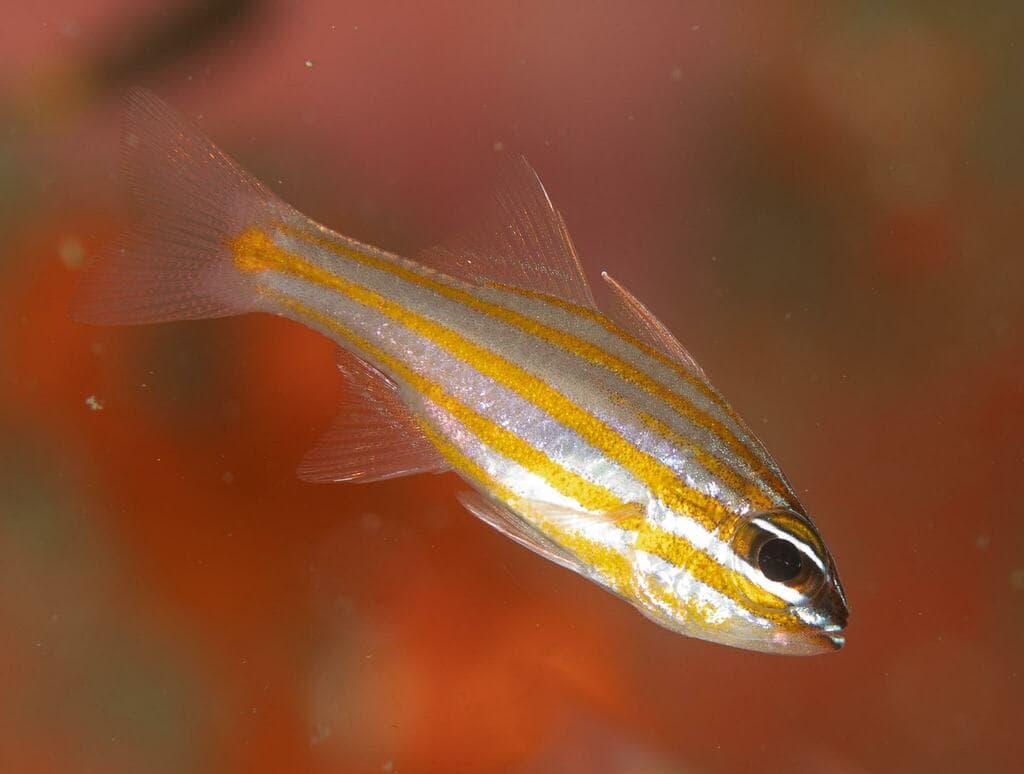
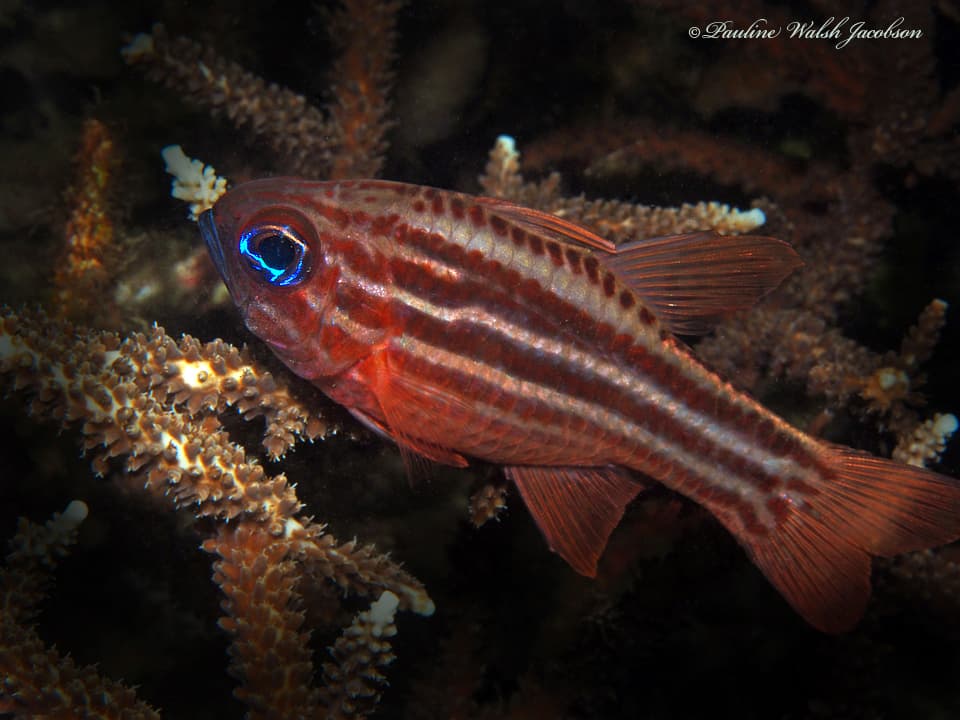
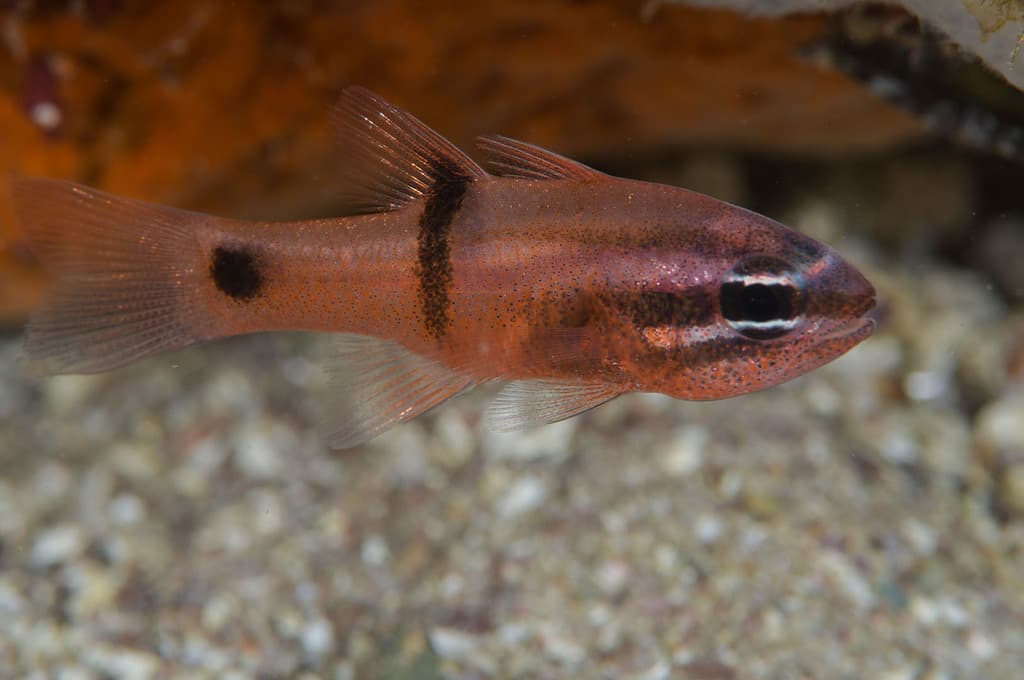
The Frostfin Cardinalfish is an elegant species named for the distinctive white or frosted tips on its fins that create a subtle yet eye-catching contrast against its silvery body. Found across the Western Pacific, this species inhabits coral reef environments where it forms small schools among branching corals, sponges, and rocky overhangs. The delicate frosted appearance of its fins gives this species a refined quality that distinguishes it from other more plainly colored cardinalfish.
In captivity, the Frostfin Cardinalfish is a straightforward species to keep and an excellent candidate for beginning marine aquarists. It adapts quickly to tank life, is resilient against common diseases, and readily accepts a variety of frozen and prepared foods. This species is naturally social and benefits from being kept in groups of three or more, where it will form loose aggregations that hover near preferred shelter sites. A 20-gallon tank with adequate rockwork provides sufficient space for a small group.
The Frostfin Cardinalfish is completely reef-safe and coexists harmoniously with corals, clams, and invertebrates. Its peaceful demeanor makes it suitable for virtually any community reef aquarium. The species is particularly attractive under blue actinic lighting, where its frosted fin tips and silvery body take on a luminescent quality that enhances the visual appeal of the tank.
Feeding & Diet
Carnivore
The Frostfin Cardinalfish is a carnivore that feeds on small crustaceans and zooplankton. In aquariums, offer frozen mysis shrimp, enriched brine shrimp, copepods, and marine pellets. Feed small portions two to three times daily.
Compatibility
reef-safepeacefulcommunity-friendlybeginner-friendly
The Frostfin Cardinalfish is very peaceful and compatible with most reef community fish including clownfish, gobies, blennies, firefish, and other cardinalfish species. Avoid aggressive tankmates.
Check CompatibilityBreeding
Moderate
A paternal mouthbrooder. The male carries fertilized eggs in his mouth until they hatch, typically over a period of two to three weeks. Captive breeding is possible with well-conditioned, bonded pairs.
Special Requirements
- Provide rockwork with caves and overhangs for shelter
- Keep in groups of 3 or more for schooling behavior
- Nocturnal - dim lighting preferred in part of the tank
- Particularly attractive under actinic lighting
Water Parameters
Temperature72–80°F
Specific Gravity1.02–1.026 sg
pH8.1–8.4
Alkalinity8–12 dKH
Coloration
silverwhitebrown
Tags
reef-safepeacefulcommunity-friendlybeginner-friendly