BeginnerPeacefulReef Safe
Five Lined Cardinalfish
Cheilodipterus quinquelineatus
Family: Apogonidae · Cardinalfish
Also known as: Five-line Cardinalfish, Fivelined Cardinal, Five-striped Cardinalfish
(c) juju98, some rights reserved (CC BY-NC)
Max Size
5"
Min Tank
30 gal
Lifespan
5-7 years
Origin
Indo-Pacific
Diet
Carnivore
Swims
Middle
About
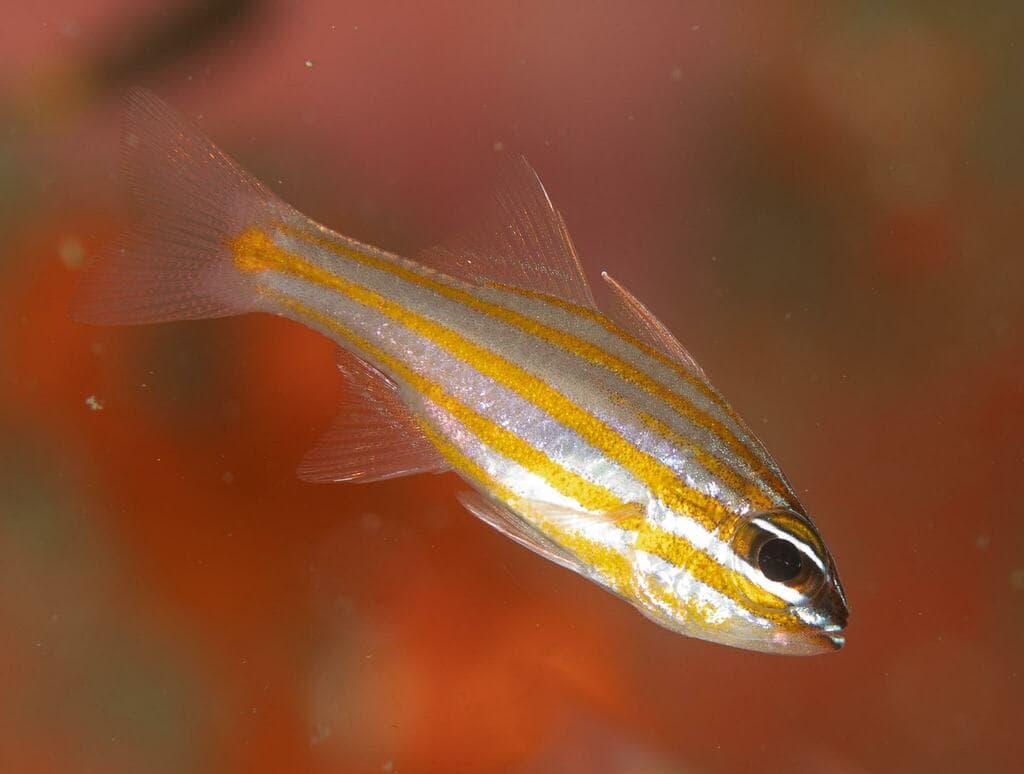
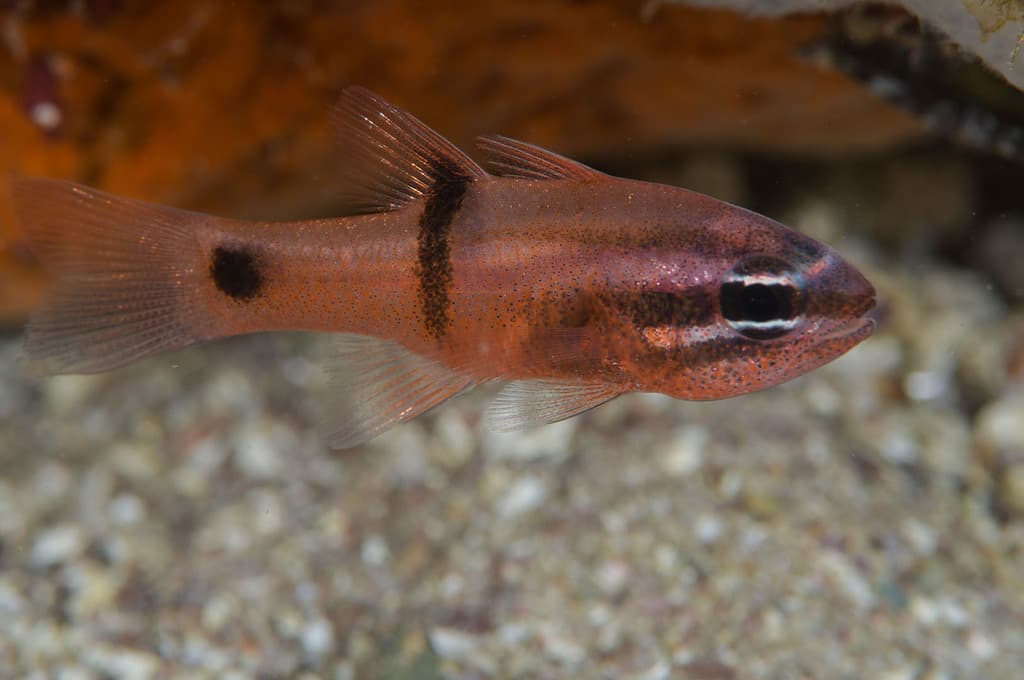
The Five Lined Cardinalfish is a larger and more robust member of the cardinalfish family, reaching up to 5 inches in length. It is easily identified by the five distinct horizontal lines that run along its elongated silvery body, from the head to the base of the tail. Native to the Indo-Pacific region, this species is widespread across tropical reefs where it forms schools among coral formations, rocky overhangs, and in the vicinity of sea urchin clusters. Its bold linear pattern and schooling behavior make it a visually compelling aquarium fish.
In captivity, the Five Lined Cardinalfish is a hardy and easy-to-maintain species suitable for aquarists of all experience levels. It accepts a variety of frozen and prepared foods readily and is resistant to most common marine diseases. Due to its larger size compared to many other cardinalfish, a minimum tank of 30 gallons is recommended, especially if keeping a group. This species is most impressive when maintained in schools of three to five individuals, creating an eye-catching display as they swim in coordinated formation.
The Five Lined Cardinalfish is reef-safe and will not harm corals or invertebrates. However, its slightly larger size means it may occasionally prey on very small shrimp or tiny fish fry. It is generally peaceful toward other species but may show mild territorial behavior toward conspecifics in tight quarters. This species is an excellent choice for medium to large reef aquariums seeking an active and visually distinctive schooling fish.
Feeding & Diet
Carnivore
The Five Lined Cardinalfish is a carnivore that feeds on small fish, crustaceans, and zooplankton in the wild. In captivity, it eagerly accepts frozen mysis shrimp, enriched brine shrimp, chopped krill, and marine pellets. Its larger mouth allows it to accept bigger food items than smaller cardinalfish.
Compatibility
reef-safepeacefulcommunity-friendlybeginner-friendly
The Five Lined Cardinalfish is generally peaceful but may eat very small invertebrates or fish fry due to its larger size. It pairs well with clownfish, tangs, wrasses, and other moderately sized reef fish. Avoid very small shrimp species.
Check CompatibilityBreeding
Moderate
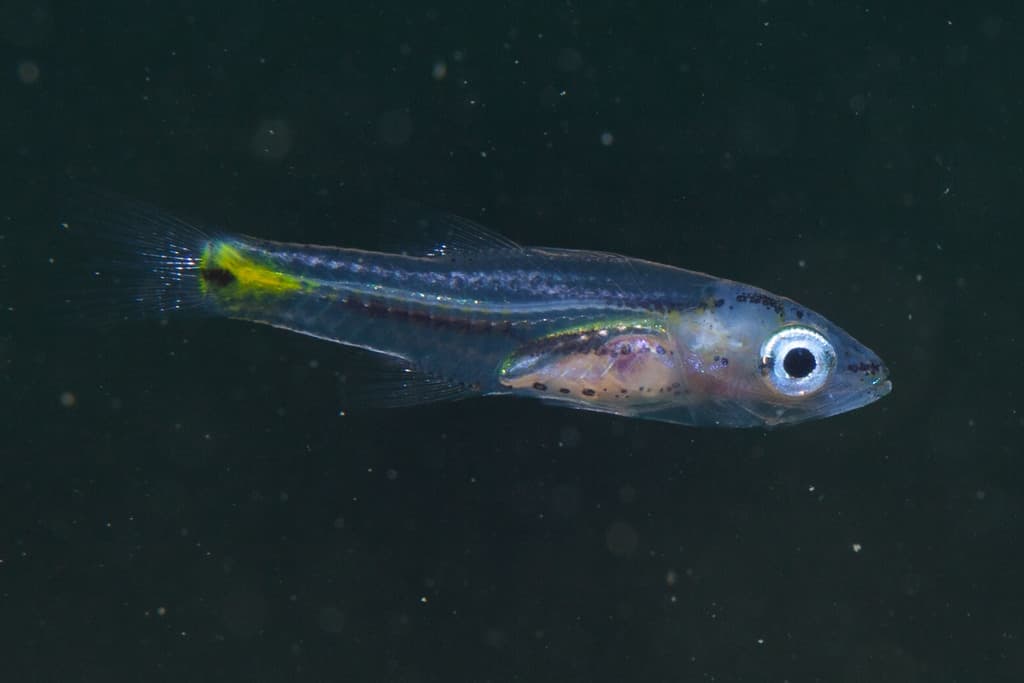
A paternal mouthbrooder. The male incubates the relatively large eggs in his mouth for two to three weeks. Fry are larger at hatching compared to smaller cardinalfish species, making them somewhat easier to rear.
Special Requirements
- Provide rockwork with caves and large overhangs for shelter
- Keep in groups of 3 or more for impressive schooling display
- Larger species - ensure adequate tank volume
- May eat very small ornamental shrimp
Water Parameters
Temperature72–80°F
Specific Gravity1.02–1.026 sg
pH8.1–8.4
Alkalinity8–12 dKH
Coloration
silverwhiteblack
Tags
reef-safepeacefulcommunity-friendlybeginner-friendly