BeginnerPeacefulReef Safe
Eyeshadow Cardinalfish
Apogon perlitus
Family: Apogonidae · Cardinalfish
Also known as: Eyeshadow Cardinal, Pearl-spot Cardinalfish
Division of Fishes
Max Size
3"
Min Tank
20 gal
Lifespan
4-6 years
Origin
Western Pacific
Diet
Carnivore
Swims
Middle
About
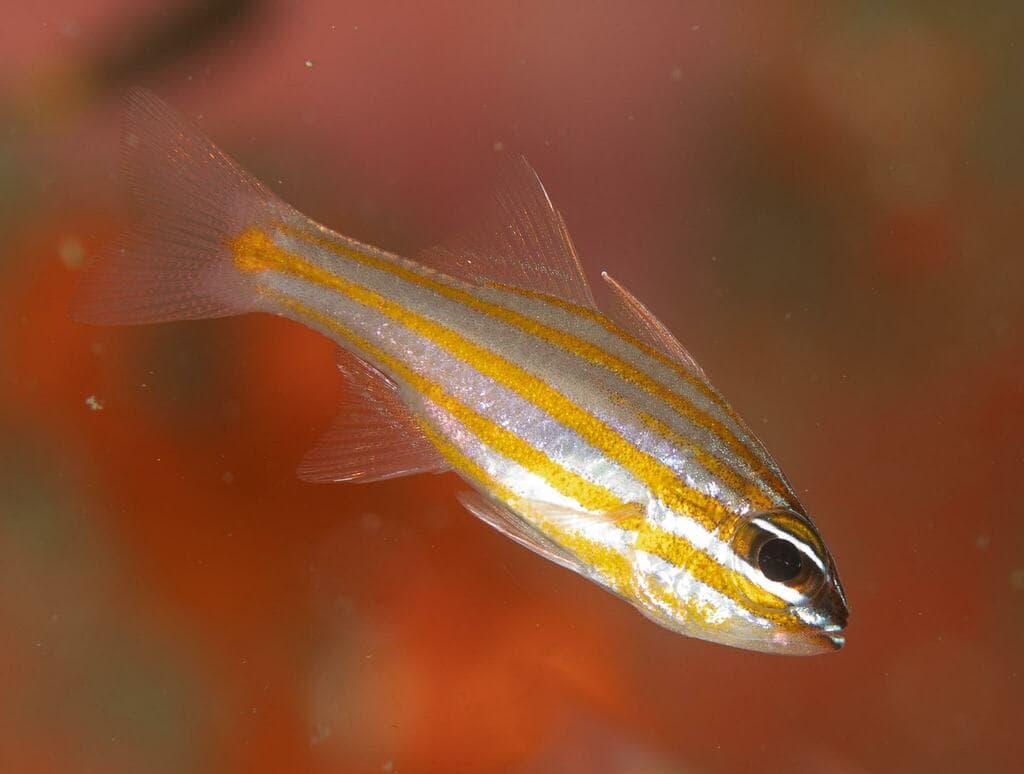
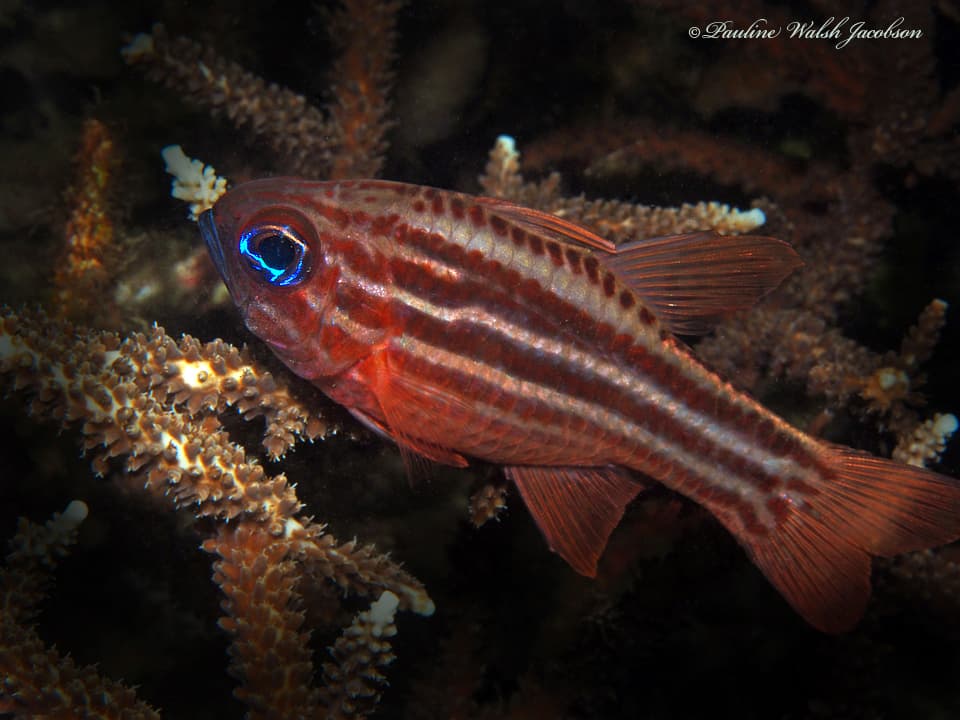
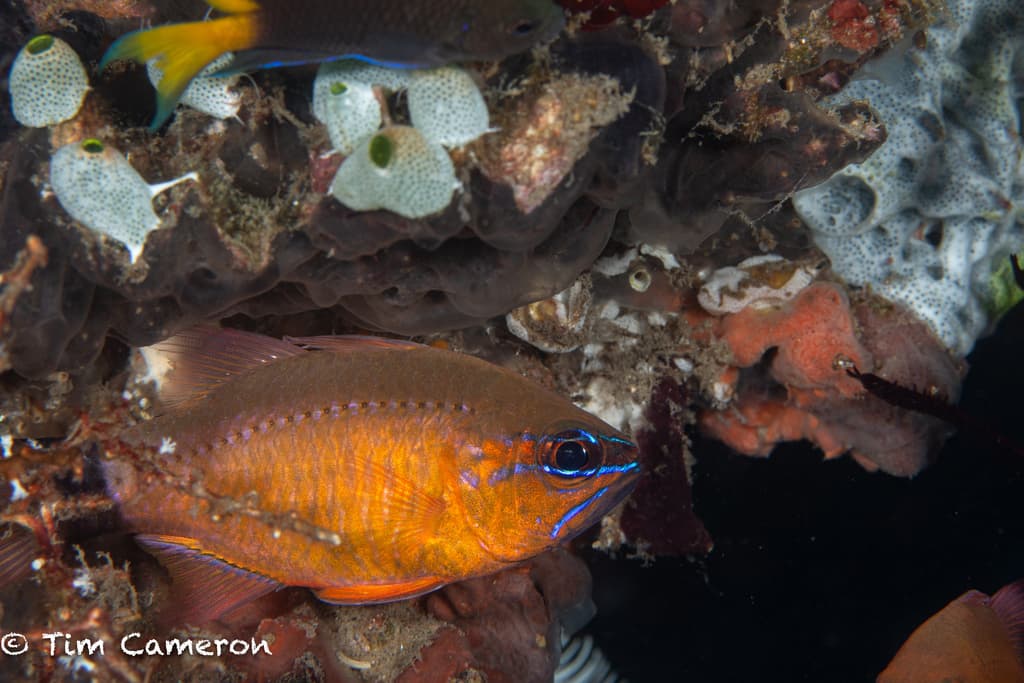
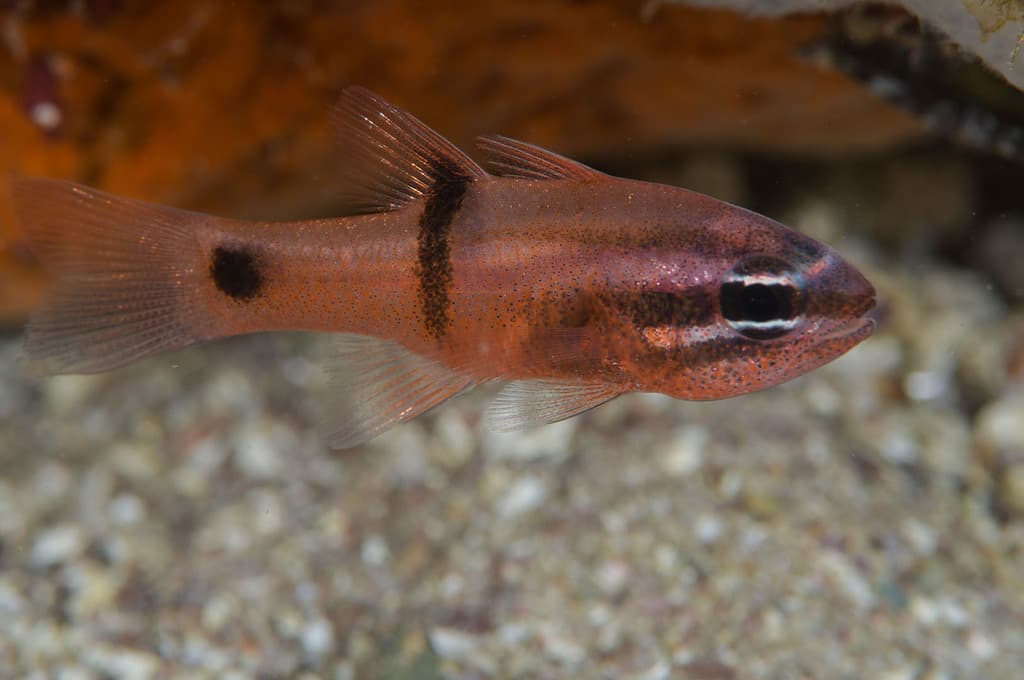
The Eyeshadow Cardinalfish is a delightful and aptly named species recognized by the distinctive dark patch around its eye that resembles applied eyeshadow. This marking stands out dramatically against the fish's pale, translucent body, creating a memorable and endearing appearance. Found throughout the Western Pacific, this species inhabits shallow coral reefs and lagoons where it shelters among coral formations and rock crevices in small social groups.
In the home aquarium, the Eyeshadow Cardinalfish is a beginner-friendly species that requires minimal specialized care. It adapts quickly to captive conditions and accepts a range of commercially available foods within days of introduction. This peaceful species does best when kept in groups of three or more, allowing it to display its natural schooling behavior. A tank of 20 gallons or larger with adequate live rock provides sufficient space and shelter for a small group.
The Eyeshadow Cardinalfish is entirely reef-safe and will not disturb any corals, clams, or invertebrates. Its tranquil temperament makes it an ideal companion for other gentle reef inhabitants. This species adds a touch of personality to the aquarium with its unique facial markings and calm, deliberate swimming style. It is particularly well-suited for nano reef enthusiasts looking for an attractive and easy-to-care-for species.
Feeding & Diet
Carnivore
The Eyeshadow Cardinalfish feeds on small crustaceans and zooplankton in the wild. In captivity, offer frozen mysis shrimp, enriched brine shrimp, cyclops, and quality marine pellets. Feed two to three times daily in small portions.
Compatibility
reef-safepeacefulcommunity-friendlybeginner-friendly
The Eyeshadow Cardinalfish is completely peaceful and coexists well with clownfish, gobies, blennies, firefish, and other cardinalfish. Avoid housing with aggressive species that may intimidate this gentle fish.
Check CompatibilityBreeding
Moderate
A paternal mouthbrooder. The male carries fertilized eggs in his mouth for two to three weeks until hatching. Breeding in captivity is possible with established, well-conditioned pairs.
Special Requirements
- Provide rockwork with caves and crevices for shelter
- Keep in groups of 3 or more for schooling behavior
- Nocturnal - dim lighting preferred
- Suitable for nano reef setups
Water Parameters
Temperature72–80°F
Specific Gravity1.02–1.026 sg
pH8.1–8.4
Alkalinity8–12 dKH
Coloration
silverwhiteblack
Tags
reef-safepeacefulcommunity-friendlybeginner-friendly