BeginnerPeacefulReef Safe
Doublebar Cardinalfish
Apogon taeniophorus
Family: Apogonidae · Cardinalfish
Also known as: Doublebar Cardinal, Two-barred Cardinalfish, Double-barred Cardinalfish
(c) Amir Rasheed, all rights reserved
Max Size
3.5"
Min Tank
20 gal
Lifespan
4-6 years
Origin
Western Pacific
Diet
Carnivore
Swims
Middle
About
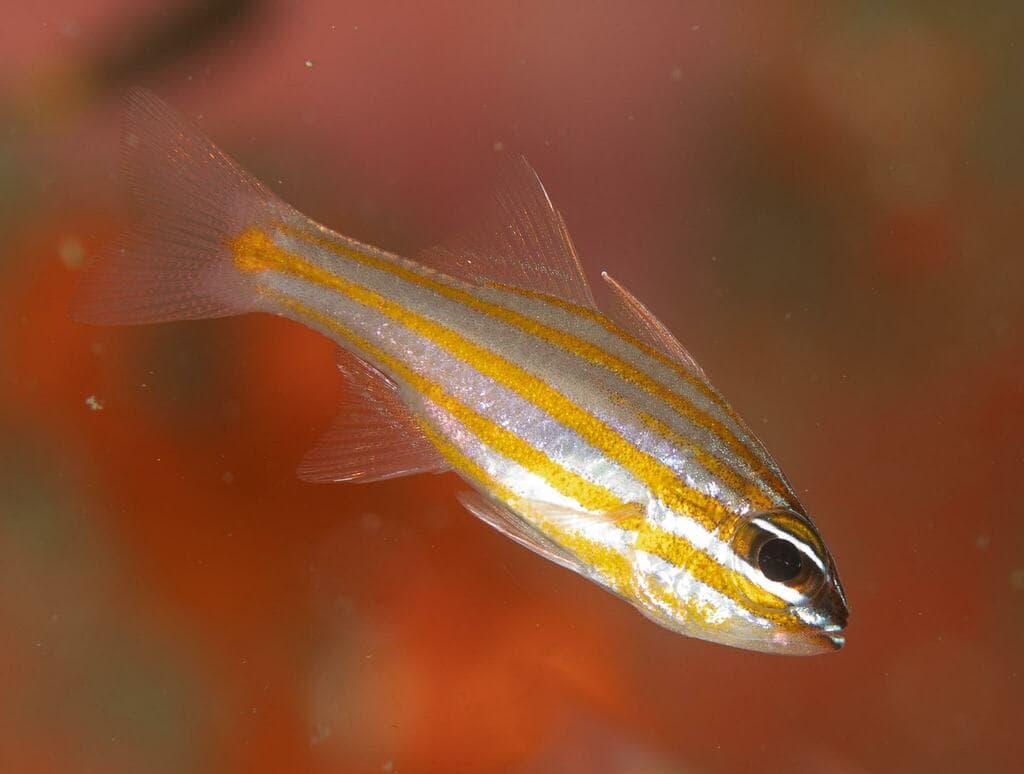
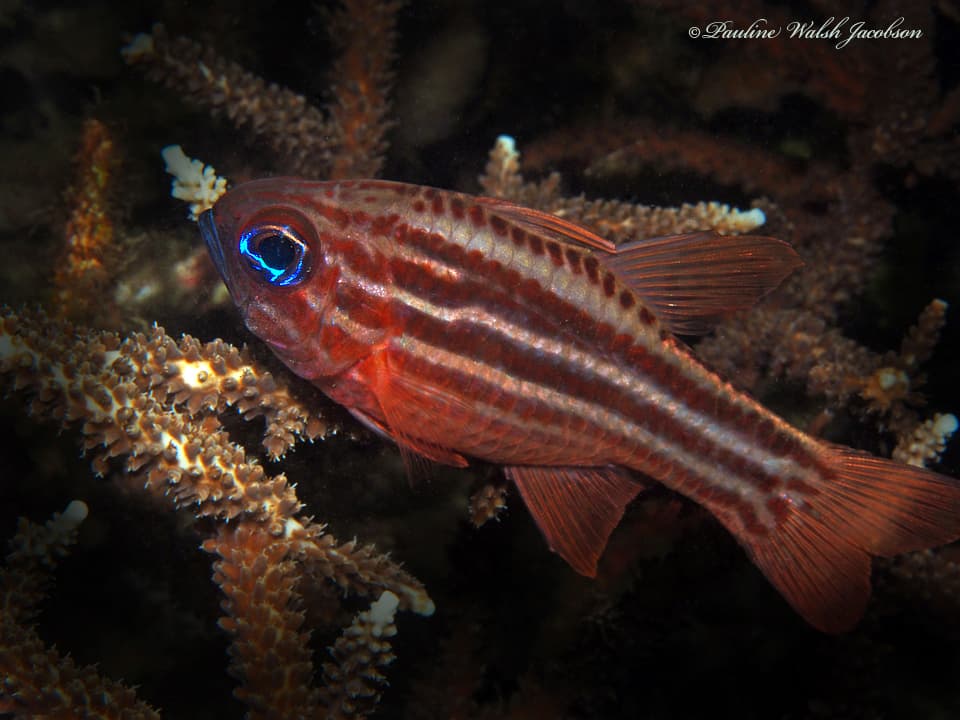
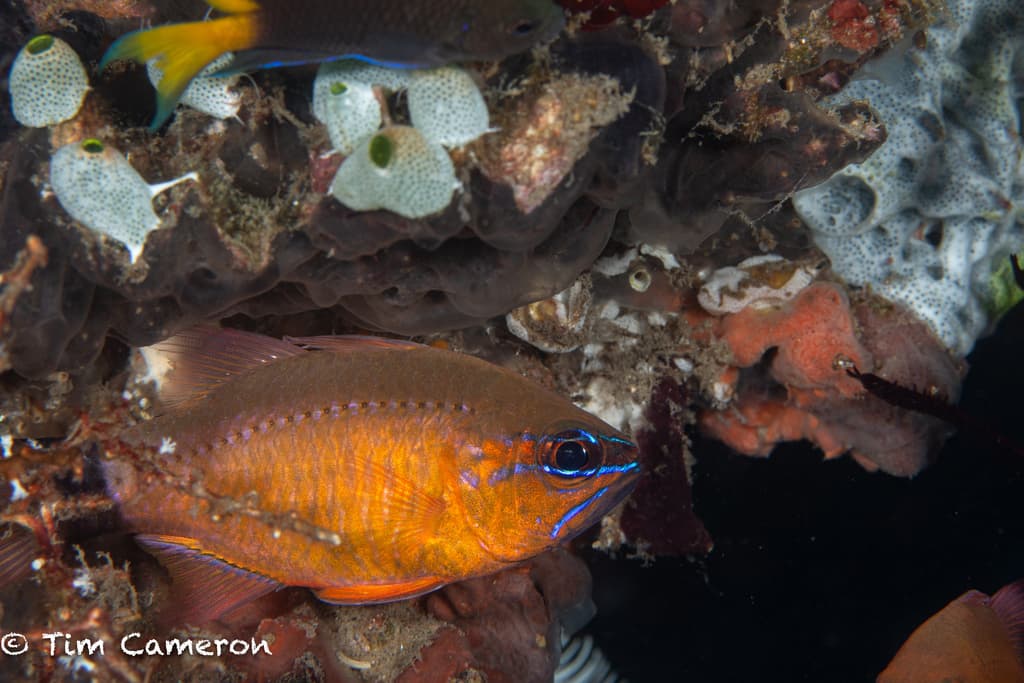
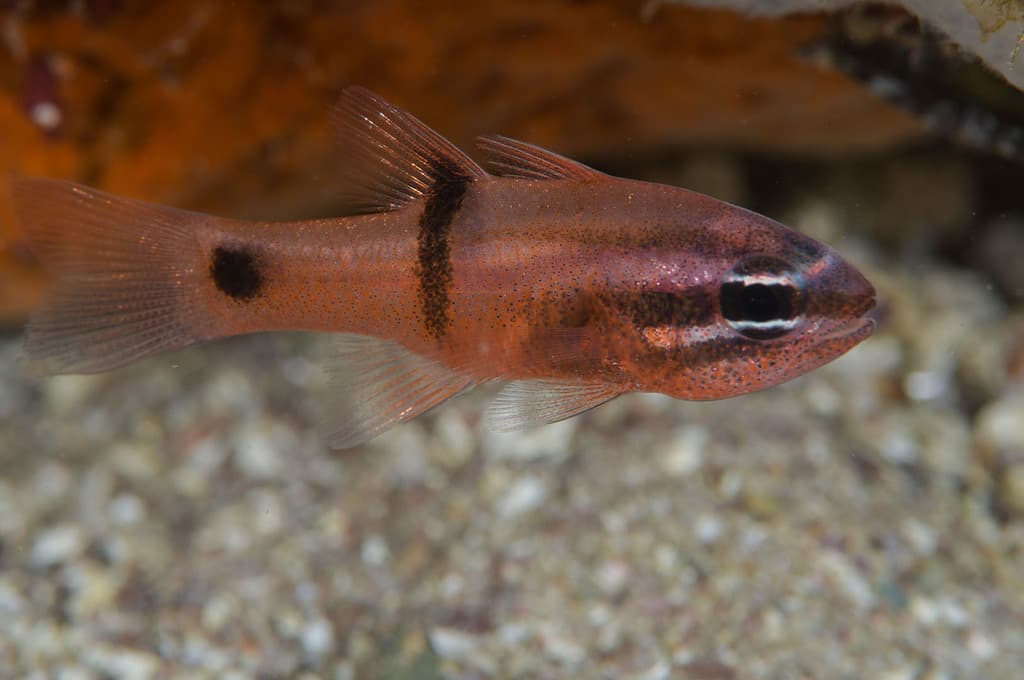
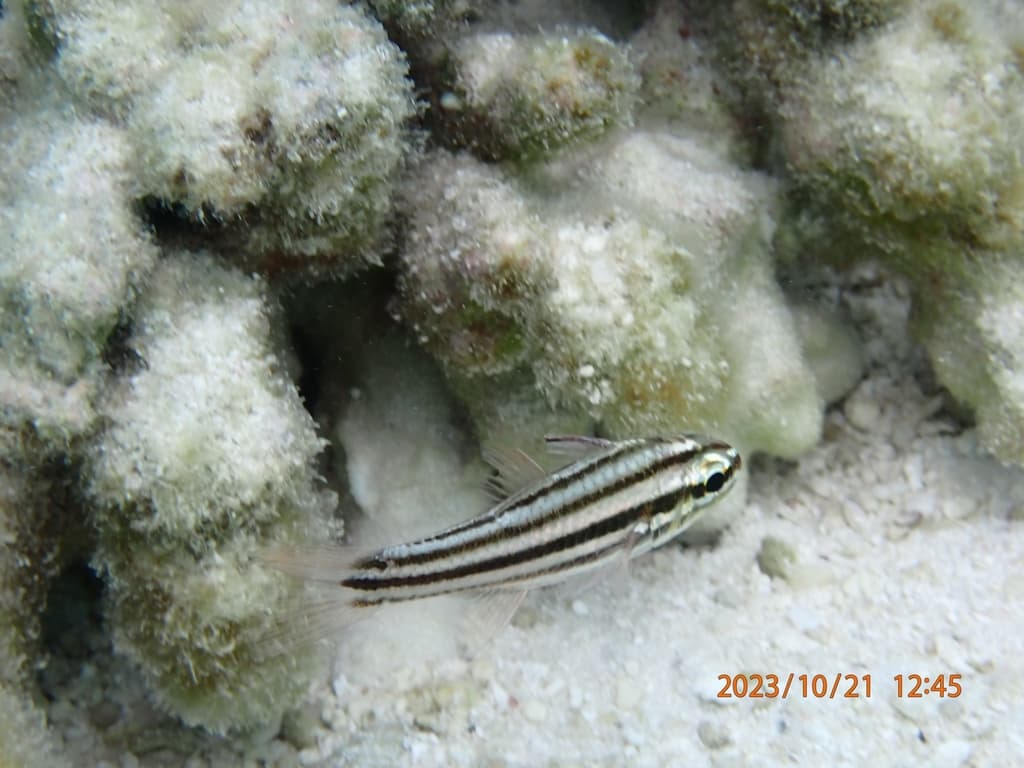
The Doublebar Cardinalfish is an attractive and readily identifiable species distinguished by two prominent dark vertical bars on its translucent pinkish-silver body. Native to the Western Pacific, this species is found on coral reefs and in sheltered lagoons where it congregates in small groups near branching corals and rock formations. The clean, graphic quality of its double-bar pattern gives it a crisp, distinctive appearance that stands out among other cardinalfish species.
This species is one of the hardiest cardinalfish available to aquarists and adapts quickly to captive conditions. The Doublebar Cardinalfish readily accepts frozen and prepared foods, is resistant to common marine diseases, and tolerates a range of aquarium conditions. It does best when kept in small groups of three or more in a well-aquascaped tank with plenty of live rock. As a crepuscular species, it is most active at dawn and dusk, spending daylight hours hovering near protective reef structures.
Completely reef-safe, the Doublebar Cardinalfish will not harm corals or invertebrates. Its peaceful disposition makes it an excellent community fish that can be housed with virtually any non-aggressive species. This hardy species is particularly recommended for beginners who are setting up their first reef aquarium, as it provides beauty and activity without demanding expert-level care.
Feeding & Diet
Carnivore
The Doublebar Cardinalfish is a carnivore that feeds on small crustaceans and zooplankton in the wild. In captivity, it readily accepts frozen mysis shrimp, enriched brine shrimp, and marine pellets or flakes. Feed two to three times daily in small amounts.
Compatibility
reef-safepeacefulcommunity-friendlybeginner-friendly
The Doublebar Cardinalfish is extremely peaceful and coexists well with clownfish, gobies, blennies, wrasses, and other community reef fish. Avoid housing with aggressive or predatory species.
Check CompatibilityBreeding
Moderate
A paternal mouthbrooder. The male carries the eggs in his mouth for approximately two to three weeks until they hatch. Captive breeding is possible with established pairs and stable water parameters.
Special Requirements
- Provide rockwork with caves and overhangs for shelter
- Keep in groups of 3 or more for natural schooling behavior
- Nocturnal - dim lighting preferred in part of the tank
- Very hardy - excellent choice for beginner marine aquarists
Water Parameters
Temperature72–80°F
Specific Gravity1.02–1.026 sg
pH8.1–8.4
Alkalinity8–12 dKH
Coloration
silverpinkblack
Tags
reef-safepeacefulcommunity-friendlybeginner-friendly