BeginnerPeacefulReef Safe
Copper Cardinalfish
Apogon aureus
Family: Apogonidae · Cardinalfish
Also known as: Copper Cardinal, Golden Cardinalfish, Ring-tailed Copper Cardinalfish
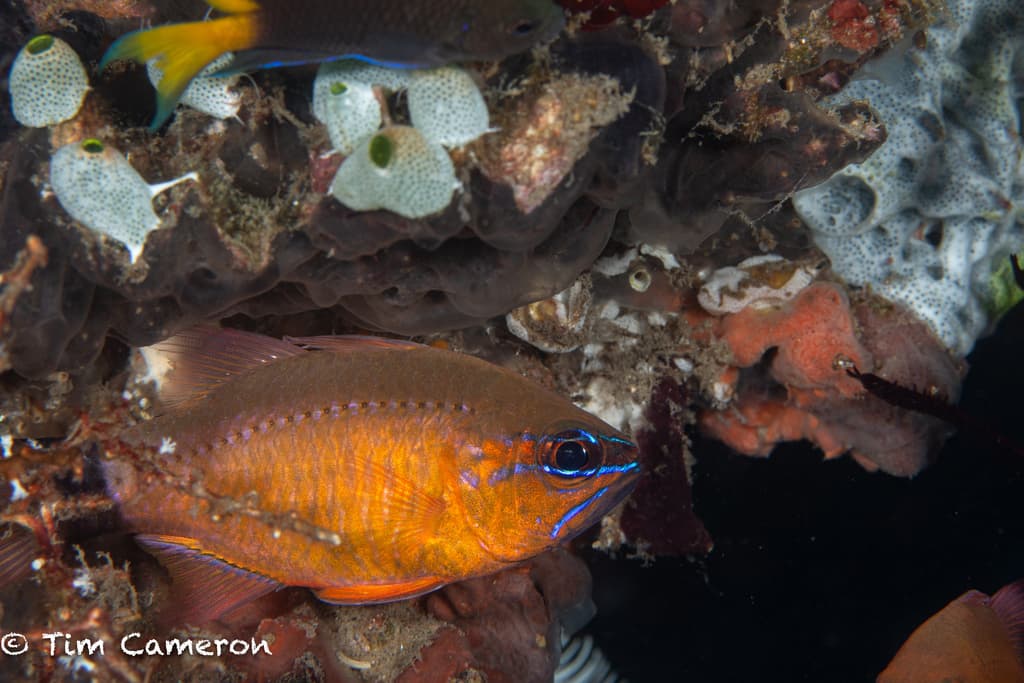
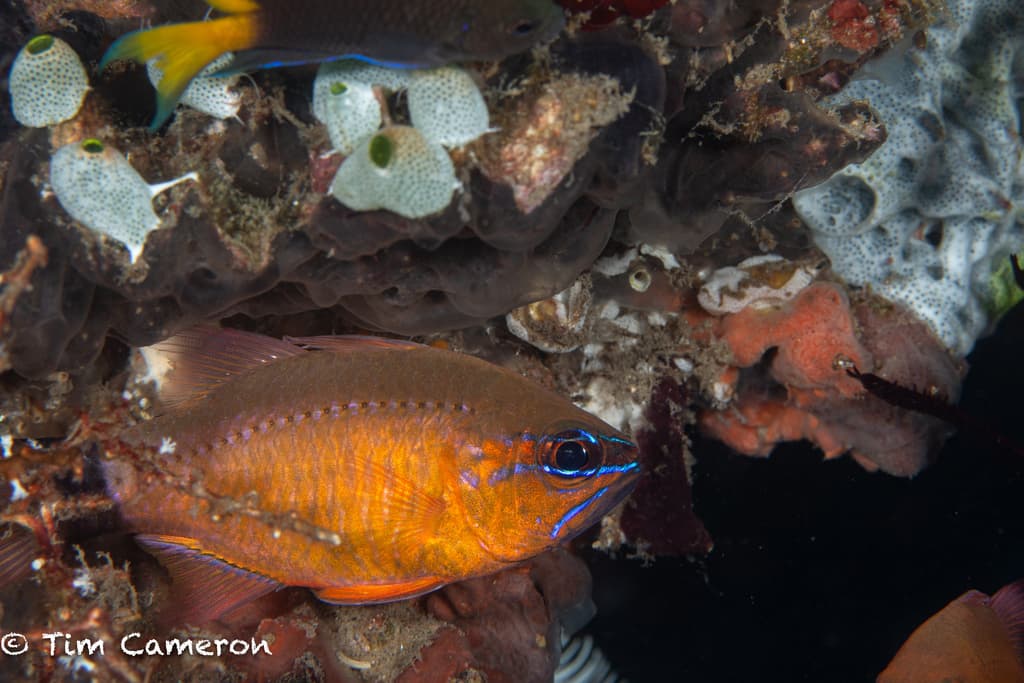
(c) Tim Cameron, all rights reserved
Max Size
3.5"
Min Tank
20 gal
Lifespan
4-6 years
Origin
Caribbean
Diet
Carnivore
Swims
Middle
About
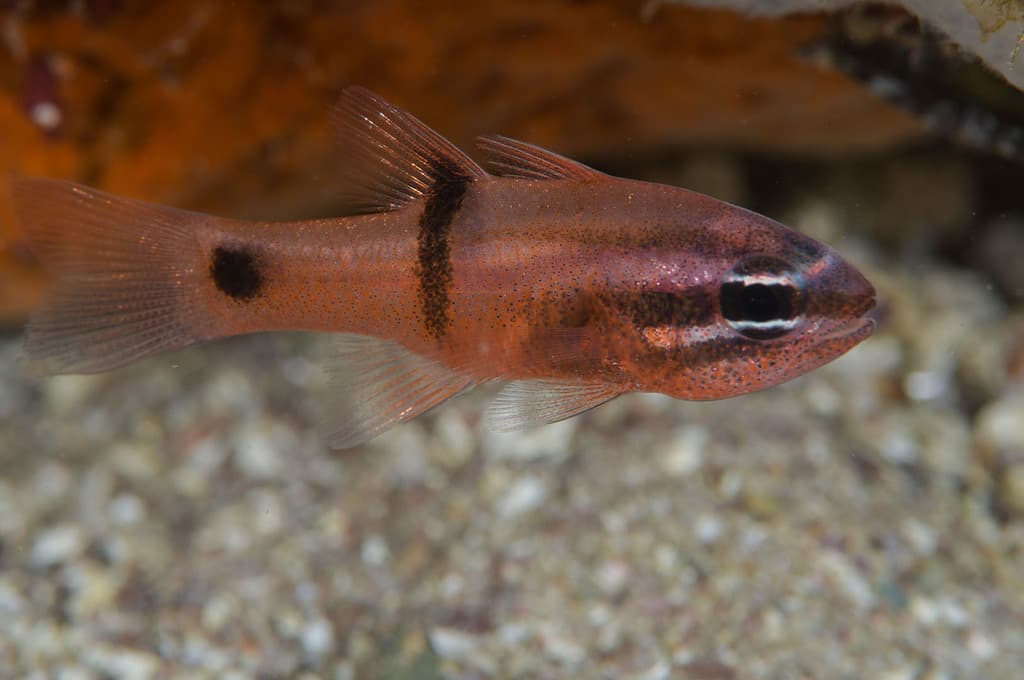
The Copper Cardinalfish is a warm-toned Caribbean species that displays a beautiful coppery-orange to golden coloration across its compact body. Found throughout the Caribbean Sea and adjacent waters, this species is typically encountered on shallow reefs, among seagrass beds, and around pier pilings where it shelters in small groups during the day. Its rich metallic hue sets it apart from many of its more subdued Indo-Pacific relatives and makes it a sought-after species for Caribbean biotope aquariums.
In the home aquarium, the Copper Cardinalfish is an easy-to-maintain species that settles in rapidly and accepts prepared foods without difficulty. It is a peaceful, somewhat shy fish that appreciates plenty of rockwork and hiding places. Like other cardinalfish, it tends to be crepuscular and nocturnal, becoming most active during dawn, dusk, and nighttime hours. Keep it in small groups to encourage social interaction and reduce stress, though it can also be maintained as a single specimen in smaller setups.
This species is completely reef-safe and poses no threat to corals or invertebrates. The Copper Cardinalfish is an ideal addition to Caribbean-themed reef tanks or general community aquariums. Its peaceful nature and warm coloration complement a wide variety of tankmates, and its hardiness makes it forgiving of the occasional minor fluctuation in water parameters that can challenge more sensitive species.
Feeding & Diet
Carnivore
The Copper Cardinalfish feeds primarily on small crustaceans and zooplankton in the wild. In captivity, it accepts frozen mysis shrimp, enriched brine shrimp, and high-quality marine pellets or flakes. Feed small portions two to three times daily.
Compatibility
reef-safepeacefulcommunity-friendlybeginner-friendly
The Copper Cardinalfish is peaceful and mixes well with most community reef fish. Excellent tankmates include royal grammas, gobies, blennies, and other Caribbean species. Avoid housing with aggressive or territorial fish.
Check CompatibilityBreeding
Moderate
A paternal mouthbrooder like other members of the family. The male incubates the eggs in his mouth for two to three weeks until hatching. Captive breeding is achievable with bonded pairs in stable aquarium conditions.
Special Requirements
- Provide rockwork with caves and overhangs for shelter
- Keep in groups of 3 or more for natural behavior
- Nocturnal - dim lighting preferred
- Ideal for Caribbean biotope aquariums
Water Parameters
Temperature72–80°F
Specific Gravity1.02–1.026 sg
pH8.1–8.4
Alkalinity8–12 dKH
Coloration
copperorangegold
Tags
reef-safepeacefulcommunity-friendlybeginner-friendly