BeginnerPeacefulReef Safe
Cooktown Cardinalfish
Ostorhinchus cookii
Family: Apogonidae · Cardinalfish
Also known as: Cook's Cardinalfish, Cooktown Cardinal
(c) WellsCheng, all rights reserved
Max Size
4"
Min Tank
30 gal
Lifespan
4-6 years
Origin
Western Pacific
Diet
Carnivore
Swims
Middle
About
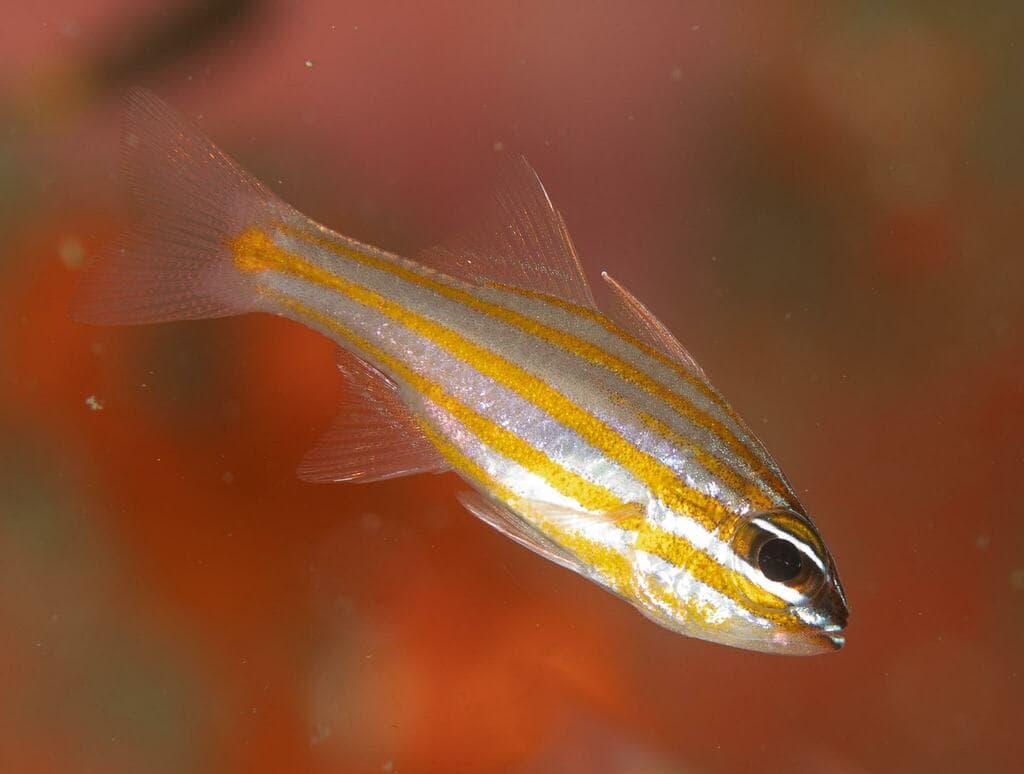
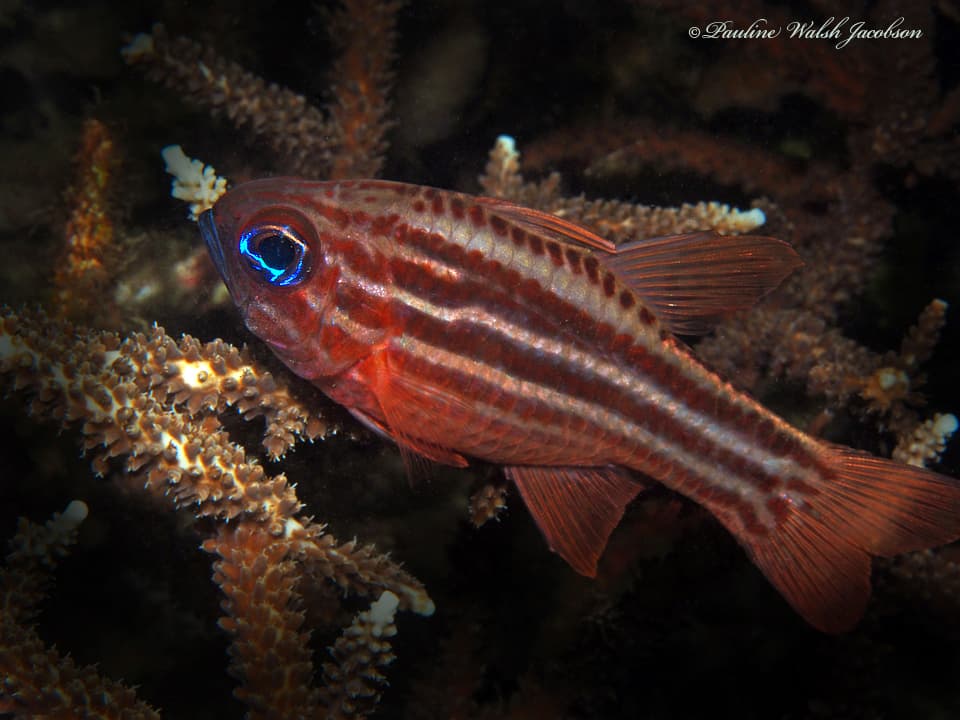
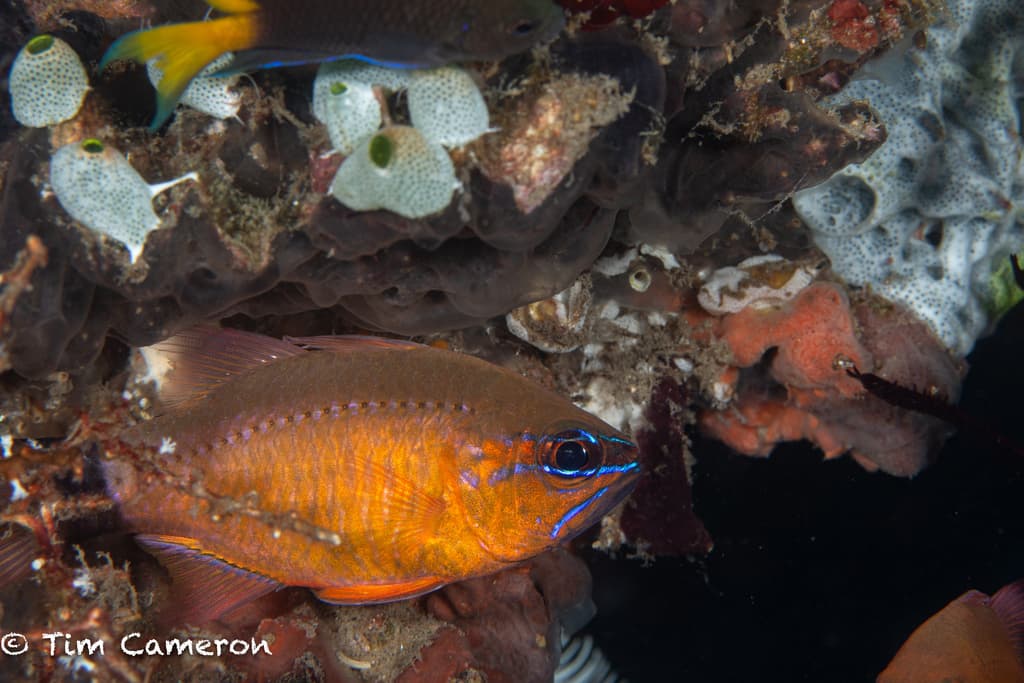
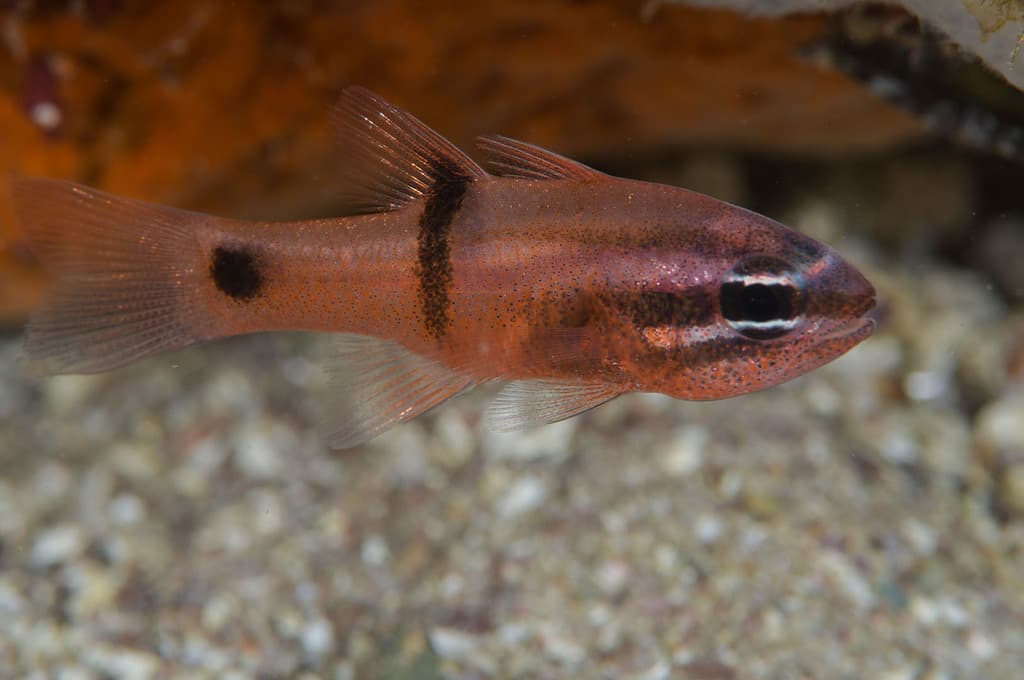
The Cooktown Cardinalfish is a robust and attractive species characterized by its silvery body decorated with scattered dark spots and subtle lateral markings. Named after the town of Cooktown in Queensland, Australia, this species is widespread across the Western Pacific, where it inhabits coral reef environments, rocky outcrops, and sheltered lagoons. It is a common sight on the Great Barrier Reef and surrounding waters, often found in loose aggregations near protective reef structures.
This species is one of the hardiest cardinalfish available in the aquarium trade, making it an excellent choice for marine beginners. The Cooktown Cardinalfish adapts rapidly to captive conditions, is disease-resistant, and readily accepts a broad range of prepared foods from the very first day. It thrives in groups and will form attractive schools that hover near favored sections of the reef structure. A minimum tank size of 30 gallons is recommended to accommodate a small group comfortably.
Fully reef-safe and completely peaceful, the Cooktown Cardinalfish is a model community aquarium citizen. It will not bother corals, invertebrates, or other fish, and its calm disposition means it can be paired with virtually any non-aggressive tankmate. This species is particularly valued for its hardiness and adaptability, making it a reliable and trouble-free addition to both new and established reef systems.
Feeding & Diet
Carnivore
The Cooktown Cardinalfish is a carnivore that feeds on small crustaceans, copepods, and planktonic organisms in the wild. In captivity, it eagerly accepts frozen mysis shrimp, enriched brine shrimp, and marine pellets. Supplement with occasional live foods for optimal condition.
Compatibility
reef-safepeacefulcommunity-friendlybeginner-friendly
The Cooktown Cardinalfish is exceptionally peaceful and compatible with most reef inhabitants. It pairs well with clownfish, gobies, blennies, wrasses, tangs, and other cardinalfish. Avoid housing with large aggressive predators.
Check CompatibilityBreeding
Moderate
A paternal mouthbrooder. The male carries and incubates eggs in his mouth for approximately two to three weeks. Breeding in captivity is possible with bonded pairs that are well-fed and maintained in stable conditions.
Special Requirements
- Provide ample rockwork with caves for daytime shelter
- Keep in groups of 3 or more for schooling behavior
- Nocturnal - dim lighting preferred in at least part of the tank
- Very hardy - tolerates minor parameter fluctuations
Water Parameters
Temperature72–80°F
Specific Gravity1.02–1.026 sg
pH8.1–8.4
Alkalinity8–12 dKH
Coloration
silverbrownblack
Tags
reef-safepeacefulcommunity-friendlybeginner-friendly