BeginnerPeacefulReef Safe
Broadstripe Cardinalfish
Ostorhinchus angustatus
Family: Apogonidae · Cardinalfish
Also known as: Broadstripe Cardinal, Broad-striped Cardinalfish
(c) Hickson Fergusson, all rights reserved
Max Size
3"
Min Tank
20 gal
Lifespan
4-6 years
Origin
Western Pacific
Diet
Carnivore
Swims
Middle
About
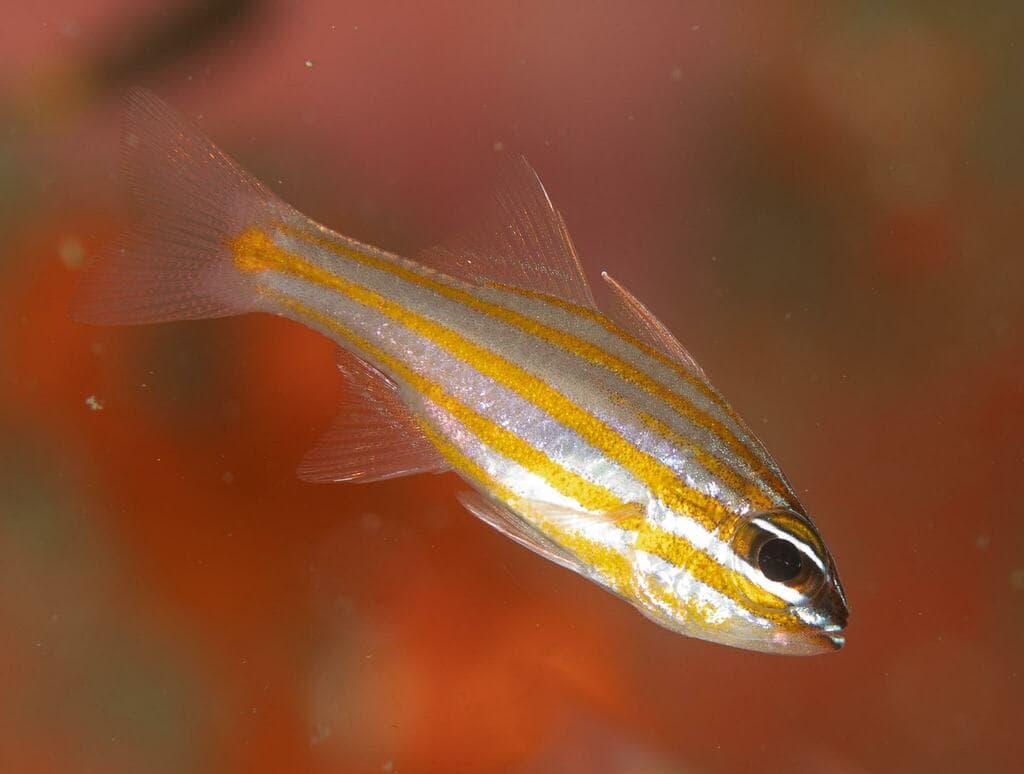
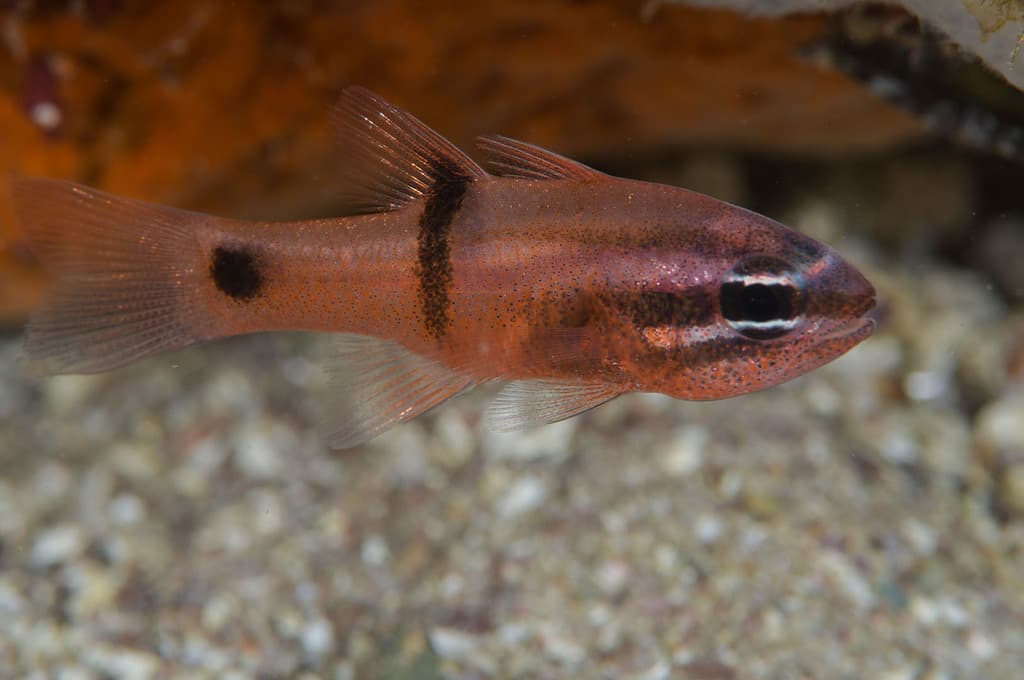
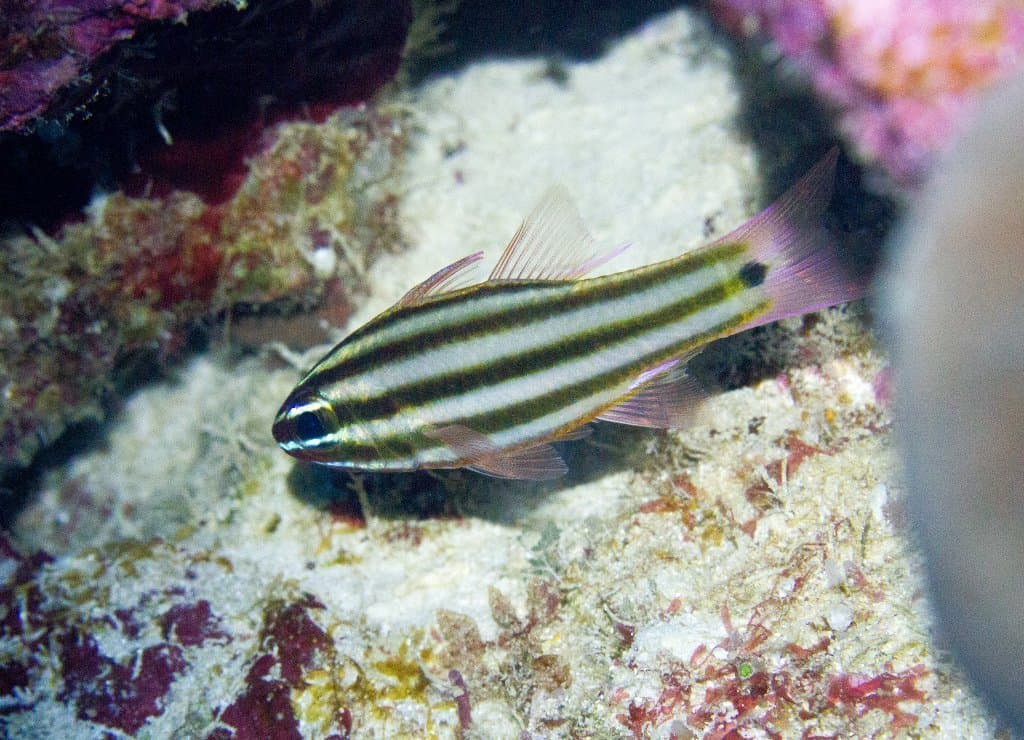
The Broadstripe Cardinalfish is a distinctive species easily identified by the wide dark horizontal stripe that extends from its snout through to the base of its tail, set against a pale silvery-white body. Found throughout the Western Pacific, this species is a common inhabitant of coral reefs and lagoons where it forms small aggregations among branching corals and rock formations. Its bold patterning and manageable size make it a visually interesting addition to the home reef aquarium.
This species is remarkably easy to maintain in captivity, making it an ideal choice for beginning marine aquarists. The Broadstripe Cardinalfish is hardy, disease-resistant, and adapts readily to aquarium foods. It is a social species that displays its most natural behavior when kept in groups of three or more. Provide a well-aquascaped tank with plenty of live rock formations that offer caves, ledges, and overhangs for the fish to shelter in during daylight hours.
As a completely reef-safe species, the Broadstripe Cardinalfish will not disturb any corals or invertebrates in the tank. Its peaceful temperament makes it an outstanding community fish that pairs well with a wide variety of other non-aggressive marine species. The species is particularly attractive when kept as a small school, with the group hovering together near a favored reef structure.
Feeding & Diet
Carnivore
The Broadstripe Cardinalfish feeds on small crustaceans and zooplankton in the wild. In the aquarium, it accepts frozen mysis shrimp, enriched brine shrimp, copepods, and quality marine pellets or flakes. Feed two to three times daily with appropriately sized portions.
Compatibility
reef-safepeacefulcommunity-friendlybeginner-friendly
The Broadstripe Cardinalfish is extremely peaceful and thrives alongside clownfish, gobies, blennies, firefish, and other cardinalfish species. It should not be housed with aggressive or large predatory fish.
Check CompatibilityBreeding
Moderate
A paternal mouthbrooder with the male incubating fertilized eggs in his oral cavity for two to three weeks. Breeding is achievable in captivity with established pairs and consistent water quality.
Special Requirements
- Provide rockwork with caves and overhangs for shelter
- Keep in groups of 3 or more for natural schooling behavior
- Nocturnal - dim lighting preferred in part of the tank
- Gentle water flow is preferred
Water Parameters
Temperature72–80°F
Specific Gravity1.02–1.026 sg
pH8.1–8.4
Alkalinity8–12 dKH
Coloration
silverwhiteblack
Tags
reef-safepeacefulcommunity-friendlybeginner-friendly