BeginnerPeacefulReef Safe
Bridle Cardinalfish
Ostorhinchus semicinctus
Family: Apogonidae · Cardinalfish
Also known as: Bridle Cardinal, Half-banded Cardinalfish
Max Size
2.5"
Min Tank
20 gal
Lifespan
4-6 years
Origin
Western Pacific
Diet
Carnivore
Swims
Middle
About
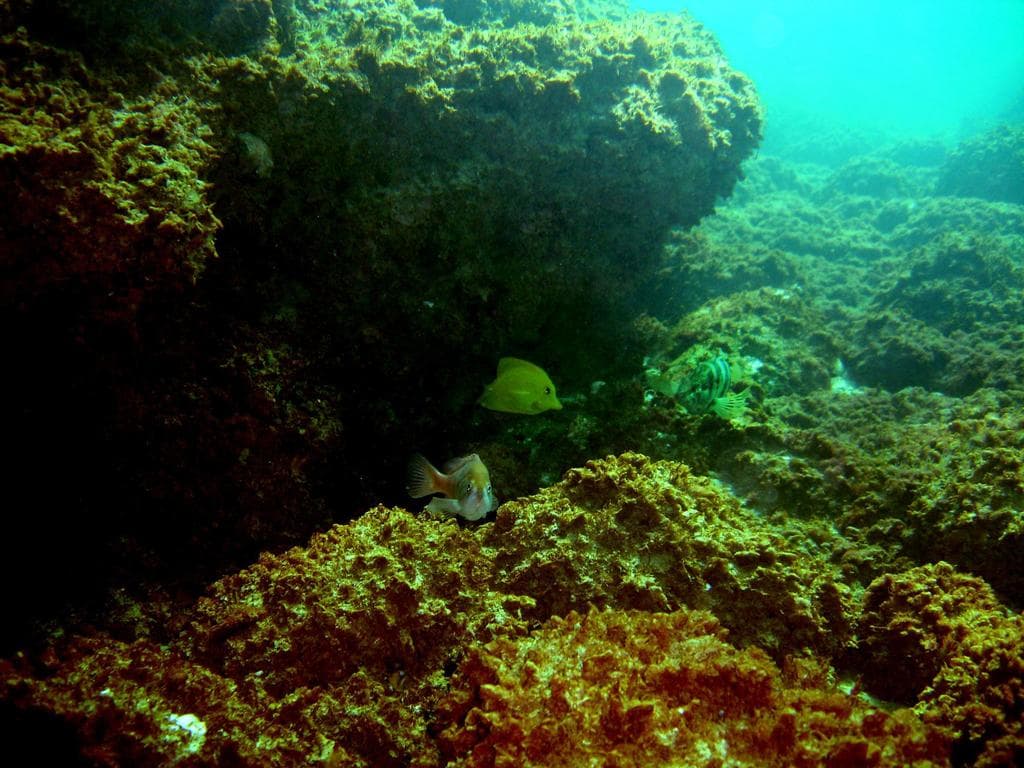
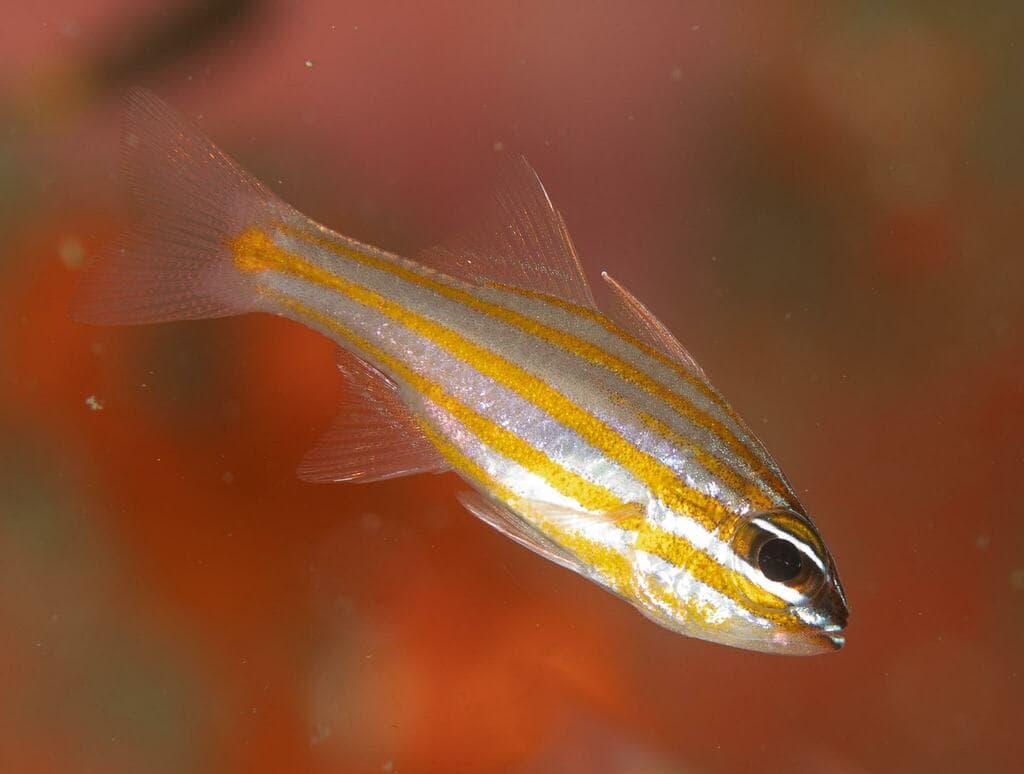
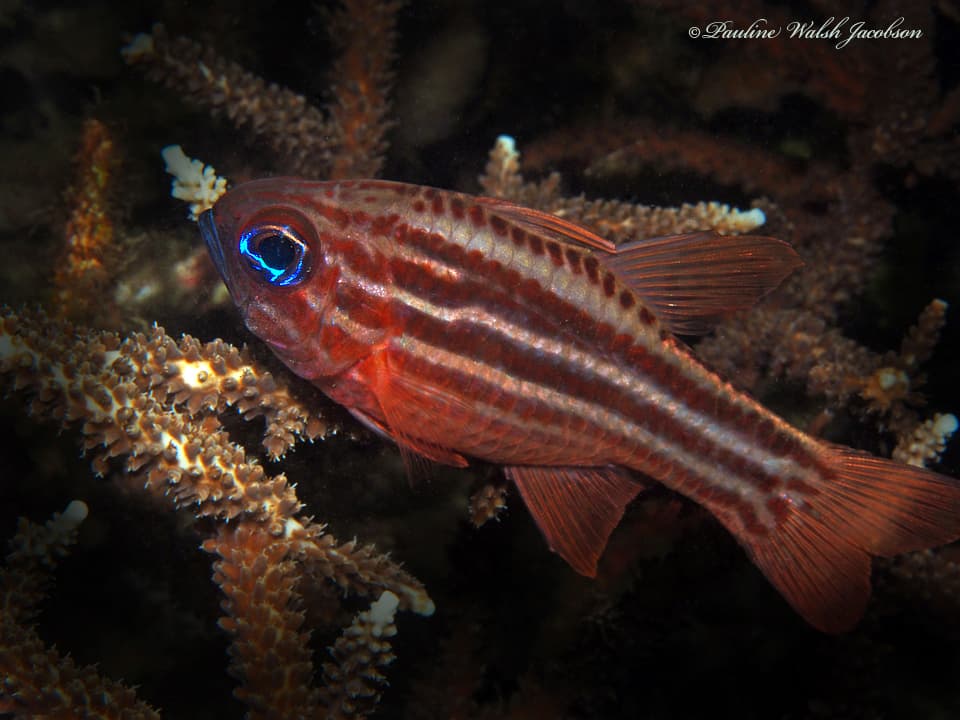
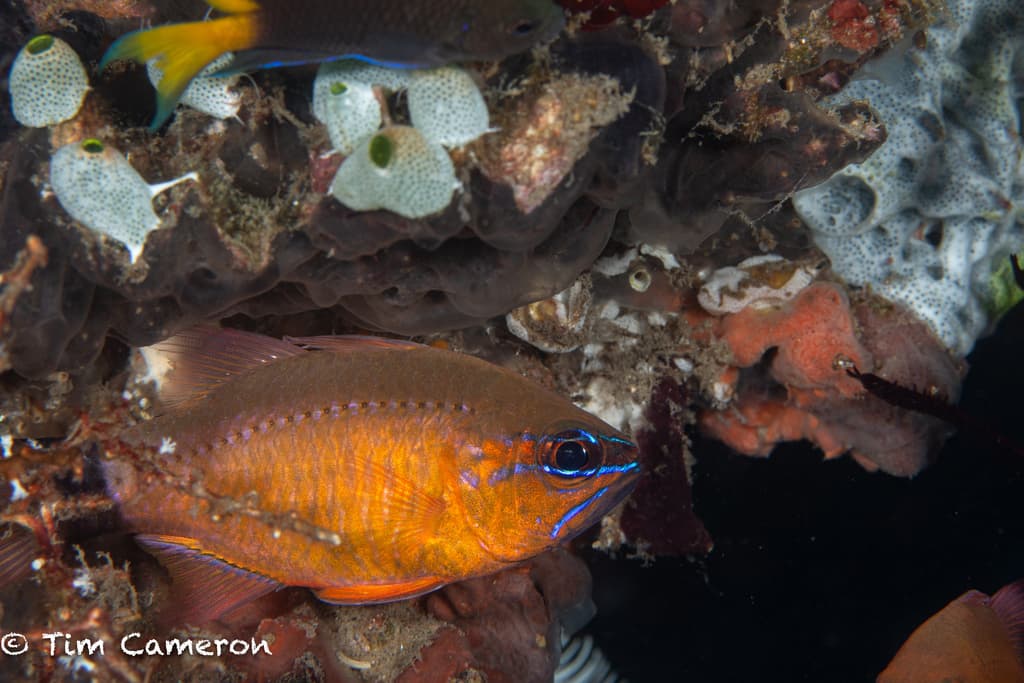
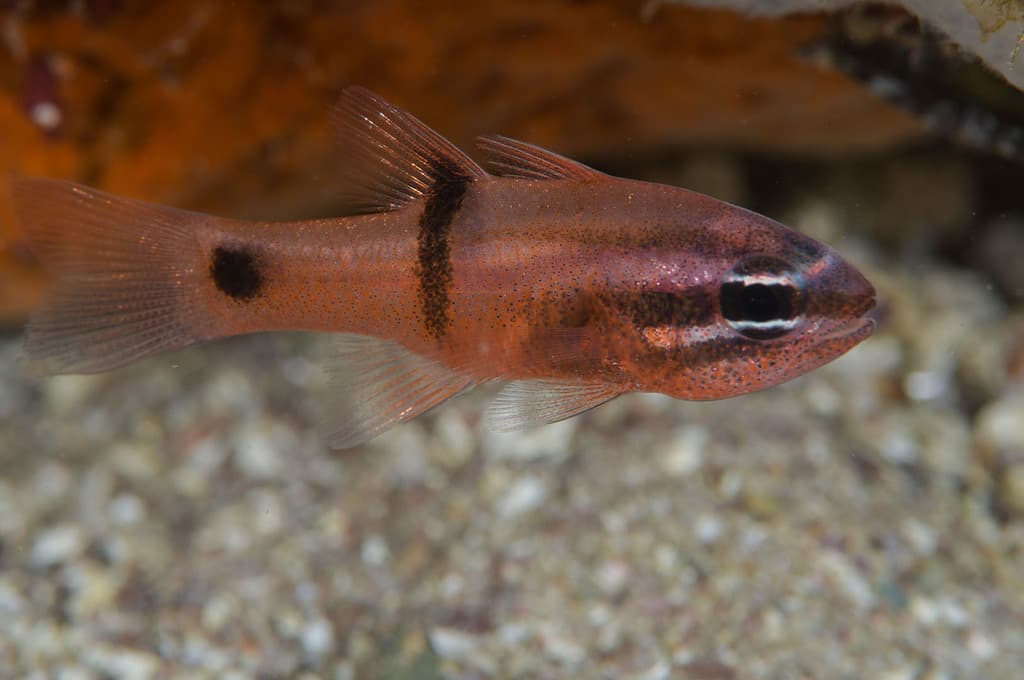
The Bridle Cardinalfish is a small and beautifully marked species distinguished by its warm yellow body adorned with a characteristic dark bridle-like pattern that arcs across its head and upper body. Native to the Western Pacific, this species is found on shallow coral reefs where it shelters in small groups among coral branches and rocky crevices. Its attractive coloration and diminutive size make it an appealing choice for nano reef and community aquariums alike.
In the aquarium, the Bridle Cardinalfish is an undemanding and resilient species that settles in quickly. It is a peaceful schooling fish that does best when kept with conspecifics or other non-aggressive species. Its small size means it can thrive in modest aquariums of 20 gallons or more, provided there is adequate rockwork for shelter. Like other cardinalfish, it tends to be more active during twilight and nighttime hours, spending much of the day hovering near protective structures.
This species is fully reef-safe and will not harm corals, clams, or other invertebrates. The Bridle Cardinalfish is an ideal candidate for community reef tanks where its golden hues provide a pleasant contrast to the blues and greens of coral-dominated landscapes. Its peaceful nature ensures harmonious coexistence with a wide range of tankmates.
Feeding & Diet
Carnivore
The Bridle Cardinalfish feeds on tiny crustaceans and zooplankton in nature. In captivity, it accepts frozen mysis shrimp, enriched brine shrimp, cyclops, and finely ground marine pellets. Feed small portions two to three times daily for best results.
Compatibility
reef-safepeacefulcommunity-friendlybeginner-friendly
The Bridle Cardinalfish is exceptionally peaceful and mixes well with clownfish, gobies, blennies, dartfish, and other small reef inhabitants. Avoid aggressive or large predatory tankmates that may bully this small species.
Check CompatibilityBreeding
Moderate
A paternal mouthbrooder like other cardinalfish. The male incubates eggs in his mouth for approximately two to three weeks. Captive breeding is possible with bonded pairs in a stable, well-maintained aquarium.
Special Requirements
- Provide rockwork with caves and small crevices for shelter
- Keep in groups of 3 or more for natural schooling behavior
- Nocturnal - dim lighting preferred
- Suitable for nano reef aquariums
Water Parameters
Temperature72–80°F
Specific Gravity1.02–1.026 sg
pH8.1–8.4
Alkalinity8–12 dKH
Coloration
yellowbrownblack
Tags
reef-safepeacefulcommunity-friendlybeginner-friendly