BeginnerPeacefulReef Safe
Blackstripe Cardinalfish
Ostorhinchus nigrofasciatus
Family: Apogonidae · Cardinalfish
Also known as: Blackstripe Cardinal, Black-striped Cardinalfish
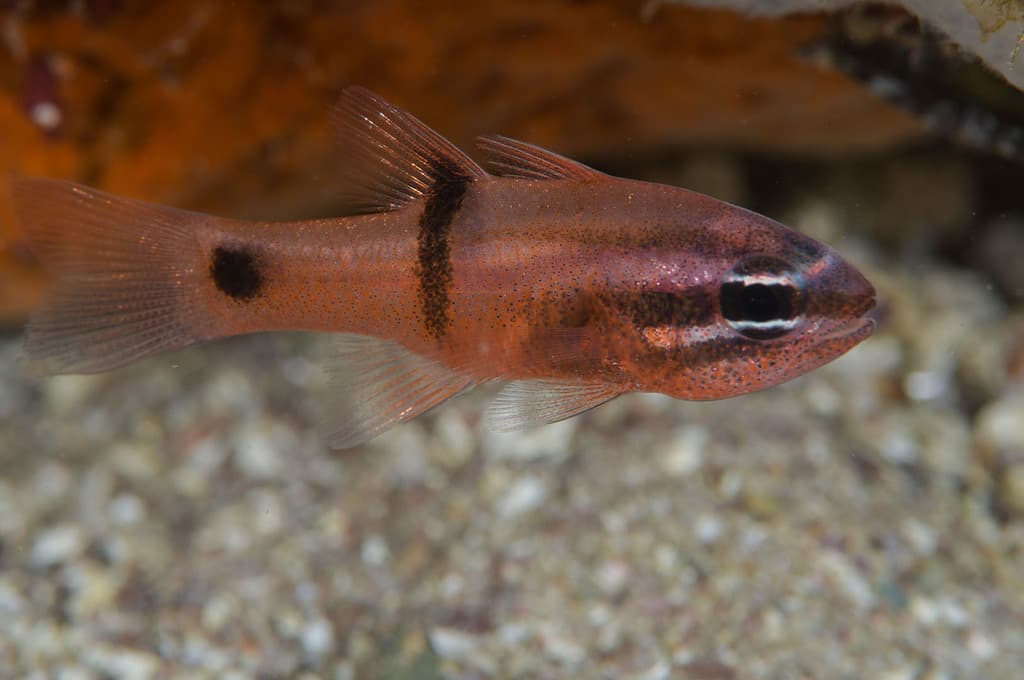
(c) Xavier Rufray, some rights reserved (CC BY-NC)
Max Size
4"
Min Tank
30 gal
Lifespan
4-6 years
Origin
Western Pacific
Diet
Carnivore
Swims
Middle
About
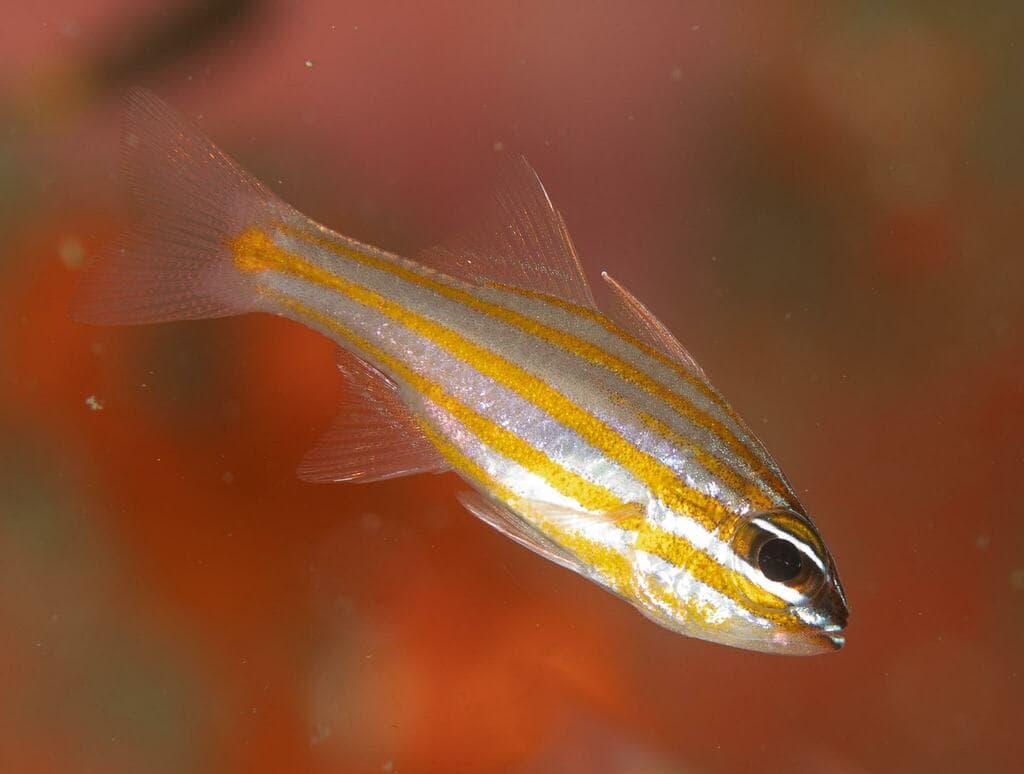
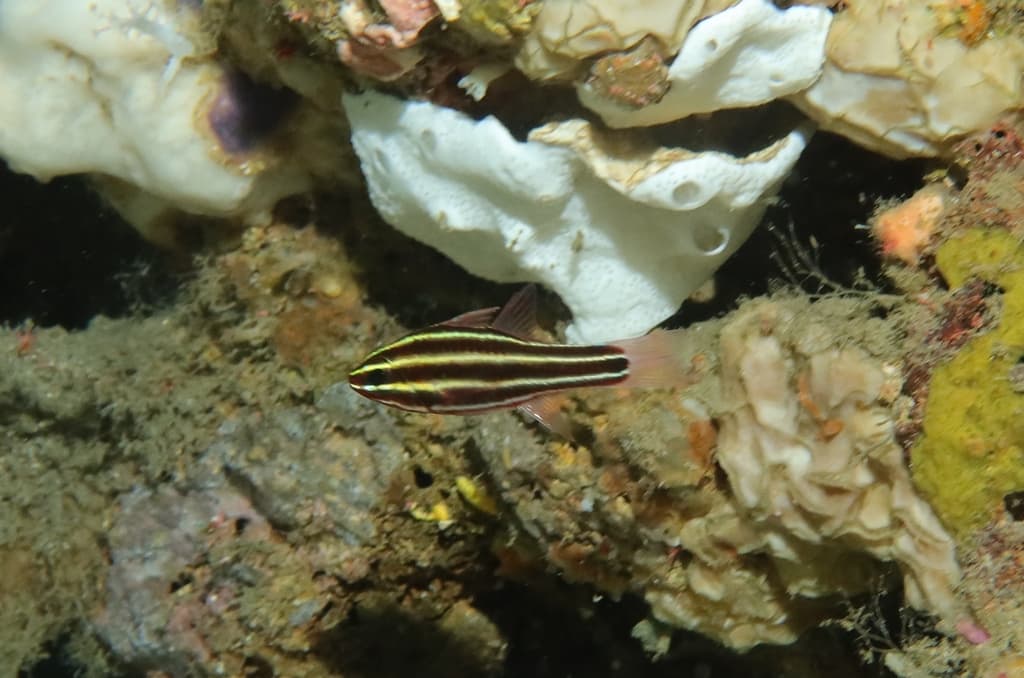
The Blackstripe Cardinalfish is a subtly attractive species characterized by a prominent dark horizontal stripe running along the length of its pale silvery body. Found across the Western Pacific, this species typically inhabits coral reef environments where it takes shelter among branching corals and in reef crevices during the day, venturing out at night to feed. Its understated elegance and peaceful nature make it a welcome addition to community reef aquariums.
Care for the Blackstripe Cardinalfish is straightforward, making it an excellent choice for aquarists of all skill levels. This hardy species adapts well to captive conditions and readily accepts a variety of commercially available foods. It is a social species that benefits from being kept in groups of three or more, which promotes natural schooling behavior and reduces individual stress levels. A well-aquascaped tank with numerous hiding places among live rock will help this species feel secure and display its most natural behaviors.
The Blackstripe Cardinalfish is entirely reef-safe and will not disturb corals or invertebrates. Its gentle, peaceful disposition means it can be safely housed with virtually any non-aggressive community fish. This species is particularly well-suited for nano reef setups and mixed reef aquariums where its calm presence adds to the diversity without creating territorial conflicts.
Feeding & Diet
Carnivore
The Blackstripe Cardinalfish is a carnivore that naturally feeds on small crustaceans and planktonic organisms. In aquariums, it thrives on a diet of frozen mysis shrimp, enriched brine shrimp, and quality marine pellets. Offer food two to three times daily in small amounts.
Compatibility
reef-safepeacefulcommunity-friendlybeginner-friendly
The Blackstripe Cardinalfish is one of the most peaceful marine fish available. It coexists beautifully with clownfish, gobies, blennies, dartfish, and other cardinalfish. Avoid housing with large aggressive species.
Check CompatibilityBreeding
Moderate
This species is a paternal mouthbrooder, with the male carrying eggs in his mouth until hatching. Pairs can be encouraged to breed in captivity with good nutrition and stable water conditions.
Special Requirements
- Provide rockwork with caves and crevices for daytime shelter
- Keep in groups of 3 or more for schooling behavior
- Nocturnal - dim lighting preferred in at least part of the tank
- Best suited for peaceful community tanks
Water Parameters
Temperature72–80°F
Specific Gravity1.02–1.026 sg
pH8.1–8.4
Alkalinity8–12 dKH
Coloration
silverblackwhite
Tags
reef-safepeacefulcommunity-friendlybeginner-friendly