BeginnerPeacefulReef Safe
Blackbelt Cardinalfish
Apogon nigrofasciatus
Family: Apogonidae · Cardinalfish
Also known as: Blackbelt Cardinal, Black-banded Cardinalfish
(c) Xavier Rufray, some rights reserved (CC BY-NC)
Max Size
4"
Min Tank
30 gal
Lifespan
4-6 years
Origin
Indo-Pacific
Diet
Carnivore
Swims
Middle
About
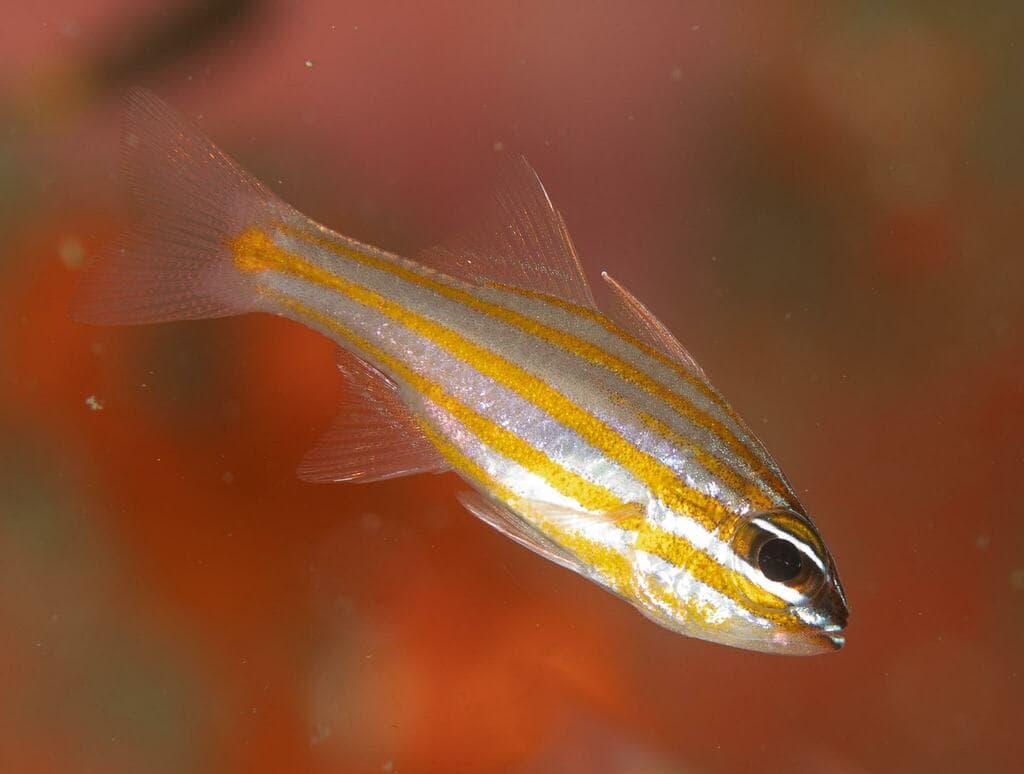
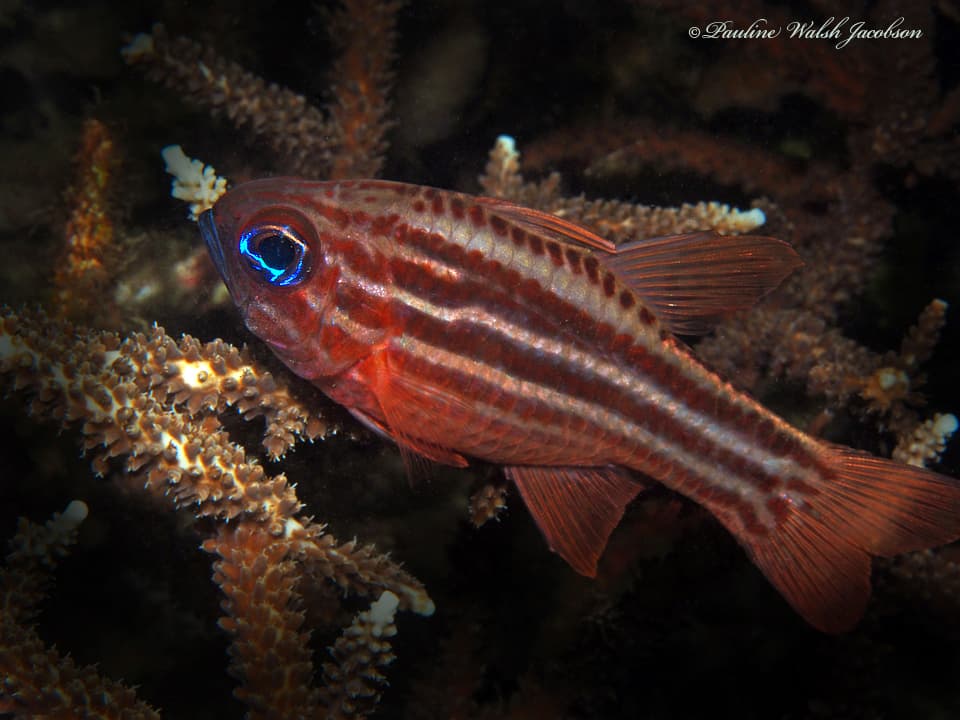
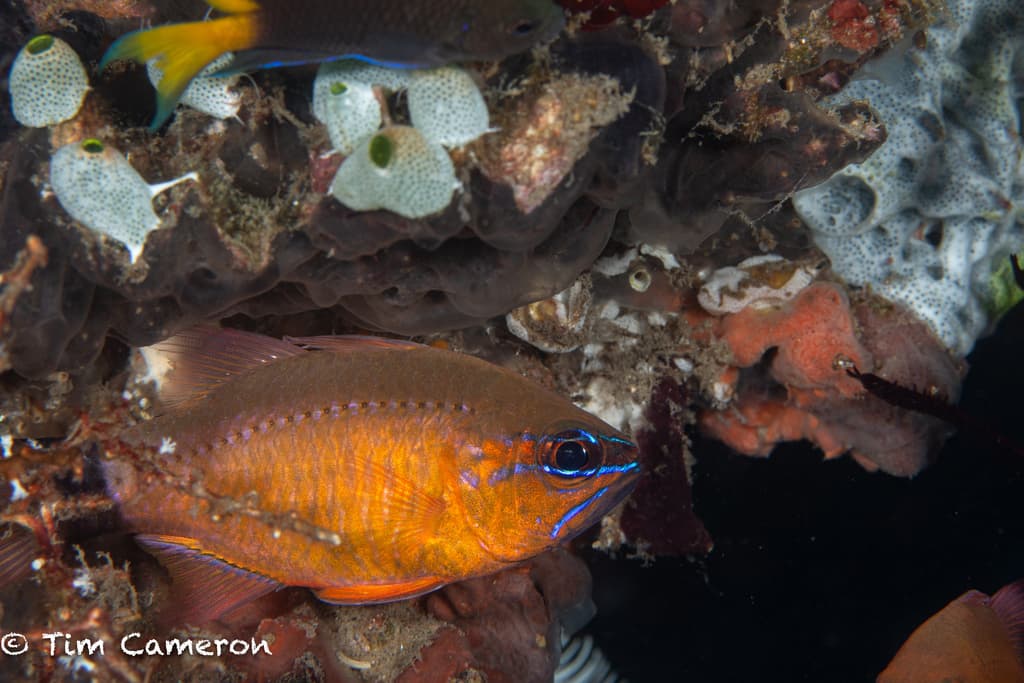
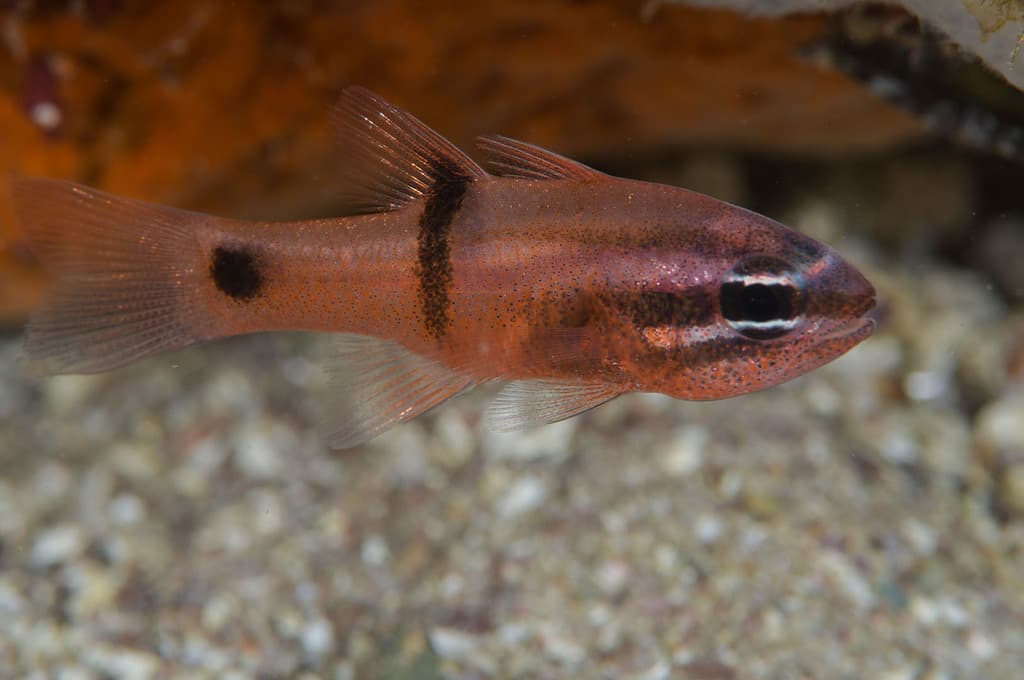
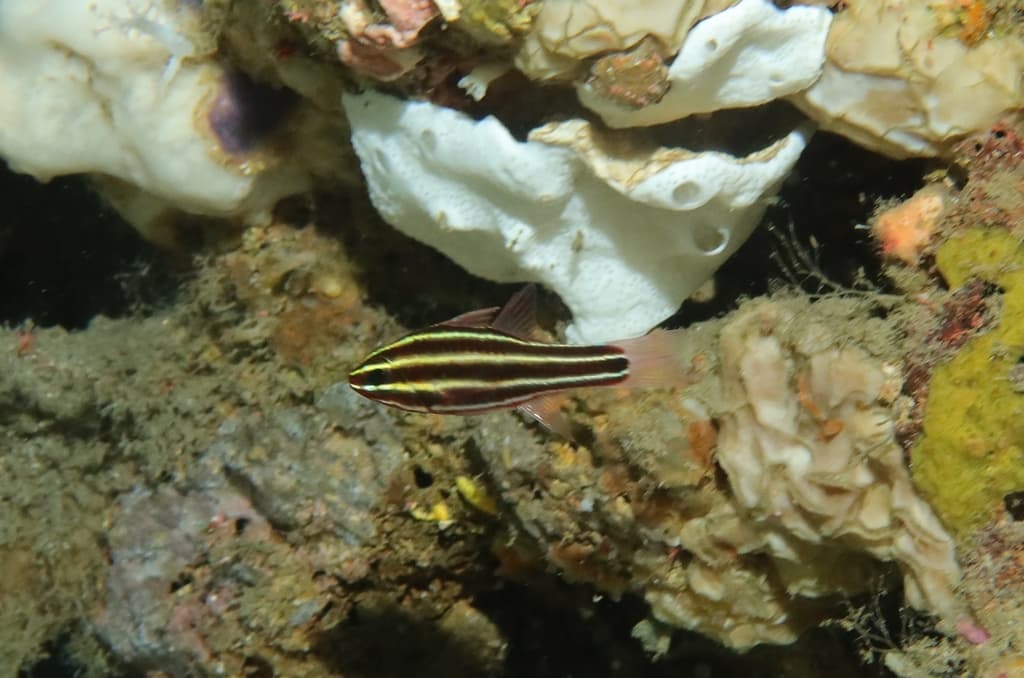
The Blackbelt Cardinalfish is a striking member of the cardinalfish family, easily identified by the bold black belt-like band that encircles its mid-body against a pale silvery-pink background. Native to the Indo-Pacific region, this species is commonly found in sheltered reef environments, lagoons, and around coral heads where it forms loose aggregations with other cardinalfish. Its distinctive marking and manageable size make it an attractive choice for reef aquarium enthusiasts.
In captivity, the Blackbelt Cardinalfish is a wonderfully hardy and easy-to-care-for species. It adapts quickly to aquarium life and accepts a wide range of prepared foods with minimal coaxing. This species thrives when kept in small groups, which encourages its natural schooling behavior and creates an impressive visual display in the aquarium. Provide ample rockwork with caves, crevices, and overhangs to give the fish secure hiding spots, particularly during daylight hours when they tend to be less active.
As a reef-safe species, the Blackbelt Cardinalfish poses no threat to corals, anemones, or invertebrates. Its peaceful temperament makes it compatible with a broad range of community fish. Care should be taken to avoid housing it with overly aggressive species that might intimidate this gentle fish, as stress can lead to reduced feeding and susceptibility to disease.
Feeding & Diet
Carnivore
The Blackbelt Cardinalfish feeds on small crustaceans, copepods, and zooplankton in the wild. In captivity, offer a varied diet of frozen mysis shrimp, enriched brine shrimp, and high-quality marine pellets. Feed two to three times daily in small portions for optimal health.
Compatibility
reef-safepeacefulcommunity-friendlybeginner-friendly
The Blackbelt Cardinalfish is very peaceful and thrives in community reef tanks. It gets along well with clownfish, gobies, blennies, and other peaceful species. Avoid pairing with aggressive or territorial fish.
Check CompatibilityBreeding
Moderate
The Blackbelt Cardinalfish is a paternal mouthbrooder. The male carries the fertilized eggs in his mouth for approximately two to three weeks until they hatch. Breeding can be achieved in captivity with well-conditioned pairs.
Special Requirements
- Provide rockwork with caves and overhangs for shelter
- Keep in groups of 3 or more for natural schooling behavior
- Nocturnal species - provide areas of dim lighting
- Avoid housing with aggressive tankmates
Water Parameters
Temperature72–80°F
Specific Gravity1.02–1.026 sg
pH8.1–8.4
Alkalinity8–12 dKH
Coloration
silverpinkblack
Tags
reef-safepeacefulcommunity-friendlybeginner-friendly