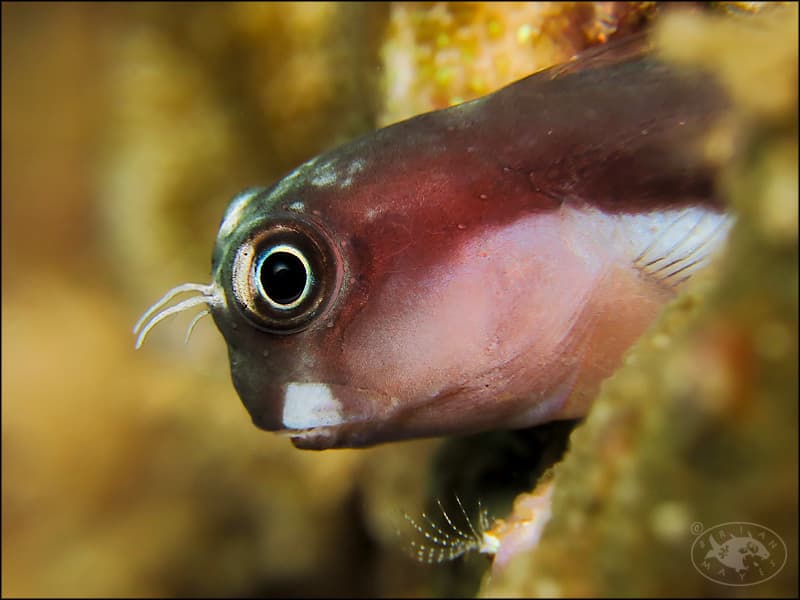
BeginnerPeacefulReef SafeIUCN: Not Evaluated
Bicolor Blenny
Ecsenius bicolor
Family: Blenniidae · Blennies
Also known as: Two-colored Blenny, Flame Tail Blenny, Two-tone Blenny
(c) Brian Mayes, all rights reserved
Max Size
4"
Min Tank
30 gal
Lifespan
4-6 years
Origin
Indo-Pacific, Indonesia
Diet
Herbivore
Swims
Bottom
Did You Know?
- The Bicolor Blenny can change the intensity of its coloration depending on mood, becoming darker when stressed or displaying dominance
- Like all combtooth blennies, it has a row of tiny, closely-set teeth resembling a comb that are perfectly adapted for scraping algae from hard surfaces
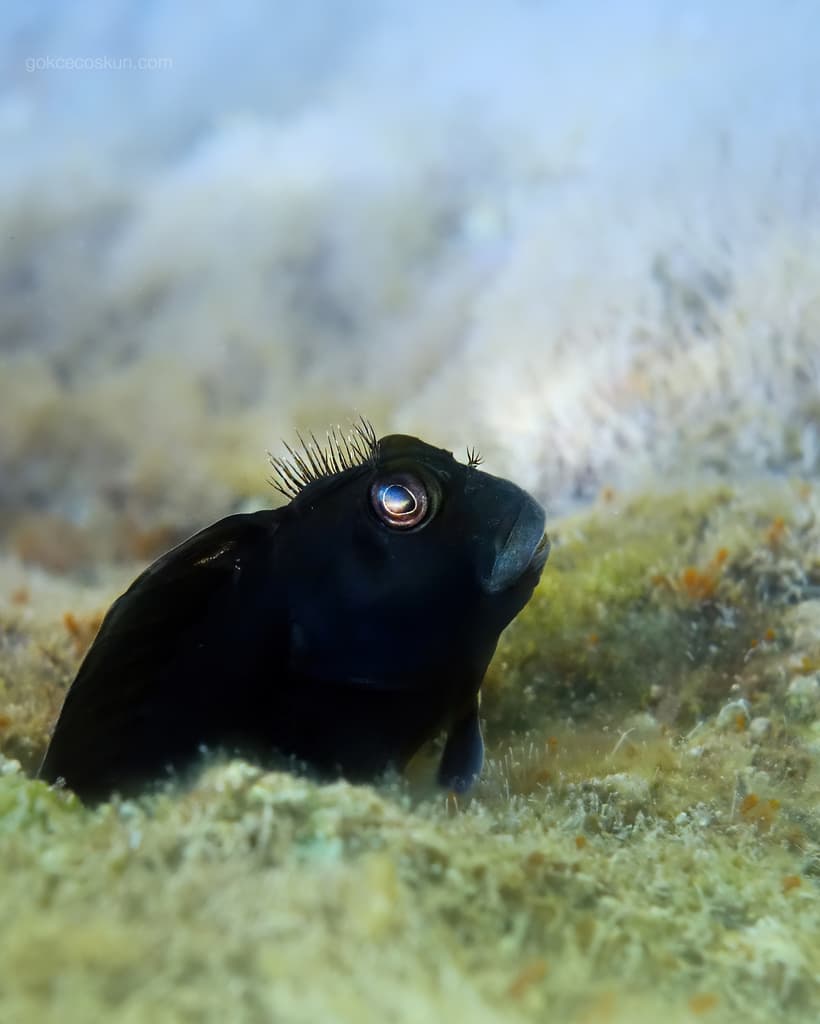
- Bicolor Blennies are known for their expressive faces and curious behavior, often peering out from their holes with what appears to be a perpetual look of surprise
About
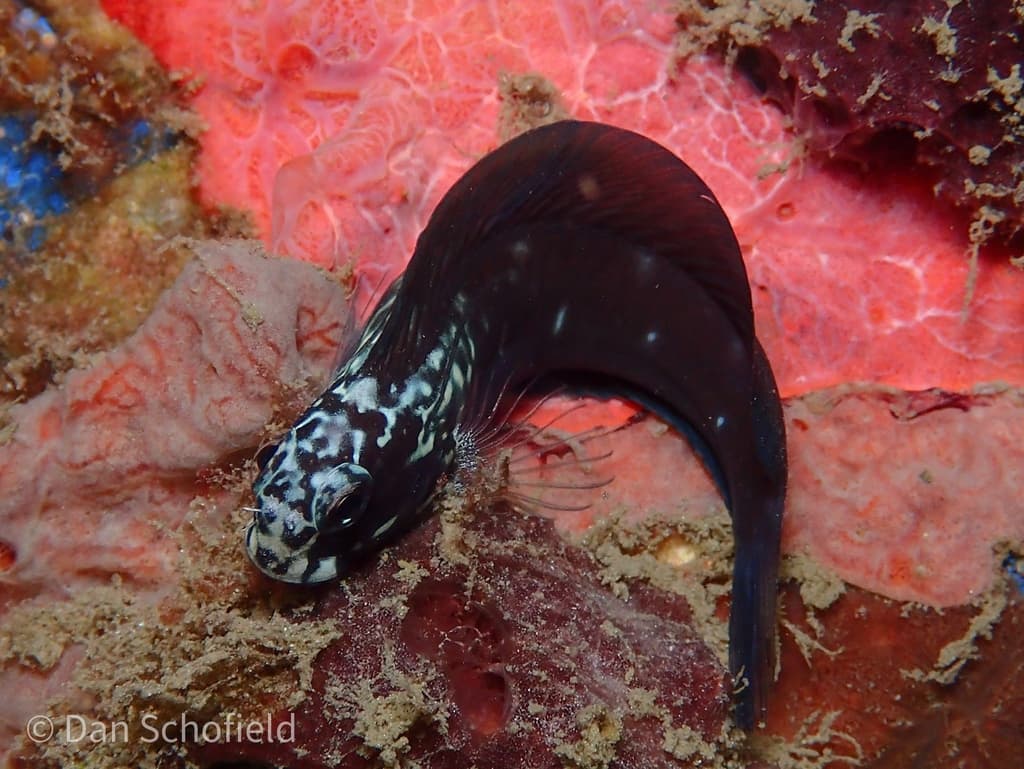
The Bicolor Blenny is a charming and widely kept combtooth blenny that derives its name from its distinctive two-tone coloration: a dark brown to dusky blue-black anterior half transitions abruptly into a bright orange to rusty-red posterior half. This clean bicolored pattern, combined with its expressive, high-set eyes and the characteristically impish blenny facial features complete with fringed cirri above the eyes, gives the Bicolor Blenny an endearing personality that quickly wins over aquarists.
In the wild, the Bicolor Blenny is found throughout the Indo-Pacific on coral reefs and rubble zones, where it perches on rock surfaces and darts between crevices while grazing on microalgae. Like other members of the genus Ecsenius, it is primarily an herbivore that uses its comblike teeth to scrape algae from hard surfaces. In the aquarium, this natural grazing behavior makes the Bicolor Blenny a useful, if modest, contributor to algae control on live rock and glass surfaces. It will establish a favorite perching spot, typically a hole or crevice in the rockwork, from which it surveys its territory with alert, swiveling eyes.
The Bicolor Blenny is an excellent beginner fish that is hardy, disease-resistant, and readily available at affordable prices. It adapts quickly to aquarium life and will soon accept a variety of prepared foods in addition to its natural algae diet. However, aquarists should be aware that some individuals may occasionally nip at the mantles of large-polyp stony corals or clam mantles, particularly if underfed. Keeping the fish well-fed with vegetable-rich foods minimizes this risk. The Bicolor Blenny's combination of personality, utility as an algae grazer, and ease of care make it one of the most popular blennies in the hobby.
Feeding & Diet
Herbivore
The Bicolor Blenny is primarily an herbivore that grazes on filamentous microalgae using its comblike teeth. In captivity, provide Spirulina-based flake or pellet foods, marine algae sheets (nori), and frozen preparations containing vegetable matter. It will also accept frozen mysis shrimp and enriched brine shrimp as supplemental protein. A tank with natural algae growth on live rock provides continuous grazing opportunities between feedings. Feed two to three times daily to prevent potential coral nipping.
Compatibility
reef-safepeacefulalgae-grazerbeginner-friendlycommunity-safeherbivore
The Bicolor Blenny is peaceful toward most tankmates but can be territorial toward other blennies and fish of similar size and shape. Only one blenny per tank is generally recommended unless the aquarium is large enough to support separate territories. Compatible with clownfish, tangs, gobies, wrasses, and most other peaceful to semi-aggressive community fish. Monitor around LPS corals and clams. Avoid keeping with aggressive species that may bully the blenny.
Check CompatibilityBreeding
Difficult
Bicolor Blennies are egg-layers that deposit adhesive eggs in small crevices or abandoned shells. The male guards and aerates the eggs until hatching, which takes approximately one week. Males can be distinguished from females by their slightly larger size and more elaborate head cirri. Larvae are small and pelagic, requiring rotifers and phytoplankton as first foods. Captive breeding has been achieved but is not common in the hobby.
Special Requirements
- Provide rockwork with small holes and crevices for perching and hiding
- May occasionally nip at LPS coral mantles or clam mantles if underfed
- Keep well-fed with algae-based foods to minimize coral nipping risk
- Only one blenny per tank unless the tank is very large
- Benefits from natural algae growth on live rock
- Known to jump - a tight-fitting lid is recommended
Water Parameters
Temperature72–82°F
Specific Gravity1.02–1.026 sg
pH8–8.4
Alkalinity8–12 dKH
Coloration
brownorangeblueblack
Tags
reef-safepeacefulalgae-grazerbeginner-friendlycommunity-safeherbivore