AdvancedPeacefulReef SafeIUCN: Not Evaluated
Sunburst Anthias
Serranocirrhitus latus
Family: Serranidae · Anthias
Also known as: Fathead Anthias, Fathead Sunburst Anthias, Hawkfish Anthias
(c) Zack, some rights reserved (CC BY-NC)
Max Size
5"
Min Tank
75 gal
Lifespan
5-8 years
Origin
Western Pacific, Japan
Diet
Planktivore
Swims
Middle
Did You Know?
- The Sunburst Anthias is sometimes called the Hawkfish Anthias because it perches on rocks and coral heads rather than hovering in the water column like other anthias
- Unlike most anthias that form harems and schools, the Sunburst Anthias is typically solitary or found in pairs in the wild
About
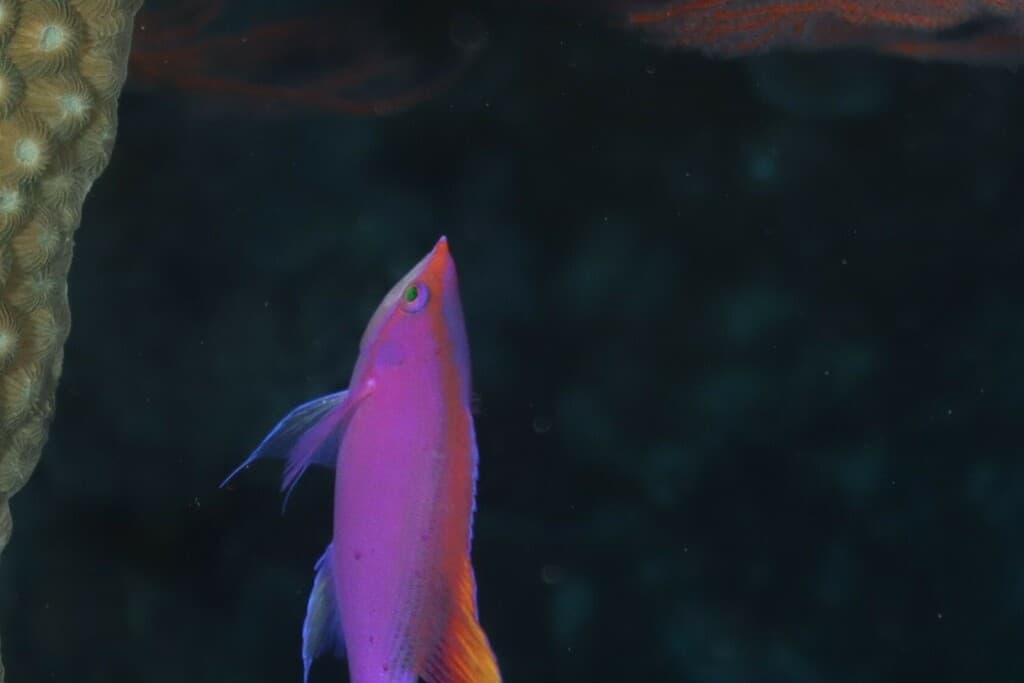
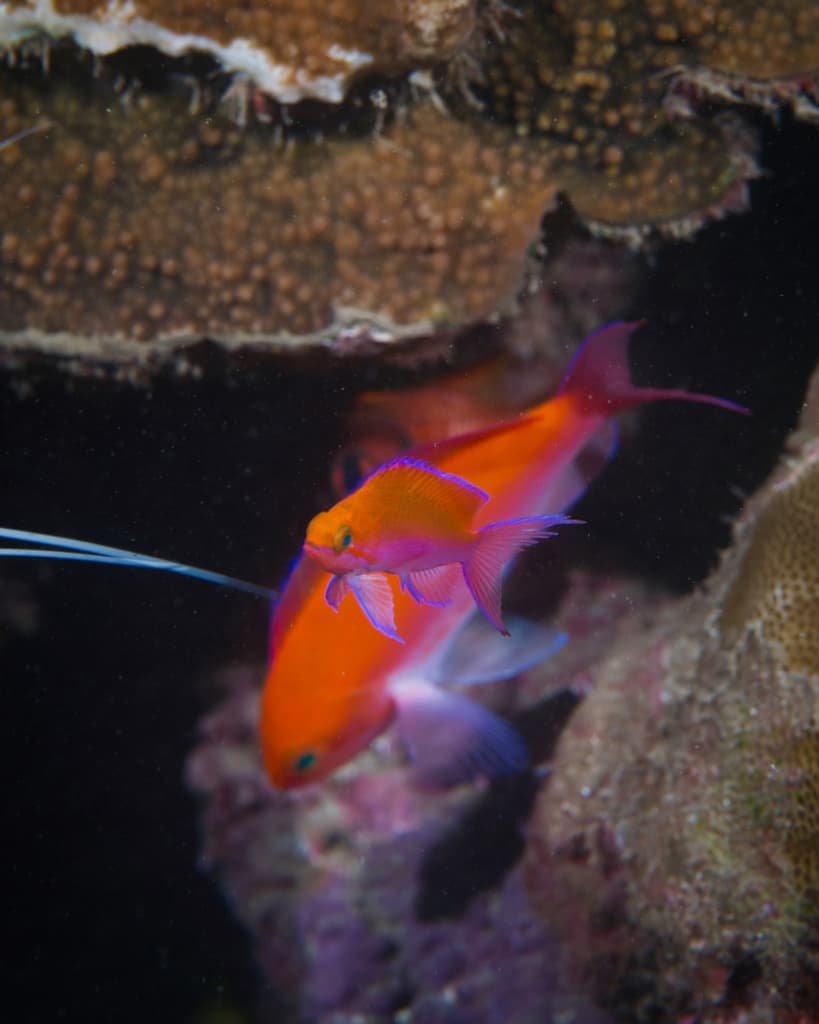
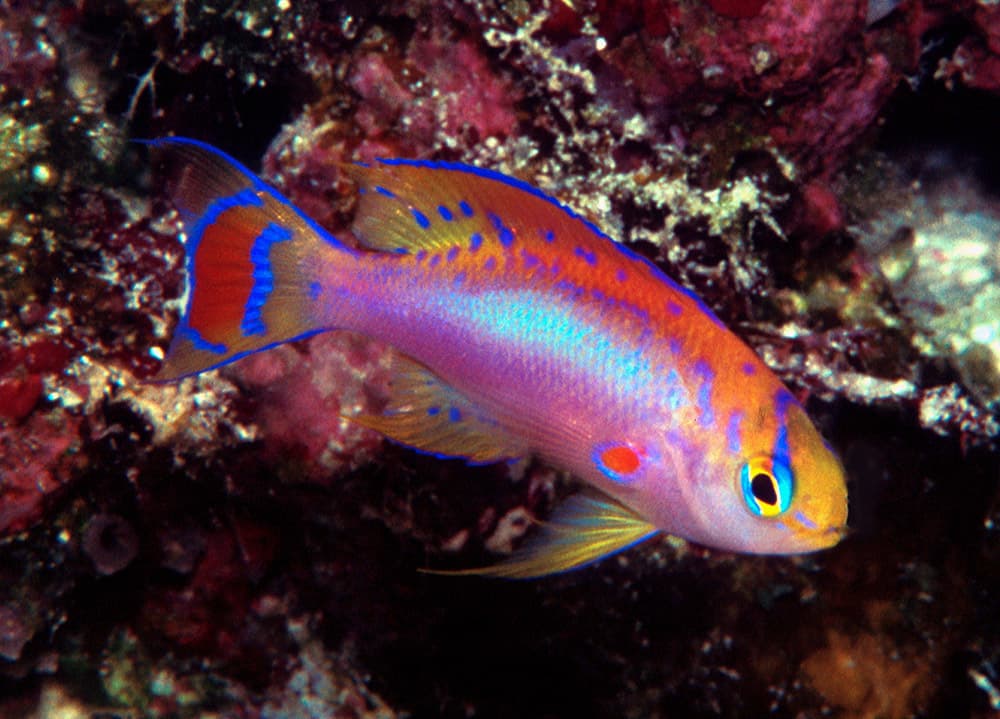
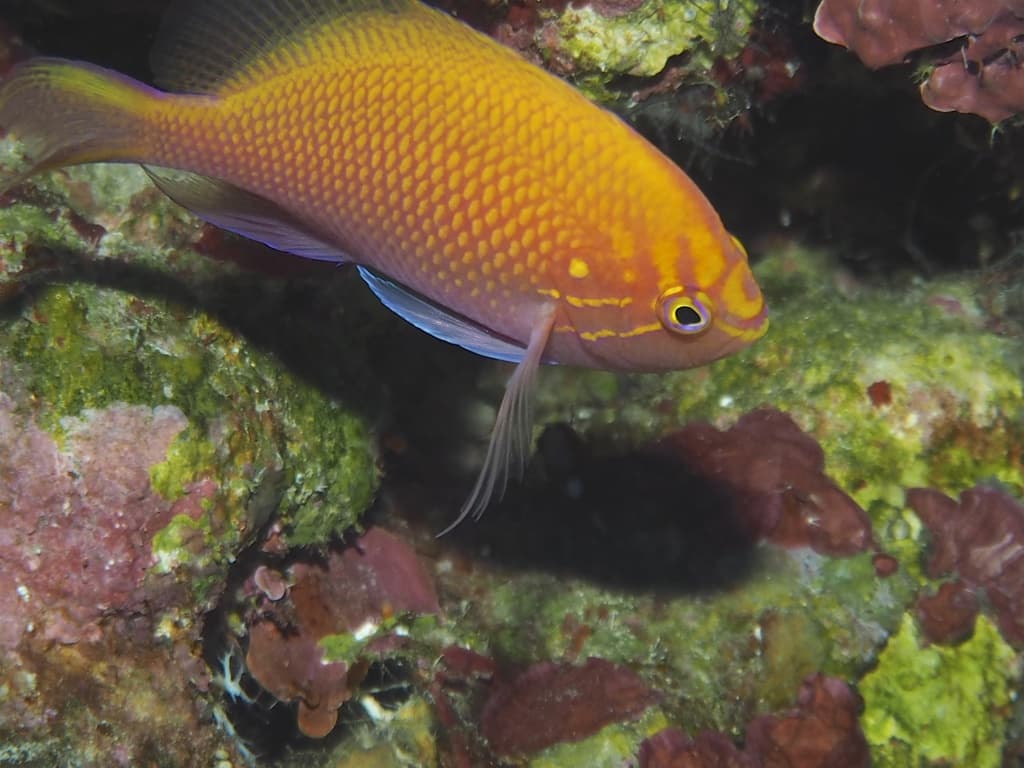
The Sunburst Anthias is a uniquely beautiful species that stands apart from other anthias both in appearance and behavior. Its body displays a stunning gradient of warm sunset colors, ranging from deep orange-red on the head and upper body to bright yellow on the lower flanks and belly, often accented with purple and pink highlights around the head and operculum. The species has a distinctively stocky, robust body shape with a large head that has earned it the alternative common name of Fathead Anthias. Unlike the typical slender, streamlined anthias, the Sunburst has a chunky build more reminiscent of a hawkfish.
This behavioral similarity to hawkfish extends beyond mere body shape. The Sunburst Anthias is a solitary or semi-solitary species that frequently perches on rock ledges and coral heads rather than hovering in the water column like most anthias. It is less dependent on continuous planktonic feeding than its relatives and more readily accepts prepared foods, making it somewhat easier to maintain in terms of feeding frequency. However, it compensates for this advantage by being more secretive and requiring a well-aquascaped tank with numerous hiding spots and shaded areas where it feels secure.
The Sunburst Anthias is classified as an advanced-level species primarily because of its initial sensitivity during acclimation and its preference for lower-light environments with plenty of caves and overhangs. It is typically collected from deep reef habitats and requires careful decompression handling. Once established, however, it becomes a bold and personable aquarium inhabitant. It is best kept singly or in mated pairs rather than in groups, distinguishing it further from the schooling anthias species. A 75-gallon aquarium with mature live rock and stable water parameters provides an ideal home.
Feeding & Diet
Planktivore
Sunburst Anthias are planktivores that feed on zooplankton and small benthic invertebrates. In captivity, they accept frozen mysis shrimp, enriched brine shrimp, cyclopeeze, and high-quality marine pellets more readily than many anthias species. Feed two to three times daily. While less demanding than schooling anthias, consistent feeding is still important for long-term health.
Compatibility
reef-safepeacefulsolitarycommunity-safecave-dweller
The Sunburst Anthias is a peaceful species that coexists well with most reef community fish. Unlike schooling anthias, it is best kept singly or in pairs. It may be timid initially and should not be housed with aggressive species that could outcompete it for food or territory. Excellent companions include clownfish, gobies, blennies, other peaceful anthias species, and small wrasses. It will not bother corals or invertebrates.
Check CompatibilityBreeding
Very Difficult
Sunburst Anthias have been spawned in captivity on very rare occasions but successful larval rearing remains extremely uncommon. Unlike most anthias that form harems, this species tends to form monogamous pairs. Spawning occurs at dusk with the release of pelagic eggs. The unique solitary nature of this species and its deep-water origin present additional challenges for captive breeding efforts.
Special Requirements
- Provide caves, overhangs, and shaded areas for security
- Prefers subdued lighting or areas with shade
- Best kept singly or in mated pairs rather than groups
- Requires careful acclimation - often collected from deep water
- Mature aquarium with established live rock preferred
- Feed two to three times daily with varied diet
Water Parameters
Temperature72–82°F
Specific Gravity1.02–1.026 sg
pH8–8.4
Alkalinity8–12 dKH
Coloration
orangeredyellowpurplepink
Tags
reef-safepeacefulsolitarycommunity-safecave-dweller