AdvancedPeacefulReef SafeIUCN: Not Evaluated
Bicolor Anthias
Pseudanthias bicolor
Family: Serranidae · Anthias
Also known as: Bicolor Fairy Basslet, Two-colored Anthias
(c) David R, some rights reserved (CC BY-NC)
Max Size
5"
Min Tank
75 gal
Lifespan
4-6 years
Origin
Indo-Pacific, Maldives
Diet
Planktivore
Swims
Top
Did You Know?
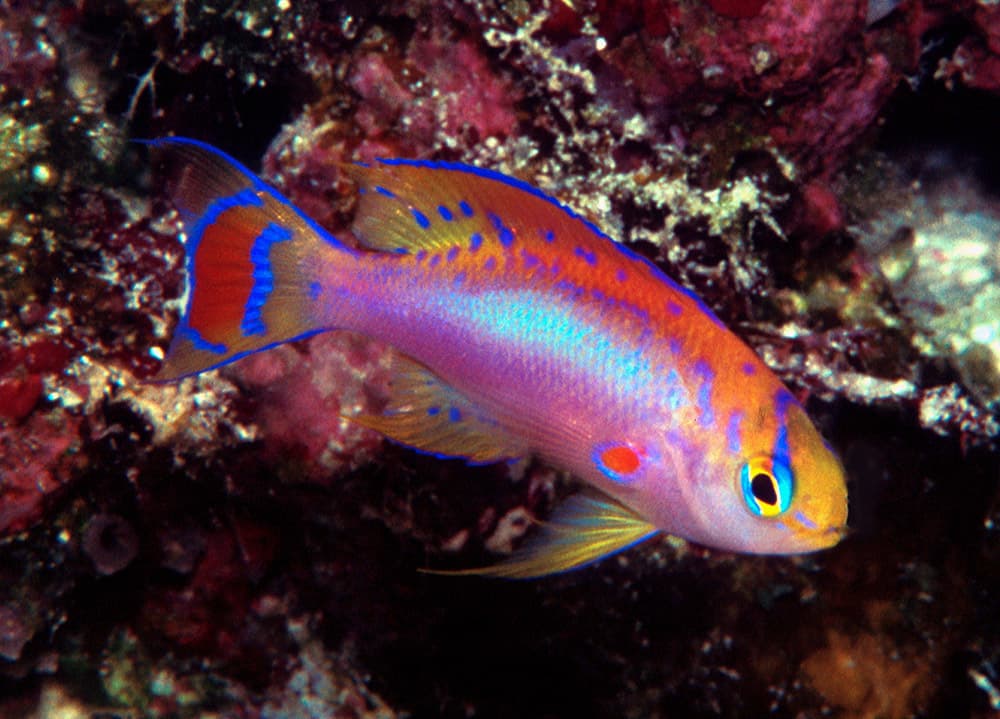
- The Bicolor Anthias gets its name from the sharp division between its purple upper body and golden-yellow lower body in males
- When a dominant male is lost from a group, the highest-ranking female will change sex and develop full male coloration within a few weeks
About
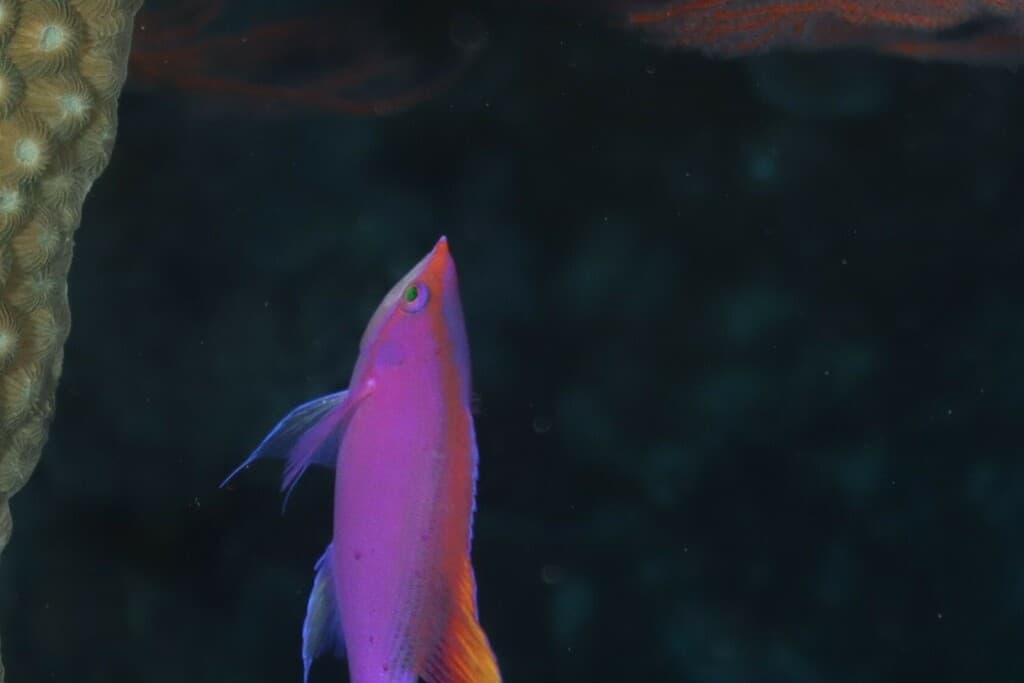
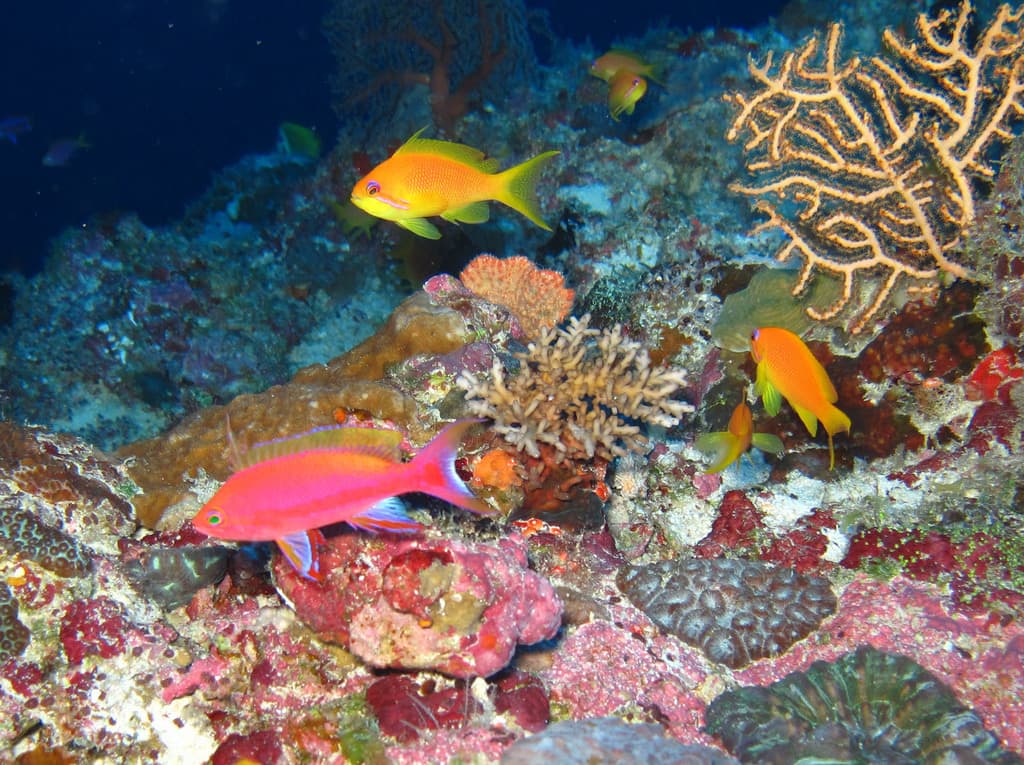
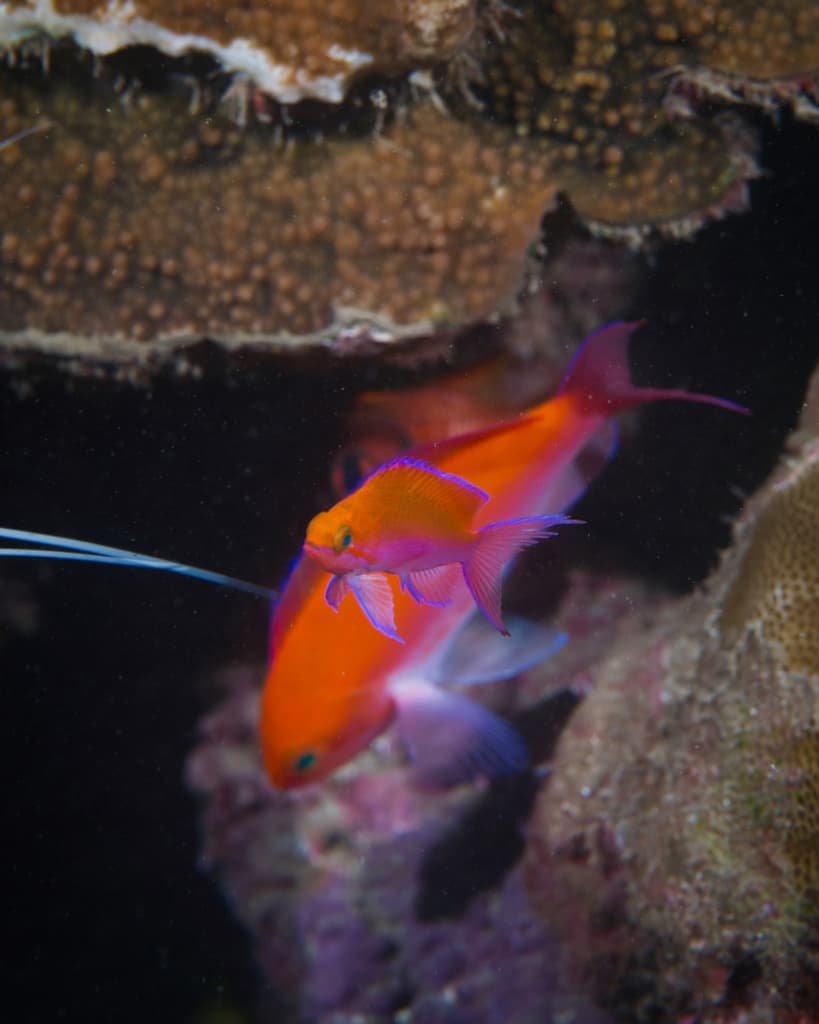
The Bicolor Anthias is a visually striking species named for its distinctive two-toned coloration. Males exhibit a vivid purple to violet upper body that transitions sharply into a bright golden-yellow lower half, creating a dramatic bicolor effect that is instantly recognizable. Females are more uniformly colored in soft shades of lavender and orange. Reaching approximately 5 inches in length, this is a medium-sized anthias that makes a beautiful addition to larger reef aquariums, though it demands more advanced husbandry skills than some of its relatives.
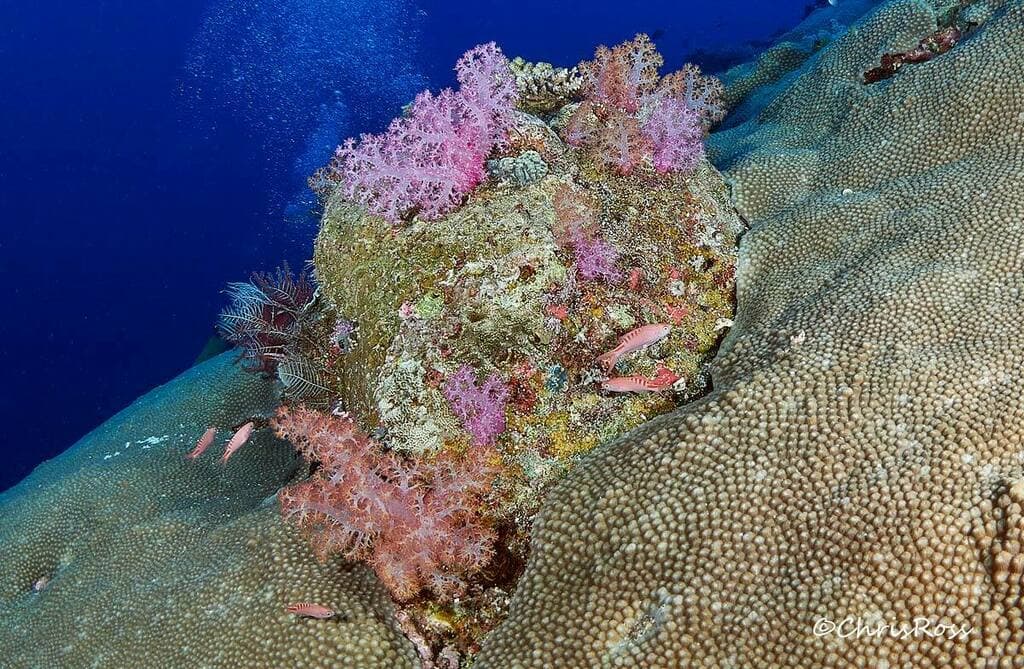
In the wild, Bicolor Anthias are found along steep outer reef slopes and drop-offs throughout the Indo-Pacific, typically at moderate depths where currents deliver a steady supply of zooplankton. They form loose aggregations with a dominant male presiding over a harem of females. Like all members of the genus Pseudanthias, they are protogynous hermaphrodites, with the most dominant female undergoing a sex change to replace a lost male. This transformation involves dramatic changes in both coloration and behavior over the course of several weeks.
The Bicolor Anthias is classified as an advanced-level species because it can be more challenging to acclimate and maintain than hardier anthias such as the Lyretail or Dispar. It is particularly sensitive during the initial adjustment period and may refuse food for several days after introduction. Once settled, however, it becomes a robust and responsive aquarium inhabitant. Multiple daily feedings of high-quality frozen and prepared foods are essential, and pristine water quality with strong flow replicating its natural current-swept habitat is a must. Keep in groups of one male with several females in a 75-gallon or larger aquarium.
Feeding & Diet
Planktivore
Bicolor Anthias are planktivores that feed continuously on zooplankton in the wild. In captivity, offer multiple small feedings daily of frozen mysis shrimp, enriched brine shrimp, cyclopeeze, finely chopped seafood, and high-quality marine pellets. Feed at least three to four times daily. An automatic feeder is strongly recommended to prevent nutritional decline between manual feedings.
Compatibility
reef-safepeacefulschoolingcommunity-safeplanktivore
Bicolor Anthias are peaceful reef fish that coexist well with other non-aggressive species. Males may display aggression toward each other and toward males of other anthias species, so keep only one male per group unless the system is very large. Compatible with clownfish, tangs, wrasses, gobies, and other peaceful community fish. Avoid keeping with aggressive species that may stress or outcompete them for food.
Check CompatibilityBreeding
Very Difficult
Bicolor Anthias are protogynous hermaphrodites. The dominant male spawns with individual females at dusk, rising into the water column to release pelagic eggs. If the male is lost, the dominant female will undergo a sex change over several weeks, developing male coloration and behavior. Captive breeding has not been achieved due to the tiny larval size and complex feeding requirements of the larvae.
Special Requirements
- Requires multiple feedings per day (3-4 minimum)
- Best kept in groups with one male and several females
- Strong water flow recommended to replicate natural habitat
- Automatic feeder strongly recommended
- May be slow to acclimate - patience required during initial period
- Pristine water quality essential
Water Parameters
Temperature72–82°F
Specific Gravity1.02–1.026 sg
pH8–8.4
Alkalinity8–12 dKH
Coloration
purplevioletyellowgoldlavenderorange
Tags
reef-safepeacefulschoolingcommunity-safeplanktivore