AdvancedPeacefulReef Safe
Lori's Anthias
Pseudanthias lori
Family: Serranidae · Anthias
Also known as: Lori's Fairy Bass, Tiger Queen Anthias
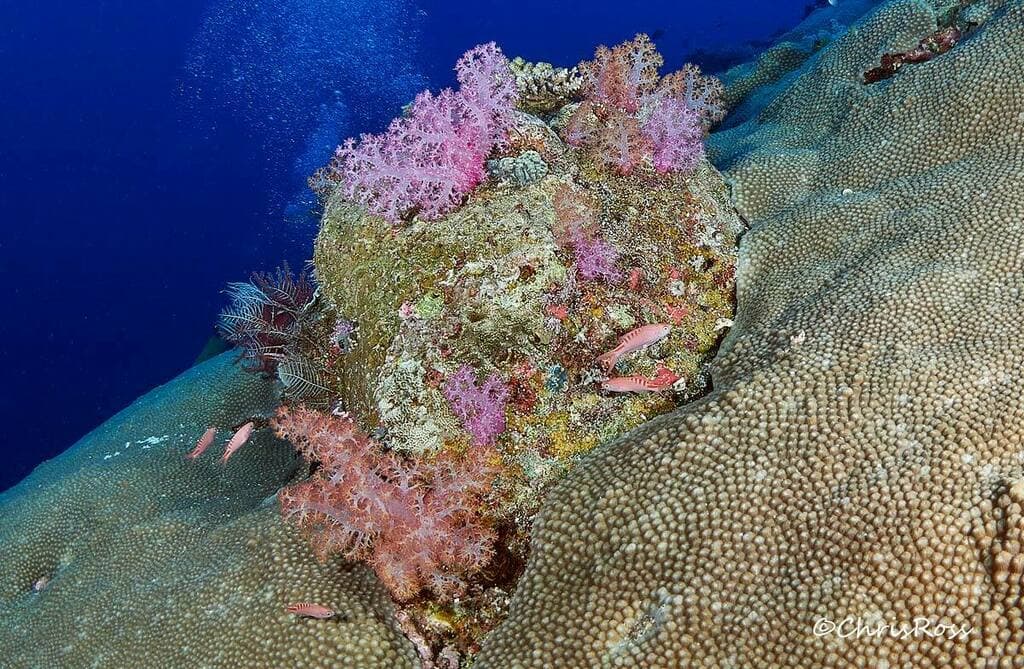
(c) chrisross, some rights reserved (CC BY-NC)
Max Size
5"
Min Tank
70 gal
Lifespan
5-7 years
Origin
Pacific Ocean, Marshall Islands
Diet
Planktivore
Swims
Middle
About
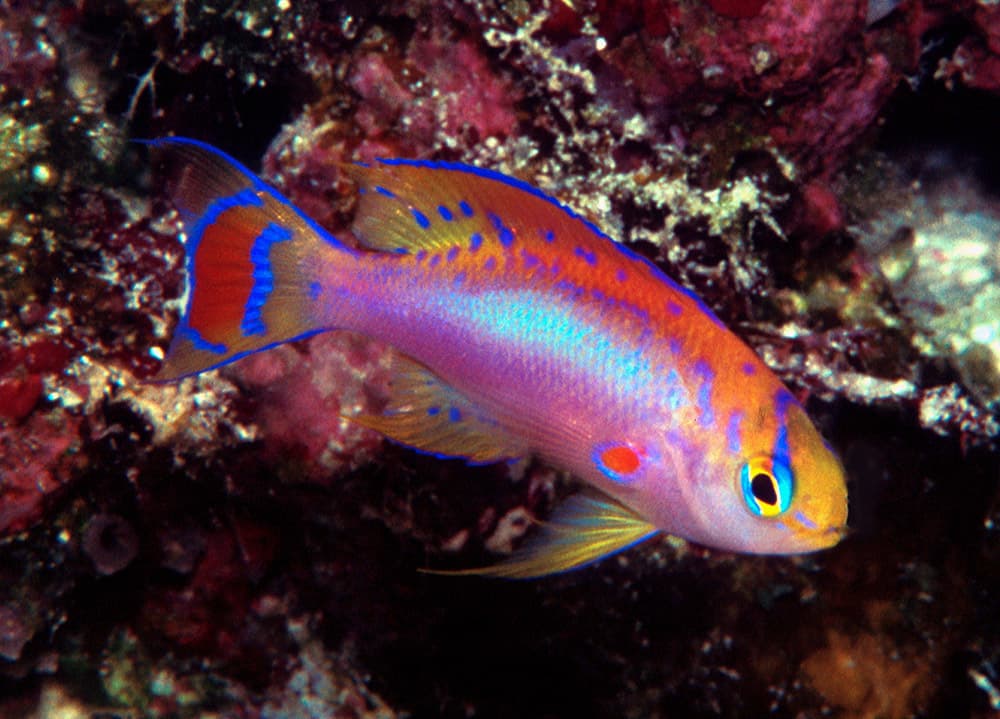
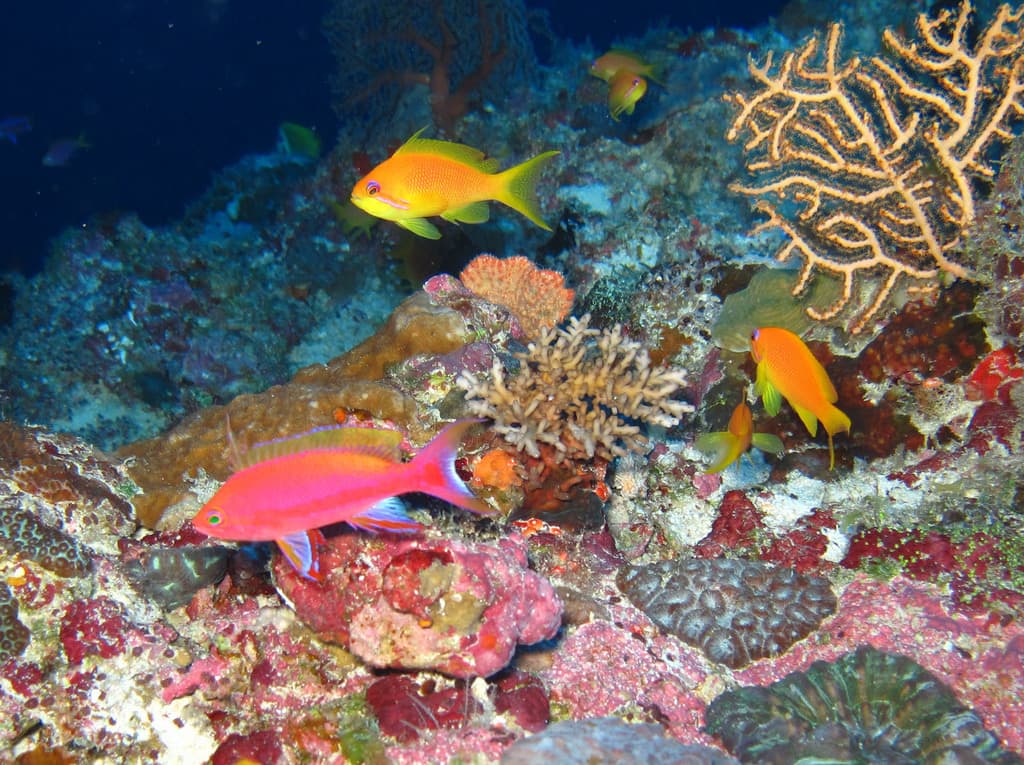
Lori's Anthias is a stunning deep-water species prized by anthias enthusiasts for its delicate beauty and challenging care requirements. Males display a gorgeous combination of pink to rose-red body coloration with bright yellow accents on the dorsal fin and caudal fin margins, along with distinctive striped facial markings. Females are more subtly colored in soft pink with a thin yellow dorsal streak. Found primarily in the Pacific Ocean, this species inhabits deep outer reef walls and slopes at depths typically ranging from 30 to 60 meters.
As a deep-water anthias, Lori's Anthias is considered difficult to maintain in captivity. The transition from deep reef conditions to the warmer, brighter aquarium environment requires careful acclimation, and many specimens struggle to adapt to prepared foods initially. Patience and a varied diet of enriched frozen foods, offered multiple times throughout the day, are essential for success with this species.
Lori's Anthias should be kept in a small harem with one male and two to four females in a tank with subdued lighting zones and cooler water temperatures than typical reef setups. Strong water flow simulating the currents of deep reef walls is appreciated. Despite the challenges, successfully maintaining a group of these anthias is deeply rewarding, as their elegant coloration and graceful swimming behavior are truly captivating.
Feeding & Diet
Planktivore
Lori's Anthias are planktivores that feed on zooplankton in the wild. Offer frozen mysis shrimp, enriched brine shrimp, cyclopeeze, and finely chopped seafood. Feed at least three times daily. May require patient training onto prepared foods.
Compatibility
reef-safepeacefulschoolingcommunity-safeplanktivore
Lori's Anthias are peaceful and should be housed with calm, non-aggressive tankmates. Avoid boisterous feeders that may outcompete them. They mix well with other peaceful reef fish but should not be combined with aggressive species.
Check CompatibilityBreeding
Very Difficult
Lori's Anthias are protogynous hermaphrodites. No successful captive breeding has been documented. Their deep-water origin and delicate larval requirements make breeding prospects extremely challenging.
Special Requirements
- Requires multiple feedings per day (3+ minimum)
- Best kept in a harem of one male with several females
- Prefers cooler water temperatures (deep-water species)
- Subdued lighting with shaded areas preferred
- Strong water flow to simulate deep reef currents
- Automatic feeder essential for consistent feeding
Water Parameters
Temperature70–76°F
Specific Gravity1.02–1.026 sg
pH8.1–8.4
Alkalinity8–12 dKH
Coloration
pinkroseredyellow
Tags
reef-safepeacefulschoolingcommunity-safeplanktivore