IntermediatePeacefulReef Safe
Watanabei Angelfish
Genicanthus watanabei
Family: Pomacanthidae · Large Angelfish
Also known as: Watanabe's Angelfish, Watanabe's Lyretail Angelfish
(c) Mark Rosenstein, some rights reserved (CC BY-NC)
Max Size
6"
Min Tank
100 gal
Lifespan
10-15 years
Origin
Western Pacific, Philippines
Diet
Planktivore
Swims
Middle
About
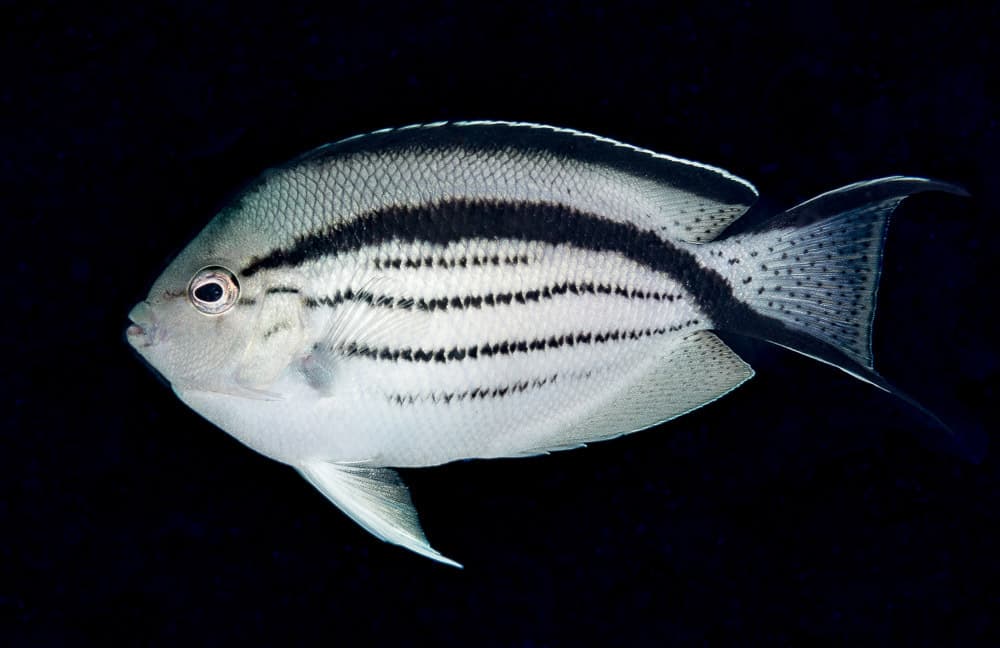
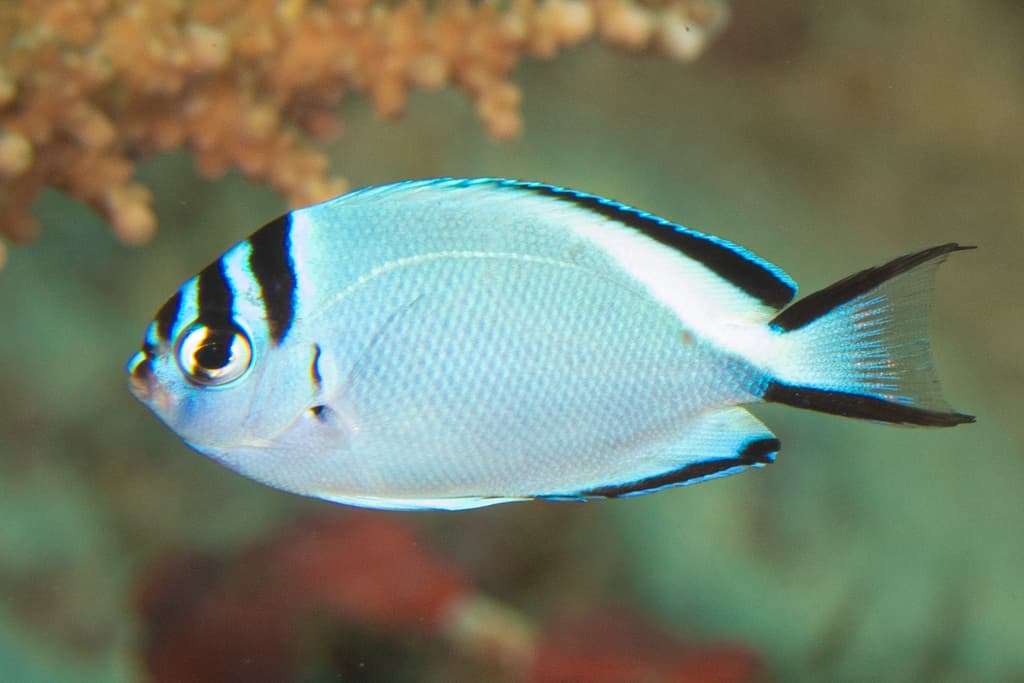
The Watanabei Angelfish is widely regarded as the hardiest and most adaptable member of the reef-safe Genicanthus genus, making it an excellent choice for aquarists seeking a reef-compatible angelfish. Males display a pale blue-white body with thin dark horizontal stripes along the flanks and a distinctive black edge on the caudal fin, while females are more uniformly pale blue-lavender with a subtle dark dorsal margin. The coloration is more understated than some flashier angelfish, but its elegant simplicity and peaceful nature make it a favorite for reef aquariums.
In the wild, Watanabei Angelfish inhabit outer reef walls and steep drop-offs in the western Pacific, typically at depths of 50 to 250 feet. They form harems with one dominant male presiding over several females, swimming in mid-water to feed on passing zooplankton. Like all Genicanthus species, they are protogynous hermaphrodites. Their deep-water origin means they are accustomed to moderate lighting and strong currents, preferences that translate well to aquarium care.
Reaching only about 6 inches, the Watanabei Angelfish is the smallest commonly available Genicanthus species and requires a minimum tank of 100 gallons. It is completely reef-safe, feeding exclusively on zooplankton in the water column without any interest in corals, clams, or other sessile invertebrates. Its hardiness, peaceful temperament, and reef compatibility make it one of the most highly recommended large angelfish for reef enthusiasts, particularly those new to keeping angelfish in reef systems.
Feeding & Diet
Planktivore
Watanabei Angelfish are planktivores that feed on zooplankton in the water column. In captivity, they readily accept enriched frozen mysis shrimp, brine shrimp, cyclops, high-quality pellets, and flake food. They are among the easiest Genicanthus species to transition to prepared foods. Feed several small meals throughout the day.
Compatibility
reef-safepeaceful-communityinvertebrate-safeplanktivorepair-or-harem
Watanabei Angelfish are peaceful and compatible with virtually all reef inhabitants. They can be kept with other Genicanthus species in large systems and are rarely aggressive toward any tankmates. Avoid housing with overly aggressive fish that may harass this gentle species.
Check CompatibilityBreeding
Not bred in captivity
Watanabei Angelfish are protogynous hermaphrodites that spawn at dusk in pairs. The dominant female transitions to male when the existing male is lost. Captive breeding has not been reliably achieved due to the extremely small larval size and specialized rearing requirements.
Special Requirements
- Reef-safe — does not nip at corals or invertebrates
- Hardiest Genicanthus species — excellent for reef angel beginners
- Provide open swimming space with moderate to strong water flow
- Can be kept in male-female pairs or small harems
- Deep-water species that prefers moderate lighting
- Multiple small daily feedings produce best results
Water Parameters
Temperature72–78°F
Specific Gravity1.02–1.026 sg
pH8.1–8.4
Alkalinity8–12 dKH
Coloration
bluewhitelavenderblack
Tags
reef-safepeaceful-communityinvertebrate-safeplanktivorepair-or-harem