IntermediatePeacefulReef Safe
Japanese Swallowtail Angelfish
Genicanthus semifasciatus
Family: Pomacanthidae · Large Angelfish
Also known as: Japanese Angelfish, Half-Banded Angelfish
(c) R Lai, some rights reserved (CC BY-NC)
Max Size
8"
Min Tank
100 gal
Lifespan
10-15 years
Origin
Japan, Northwestern Pacific
Diet
Planktivore
Swims
Middle
About
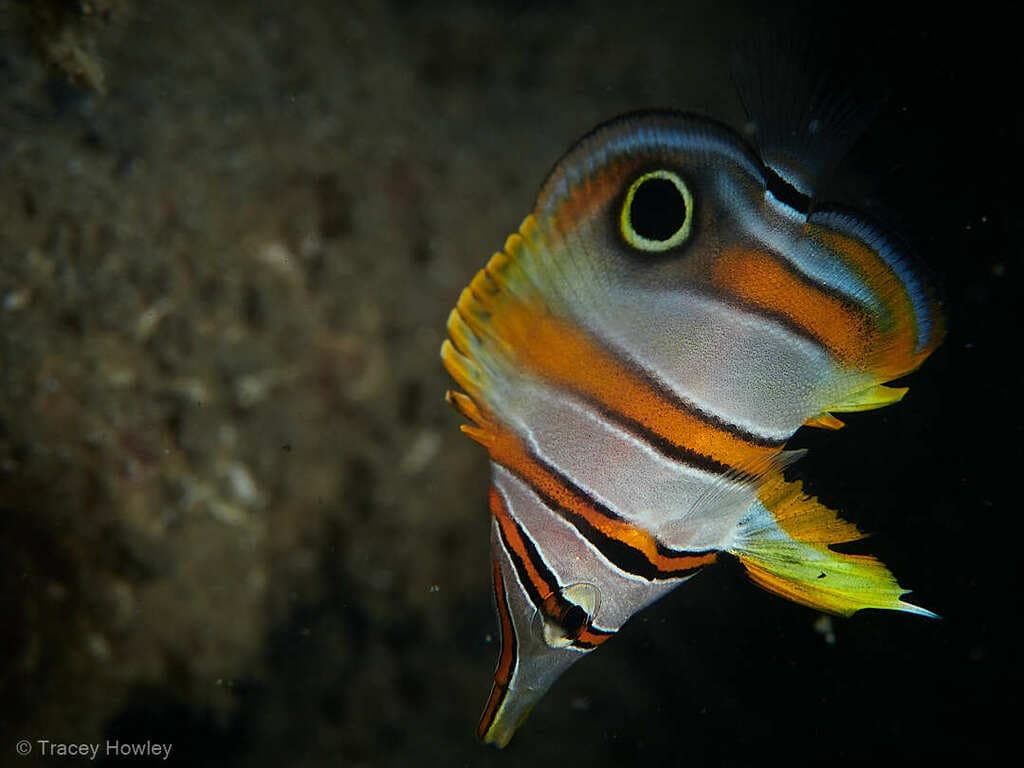
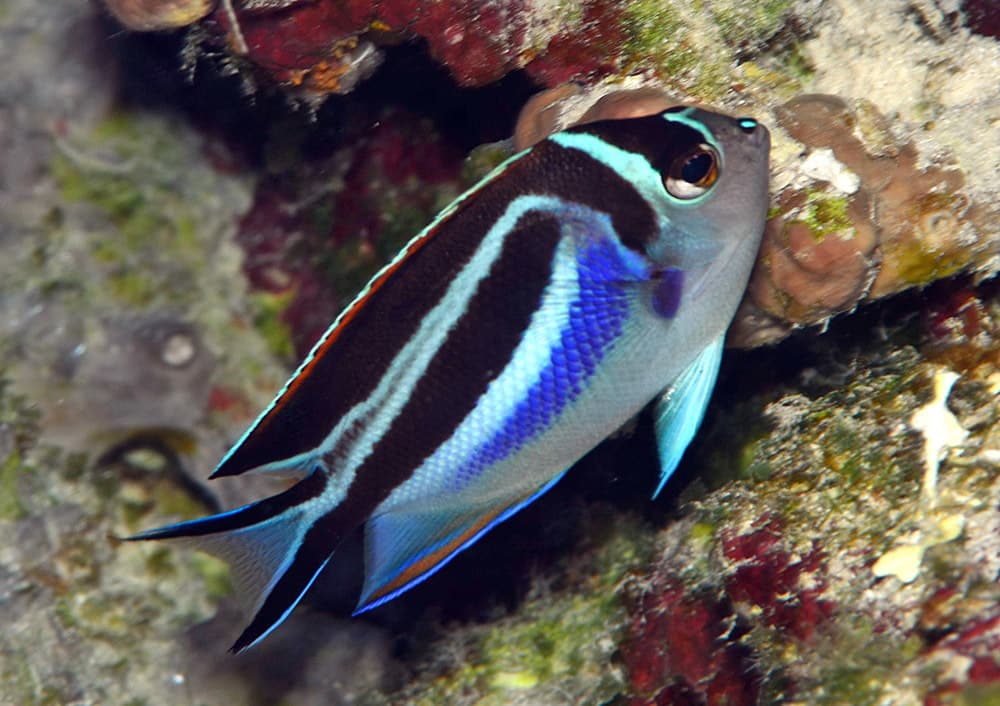
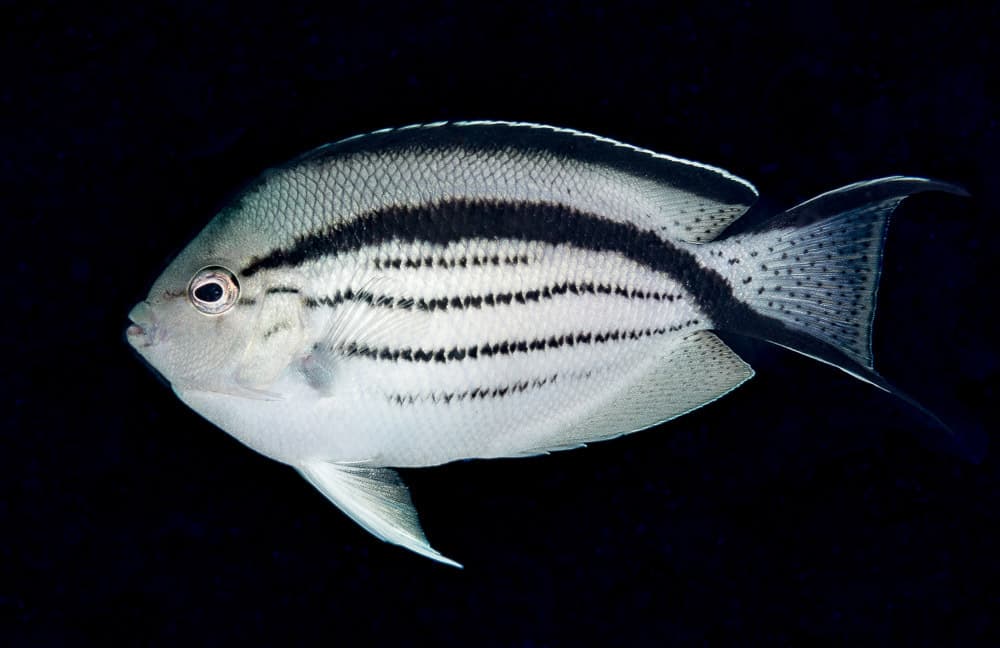
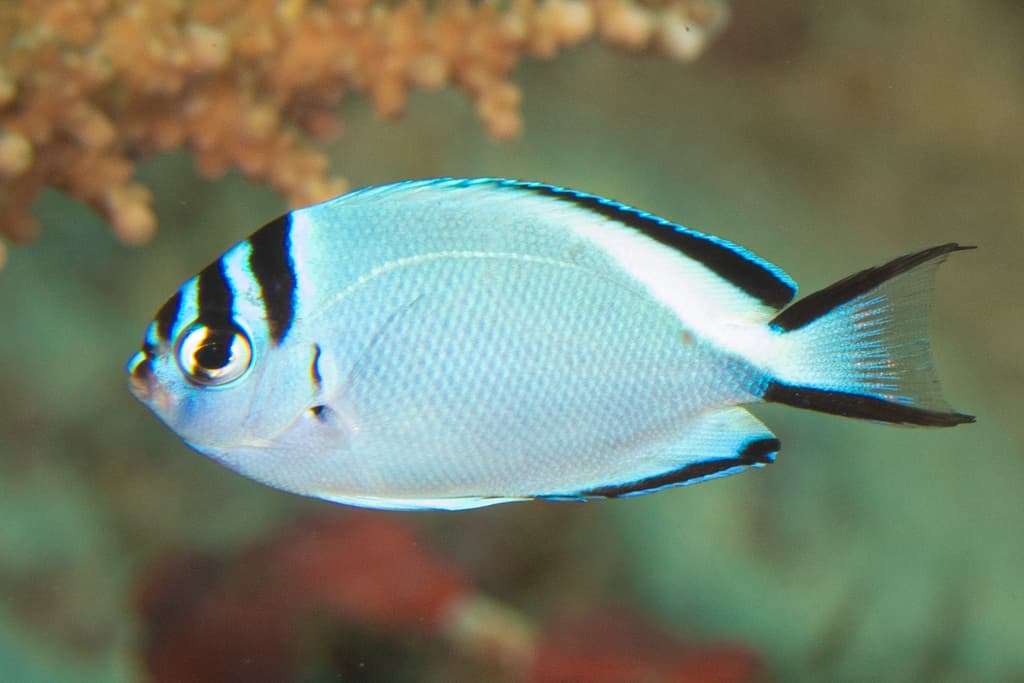
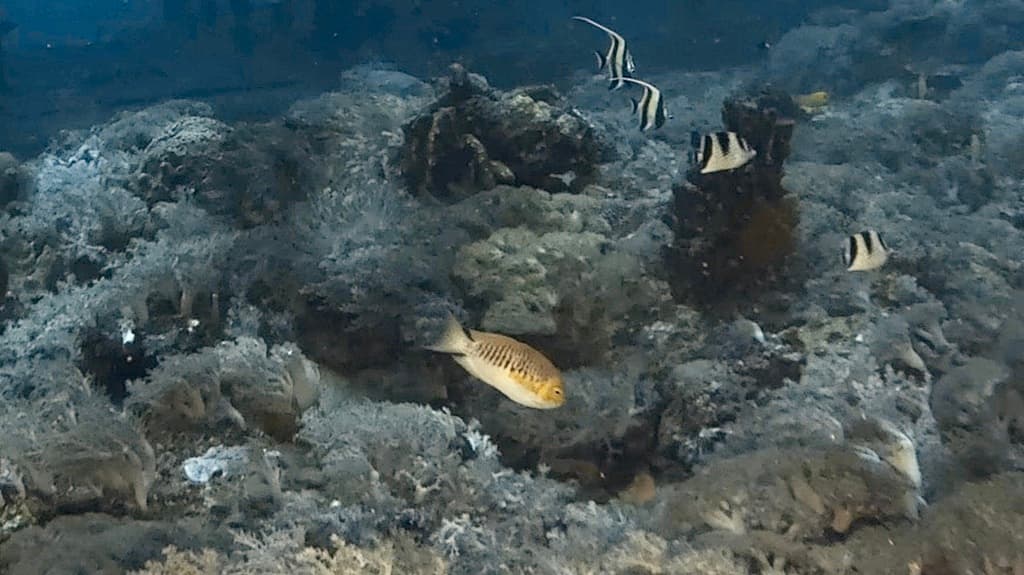
The Japanese Swallowtail Angelfish is a beautiful and relatively uncommon Genicanthus species endemic to the waters around Japan and its surrounding islands. Like all members of the Genicanthus genus, this species is truly reef-safe, making it highly prized among reef aquarists. Males display a stunning combination of a pale silvery-white body with bold black vertical bars on the posterior half, accented by vibrant orange-yellow markings on the face and a distinctive lyretail or swallowtail-shaped caudal fin. Females are more subtly colored in pale lavender-silver with dark dorsal and tail accents.
In the wild, Japanese Swallowtail Angelfish are found in deeper waters along rocky reef walls and drop-offs, typically at depths of 50 to 200 feet around the Japanese archipelago. They form small harems of one dominant male and several females, feeding on zooplankton passing in the current. Their deep-water origin means they prefer slightly cooler water temperatures than many tropical reef fish, which should be taken into consideration for aquarium husbandry.
Reaching approximately 8 inches, this species requires a minimum tank of 100 gallons with ample open swimming space and moderate to strong water flow to simulate its natural current-swept habitat. The Japanese Swallowtail Angelfish is peaceful and makes an excellent addition to community reef tanks. Its limited collection range and seasonal availability from Japan contribute to a higher price point compared to more widely distributed Genicanthus species.
Feeding & Diet
Planktivore
Japanese Swallowtail Angelfish are planktivores that feed on zooplankton in the water column. In captivity, offer enriched frozen mysis shrimp, brine shrimp, cyclops, finely chopped seafood, and high-quality pellets or flake food. Feed multiple small meals throughout the day to replicate their natural continuous feeding behavior.
Compatibility
reef-safepeaceful-communityinvertebrate-safeplanktivorepair-or-harem
Japanese Swallowtail Angelfish are peaceful and compatible with most reef inhabitants. They can coexist with other Genicanthus species in large systems. Avoid housing with overly aggressive tankmates that may intimidate this gentle species.
Check CompatibilityBreeding
Not bred in captivity
Japanese Swallowtail Angelfish are protogynous hermaphrodites that spawn in pairs during dusk. The dominant female will transition to male if the existing male is lost. Captive breeding has not been reliably achieved due to the tiny larval size and extended pelagic phase.
Special Requirements
- Reef-safe — does not nip at corals or invertebrates
- Prefers cooler water temperatures (68-76F) due to deep-water origin
- Provide open swimming space with moderate to strong water flow
- Limited availability — endemic to Japanese waters
- Sexual dimorphism makes male-female pairs visually striking
- Multiple small daily feedings preferred over fewer large meals
Water Parameters
Temperature68–76°F
Specific Gravity1.02–1.026 sg
pH8.1–8.4
Alkalinity8–12 dKH
Coloration
whiteblackorangeyellow
Tags
reef-safepeaceful-communityinvertebrate-safeplanktivorepair-or-harem