AdvancedSemi-AggressiveNot Reef Safe
Rock Beauty Angelfish
Holacanthus tricolor
Family: Pomacanthidae · Large Angelfish
Also known as: Rock Beauty, Corn Sugar, Coshubba
(c) Luke Foster, some rights reserved (CC BY-NC)
Max Size
8"
Min Tank
125 gal
Lifespan
10-15 years
Origin
Caribbean, Western Atlantic
Diet
Omnivore
Swims
Middle
About
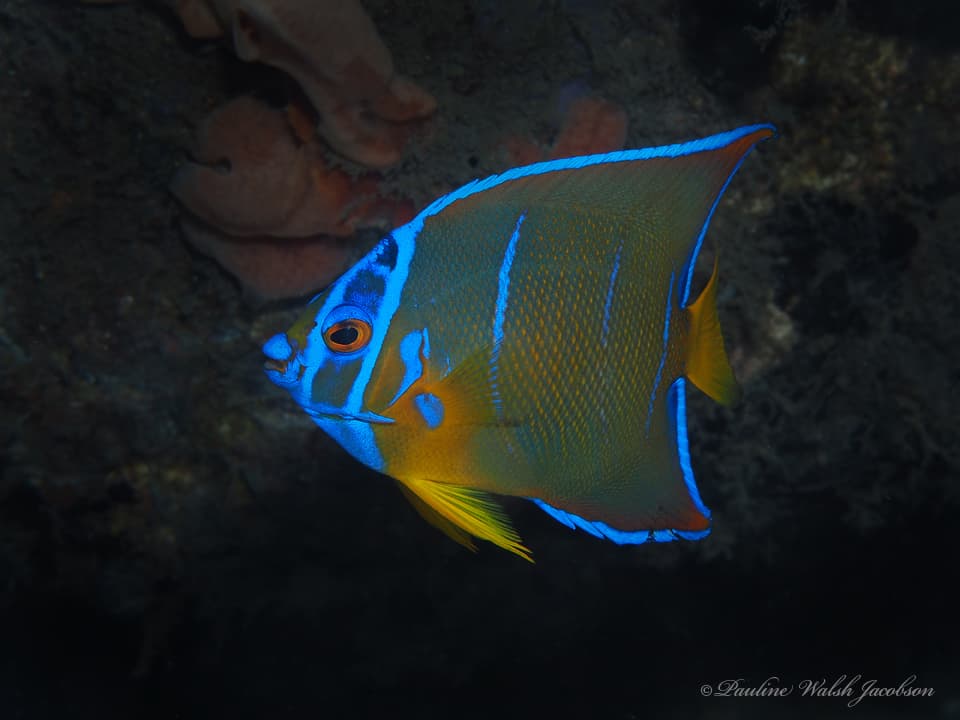
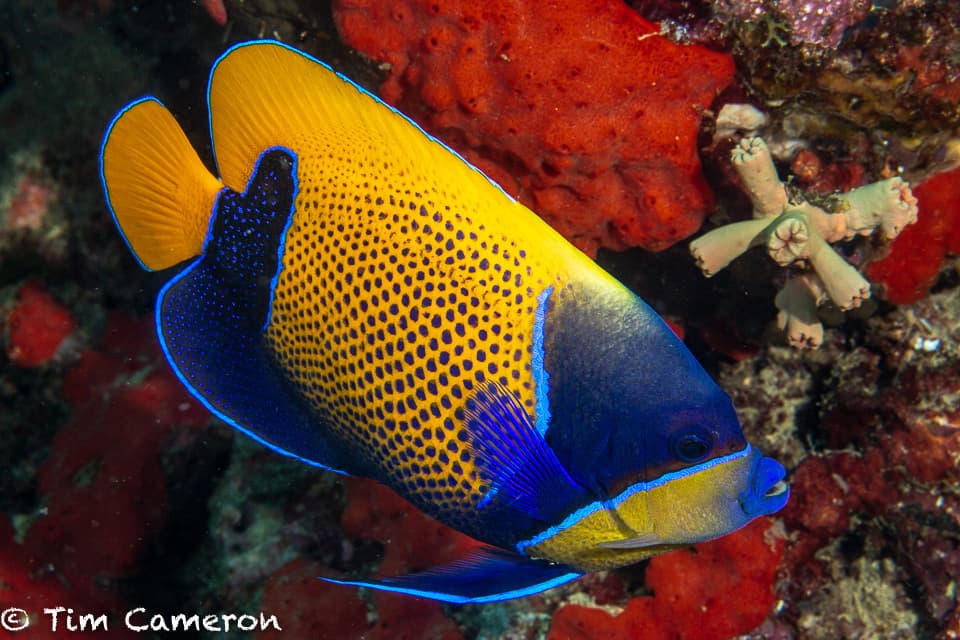
The Rock Beauty Angelfish is one of the most visually striking Caribbean angelfish, featuring a dramatic bicolored pattern with a bright yellow anterior half that sharply transitions to a deep velvety black posterior half. The face is accented with vivid blue around the eyes and lips, and juveniles display a small black spot rimmed in blue on the upper body that gradually expands to form the adult's distinctive black rear section. This bold color contrast makes the Rock Beauty one of the most recognizable fish on Caribbean reefs.
In the wild, Rock Beauty Angelfish are common inhabitants of coral reefs throughout the Caribbean, western Atlantic, and Gulf of Mexico, where they are found from shallow reef crests down to depths of about 100 feet. They are closely associated with rocky substrates and reef formations where they feed heavily on sponges, which constitute the overwhelming majority of their natural diet. This extreme dietary specialization is the primary challenge for aquarists attempting to keep this species.
Reaching approximately 8 inches, the Rock Beauty Angelfish requires a minimum tank of 125 gallons. Despite its moderate size and stunning appearance, this species has earned a reputation as one of the most difficult angelfish to maintain in captivity due to its heavy dependence on marine sponges for nutrition. Many specimens refuse all prepared foods and slowly decline without access to fresh sponge material. Only highly experienced aquarists with established systems rich in natural sponge growth should consider attempting this challenging species. It is not reef-safe and will consume various sessile invertebrates.
Feeding & Diet
Omnivore
Rock Beauty Angelfish are notoriously difficult to feed in captivity due to their heavy natural dependence on marine sponges. Offer sponge-based angelfish preparations, frozen mysis shrimp, enriched brine shrimp, nori seaweed, and fresh marine sponge when available. Many specimens refuse prepared foods initially and require patient feeding training. Established tanks with natural sponge growth greatly improve success rates.
Compatibility
not-reef-safelarge-angelfish-territorialcommunity-compatiblecoral-nipperdifficult-to-feed
Rock Beauty Angelfish can be semi-aggressive toward other angelfish and similarly shaped species. Best kept as the only large angel in the system. Avoid housing with overly aggressive tankmates that may add stress to an already challenging species to maintain.
Check CompatibilityBreeding
Not bred in captivity
Rock Beauty Angelfish are pelagic spawners that form pairs during twilight spawning events. Captive breeding has not been achieved due to the species' challenging dietary requirements and extended larval development. All specimens in the trade are wild-caught from the Caribbean.
Special Requirements
- One of the most difficult angelfish to maintain in captivity
- Heavy dietary dependence on marine sponges — specialized feeding required
- Many specimens refuse prepared foods and require patient training
- Established tanks with natural sponge growth greatly improve success
- Not reef-safe — will consume corals and sessile invertebrates
- Only recommended for expert-level aquarists with mature systems
Water Parameters
Temperature72–80°F
Specific Gravity1.02–1.026 sg
pH8.1–8.4
Alkalinity8–12 dKH
Coloration
yellowblackblue
Tags
not-reef-safelarge-angelfish-territorialcommunity-compatiblecoral-nipperdifficult-to-feed