IntermediateSemi-AggressiveNot Reef SafeIUCN: Not Evaluated
Koran Angelfish
Pomacanthus semicirculatus
Family: Pomacanthidae · Large Angelfish
Also known as: Semicircle Angelfish, Half-Circled Angelfish, Blue Koran Angelfish
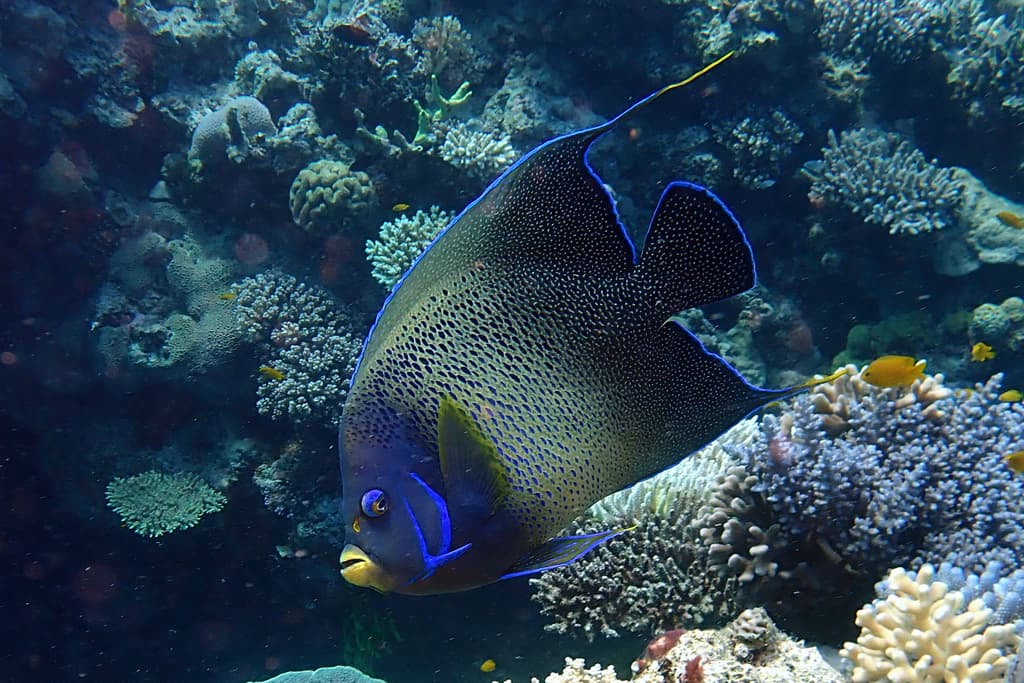
(c) Sascha Schulz, some rights reserved (CC BY-NC)
Max Size
16"
Min Tank
250 gal
Lifespan
15-20 years
Origin
Indo-Pacific, Red Sea
Diet
Omnivore
Swims
Middle
Did You Know?
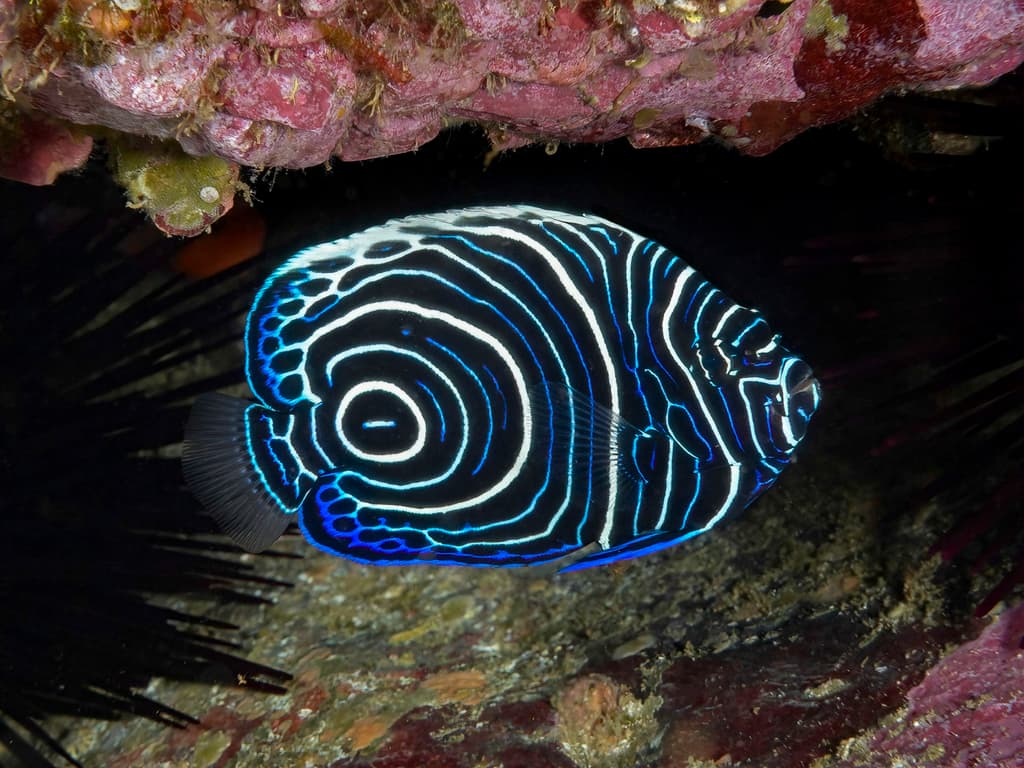
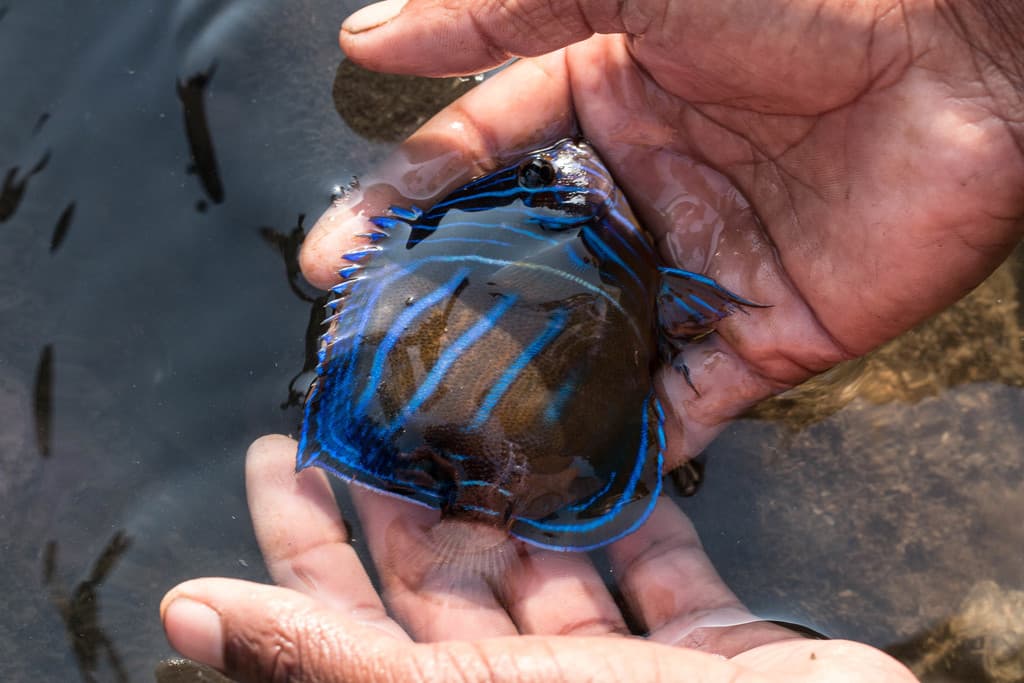
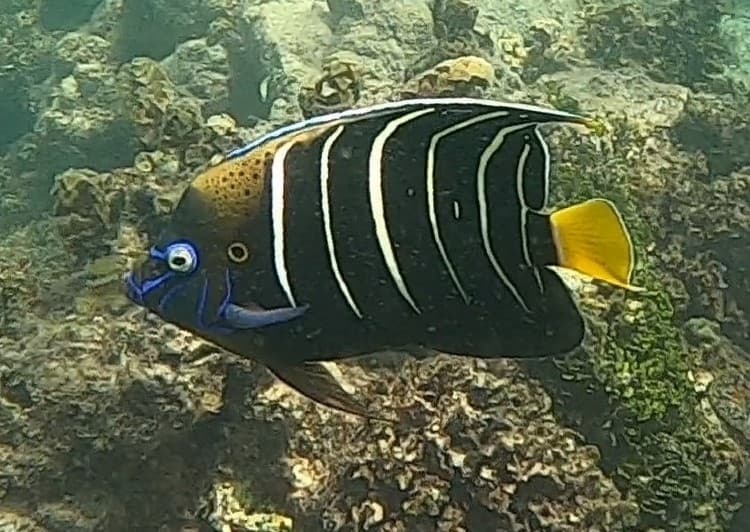
- The common name 'Koran' comes from the juvenile markings, which some observers have compared to Arabic calligraphy found in the Quran
- Juvenile Koran Angelfish look so different from adults that they were historically described as a separate species before the color transformation was documented
- The Koran Angelfish is one of the hardiest large angelfish species available and often serves as a good introduction to keeping large Pomacanthus angels
About
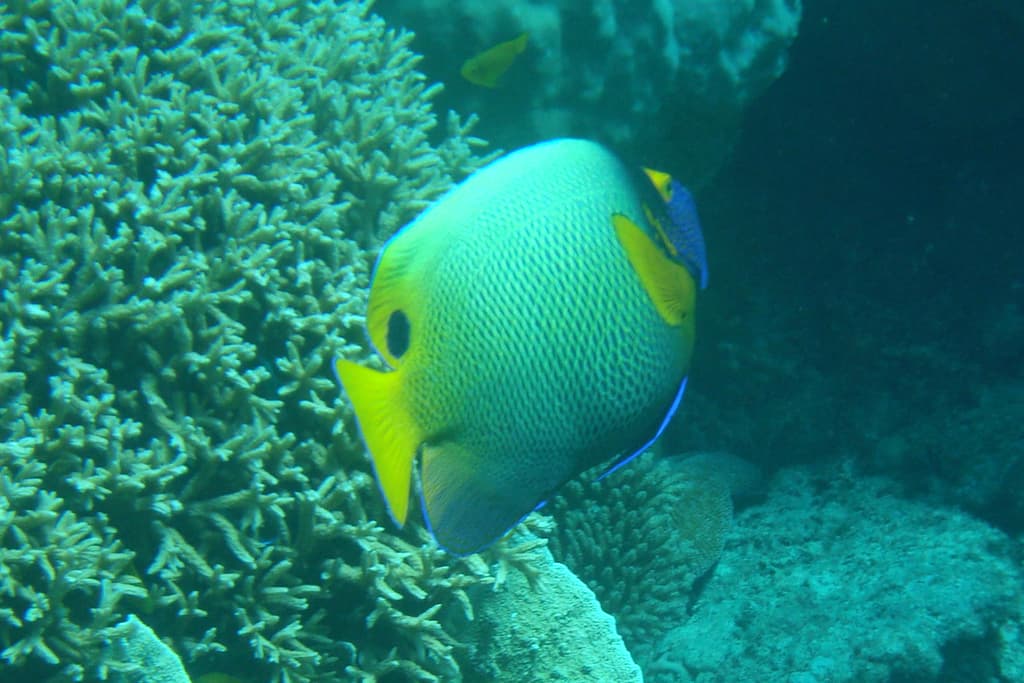
The Koran Angelfish is a large and impressive Indo-Pacific angelfish that undergoes one of the most dramatic color transformations in the marine fish world. Juveniles display a stunning pattern of curved white and blue lines on a dark navy-blue to black background, with the lines forming semicircular patterns that give the species its scientific name. As the fish matures, this intricate juvenile pattern gradually fades and is replaced by an adult coloration of olive-green to tan body with blue speckles, a yellow-edged dorsal fin, and a distinctive blue gill cover.
The common name "Koran" derives from the juvenile markings, which some have likened to Arabic script found in the Quran. This species is widely distributed throughout the Indo-Pacific, from the Red Sea and East Africa to Japan and Australia, inhabiting coral-rich reef areas and lagoons. In the wild, Koran Angelfish are typically encountered as solitary individuals or in pairs, feeding on sponges, tunicates, algae, and various invertebrates.
The Koran Angelfish is considered an intermediate-level species for the home aquarium. It is one of the hardier large angelfish species and generally adapts well to captivity, accepting prepared foods readily. However, its substantial adult size of up to 16 inches demands a very large aquarium of at least 250 gallons. It is not reef-safe and will consume corals, sponges, and sessile invertebrates. This species is best suited for fish-only or fish-only-with-live-rock systems where its impressive size and fascinating juvenile-to-adult transition can be fully appreciated.
Feeding & Diet
Omnivore
Koran Angelfish are omnivores that feed on sponges, tunicates, algae, and small invertebrates in the wild. In captivity, offer high-quality angelfish preparations with sponge content, Spirulina-enriched pellets, frozen mysis shrimp, enriched brine shrimp, and finely chopped seafood. Supplement with nori seaweed and fresh vegetables. Feed two to three times daily. This species typically adapts to prepared foods more readily than many other large angelfish.
Compatibility
not-reef-safelarge-angelfish-territorialcommunity-compatiblecoral-eaterfish-only-preferred
The Koran Angelfish can be territorial toward other large angelfish and similarly shaped fish. Only one Pomacanthus species should be kept per tank unless the system is very large (300+ gallons). It coexists well with tangs, large wrasses, groupers, and other robust community fish. Avoid keeping with other large angelfish species unless introduced simultaneously into an exceptionally large system.
Check CompatibilityBreeding
Not bred in captivity
Koran Angelfish are pelagic spawners that form pairs at dusk, rising in the water column to release eggs and sperm. The fertilized eggs are buoyant and hatch within approximately 18 to 24 hours. Captive breeding has not been achieved due to the extended pelagic larval stage and the very large adult size requiring enormous breeding systems. All specimens in the aquarium trade are wild-caught.
Special Requirements
- Very large aquarium required (250+ gallons) for adult size
- Not reef-safe - will consume corals, sponges, and invertebrates
- Juvenile-to-adult color transformation is dramatic and fascinating
- Provide abundant live rock with caves and overhangs
- Strong filtration and excellent water quality essential
- Only one large angelfish per tank unless system is extremely large
- Best suited for fish-only or FOWLR systems
Water Parameters
Temperature72–82°F
Specific Gravity1.02–1.026 sg
pH8.1–8.4
Alkalinity8–12 dKH
Coloration
bluegreentanyellowwhiteblack
Tags
not-reef-safelarge-angelfish-territorialcommunity-compatiblecoral-eaterfish-only-preferred