BeginnerPeacefulReef Safe
Yellow and Purple Wrasse
Halichoeres leucoxanthus
Family: Labridae · Wrasses
Also known as: Canary Wrasse, White-Yellow Wrasse
(c) Rafi Amar, some rights reserved (CC BY-NC)
Max Size
5"
Min Tank
50 gal
Lifespan
5-8 years
Origin
Indian Ocean, Maldives
Diet
Carnivore
Swims
Middle
About
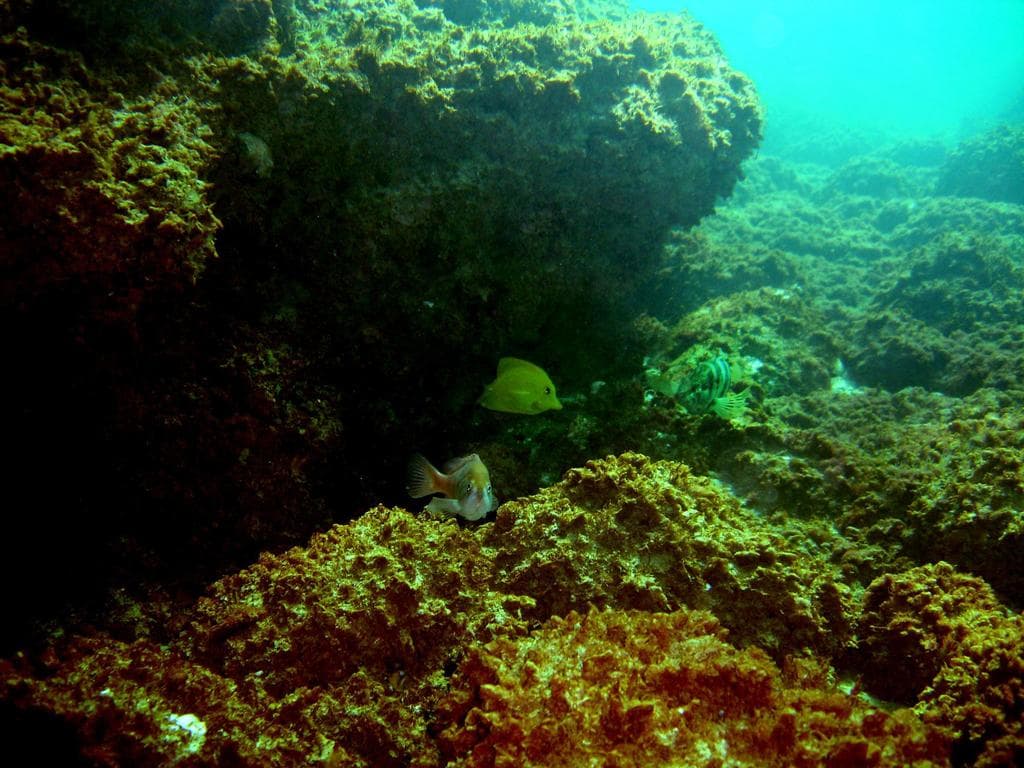
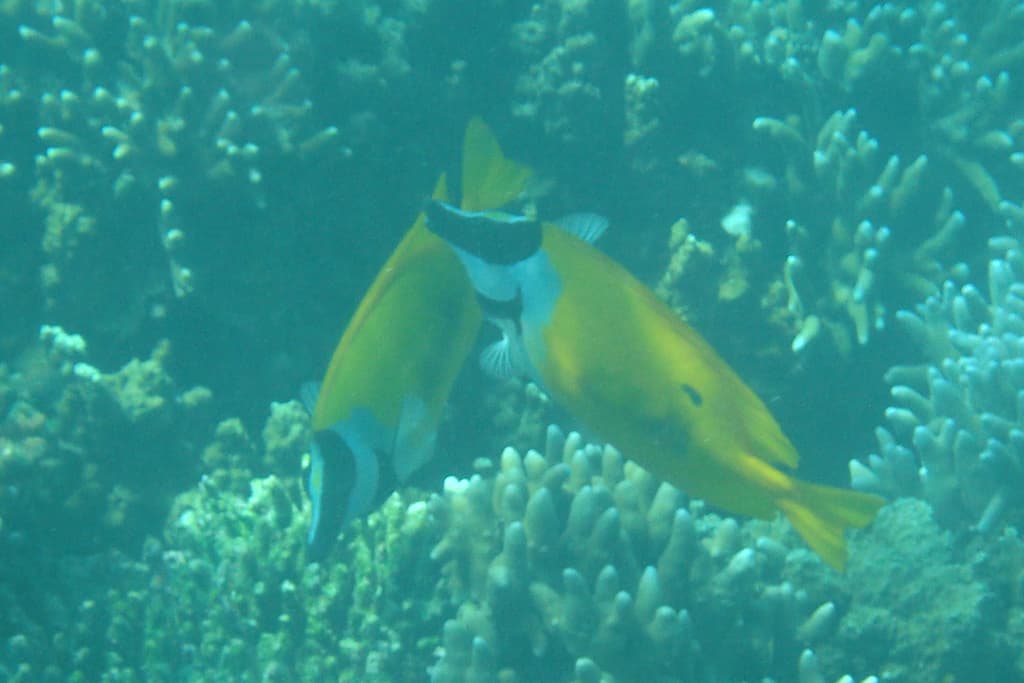
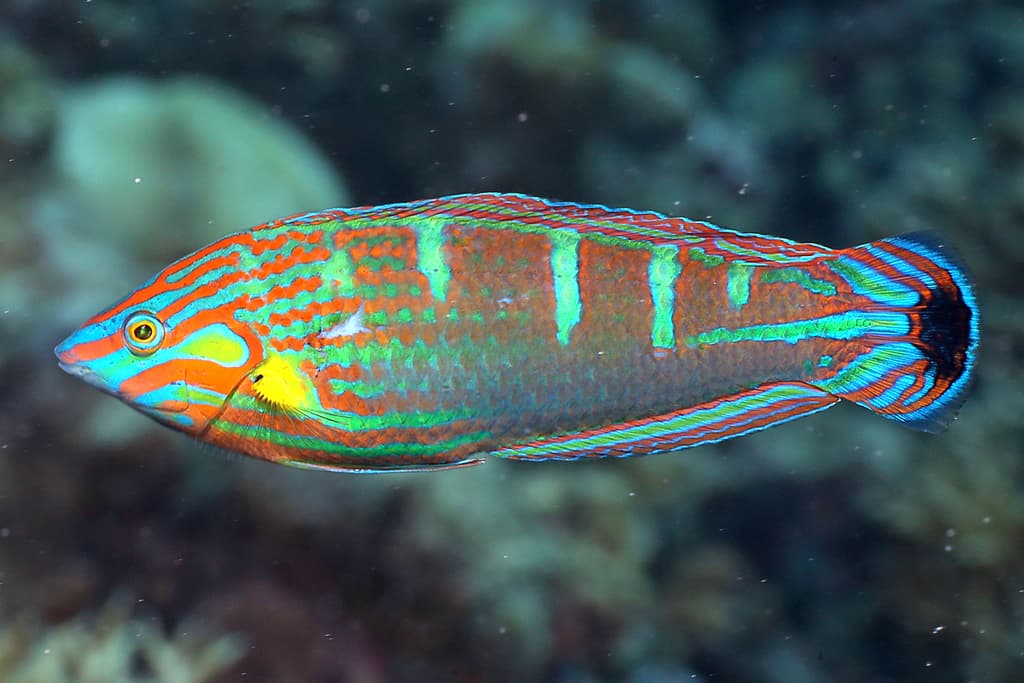
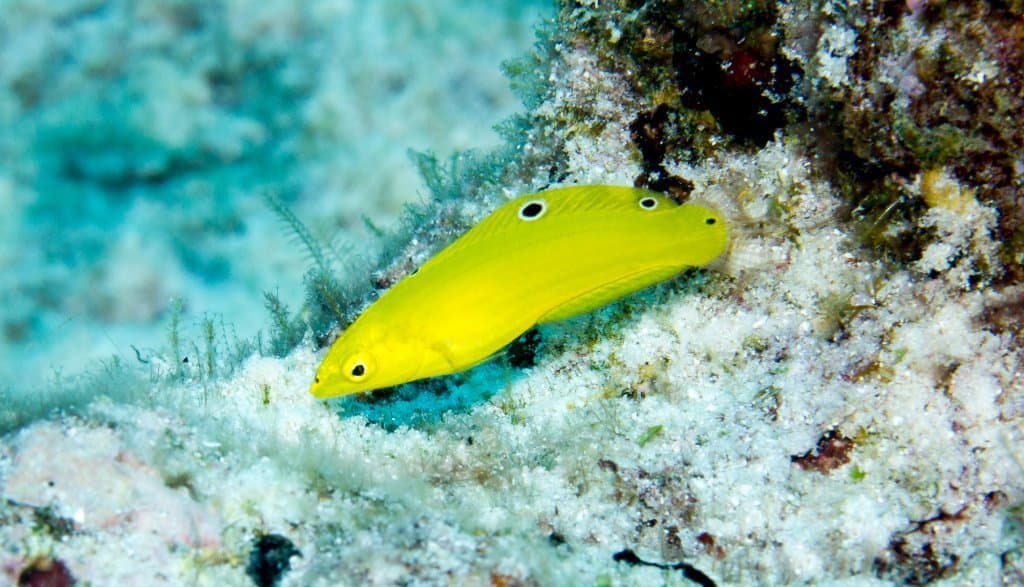
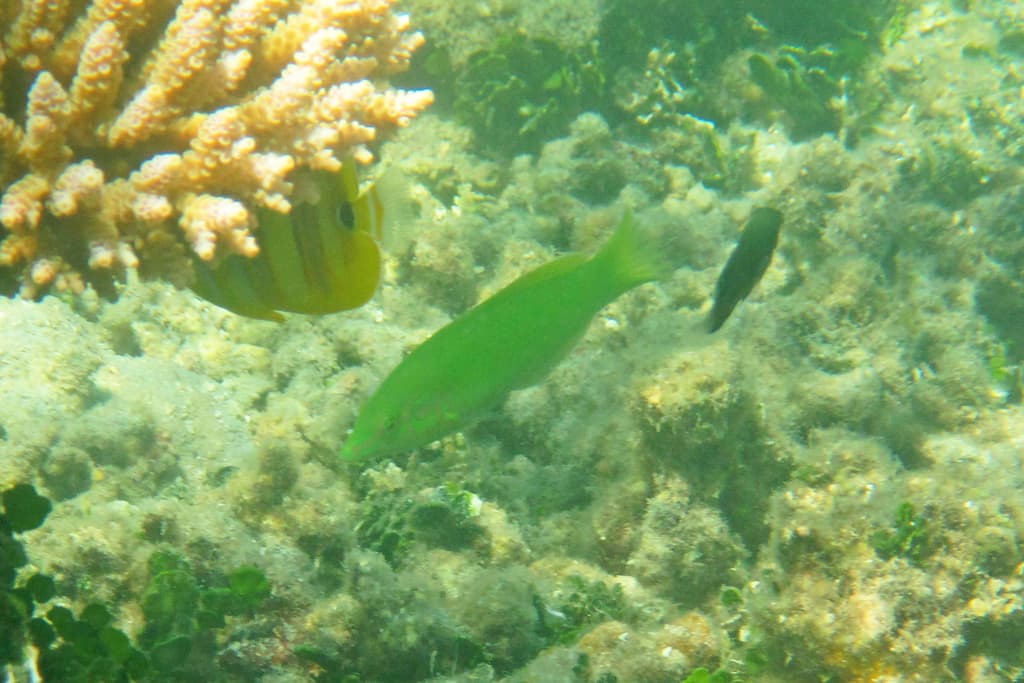
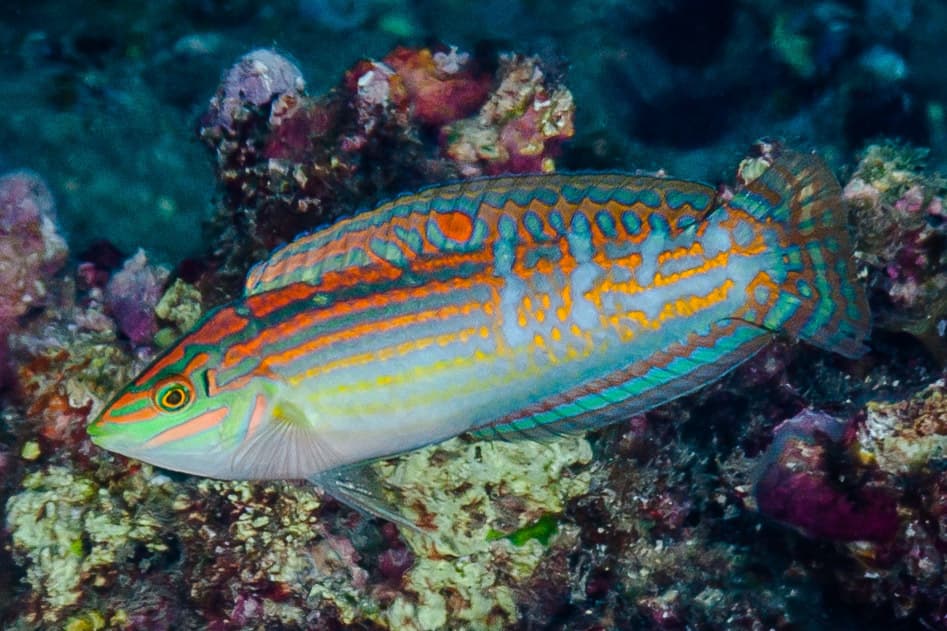
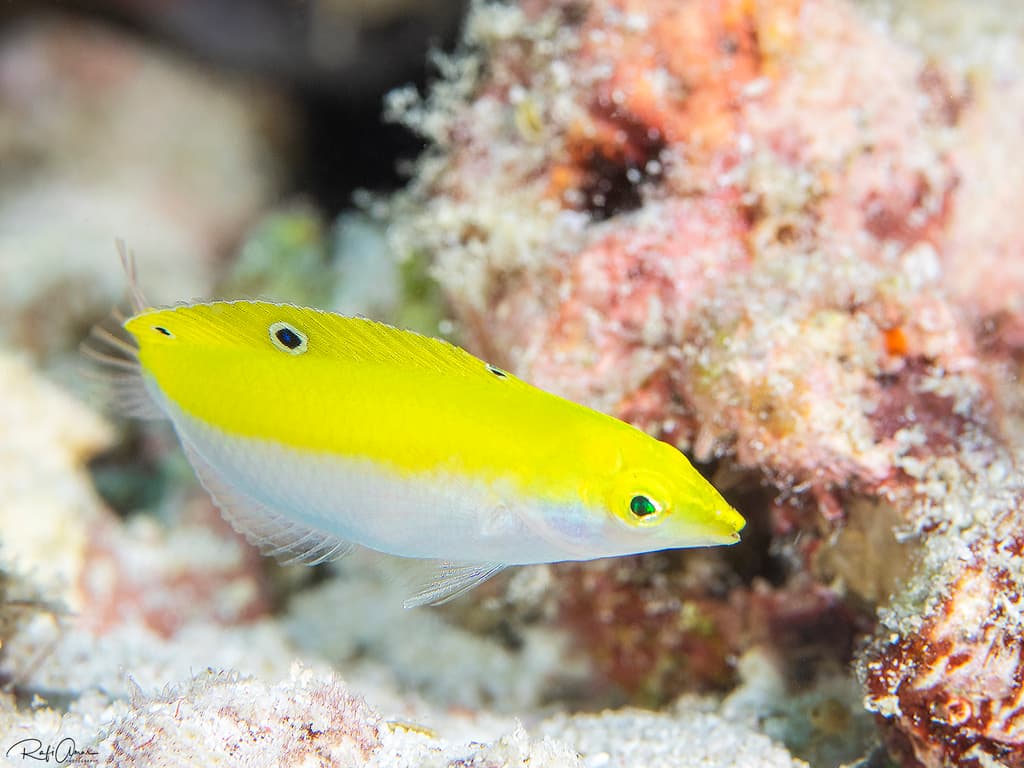
The Yellow and Purple Wrasse is a strikingly colorful species that lives up to its descriptive common name. Males display a vibrant yellow body accented with purple to violet markings on the head and along the body, creating a bold two-tone color scheme that stands out in any reef aquarium. Females are primarily yellow with more subtle violet highlights, though they are still quite attractive.
This species is one of the easier Halichoeres wrasses to keep, accepting prepared foods readily and adapting well to captive conditions. It is an active swimmer that patrols the live rock and sand bed with an engaging, purposeful demeanor. The Yellow and Purple Wrasse is hardy, disease-resistant, and suitable for beginner to intermediate aquarists looking for a colorful and functional reef fish.
Completely reef-safe and peaceful, this wrasse integrates well into community reef setups. It may consume small pest invertebrates like flatworms and bristleworms, providing beneficial pest control. Like other Halichoeres species, it sleeps buried in the sand at night, so a sand substrate of at least two inches is essential. A tight-fitting lid is necessary to prevent jumping. This is an excellent all-around wrasse that combines beauty, hardiness, and reef compatibility.
Feeding & Diet
Carnivore
Yellow and Purple Wrasses are carnivores that feed on small invertebrates and worms. In captivity, they accept frozen mysis shrimp, brine shrimp, chopped seafood, marine pellets, and flake food. They also hunt small pest organisms on live rock. Feed two to three times daily.
Compatibility
reef-safepeacefulcommunity-safepest-controllerbeginner-friendly
The Yellow and Purple Wrasse is peaceful and completely reef-safe. It coexists well with most community reef fish and will not harm corals or ornamental invertebrates. Males may occasionally spar with other Halichoeres wrasses. Excellent with clownfish, tangs, gobies, blennies, and other peaceful species.
Check CompatibilityBreeding
Not bred in captivity
Yellow and Purple Wrasses are protogynous hermaphrodites. Males court females with color displays and spawn at dusk. Pelagic eggs are released into the water column. Captive breeding has not been commercially achieved for this species.
Special Requirements
- Sand substrate of 2+ inches required for sleeping
- Tight-fitting lid essential - can jump when startled
- Hardy and disease-resistant species
- May provide beneficial pest control on live rock
- Active swimmer requiring open swimming space
Water Parameters
Temperature74–80°F
Specific Gravity1.02–1.026 sg
pH8.1–8.4
Alkalinity8–12 dKH
Coloration
yellowpurplevioletwhite
Tags
reef-safepeacefulcommunity-safepest-controllerbeginner-friendly