BeginnerPeacefulReef Safe
Possum Wrasse
Wetmorella nigropinnata
Family: Labridae · Wrasses
Also known as: Sharpnose Wrasse, Black-Finned Possum Wrasse
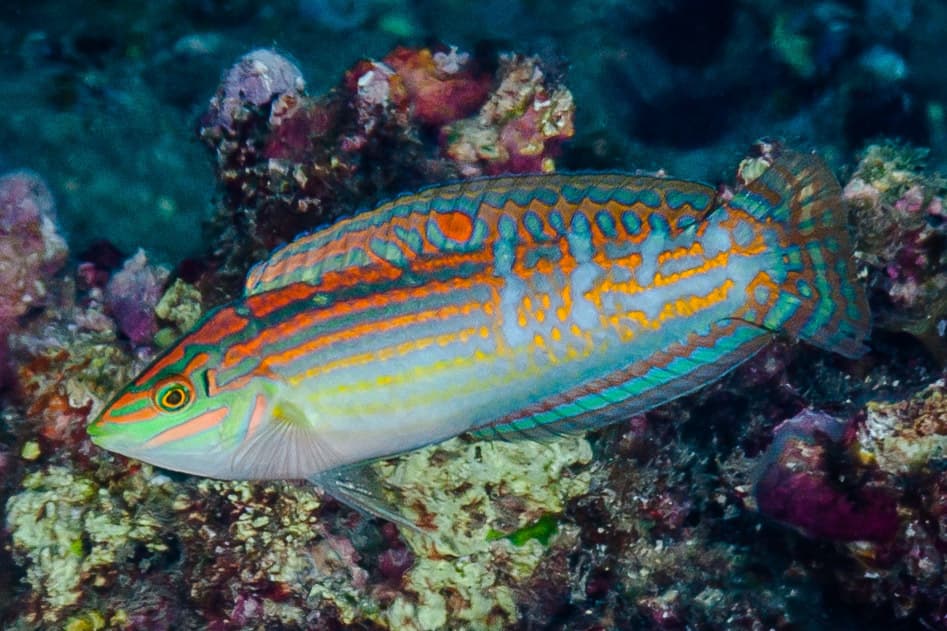
(c) Mark Rosenstein, some rights reserved (CC BY-NC)
Max Size
3"
Min Tank
20 gal
Lifespan
5-7 years
Origin
Indo-Pacific, Western Pacific
Diet
Carnivore
Swims
Bottom
About
The Possum Wrasse is a tiny, endearing species that has become a favorite among nano reef enthusiasts. Reaching only about three inches, it is one of the smallest wrasses available for the marine aquarium. Its body features an attractive pattern of reddish-brown and white with distinctive dark markings on the fins. The species gets its common name from its shy, retiring behavior, reminiscent of a possum playing dead.
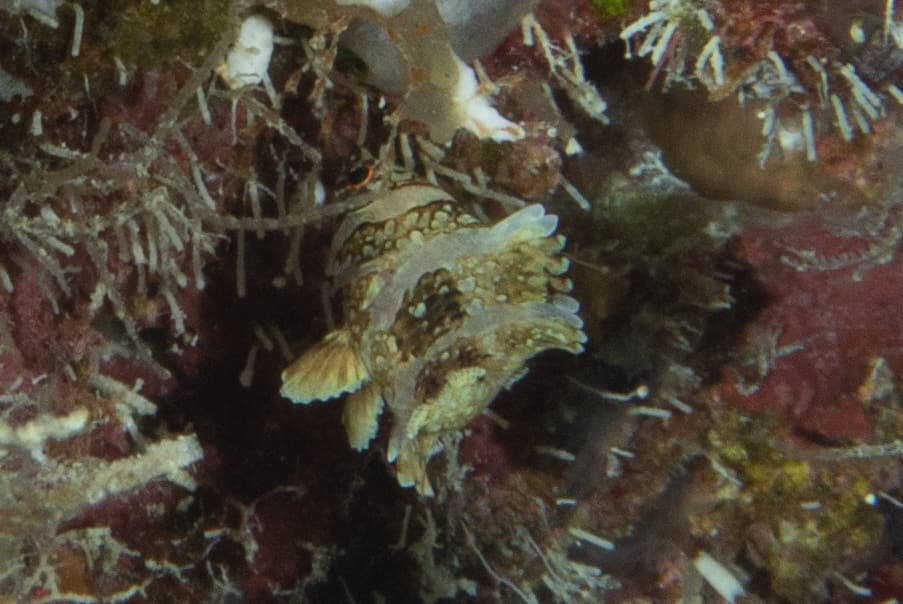
Unlike most wrasses, the Possum Wrasse is remarkably shy and reclusive, spending much of its time hiding among live rock crevices and emerging only to feed. This timid nature makes it an excellent choice for peaceful nano reef systems where it will not be bullied or outcompeted by more aggressive fish. It is best added to established tanks where it can quickly find hiding spots.
The Possum Wrasse is completely reef-safe and one of the most peaceful wrasses available. Its small size makes it suitable for aquariums as small as 20 gallons, and its gentle temperament means it can coexist with even the most timid tankmates. It is easy to care for and accepts a variety of small meaty foods. Unlike many wrasses, it does not bury in sand and instead wedges itself into rock crevices to sleep, so a sand substrate is not strictly necessary.
Feeding & Diet
Carnivore
Possum Wrasses feed on tiny invertebrates found among live rock. In captivity, they accept frozen mysis shrimp, enriched brine shrimp, cyclops, and finely chopped meaty foods. Feed small portions two to three times daily. They are not competitive feeders, so ensure food reaches them.
Compatibility
reef-safepeacefulcommunity-safenano-compatiblebeginner-friendly
The Possum Wrasse is one of the most peaceful wrasses available and never bothers any tankmate. However, it is extremely shy and can be bullied or outcompeted for food by more assertive species. Best kept with other gentle fish such as small gobies, blennies, firefish, and clownfish. Completely reef-safe.
Check CompatibilityBreeding
Not bred in captivity
Possum Wrasses are protogynous hermaphrodites. Little is known about their reproductive behavior in the wild due to their cryptic nature. Captive breeding has not been achieved for this species.
Special Requirements
- Plenty of live rock crevices for hiding - essential for this shy species
- Nano reef compatible - suitable for tanks as small as 20 gallons
- Does not bury in sand - wedges into rock crevices to sleep
- Non-competitive feeder - ensure food reaches it
- Best added to established tanks with timid community fish
Water Parameters
Temperature74–80°F
Specific Gravity1.02–1.026 sg
pH8.1–8.4
Alkalinity8–12 dKH
Coloration
brownredwhiteblack
Tags
reef-safepeacefulcommunity-safenano-compatiblebeginner-friendly