IntermediatePeacefulNot Reef Safe
Green Birdmouth Wrasse
Gomphosus caeruleus
Family: Labridae · Wrasses
Also known as: Green Bird Wrasse, Indian Ocean Bird Wrasse, Blue Bird Wrasse
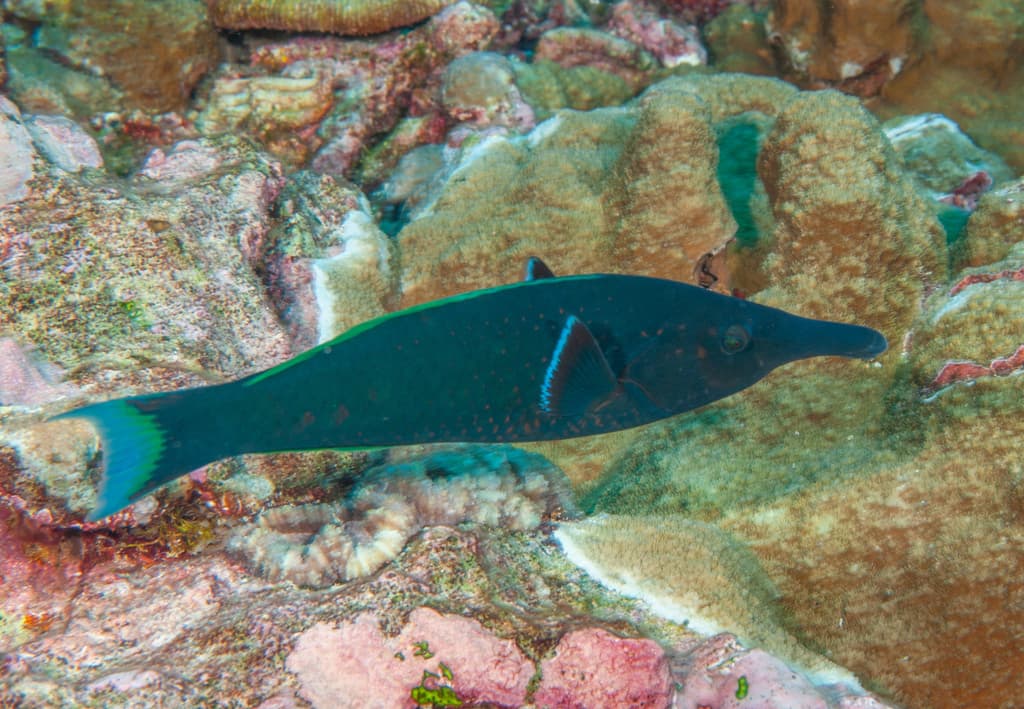
(c) Erik Schlögl, some rights reserved (CC BY-NC)
Max Size
12"
Min Tank
125 gal
Lifespan
6-10 years
Origin
Indo-Pacific, Indian Ocean
Diet
Carnivore
Swims
Middle
About
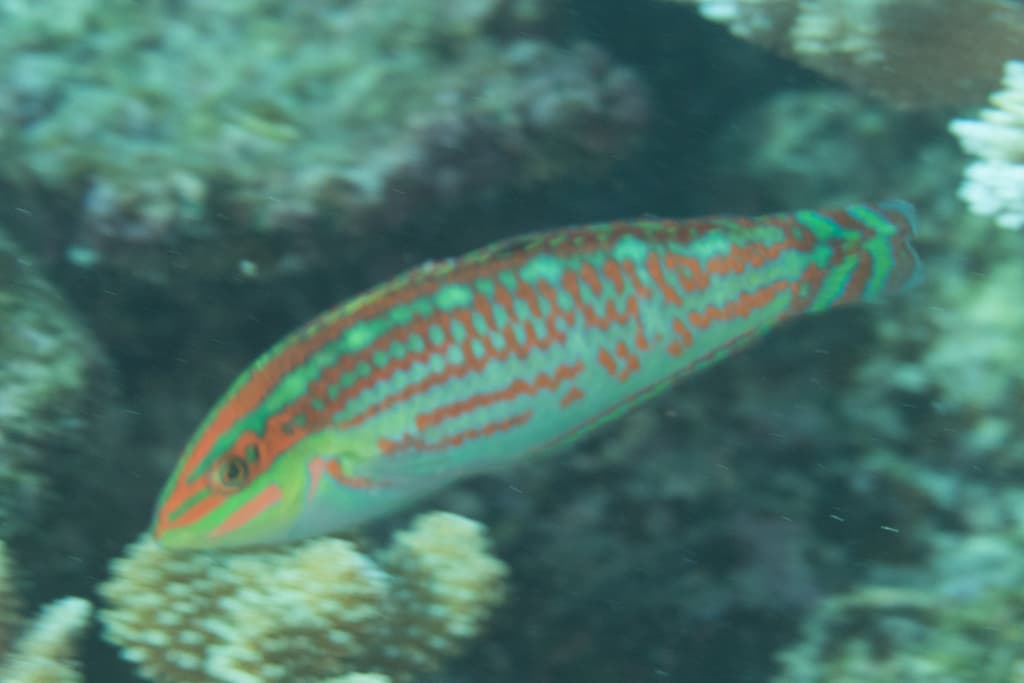
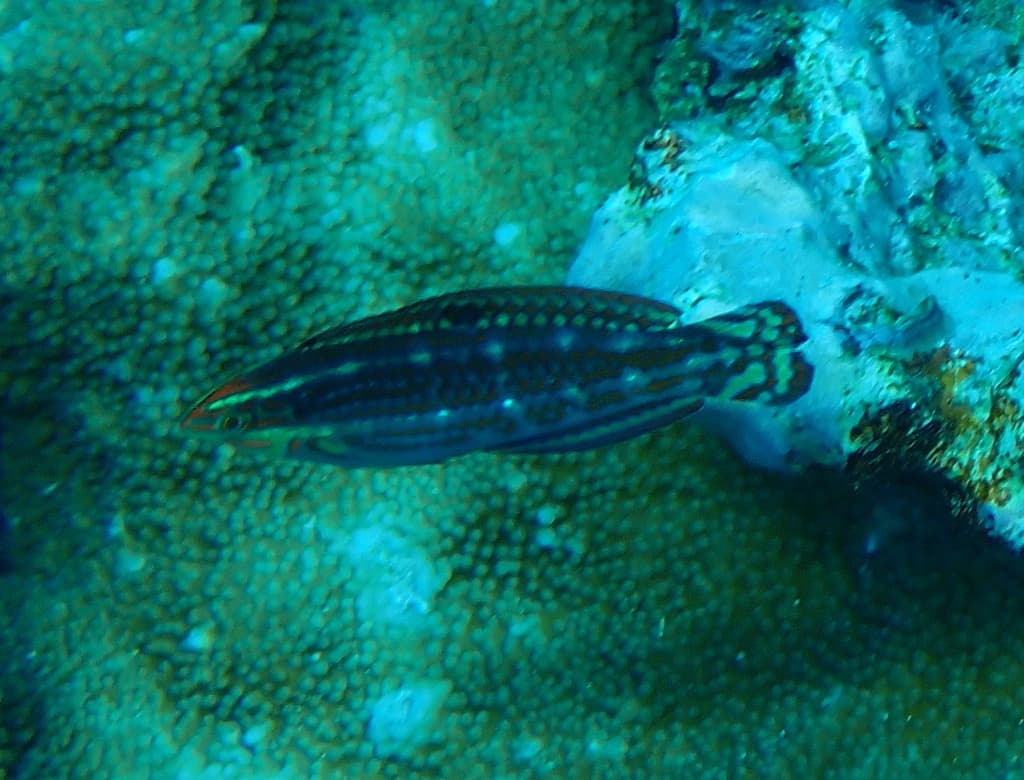
The Green Birdmouth Wrasse is a fascinating species easily identified by its extremely elongated snout that gives it a bird-like appearance. Males display a striking green to teal coloration across the entire body, while females are typically brown to dark olive. This species is closely related to the Bird Wrasse (Gomphosus varius) of the Pacific but is found in the Indian Ocean.
The long, narrow snout of the Green Birdmouth Wrasse is perfectly adapted for extracting small crustaceans and invertebrates from crevices in the reef. While this species is peaceful toward fish, it will readily consume ornamental shrimp, small crabs, and other crustaceans, making it unsuitable for reef aquariums with invertebrate populations.
The Green Birdmouth Wrasse is a fast, agile swimmer that requires plenty of open water for swimming. It is a moderately hardy species that accepts prepared foods well once acclimated. Like other wrasses, it requires a sand bed for sleeping and a secure lid to prevent jumping. Its unique appearance and active swimming behavior make it a popular centerpiece species for fish-only aquariums.
Feeding & Diet
Carnivore
The Green Birdmouth Wrasse uses its elongated snout to extract small crustaceans and invertebrates from reef crevices. In captivity, offer frozen mysis shrimp, brine shrimp, chopped shrimp, and other meaty seafood. High-quality marine pellets are also accepted. This species will eat ornamental shrimp and small crustaceans. Feed two to three times daily.
Compatibility
fish-onlypeacefulcrustacean-eateractive-swimmer
The Green Birdmouth Wrasse is peaceful toward other fish and can be housed with a wide variety of species. However, it will consume ornamental shrimp and small crustaceans. It is not aggressive toward other wrasses unless they are very similar in appearance. Best kept in fish-only or coral-only systems without invertebrate populations.
Check CompatibilityBreeding
Not bred in captivity
Green Birdmouth Wrasses are protogynous hermaphrodites with dramatic sexual dimorphism. Males are green while females are brown. Spawning occurs in open water. Captive breeding has not been achieved. All specimens are wild-caught.
Special Requirements
- Ample open swimming space essential for this active species
- Tight-fitting lid essential - known jumper
- Sand substrate of 2+ inches for sleeping
- Will consume ornamental shrimp and crustaceans
- Distinctive elongated snout is a unique identifier
- Indian Ocean counterpart to the Pacific Bird Wrasse
Water Parameters
Temperature74–80°F
Specific Gravity1.02–1.026 sg
pH8.1–8.4
Alkalinity8–12 dKH
Coloration
greentealbluebrown
Tags
fish-onlypeacefulcrustacean-eateractive-swimmer