IntermediatePeacefulReef Safe
Radiant Wrasse
Halichoeres iridis
Family: Labridae · Wrasses
Also known as: Iridis Wrasse, Rainbow Wrasse
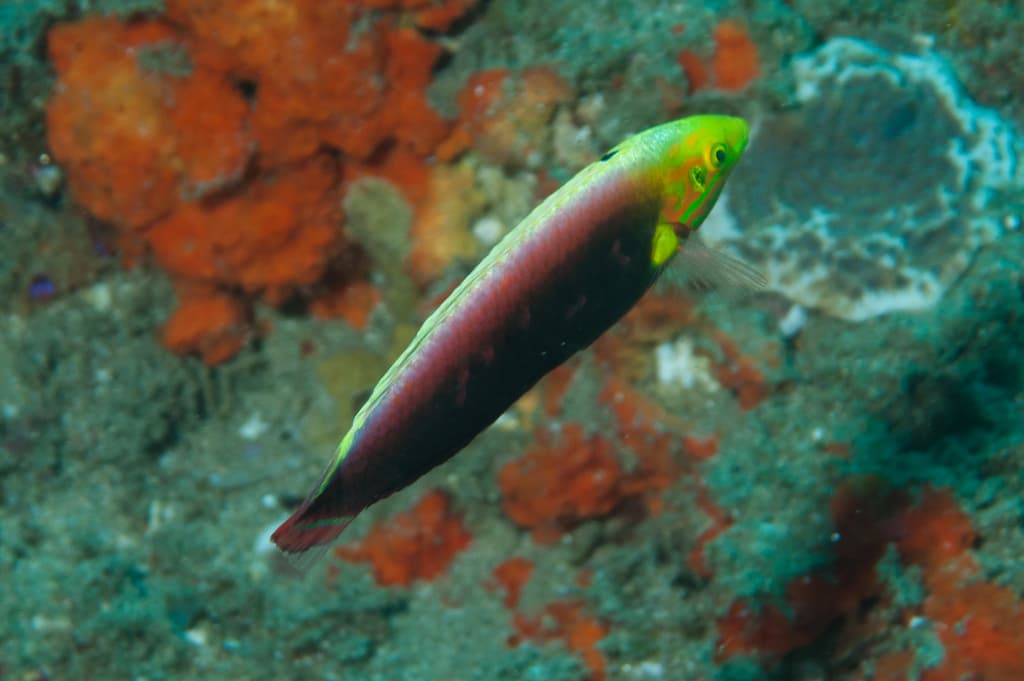
(c) Malcolm Francis, some rights reserved (CC BY-NC)
Max Size
4"
Min Tank
50 gal
Lifespan
5-8 years
Origin
Western Indian Ocean, East Africa
Diet
Carnivore
Swims
Middle
About
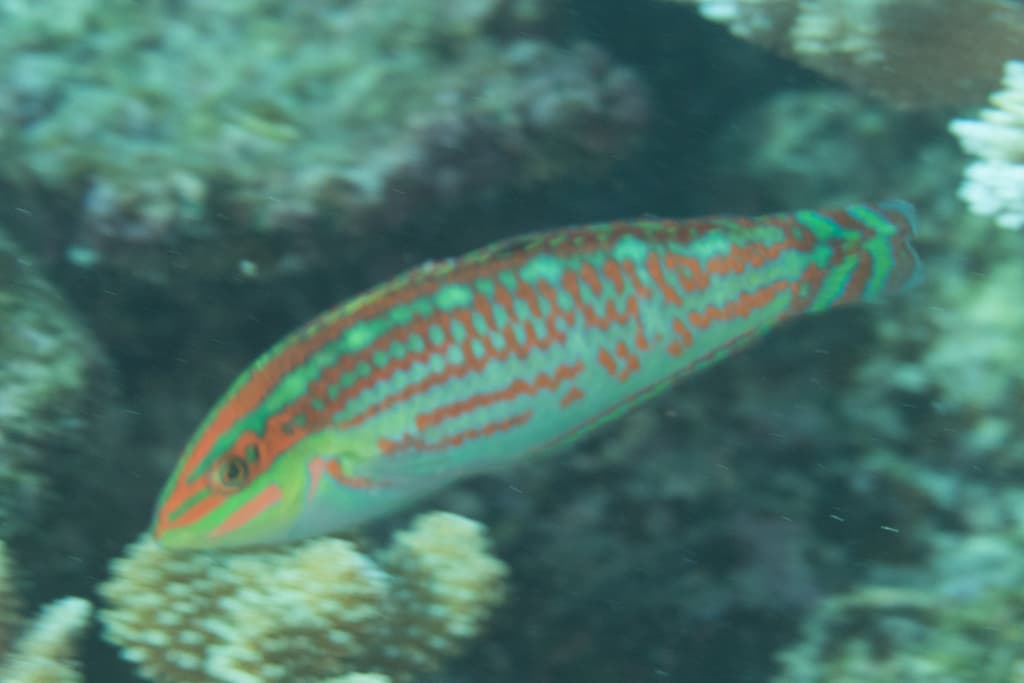
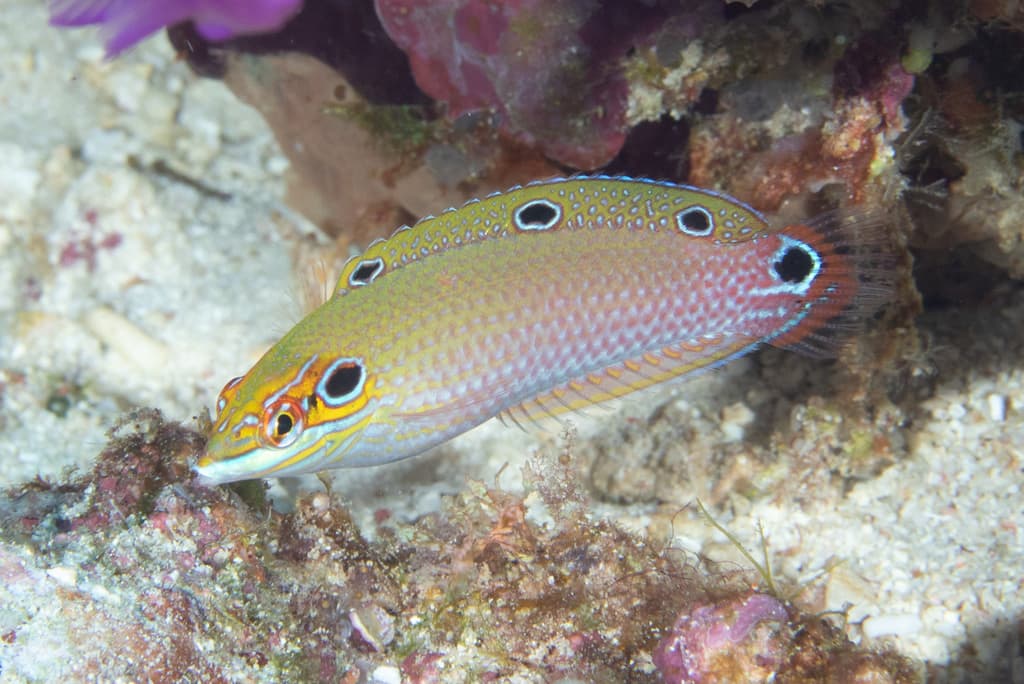
The Radiant Wrasse is an aptly named species that displays a gorgeous iridescent coloration shifting between shades of yellow, orange, green, and blue depending on the angle of light. Males develop particularly vivid colors with a golden-yellow body, blue-green face markings, and iridescent highlights that shimmer as the fish swims. This play of color makes it one of the most visually dynamic Halichoeres wrasses available.
This species is moderately hardy and adapts well to reef aquarium life. It is an active swimmer that patrols the rockwork and sand bed, hunting small invertebrates and adding constant movement and color to the display. The Radiant Wrasse is peaceful toward most tankmates and integrates well into community reef setups, though males may occasionally spar with other Halichoeres species.
Like many Halichoeres wrasses, the Radiant Wrasse buries itself in the sand to sleep at night, so a sand substrate of at least two inches is essential. A tight-fitting lid is also necessary to prevent jumping. This species is completely reef-safe and will not harm corals, clams, or ornamental invertebrates. It may consume small pest organisms, providing beneficial pest control in the reef aquarium.
Feeding & Diet
Carnivore
Radiant Wrasses are carnivores that feed on small invertebrates in the wild. In captivity, offer frozen mysis shrimp, enriched brine shrimp, chopped seafood, and marine pellets. They will also hunt small pest invertebrates on live rock. Feed two to three times daily.
Compatibility
reef-safepeacefulcommunity-safesand-sleeperpest-controller
The Radiant Wrasse is peaceful and reef-safe. It coexists well with most community fish and will not harm corals or ornamental invertebrates. Males may spar with other Halichoeres wrasses. Excellent companions include clownfish, tangs, gobies, blennies, and fairy wrasses. Avoid very aggressive tankmates.
Check CompatibilityBreeding
Not bred in captivity
Radiant Wrasses are protogynous hermaphrodites. Males maintain territories and court females with color displays. Pelagic eggs are released at dusk. Captive breeding has not been achieved for this species.
Special Requirements
- Sand substrate of 2+ inches required for sleeping
- Tight-fitting lid essential - known jumper
- Moderate water flow and open swimming space
- Iridescent colors best displayed under reef lighting
- May provide beneficial pest control on live rock
Water Parameters
Temperature74–80°F
Specific Gravity1.02–1.026 sg
pH8.1–8.4
Alkalinity8–12 dKH
Coloration
yelloworangegreenblueiridescent
Tags
reef-safepeacefulcommunity-safesand-sleeperpest-controller