BeginnerSemi-AggressiveNot Reef Safe
Goldbar Wrasse
Thalassoma hebraicum
Family: Labridae · Wrasses
Also known as: Goldbar Wrasse, Hebrew Wrasse, Red Sea Wrasse
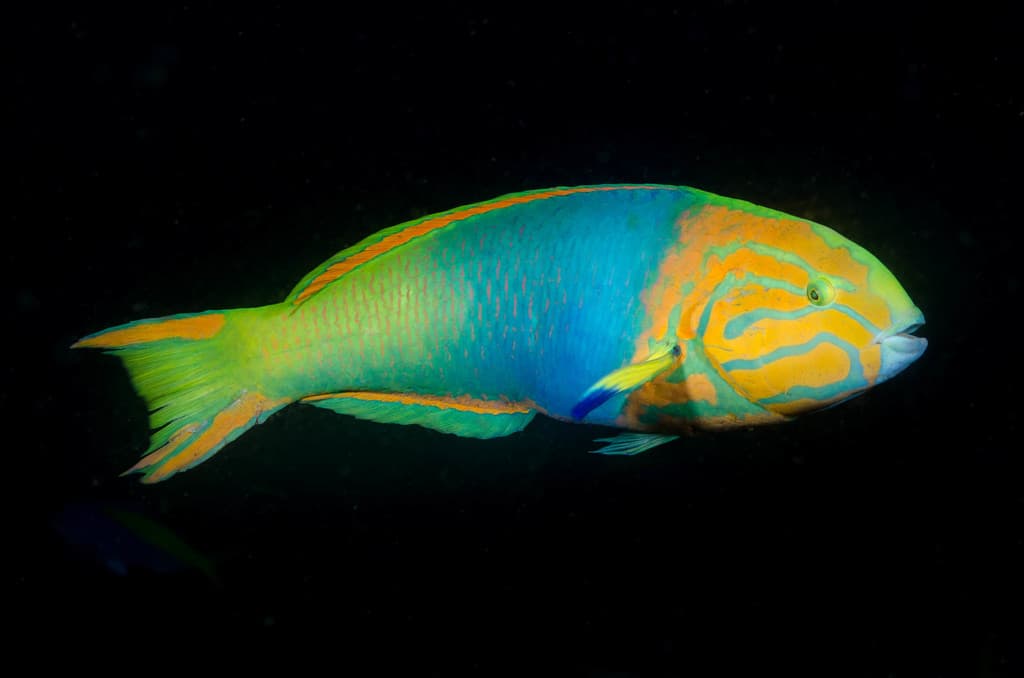
(c) Erik Schlögl, some rights reserved (CC BY-NC)
Max Size
9"
Min Tank
75 gal
Lifespan
5-8 years
Origin
Red Sea, Western Indian Ocean
Diet
Carnivore
Swims
Middle
About
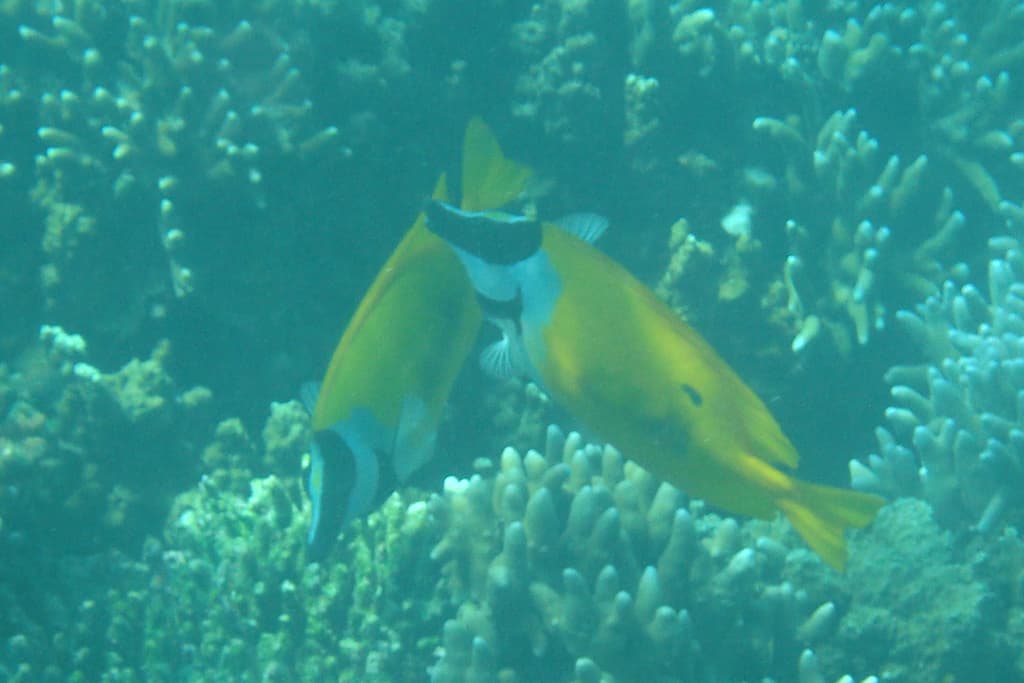
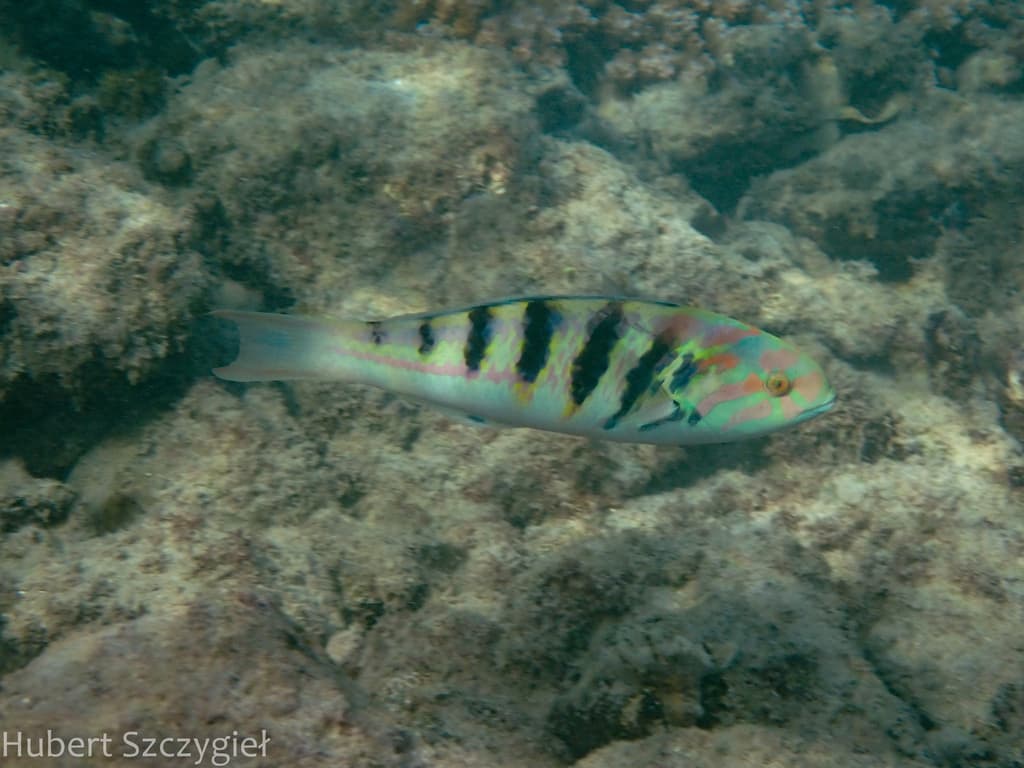
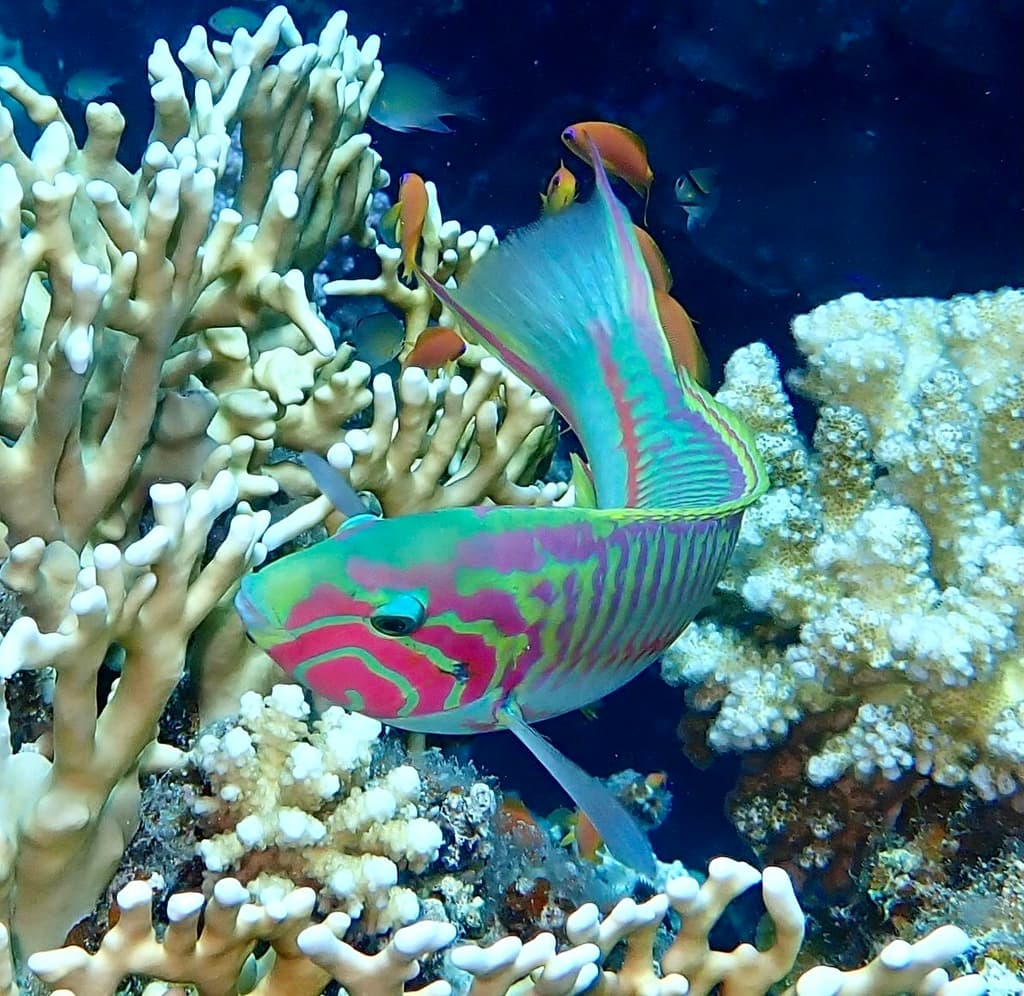
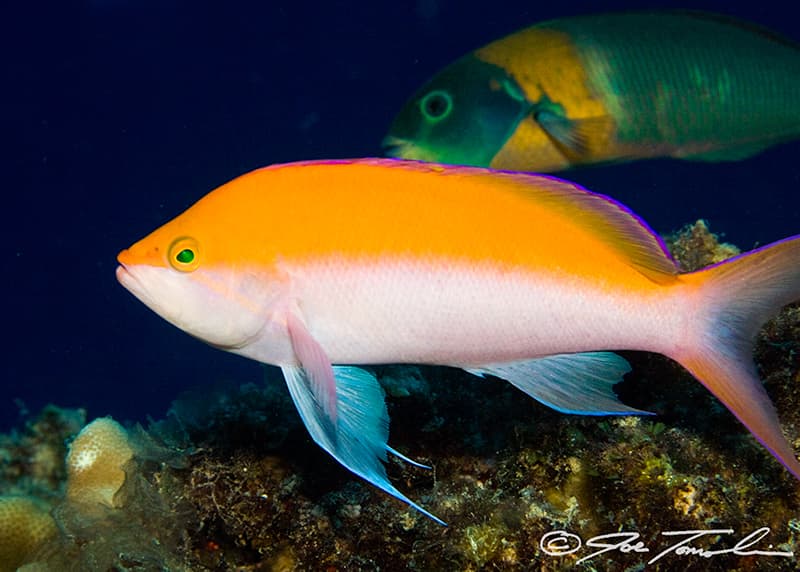
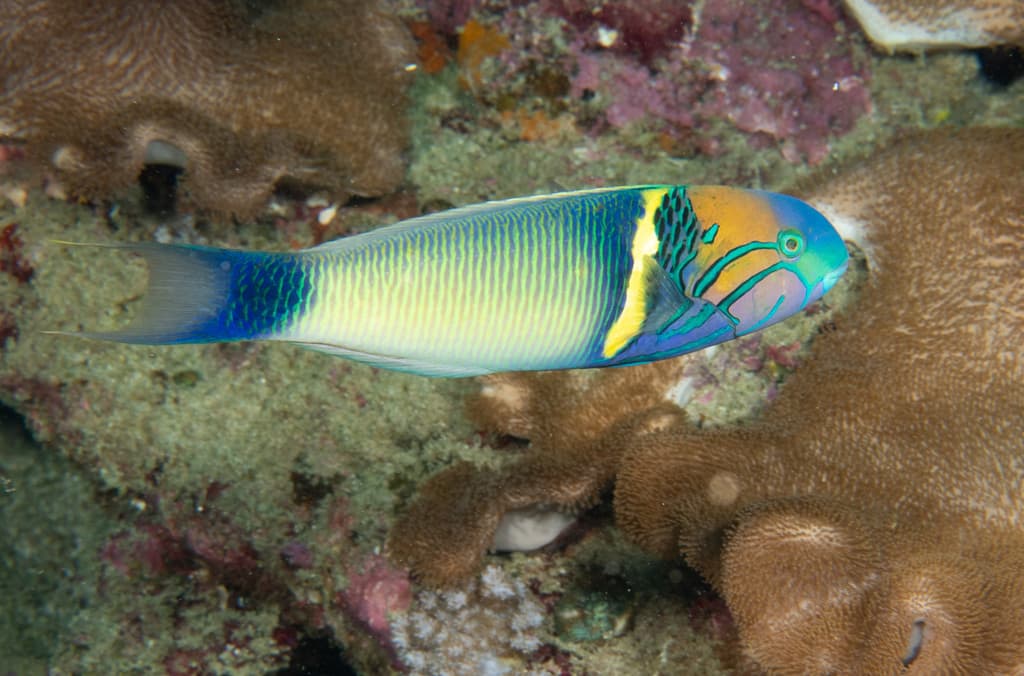
The Goldbar Wrasse is a hardy and attractively colored species native to the Red Sea and Western Indian Ocean. It features a distinctive golden-yellow vertical bar on its body set against a green to blue-green background, making it easily identifiable. Males develop more intense coloration with additional blue and green facial markings and brighter overall hues.
This is one of the hardier wrasse species available, making it an excellent choice for aquarists of all experience levels. The Goldbar Wrasse is an active, fast swimmer that brings constant motion and energy to the aquarium. Like other Thalassoma wrasses, it is semi-aggressive and can be boisterous, potentially intimidating more timid tankmates.
The Goldbar Wrasse is not considered reef safe as it may pick at small invertebrates, ornamental shrimp, and potentially nip at clam mantles. It is best suited for fish-only or carefully planned mixed systems with robust corals and no small invertebrates. A secure lid is essential as Thalassoma wrasses are notorious jumpers. This species adjusts quickly to captivity and readily accepts a wide range of prepared and frozen foods.
Feeding & Diet
Carnivore
The Goldbar Wrasse feeds on small invertebrates, crustaceans, and zooplankton in the wild. In captivity, it eagerly accepts frozen mysis shrimp, brine shrimp, chopped seafood, marine pellets, and flake food. This hardy species is an excellent eater that rarely has feeding issues. Feed two to three times daily.
Compatibility
fish-onlysemi-aggressivehardybeginner-friendly
The Goldbar Wrasse is semi-aggressive and can be a bully toward smaller, timid species. It is best housed with other active, robust fish of similar temperament. It may harass ornamental shrimp and pick at small invertebrates. Not suitable for delicate reef systems. Works well in fish-only or semi-aggressive community setups.
Check CompatibilityBreeding
Not bred in captivity
Goldbar Wrasses are protogynous hermaphrodites. Males maintain territories and harems. Spawning occurs in the water column with pelagic eggs. Captive breeding has not been achieved. Specimens are wild-caught from Red Sea and Western Indian Ocean waters.
Special Requirements
- Tight-fitting lid essential - notorious jumper
- Active swimmer requiring ample swimming space
- May pick at small invertebrates and ornamental shrimp
- Red Sea endemic species
- Can be boisterous - avoid keeping with very timid species
- Sand substrate of 2+ inches for sleeping
Water Parameters
Temperature74–80°F
Specific Gravity1.02–1.026 sg
pH8.1–8.4
Alkalinity8–12 dKH
Coloration
goldyellowgreenblue
Tags
fish-onlysemi-aggressivehardybeginner-friendly