IntermediatePeacefulReef Safe
Red Velvet Wrasse
Cirrhilabrus rubriventralis
Family: Labridae · Fairy & Flasher Wrasses
Also known as: Social Fairy Wrasse, Red-Bellied Fairy Wrasse
(c) Rafi Amar, some rights reserved (CC BY-NC)
Max Size
3"
Min Tank
30 gal
Lifespan
5-7 years
Origin
Red Sea, Western Indian Ocean
Diet
Planktivore
Swims
Middle
About
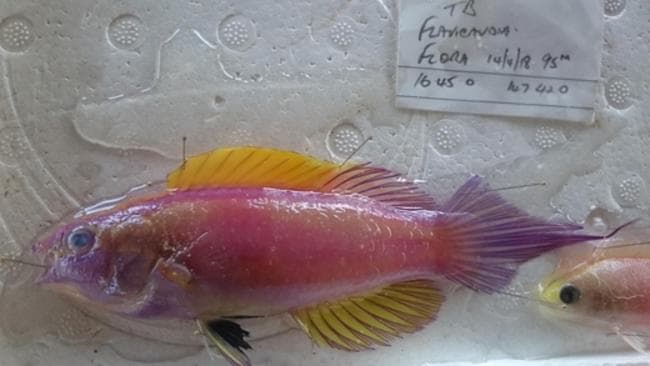
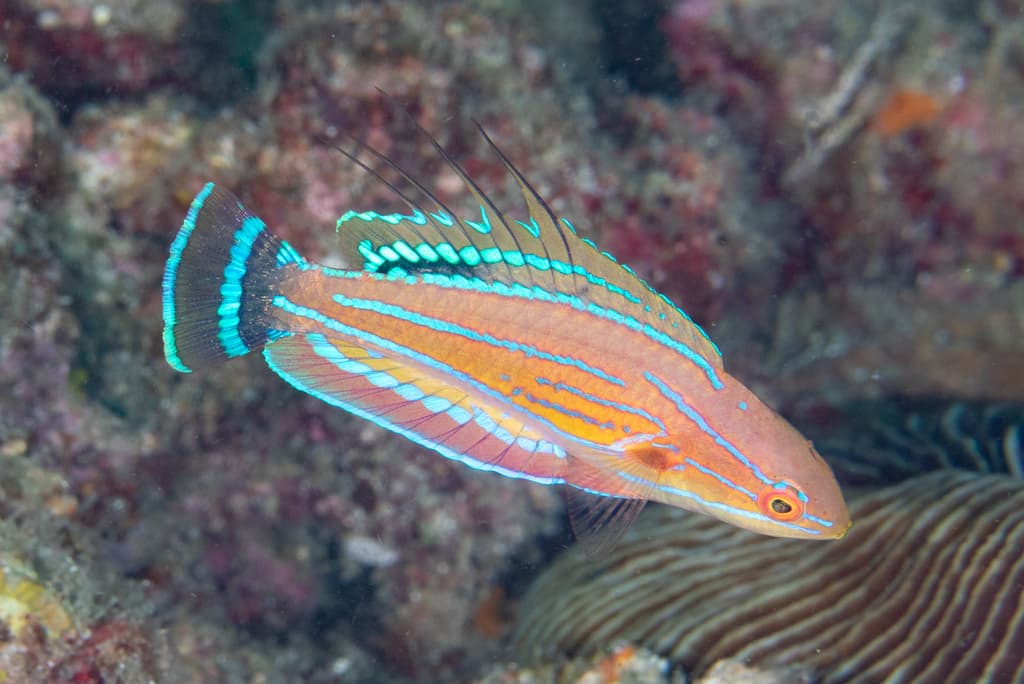
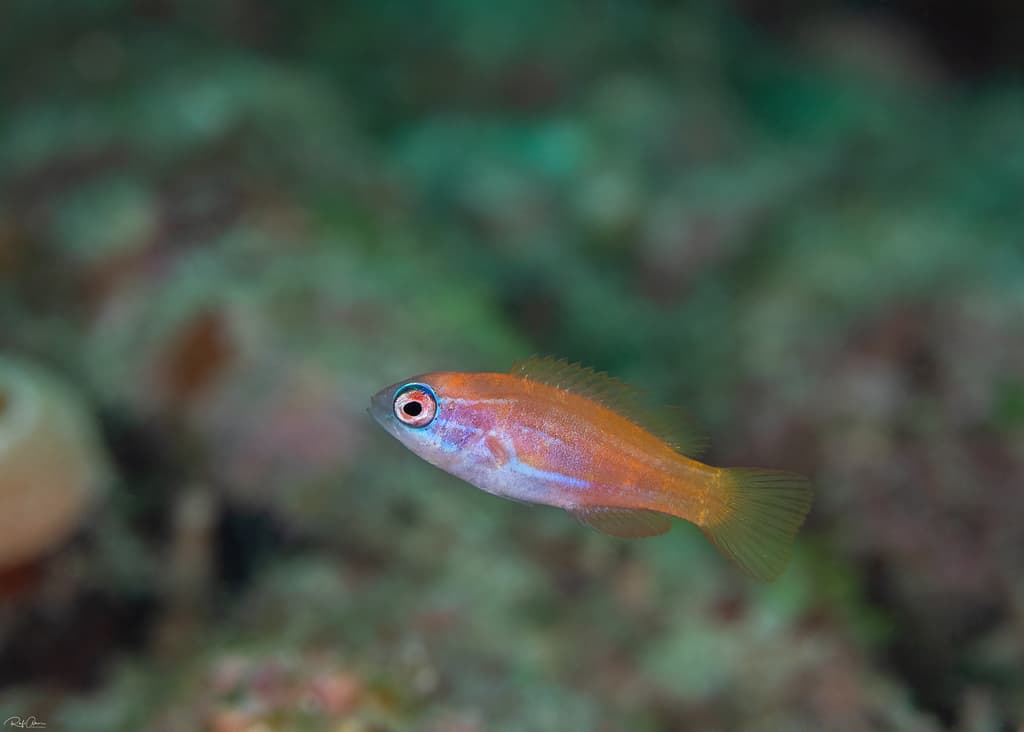
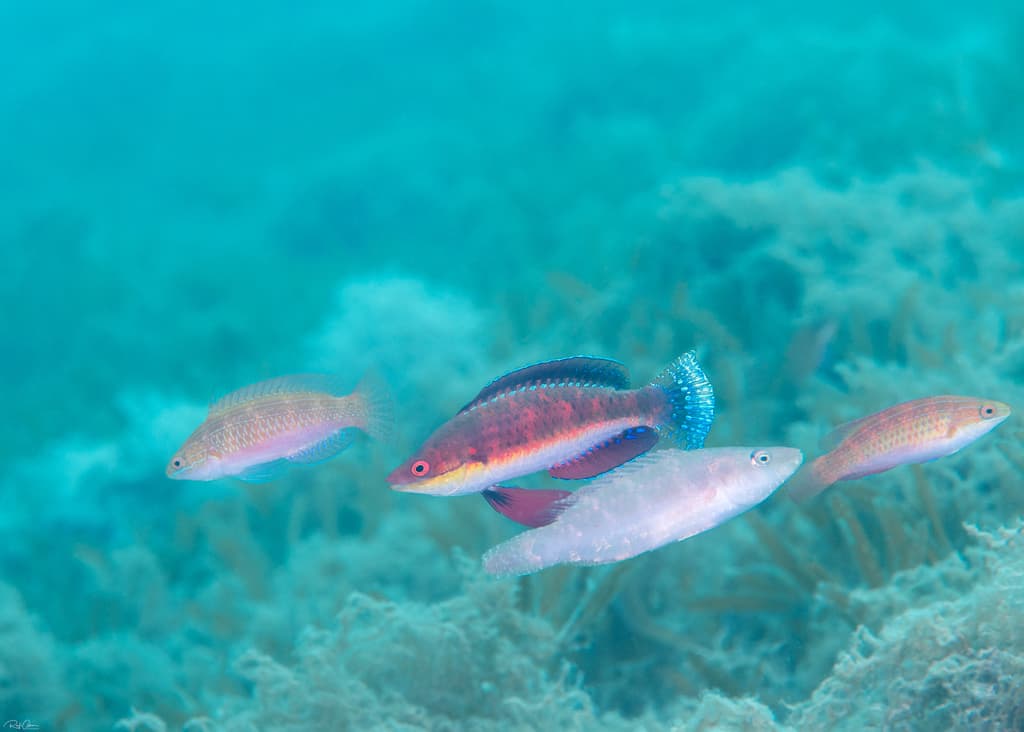
The Red Velvet Wrasse is a stunning Red Sea species that earns its common name from the rich, velvety red coloration displayed by mature males. The entire body is suffused with deep crimson red, accented by blue highlights on the face and fins that create a luxurious, jewel-like appearance. Females are more modestly colored with an orange-pink body and hints of yellow, though they are still quite attractive.
As a Red Sea endemic, the Red Velvet Wrasse benefits from the pristine, stable conditions for which that body of water is known. This origin also means availability can be variable depending on collection and export conditions from the region. When available, this species is moderately priced compared to some of the rarer Pacific fairy wrasses, making it an appealing choice for hobbyists seeking a distinctive Red Sea species.
The Red Velvet Wrasse is completely reef-safe and peaceful, making it an excellent addition to community reef aquariums. It is moderately hardy and adapts well to captive conditions with proper acclimation. Like all fairy wrasses, it requires a secure lid, moderate water flow, and multiple daily feedings of planktonic foods. This species is somewhat more social than many fairy wrasses and does well in small groups.
Feeding & Diet
Planktivore
Red Velvet Wrasses feed on zooplankton in the wild. In captivity, offer frozen mysis shrimp, enriched brine shrimp, cyclops, and quality marine pellets. Multiple small feedings per day are recommended to maintain the rich velvety coloration.
Compatibility
reef-safepeacefulcommunity-safedisplay-fishnano-compatible
The Red Velvet Wrasse is peaceful and completely reef-safe. It is more social than many fairy wrasses and can be kept in small groups. Males may flash competitively at other Cirrhilabrus species. Excellent community fish compatible with clownfish, tangs, gobies, dartfish, and other peaceful species.
Check CompatibilityBreeding
Not bred in captivity
Red Velvet Wrasses are protogynous hermaphrodites. Males maintain harems and perform vivid red courtship displays at dusk. Pelagic eggs are released into the water column. Captive breeding has not been commercially achieved for this species.
Special Requirements
- Tight-fitting lid essential - fairy wrasses are jumpers
- Multiple small feedings per day recommended
- Moderate water flow and open swimming space
- Red Sea species - availability depends on export conditions
- More social than most fairy wrasses - does well in small groups
Water Parameters
Temperature74–80°F
Specific Gravity1.02–1.026 sg
pH8.1–8.4
Alkalinity8–12 dKH
Coloration
redcrimsonblueorangepink
Tags
reef-safepeacefulcommunity-safedisplay-fishnano-compatible