IntermediatePeacefulReef Safe
Pink Margin Wrasse
Cirrhilabrus rubrimarginatus
Family: Labridae · Fairy & Flasher Wrasses
Also known as: Pink-Margined Fairy Wrasse, Red-Margin Fairy Wrasse
(c) Mark Rosenstein, some rights reserved (CC BY-NC)
Max Size
5"
Min Tank
55 gal
Lifespan
5-8 years
Origin
Western Pacific, Philippines
Diet
Planktivore
Swims
Middle
About
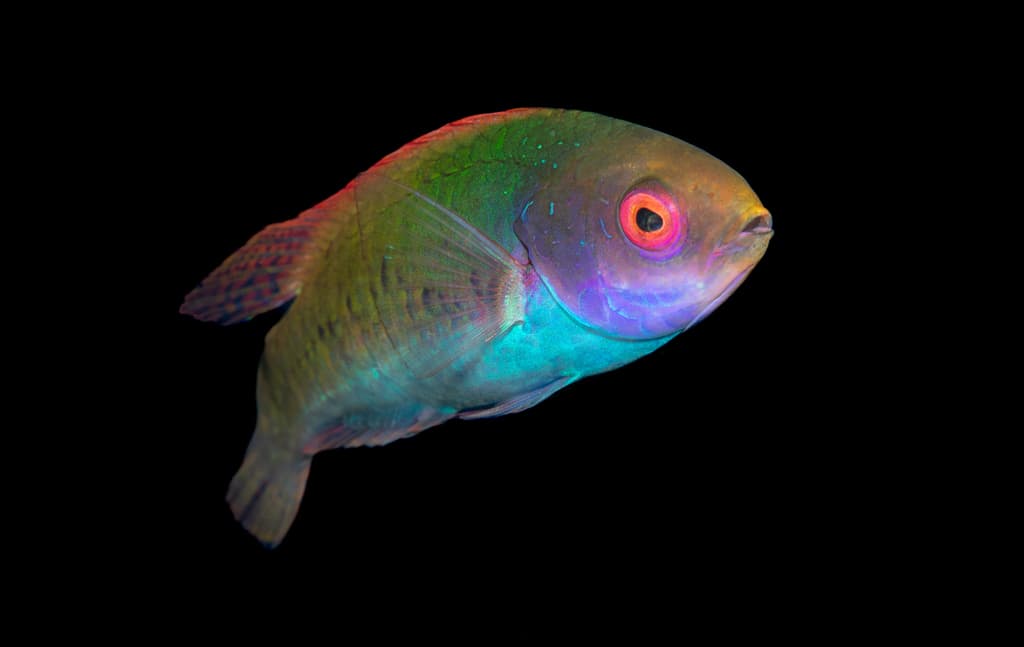
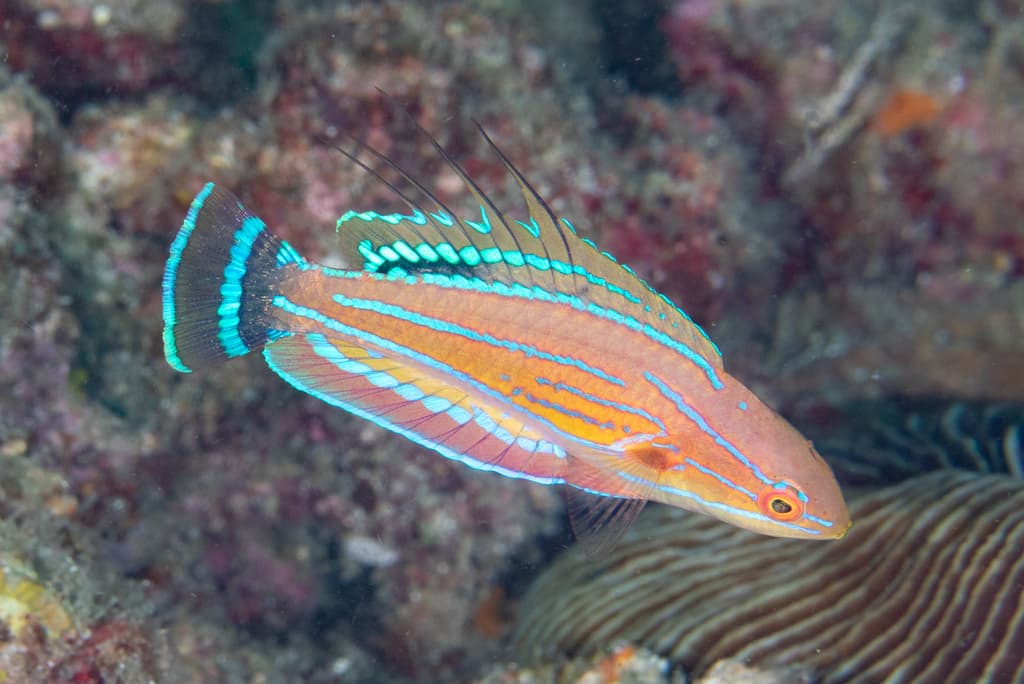
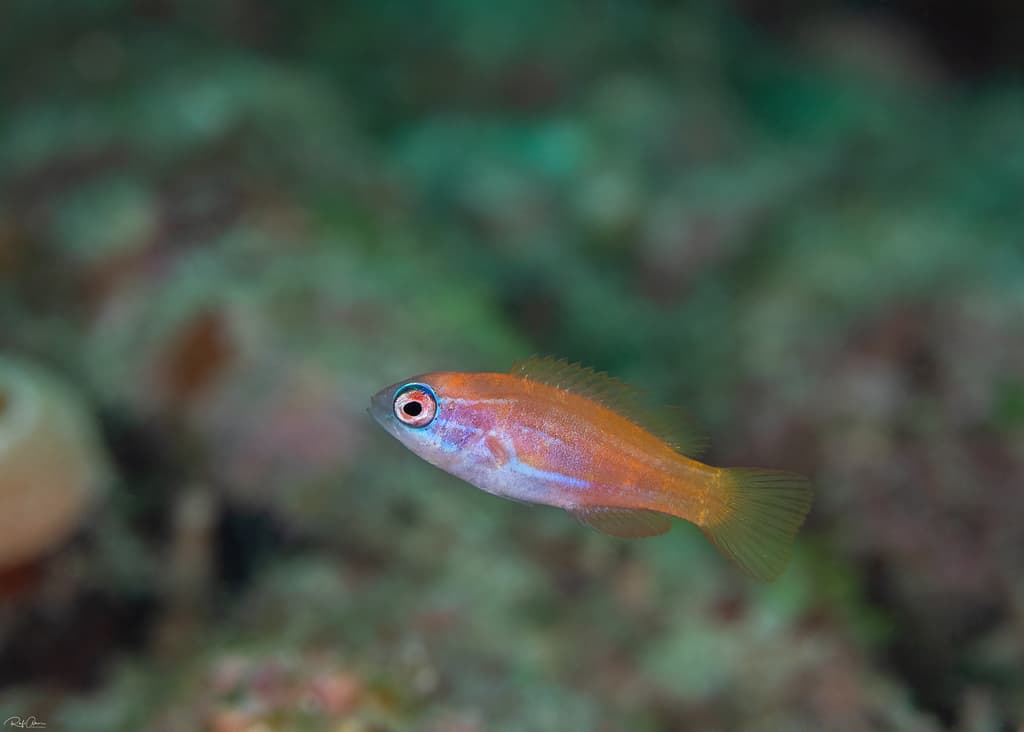
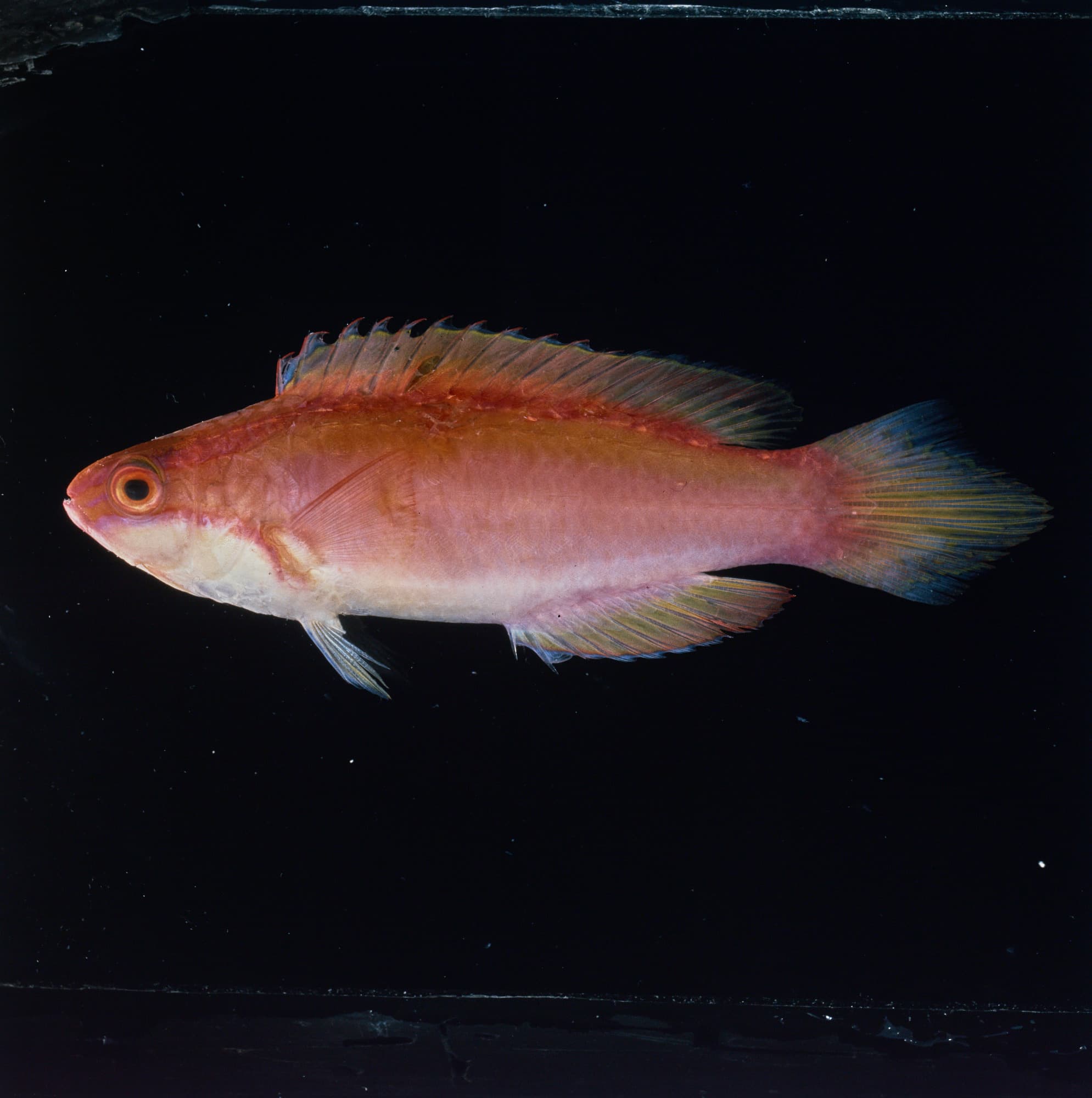
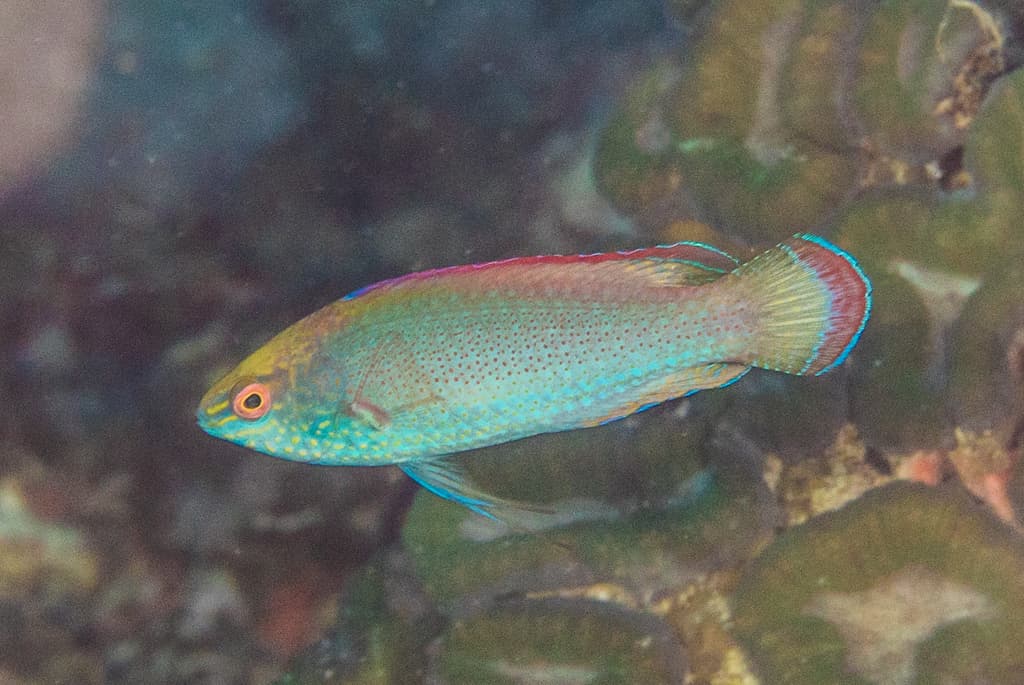
The Pink Margin Wrasse is a robust and colorful fairy wrasse distinguished by the distinctive pink to red margins on its dorsal and anal fins. Males display a striking combination of green, blue, and yellow on the body with vivid pink-red edges on the fins that create a beautiful contrast. The overall effect is one of refined elegance rather than flashy brilliance. Females are more subdued with a pinkish body and yellow highlights.
This is one of the more robust fairy wrasses in the genus, reaching up to five inches and possessing a stockier build than many of its more delicate relatives. This hardiness translates well to aquarium keeping, as the Pink Margin Wrasse adapts readily to captive conditions and is moderately easy to maintain. It is a reliable choice for aquarists who want a fairy wrasse that is both beautiful and resilient.
Completely reef-safe and peaceful, the Pink Margin Wrasse is an excellent community fish that coexists well with a wide range of tankmates. It swims actively throughout the middle and upper water column and performs regular color-flashing displays. A secure lid, moderate water flow, and multiple daily feedings of planktonic foods are essential for long-term success with this species.
Feeding & Diet
Planktivore
Pink Margin Wrasses are planktivores that feed on zooplankton in the wild. In captivity, offer frozen mysis shrimp, enriched brine shrimp, cyclops, and quality marine pellets. Feed small portions two to three times daily for optimal health and coloration.
Compatibility
reef-safepeacefulcommunity-safedisplay-fishplanktivore
The Pink Margin Wrasse is peaceful and completely reef-safe. It is one of the more robust fairy wrasses and can hold its own in moderately active community tanks. Males may compete with other Cirrhilabrus species, so keep only one species per tank unless the aquarium is large. Compatible with clownfish, tangs, gobies, and other community fish.
Check CompatibilityBreeding
Not bred in captivity
Pink Margin Wrasses are protogynous hermaphrodites. Males court females with color-flashing displays and spawn at dusk by releasing pelagic eggs. Captive breeding has not been achieved for this species due to the difficulty of rearing tiny planktonic larvae.
Special Requirements
- Tight-fitting lid essential - fairy wrasses are notorious jumpers
- Multiple small feedings per day recommended
- Moderate water flow and open swimming space
- Robust species but still benefits from stable water parameters
- Can be kept in harems in larger aquariums
Water Parameters
Temperature74–80°F
Specific Gravity1.02–1.026 sg
pH8.1–8.4
Alkalinity8–12 dKH
Coloration
greenblueyellowpinkred
Tags
reef-safepeacefulcommunity-safedisplay-fishplanktivore