IntermediatePeacefulReef Safe
Labouti Fairy Wrasse
Cirrhilabrus laboutei
Family: Labridae · Fairy & Flasher Wrasses
Also known as: Laboute's Fairy Wrasse, Red-Fin Fairy Wrasse
(c) Ian Shaw, all rights reserved
Max Size
4"
Min Tank
55 gal
Lifespan
5-8 years
Origin
Western Pacific, New Caledonia
Diet
Planktivore
Swims
Middle
About
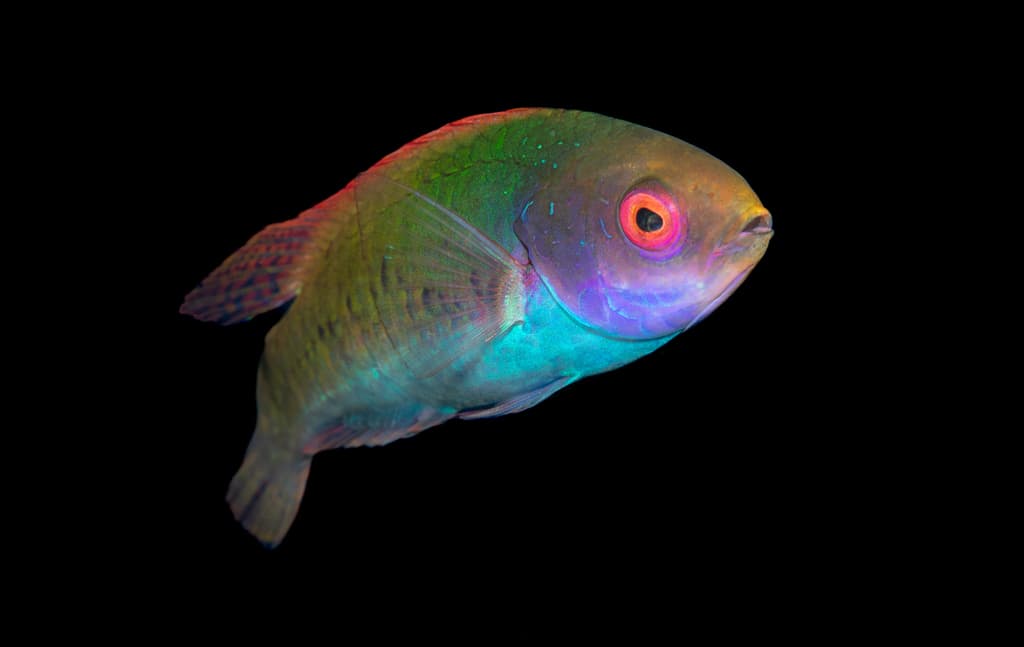
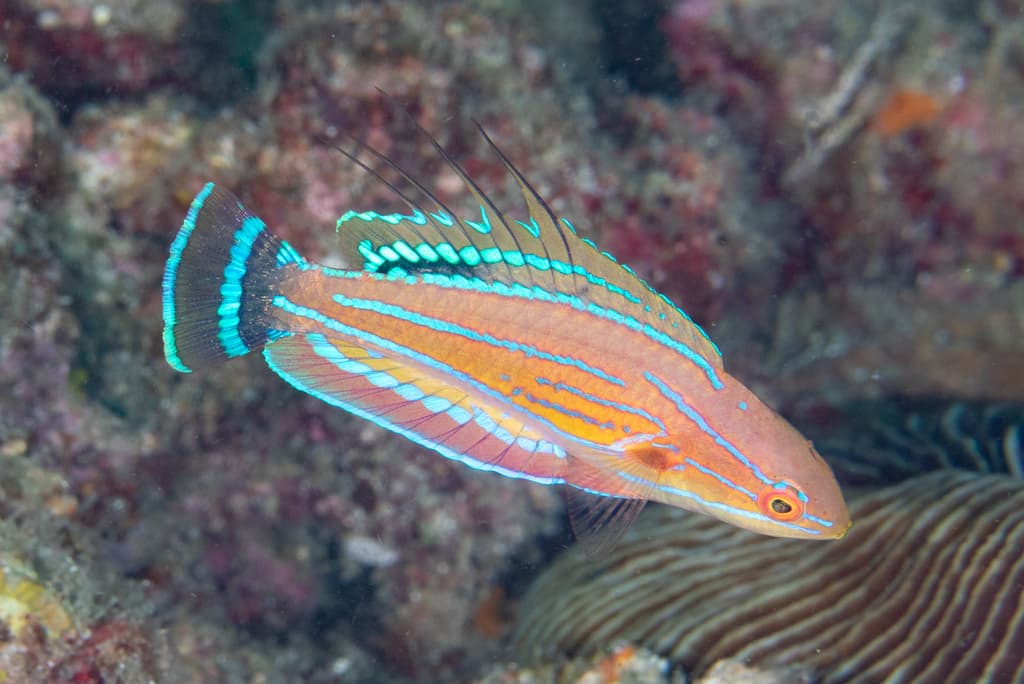
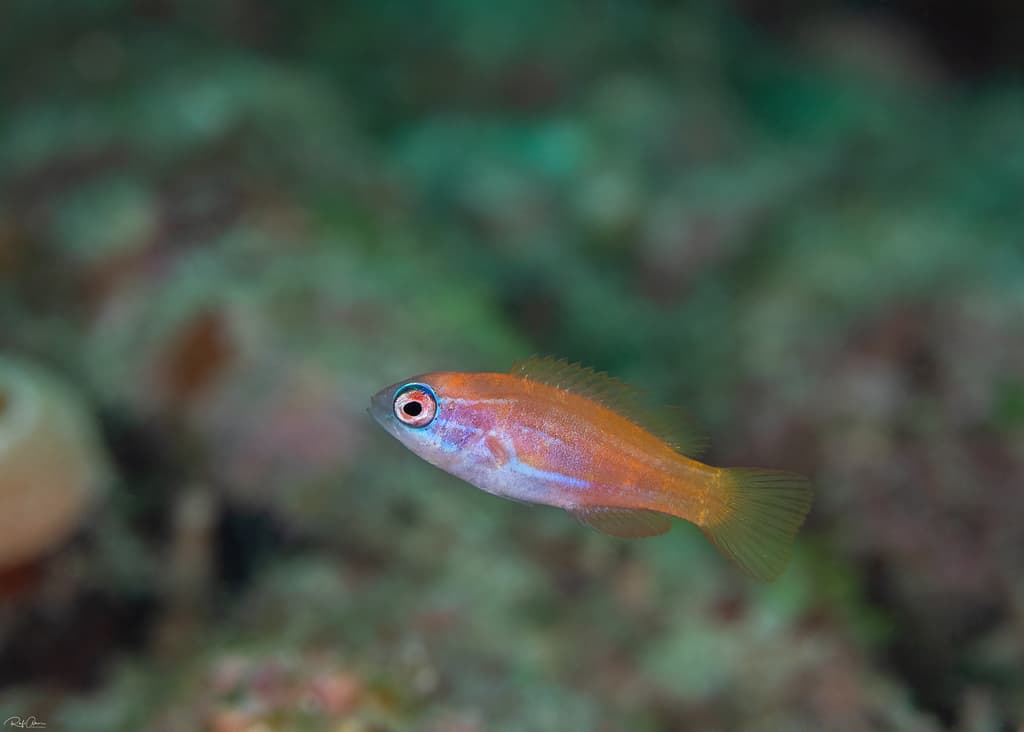
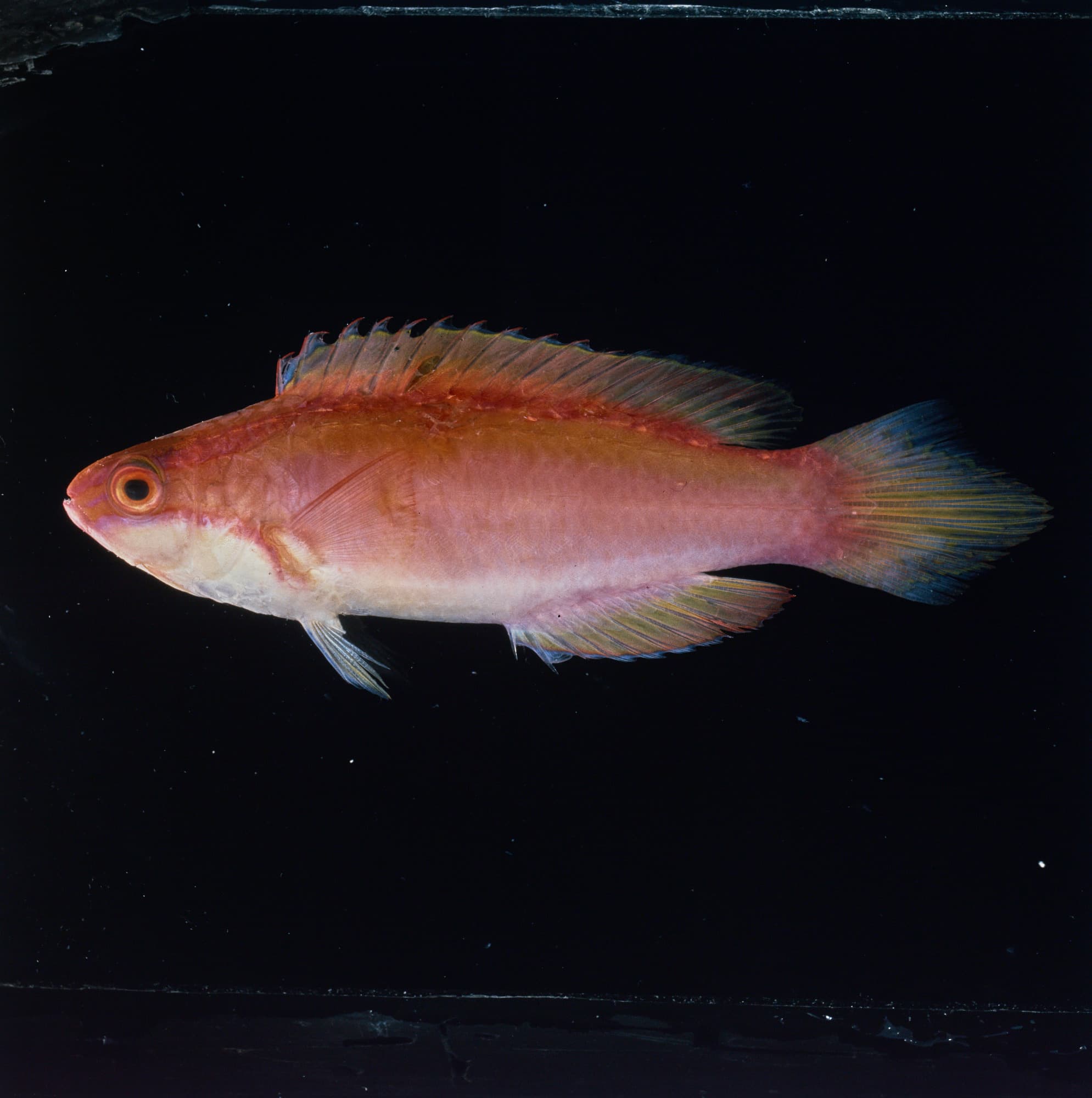
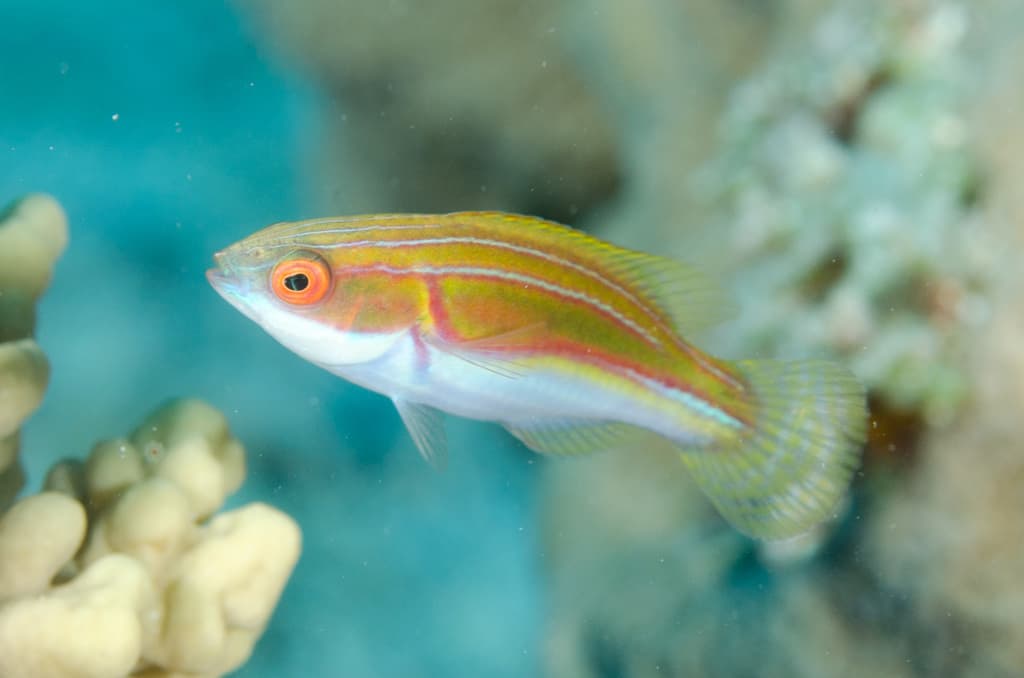
The Labouti Fairy Wrasse is a rare and exceptionally beautiful species prized for the stunning pink-red coloration of mature males. Males display an intense magenta to cherry-red body with lavender accents and electric blue highlights along the fins and face, creating one of the most vivid color combinations found in any fairy wrasse. Females are more subtly colored with a pinkish body and yellow accents.
Named after the renowned underwater photographer Jack Laboute, this species hails primarily from New Caledonia and surrounding waters in the western Pacific. Its limited distribution and the restricted collection opportunities from these regions make it one of the more expensive and sought-after fairy wrasses in the hobby. When available, specimens command premium prices that reflect their rarity and beauty.
Despite its exotic origins, the Labouti Fairy Wrasse is moderately hardy once acclimated to aquarium life. It is completely reef-safe and peaceful, integrating well into community reef systems. Like all fairy wrasses, it requires a secure lid, moderate water flow, open swimming space, and frequent small feedings of planktonic foods. Males display actively throughout the day, making this an outstanding centerpiece fish for the dedicated reef aquarist.
Feeding & Diet
Planktivore
Labouti Fairy Wrasses are planktivores feeding on zooplankton in the wild. In captivity, offer frozen mysis shrimp, enriched brine shrimp, cyclops, and small marine pellets. Multiple small feedings per day are essential for maintaining health and vivid coloration.
Compatibility
reef-safepeacefulcommunity-safedisplay-fishplanktivore
The Labouti Fairy Wrasse is peaceful and completely reef-safe. It coexists well with all community fish. Males may compete with other Cirrhilabrus species, so only one species should be kept per tank unless the aquarium is very large. Avoid aggressive tankmates that could stress this gentle fish.
Check CompatibilityBreeding
Not bred in captivity
Labouti Fairy Wrasses are protogynous hermaphrodites. Males maintain small harems and perform vibrant courtship displays at dusk. Pelagic eggs are released into the water column. Captive breeding has not been achieved for this rare species.
Special Requirements
- Tight-fitting lid essential - notorious jumper
- Multiple small feedings per day required
- Moderate water flow and open swimming space needed
- Rare species with limited availability and premium pricing
- Best kept as the only Cirrhilabrus species in smaller tanks
Water Parameters
Temperature74–80°F
Specific Gravity1.02–1.026 sg
pH8.1–8.4
Alkalinity8–12 dKH
Coloration
pinkredmagentalavenderblue
Tags
reef-safepeacefulcommunity-safedisplay-fishplanktivore