IntermediatePeacefulNot Reef Safe
Spotted Wobbegong Shark
Orectolobus maculatus
Family: Orectolobidae · Sharks & Rays
Also known as: Wobbegong, Carpet Shark, Spotted Wobbegong, Common Wobbegong
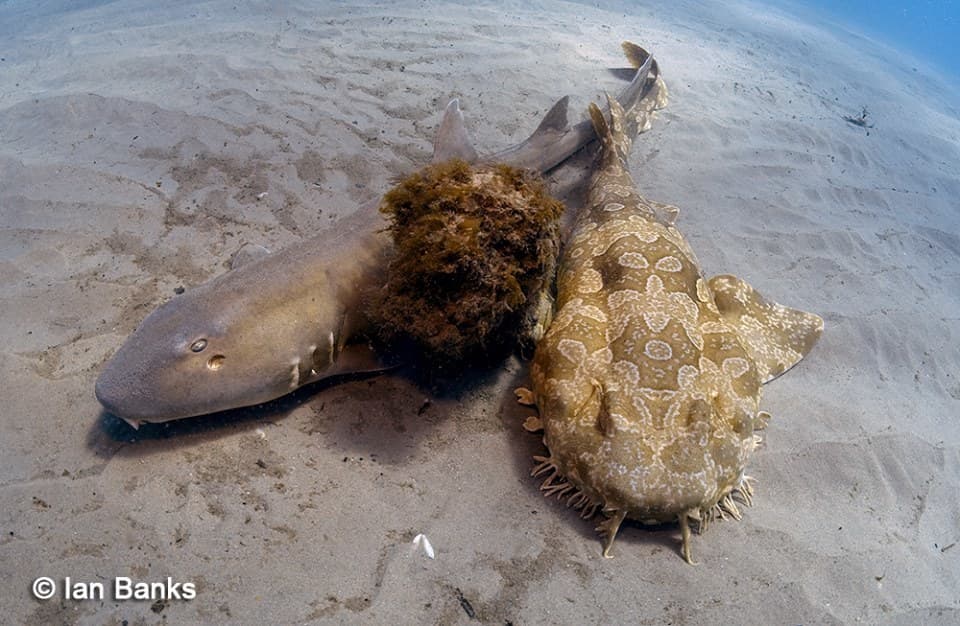
(c) Ian Banks, some rights reserved (CC BY-NC)
Max Size
48"
Min Tank
500 gal
Lifespan
20-30 years
Origin
Australia, Southern Australia
Diet
Carnivore
Swims
Bottom
About
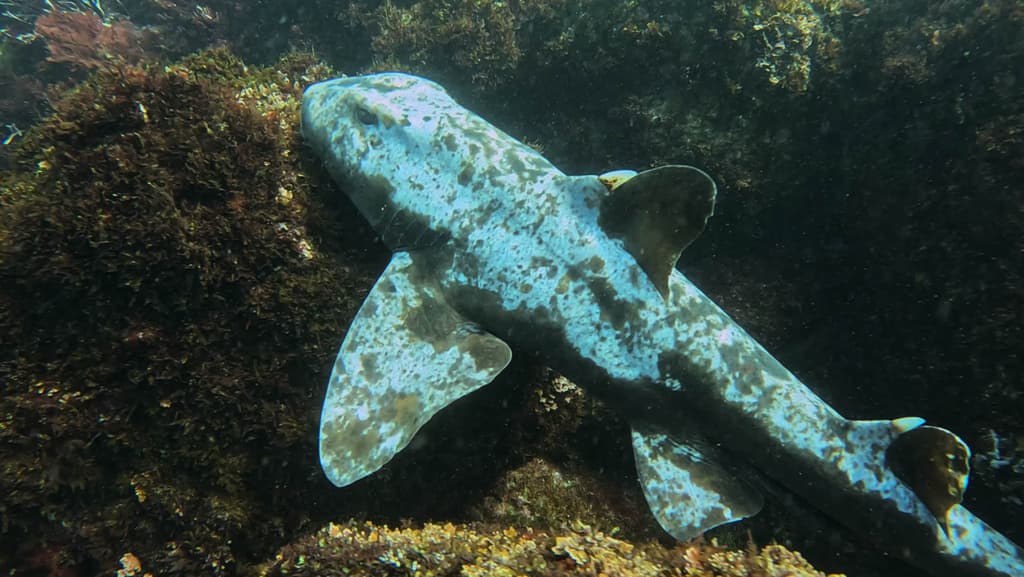
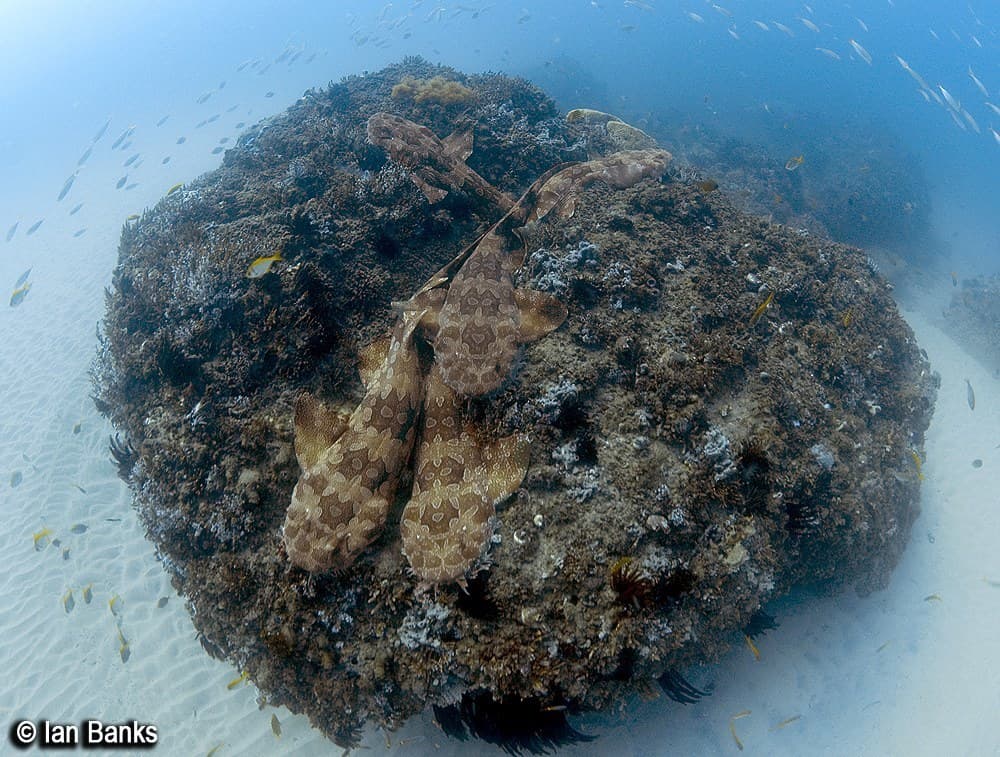
The Spotted Wobbegong is a large and fascinating carpet shark that exemplifies the art of camouflage in the marine world. Its broad, flattened body is elaborately patterned with a complex mosaic of brown, tan, and cream markings that allow it to blend almost invisibly against rocky reef and algae-covered surfaces. Most distinctive are the elaborate branching dermal lobes or tassels that fringe its lower jaw and head, which serve both as sensory organs and as camouflage, mimicking the appearance of seaweed and algae growth.
In the wild, the Spotted Wobbegong is a master ambush predator found on rocky reefs, under ledges, and in caves throughout Australian waters. It lies motionless for hours, perfectly camouflaged against the substrate, waiting for unsuspecting fish, octopus, or crustaceans to wander within striking distance. When prey approaches close enough, the wobbegong strikes with lightning speed, engulfing its victim with its enormous, highly distensible mouth. Despite its lethargic appearance, the wobbegong's strike speed is impressive, and it should never be underestimated as a predator.
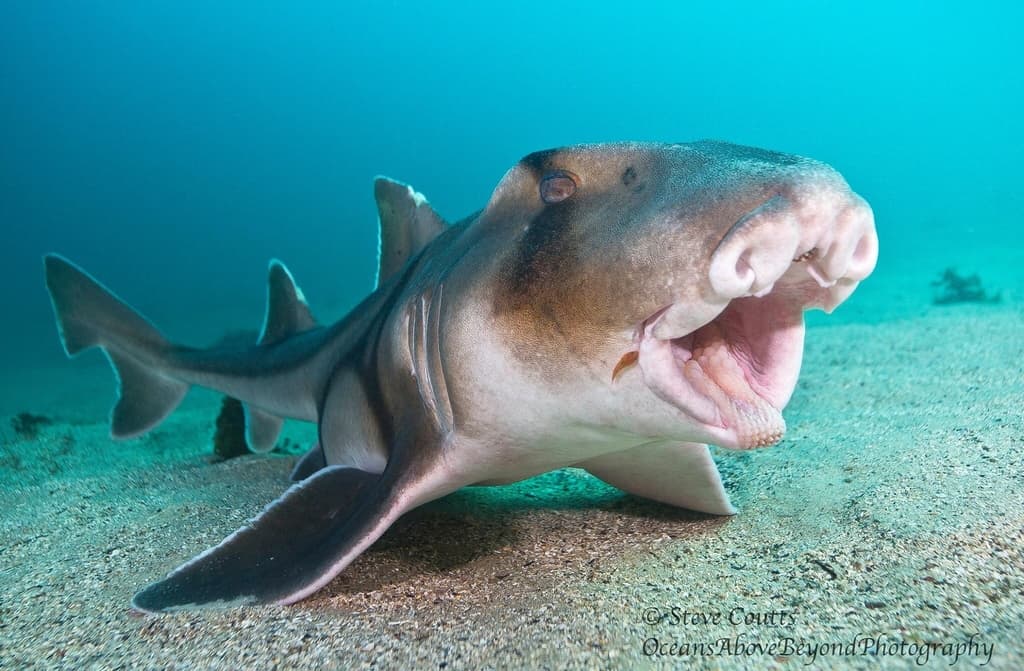
Keeping a Spotted Wobbegong requires an enormous commitment. While it grows to approximately 48 inches in most cases, some specimens can reach over 5 feet, necessitating a minimum tank of 500 gallons with a very wide, flat footprint. The aquarium should feature a fine sand substrate with ample caves and overhangs to replicate its natural resting habitat. The wobbegong will eat any fish or invertebrate that it can fit in its surprisingly large mouth, and it is deceptively capable of consuming fish nearly as long as itself. Despite its sedentary nature, it produces a significant bioload and requires powerful filtration. This species tolerates a range of temperatures from subtropical to temperate conditions.
Feeding & Diet
Carnivore
Wobbegong Sharks are ambush predators that eat fish, octopus, crabs, and other large invertebrates in the wild. In captivity, offer raw shrimp, squid, silversides, whole fish, and other meaty seafood. They prefer to eat at night or in dim lighting. Feed every three to four days, as their sedentary lifestyle means they have lower caloric needs than more active sharks. Avoid overfeeding.
Compatibility
not-reef-safepeacefulambush-predatorlarge-tank-requiredbottom-dwellernocturnalcamouflage
The Spotted Wobbegong is an ambush predator with a deceptively large mouth capable of swallowing fish nearly as long as itself. Only house with fish that are definitively too large to be consumed. Avoid any species that rests on the bottom near the wobbegong, as they will be mistaken for prey. Compatible with very large tangs, large angelfish, and similarly robust species that stay in the water column. Never keep with rays, small sharks, or any bottom-dwelling fish.
Check CompatibilityBreeding
Difficult
Spotted Wobbegong Sharks are ovoviviparous, giving birth to live young after a gestation period of approximately 10 to 11 months. Litters can number up to 37 pups. Breeding has been achieved in large public aquarium facilities but is not feasible for home aquarists due to the massive space requirements for maintaining breeding pairs.
Special Requirements
- Minimum 500-gallon tank with very wide, flat footprint
- Fine sand substrate with ample caves and overhangs
- Will eat ANY fish or invertebrate that fits in its very large mouth
- Ambush predator - surprisingly fast strike speed despite sedentary appearance
- Elaborate dermal lobes (tassels) on head and jaw are fragile - handle carefully
- Strong filtration required despite sedentary nature - heavy bioload
- Nocturnal - prefers dim lighting conditions
- Can tolerate subtropical to temperate temperatures
- Avoid copper-based medications - toxic to sharks
Water Parameters
Temperature68–78°F
Specific Gravity1.02–1.026 sg
pH8.1–8.4
Alkalinity8–12 dKH
Coloration
browntancreammottled
Tags
not-reef-safepeacefulambush-predatorlarge-tank-requiredbottom-dwellernocturnalcamouflage