AdvancedPeacefulReef Safe with Caution
Epaulette Shark
Hemiscyllium ocellatum
Family: Hemiscylliidae · Sharks & Rays
Also known as: Walking Shark, Blind Shark
(c) Sarah Whyte, some rights reserved (CC BY-NC)
Max Size
42"
Min Tank
300 gal
Lifespan
20-25 years
Origin
Western Pacific, Australia
Diet
Carnivore
Swims
Bottom
About
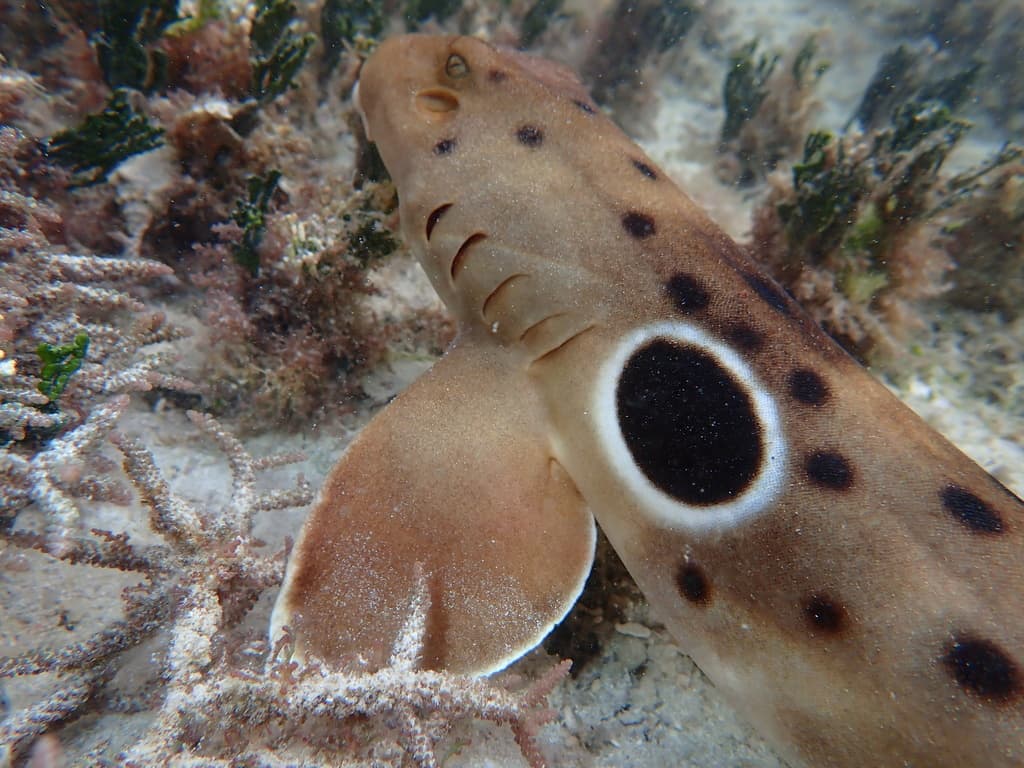
The Epaulette Shark is a small, slender carpet shark famous for its remarkable ability to "walk" across the reef using its muscular pectoral and pelvic fins. This unique locomotion allows it to navigate shallow tide pools and reef flats, where it hunts for invertebrates and small fish trapped in crevices. Named for the large, dark ocellus (eyespot) located behind each pectoral fin, which resembles a military epaulette, this species has become increasingly popular among advanced aquarists who can provide the massive aquarium space it requires.
One of the most extraordinary adaptations of the Epaulette Shark is its ability to survive extended periods of hypoxia, or low-oxygen conditions. On shallow reef flats during low tide, oxygen levels can plummet, yet this shark can downregulate its brain function and blood supply to non-essential organs, effectively surviving with almost no oxygen for several hours. This physiological marvel has made it a subject of significant scientific research and adds to its fascination as a captive species.
In the home aquarium, the Epaulette Shark requires a very large system with a minimum length of eight feet and at least 300 gallons of water volume. A wide, shallow tank design is preferred over a tall, narrow one, as this species spends the vast majority of its time on the bottom. The aquarium must have a fine sand substrate to protect its soft ventral surface and ample rockwork caves for resting during the day. While it is generally docile and ignores most large fish, it will consume any crustacean, small fish, or invertebrate it can catch, making it unsuitable for traditional reef aquariums with ornamental shrimp or small fish.
Feeding & Diet
Carnivore
Epaulette Sharks are carnivores that feed on benthic invertebrates, worms, small crustaceans, and small fish in the wild. In captivity, offer raw shrimp, squid, clam, silversides, and other meaty seafood. Feed every two to three days. Avoid overfeeding as obesity is common in captive sharks. Enriched foods with vitamins are recommended for long-term health.
Compatibility
reef-cautionpeacefulpredatorlarge-tank-requiredbottom-dwelleradvanced-only
The Epaulette Shark is peaceful toward fish too large to consume but will eat any small fish, crustacean, or invertebrate it can catch. Compatible with large tangs, angelfish, groupers, and other robust species. Avoid housing with ornamental shrimp, small gobies, or any fish under four inches. Multiple Epaulette Sharks can coexist in sufficiently large systems.
Check CompatibilityBreeding
Difficult
Epaulette Sharks are oviparous, laying paired egg cases that hatch after approximately 120 days at 77 degrees Fahrenheit. Breeding in captivity has been achieved in public aquariums and by dedicated private hobbyists with sufficiently large systems. Eggs are deposited on the substrate or attached to rockwork and require stable water conditions throughout the incubation period.
Special Requirements
- Minimum 8-foot-long aquarium required
- Fine sand substrate essential to protect ventral surface
- Strong filtration and protein skimmer necessary for bioload
- Wide, shallow tank design preferred over tall tanks
- Will eat crustaceans, small fish, and invertebrates
- Ample rockwork caves for daytime resting
- Nocturnal - most active at night and during dim lighting
Water Parameters
Temperature74–78°F
Specific Gravity1.02–1.026 sg
pH8.1–8.4
Alkalinity8–12 dKH
Coloration
tanbrowncreamblack
Tags
reef-cautionpeacefulpredatorlarge-tank-requiredbottom-dwelleradvanced-only