IntermediatePeacefulNot Reef Safe
Port Jackson Shark
Heterodontus portusjacksoni
Family: Heterodontidae · Sharks & Rays
Also known as: Port Jackson Bullhead, Tabbigaw, Oyster Crusher
(c) stephencoutts, some rights reserved (CC BY-NC)
Max Size
65"
Min Tank
500 gal
Lifespan
20-30 years
Origin
Australia, Southern Australia
Diet
Carnivore
Swims
Bottom
About
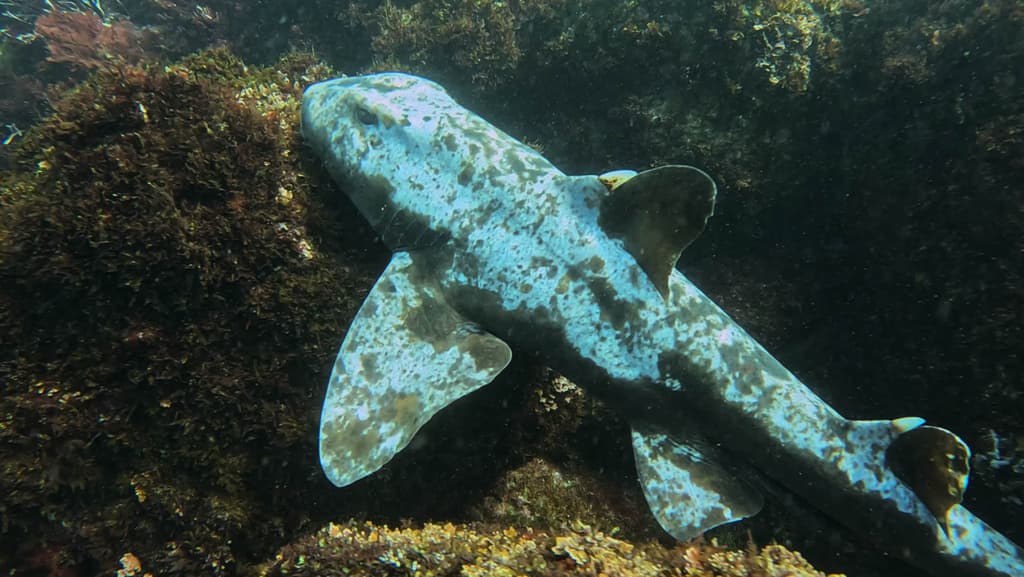
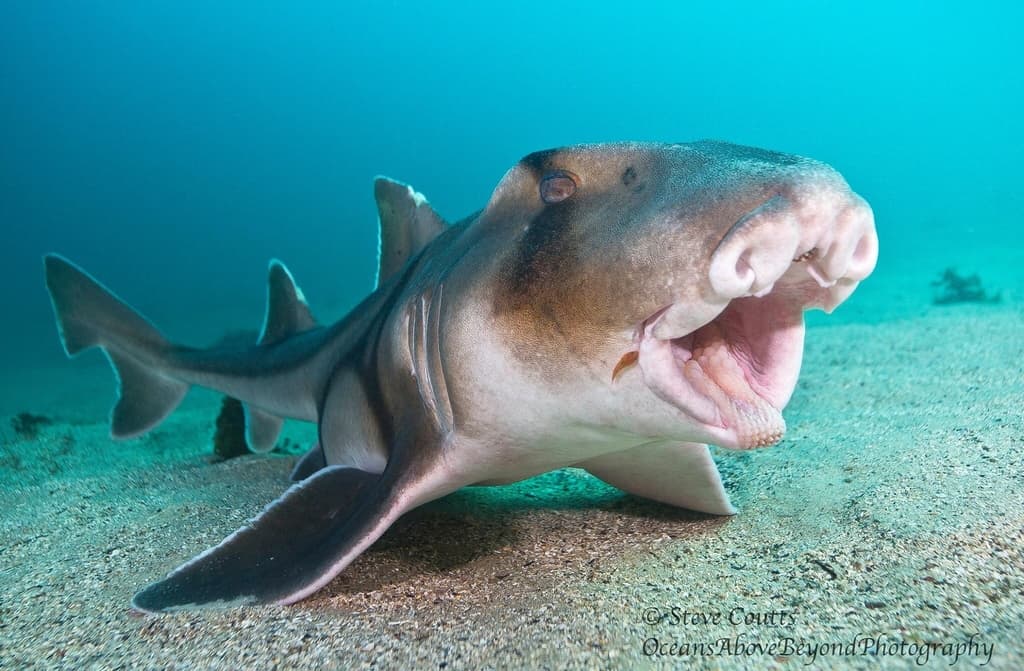
The Port Jackson Shark is a large, distinctive bullhead shark native to the temperate waters of southern Australia. It is one of the most recognizable sharks in Australian waters, featuring a blunt head with prominent forehead ridges and a unique harness-like pattern of dark brown bands that run across the body and around the gills, creating a distinctive marking that resembles a horse's yoke or harness. Its tan to grayish-brown body can reach an impressive 65 inches in length, making it one of the largest Heterodontus species.
In the wild, Port Jackson Sharks are primarily found in rocky reefs, seagrass beds, and sandy areas at depths from shallow tide pools to over 250 meters. They are nocturnal hunters that feed mainly on hard-shelled invertebrates, including sea urchins, mollusks, crabs, and starfish. Like other bullhead sharks, they possess heterodont teeth with sharp front teeth for grasping and flat molar-like rear teeth for crushing shells. Port Jackson Sharks are known for their annual migrations along the Australian coast, traveling hundreds of kilometers between breeding and feeding grounds.
Keeping a Port Jackson Shark in captivity is a serious undertaking reserved for the most dedicated aquarists with access to very large systems. A minimum tank size of 500 gallons with a long, wide footprint is essential, and significantly larger is preferable. The most critical requirement is temperature: this is a cold-water species that requires water temperatures between 60 and 70 degrees Fahrenheit. A high-capacity chiller is mandatory in most indoor environments. The combination of its large adult size, cold-water requirements, and long lifespan of over 20 years means this species should only be attempted by hobbyists who can provide a permanent home with appropriate conditions.
Feeding & Diet
Carnivore
Port Jackson Sharks are specialized predators of hard-shelled invertebrates. In the wild, they feed on sea urchins, crabs, mollusks, and starfish. In captivity, offer raw shrimp, squid, clam on the half shell, mussels, crab, and silversides. They benefit from whole prey items that allow them to exercise their crushing teeth. Feed every two to three days and avoid overfeeding. Vitamin supplementation is recommended for long-term health.
Compatibility
not-reef-safepeacefulpredatorlarge-tank-requiredbottom-dwellernocturnalcold-water
The Port Jackson Shark is peaceful toward fish too large to eat, but its cold-water requirement severely limits tankmate options. Compatible only with other temperate species that tolerate the same 60-70F range. Will consume any crustacean, sea urchin, or invertebrate. Can be kept with other Port Jackson Sharks in very large systems, though their eventual size makes this impractical for most hobbyists.
Check CompatibilityBreeding
Difficult
Port Jackson Sharks are oviparous, laying distinctive spiral-shaped egg cases similar to those of the Horn Shark. Females deposit eggs in rocky crevices, and incubation takes approximately 10 to 12 months in cooler water. This species has been bred in public aquariums but is extremely challenging for home aquarists due to the size requirements for maintaining breeding pairs.
Special Requirements
- CRITICAL: Cold-water species requiring 60-70F - high-capacity chiller mandatory
- Minimum 500-gallon tank with very wide, long footprint - larger is strongly preferred
- Fine sand substrate essential to protect ventral surface
- Ample rocky caves and overhangs for daytime hiding
- Strong filtration and oversized protein skimmer required
- Will eat all crustaceans, urchins, starfish, and small invertebrates
- Nocturnal - most active at night
- Very long-lived - commitment of 20+ years
- Avoid copper-based medications - toxic to sharks
Water Parameters
Temperature60–70°F
Specific Gravity1.02–1.026 sg
pH8.1–8.4
Alkalinity8–12 dKH
Coloration
tanbrowngraycream
Tags
not-reef-safepeacefulpredatorlarge-tank-requiredbottom-dwellernocturnalcold-water