BeginnerSemi-AggressiveReef Safe with Caution
Flame Hawkfish
Neocirrhites armatus
Family: Cirrhitidae · Hawkfish
Also known as: Brilliant Hawkfish, Red Hawkfish
(c) Mark Rosenstein, some rights reserved (CC BY-NC)
Max Size
3.5"
Min Tank
30 gal
Lifespan
5-7 years
Origin
Western Pacific, Great Barrier Reef
Diet
Carnivore
Swims
Bottom
About
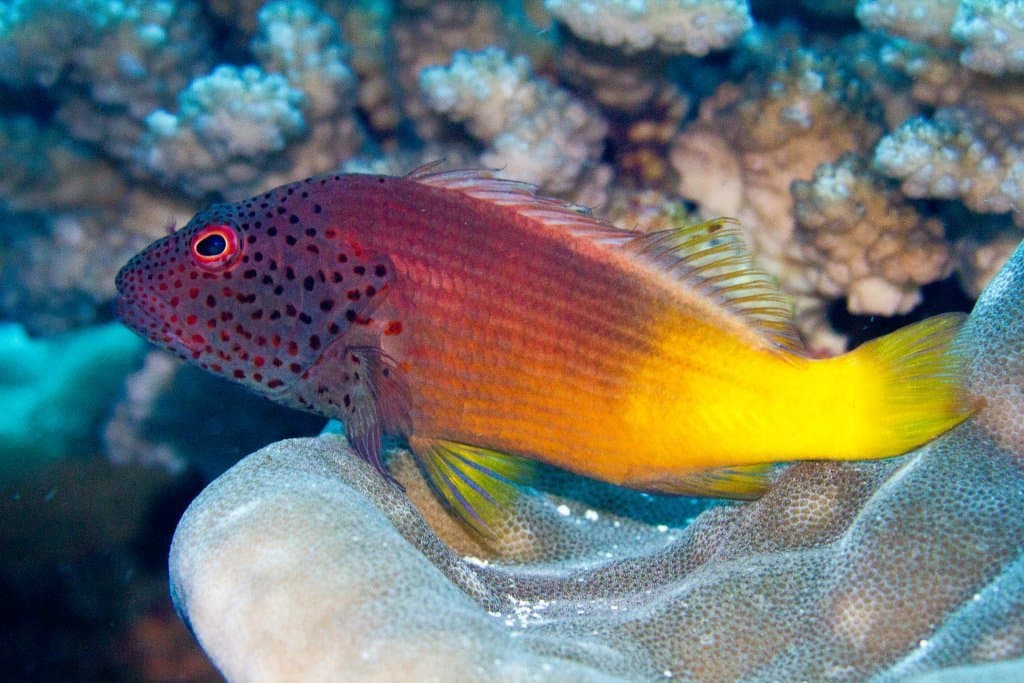
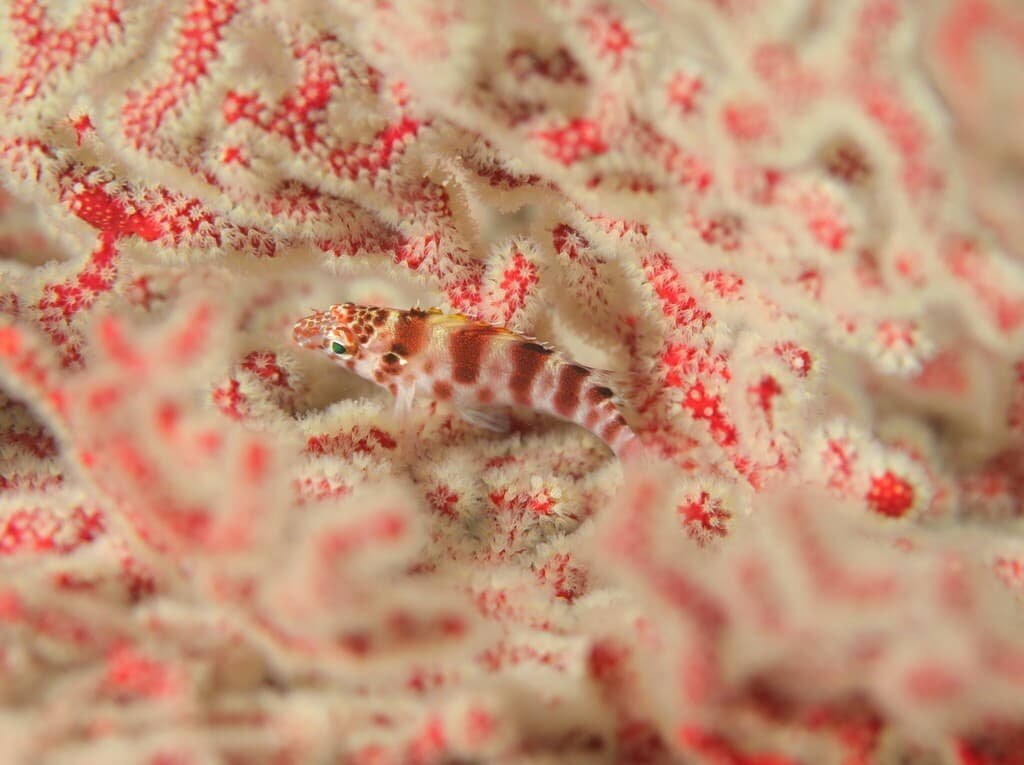
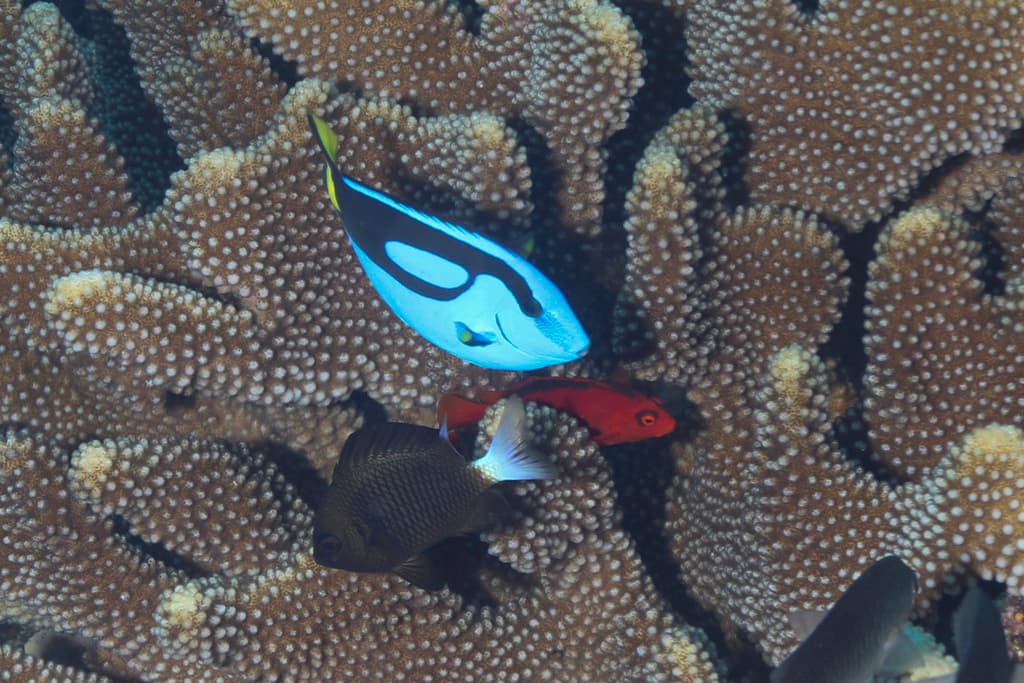
The Flame Hawkfish is a stunningly vivid species that brings a brilliant splash of deep red color to the marine aquarium. Its compact, robust body is entirely bright red with subtle dark markings around the eyes and along the dorsal fin. Like all hawkfish, it lacks a swim bladder and prefers to perch on rock ledges, coral branches, and elevated surfaces, from which it surveys its territory with keen, observant eyes.
This species is an excellent choice for aquarists of all experience levels due to its extreme hardiness, bold personality, and willingness to accept all manner of prepared foods from the first day in the tank. The Flame Hawkfish is an active, curious fish that quickly becomes the center of attention, often perching prominently and watching aquarium activity with interest.
While generally reef-safe with corals, the Flame Hawkfish is a micro-predator that will consume ornamental shrimp, small crabs, and other tiny crustaceans. It can be semi-aggressive toward small, passive fish and may bully new additions to the tank. It is best kept singly unless in a very large aquarium, as conspecifics will fight. Despite these caveats, its manageable size and bold character make it a perennial favorite.
Feeding & Diet
Carnivore
Flame Hawkfish are carnivores that prey on small crustaceans, zooplankton, and invertebrates in the wild. In captivity, they eagerly accept frozen mysis shrimp, brine shrimp, chopped seafood, and high-quality marine pellets. Feed two to three times daily.
Compatibility
reef-safesemi-aggressiveperchermay-eat-shrimphardy
The Flame Hawkfish is generally compatible with most community reef fish but may harass very small, timid species like firefish or small gobies. It will prey on ornamental shrimp including cleaner shrimp. Safe with corals of all types. Best kept singly as conspecifics will fight aggressively.
Check CompatibilityBreeding
Difficult
Flame Hawkfish are protogynous hermaphrodites, with dominant females able to change sex to male. Spawning occurs at dusk with pairs rising briefly into the water column to release pelagic eggs. Captive breeding has been achieved on a limited basis but remains uncommon in the hobby.
Special Requirements
- Provide elevated perching spots on rock or coral
- Will eat ornamental shrimp and small crabs
- Keep singly to avoid conspecific aggression
- Secure lid recommended as they may jump
Water Parameters
Temperature74–80°F
Specific Gravity1.02–1.026 sg
pH8.1–8.4
Alkalinity8–12 dKH
Coloration
redblack
Tags
reef-safesemi-aggressiveperchermay-eat-shrimphardy