IntermediateAggressiveNot Reef Safe
Giant Hawkfish
Cirrhitus rivulatus
Family: Cirrhitidae · Hawkfish
Also known as: Hieroglyphic Hawkfish, Rivulated Hawkfish, Stocky Hawkfish
(c) Vicki Anderson, all rights reserved
Max Size
24"
Min Tank
180 gal
Lifespan
8-12 years
Origin
Eastern Pacific, Gulf of California
Diet
Carnivore
Swims
Bottom
About
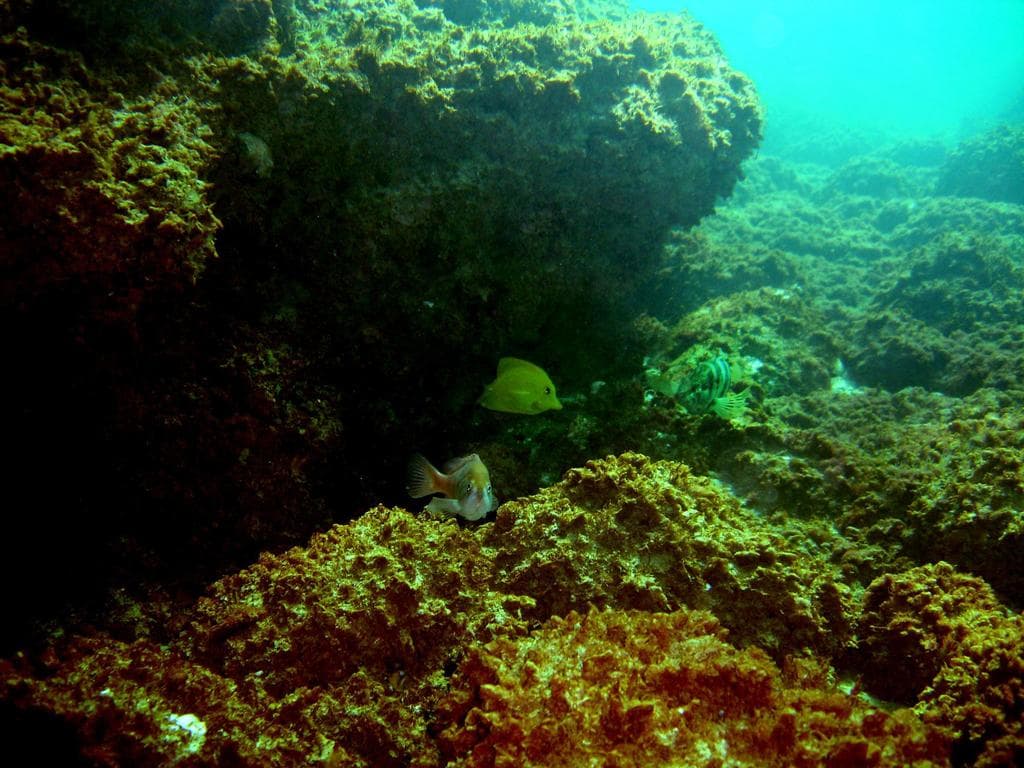
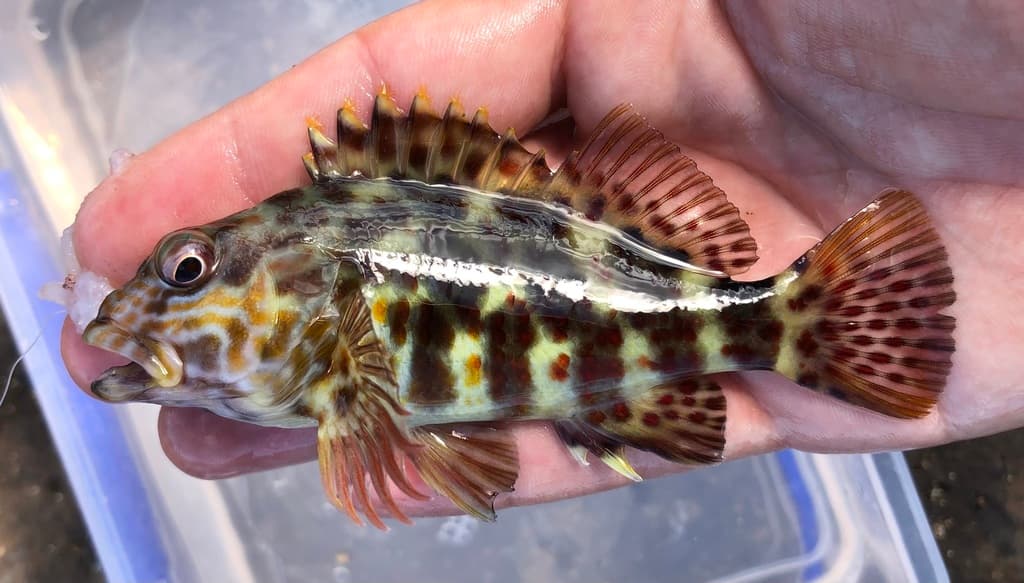
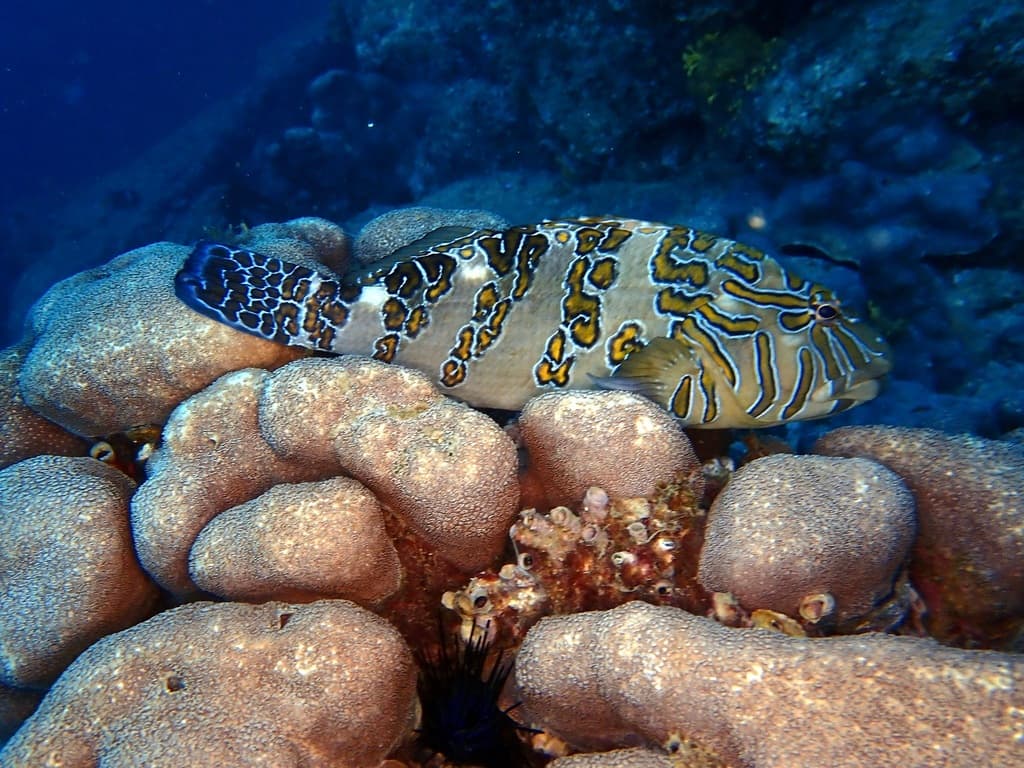
The Giant Hawkfish is by far the largest member of the hawkfish family, reaching an impressive 24 inches in length and dwarfing its more commonly kept relatives. Its muscular, thick-bodied frame is adorned with a bold pattern of reddish-brown hieroglyphic-like markings and spots over a lighter background, giving it a rugged, predatory appearance. Like all hawkfish, it lacks a swim bladder and prefers to perch on rocky outcroppings, ledges, and elevated surfaces, from which it ambushes prey with explosive speed.
In the wild, the Giant Hawkfish inhabits rocky reefs and surge zones along the Eastern Pacific coast, from the Gulf of California to the Galapagos Islands. It is a formidable apex predator in its habitat, feeding on fish, crabs, sea urchins, and other large invertebrates. Its powerful jaws and muscular body allow it to capture and crush prey items that smaller hawkfish species could never tackle. This species tends to be solitary and highly territorial, aggressively defending its chosen perching site from intruders.
Due to its massive adult size and aggressive predatory nature, the Giant Hawkfish requires a very spacious aquarium of at least 180 gallons and is suitable only for experienced aquarists who can accommodate its needs. It is not reef-safe, as it will consume any crustacean, small fish, or invertebrate it can catch. It is best housed in a large fish-only setup with equally robust and large tankmates such as groupers, large triggers, and large wrasses. Despite its aggressive feeding behavior, the Giant Hawkfish can develop an interactive personality and will quickly learn to recognize its owner as a food source.
Feeding & Diet
Carnivore
Giant Hawkfish are voracious carnivores that feed on fish, crabs, shrimp, sea urchins, and other large invertebrates. In captivity, offer chunks of raw shrimp, squid, silversides, krill, and other meaty seafood. They will also readily consume high-quality marine carnivore pellets once acclimated. Feed every one to two days, adjusting based on growth and body condition. Avoid overfeeding as they are prone to obesity in captivity.
Compatibility
not-reef-safeaggressivepredatorlarge-tank-requiredpercherFOWLR
The Giant Hawkfish is a large, aggressive predator that will eat any fish or invertebrate small enough to fit in its mouth. It must only be housed with equally large, robust species. Compatible with groupers, large triggers, large wrasses, and moray eels. Avoid housing with any fish under 6 inches, ornamental shrimp, or any crustaceans. Will aggressively defend its territory against similar-sized fish.
Check CompatibilityBreeding
Not bred in captivity
Giant Hawkfish are protogynous hermaphrodites, with dominant females changing to males. They are pelagic spawners that release buoyant eggs into the water column. Captive breeding has not been achieved due to the species' large size, territorial aggression, and challenges in rearing pelagic larvae.
Special Requirements
- Very large tank required due to adult size of 24 inches
- Will eat any fish or invertebrate small enough to consume
- Not reef-safe - predator of all crustaceans and small fish
- Provide large, sturdy rock perching platforms
- Strong filtration required for heavy bioload
- Secure lid recommended as large hawkfish can jump
- Solitary and territorial - best kept as the only hawkfish
Water Parameters
Temperature72–78°F
Specific Gravity1.02–1.025 sg
pH8.1–8.4
Alkalinity8–12 dKH
Coloration
brownredtanwhite
Tags
not-reef-safeaggressivepredatorlarge-tank-requiredpercherFOWLR