BeginnerPeacefulReef Safe
Barber Goby
Elacatinus figaro
Family: Gobiidae · Gobies
Also known as: Figaro Goby, Brazilian Neon Goby, Barber Neon Goby
(c) Kai Lima, some rights reserved (CC BY-NC)
Max Size
1.5"
Min Tank
10 gal
Lifespan
2-4 years
Origin
Caribbean, Brazil
Diet
Carnivore
Swims
Bottom
About
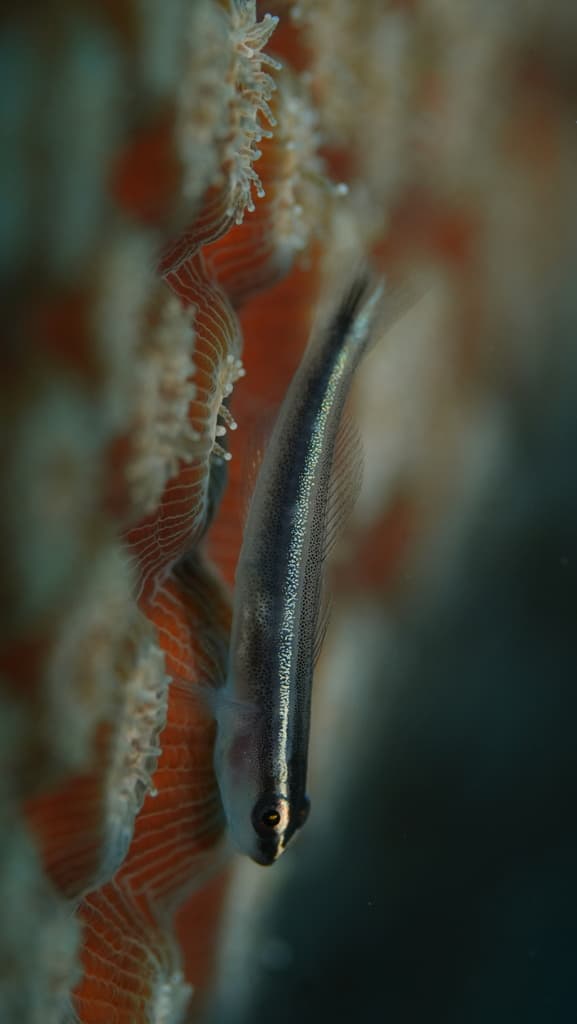
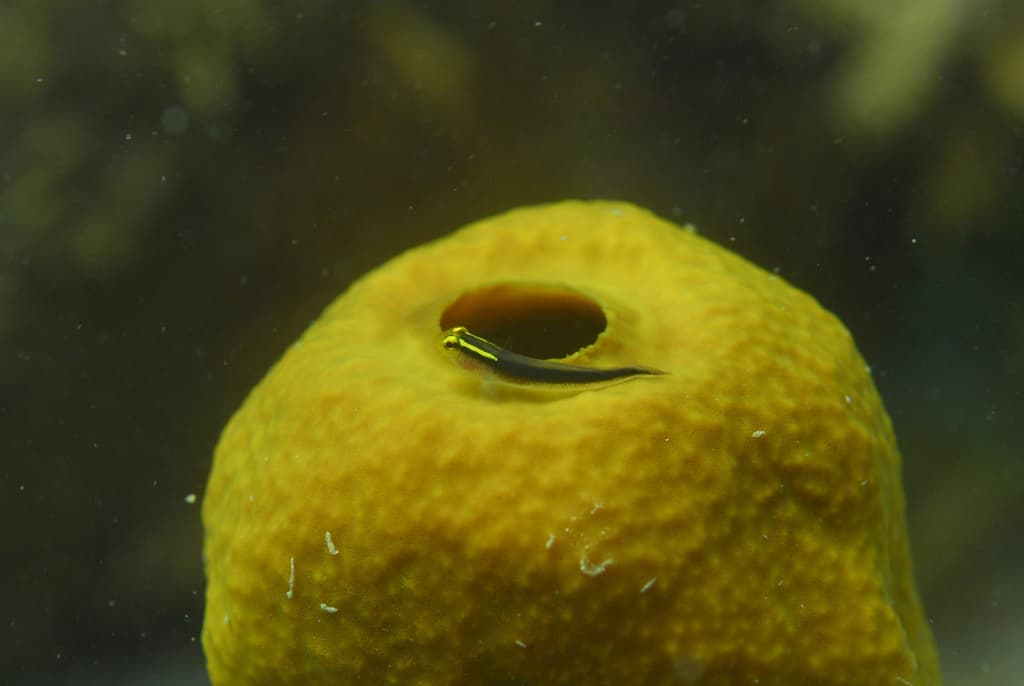
The Barber Goby is a charming cleaner species endemic to the coastal waters of Brazil, where it was first described from the rocky reefs near Arraial do Cabo. Like other members of the Elacatinus genus, this tiny goby establishes cleaning stations on prominent coral heads and rock outcroppings, where larger fish queue up to have parasites and dead skin removed. Its bold neon stripe serves as an advertisement to potential clients, signaling its cleaning services from a distance.
In the home aquarium, the Barber Goby is an ideal nano reef inhabitant. At a maximum size of just 1.5 inches, it requires minimal space and produces a negligible bioload. This species readily accepts captive-bred specimens, which are increasingly available in the hobby. Captive-bred individuals tend to be hardier and more readily accept prepared foods compared to their wild-caught counterparts.
The Barber Goby's cleaning behavior is fascinating to observe in a home aquarium, as it will actively attend to tankmates, picking at their skin and gill covers. This mutualistic behavior provides genuine health benefits to other fish in the system while offering the goby a natural food source. The species is extremely peaceful and poses no threat to corals, invertebrates, or other tankmates.
Feeding & Diet
Carnivore
Barber Gobies are micro-predators and cleaner fish that naturally feed on ectoparasites removed from client fish, along with tiny crustaceans and zooplankton. In captivity, they readily accept frozen mysis shrimp, brine shrimp, cyclops, and finely chopped seafood. High-quality pellet and flake foods are also accepted once acclimated.
Compatibility
reef-safepeacefulcommunity-safenano-reef
The Barber Goby is exceptionally peaceful and compatible with virtually all reef-safe species. Its cleaning behavior is welcomed by most tankmates. Avoid housing with aggressive species that may harass or consume this tiny fish.
Check CompatibilityBreeding
Moderate
Barber Gobies form monogamous pairs and deposit eggs in small crevices or empty shells. The male guards the clutch until hatching. Captive breeding has been achieved commercially, and larvae require rotifers and copepods during the early planktonic stage.
Special Requirements
- Captive-bred specimens recommended for best acclimation
- Provide live rock with cleaning stations for natural behavior
- Benefits from tankmates that accept cleaning services
- Small enough for nano reef aquariums of 10+ gallons
- Endemic to Brazil — wild-caught specimens rarely exported
Water Parameters
Temperature74–80°F
Specific Gravity1.02–1.026 sg
pH8.1–8.4
Alkalinity8–12 dKH
Coloration
blackyellowblue
Tags
reef-safepeacefulcommunity-safenano-reef