IntermediateSemi-AggressiveReef Safe with Caution
Yellowsaddle Goatfish
Parupeneus cyclostomus
Family: Mullidae · Goatfish
Also known as: Gold Saddle Goatfish, Blue Goatfish, Yellowsaddled Goatfish, Moano
(c) Vince Golder, all rights reserved
Max Size
20"
Min Tank
180 gal
Lifespan
5-8 years
Origin
Indo-Pacific, Red Sea
Diet
Carnivore
Swims
Bottom
About
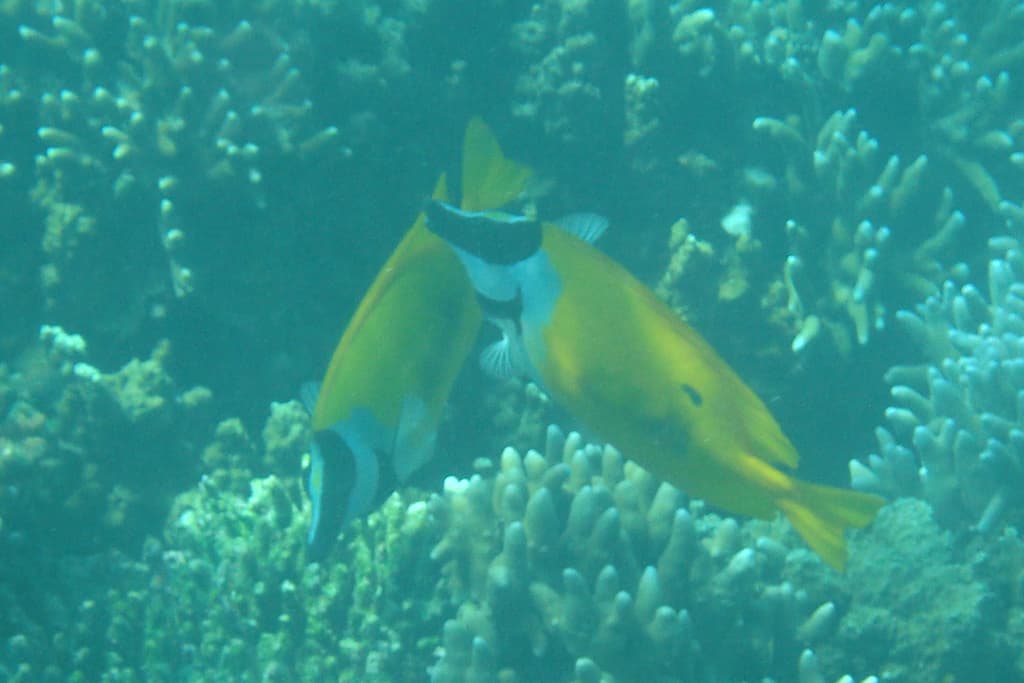
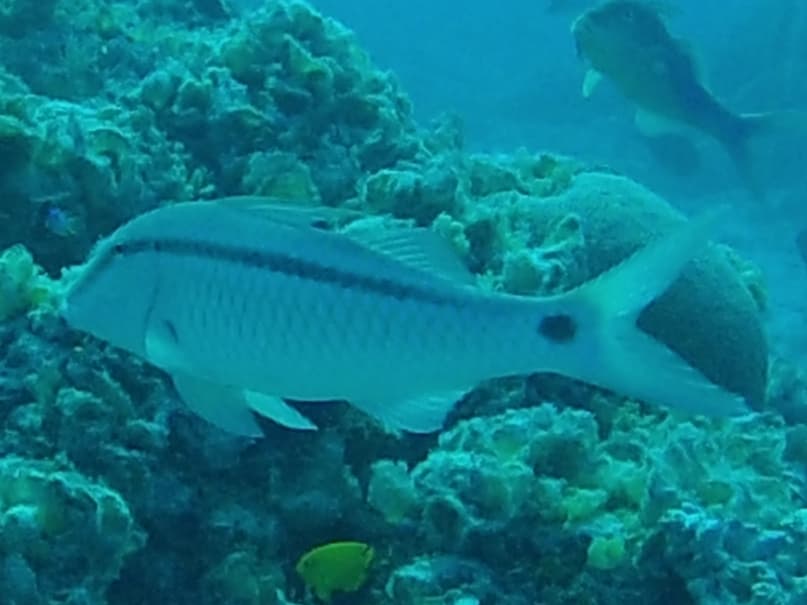
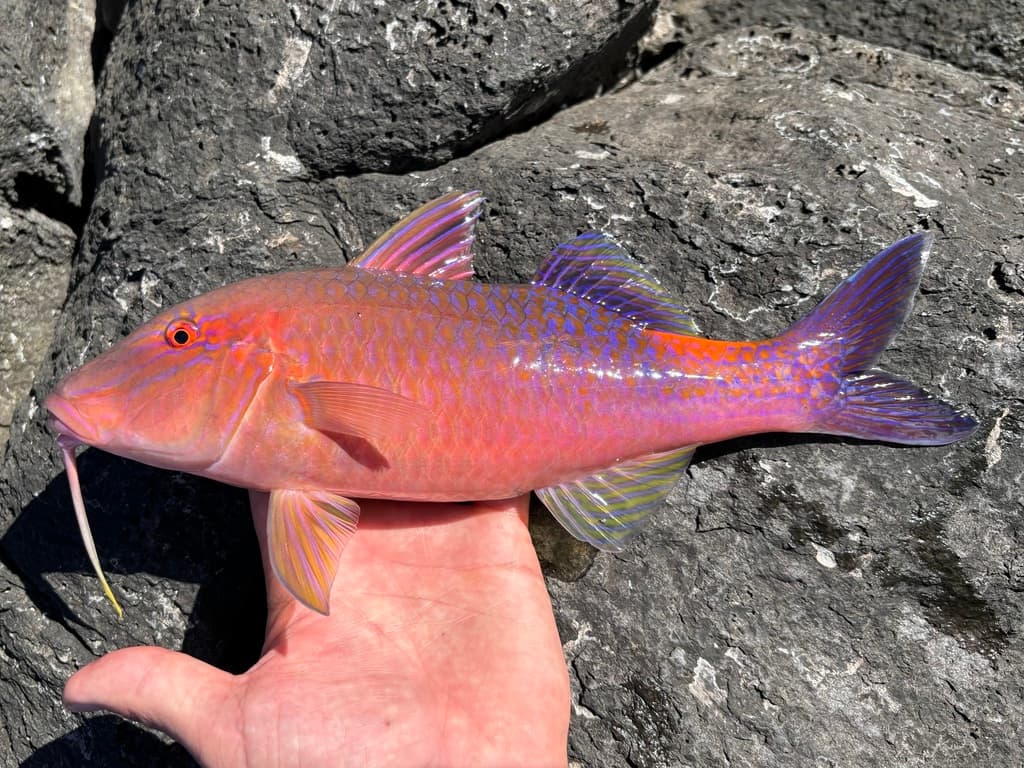
The Yellowsaddle Goatfish is one of the largest and most impressive members of the goatfish family, capable of reaching 20 inches in length in the wild. This species displays remarkable color variability, with individuals appearing in either a brilliant golden-yellow phase or a striking blue phase depending on their mood, habitat, and time of day. The yellow color phase features a bright canary-yellow body with a darker saddle marking, while the blue phase displays a vivid electric blue coloration. This ability to shift between dramatically different color states makes the Yellowsaddle Goatfish one of the most visually dynamic fish available to marine aquarists.
In the wild, the Yellowsaddle Goatfish is found on coral reefs and rocky substrates throughout the Indo-Pacific, from the Red Sea to Hawaii. It is a more aggressive predator than most goatfish species, actively hunting small fish and larger invertebrates in addition to the typical benthic organisms that most goatfish consume. It uses its long chemosensory barbels to probe crevices and substrate for hidden prey, and it has been observed cooperatively hunting with other species, herding prey toward each other in a remarkable display of interspecies collaboration.
Due to its large adult size and semi-aggressive temperament, the Yellowsaddle Goatfish requires a spacious aquarium of at least 180 gallons. It is not suitable for reef aquariums with ornamental crustaceans or small fish, as it will consume anything it can swallow. Despite these requirements, it is a hardy and adaptable species that acclimates well to captivity. Its dramatic color-changing ability and active behavior make it a centerpiece fish for large fish-only or FOWLR aquariums. It can be kept with other large, robust species that are too big to be consumed.
Feeding & Diet
Carnivore
Yellowsaddle Goatfish are active carnivores and one of the more predatory goatfish species. They feed on small fish, crustaceans, and invertebrates in the wild. In captivity, offer frozen silversides, krill, chopped shrimp, squid, and sinking carnivore pellets. They have a hearty appetite and should be fed two to three times daily. Will also actively hunt and consume any small invertebrates in the tank.
Compatibility
semi-aggressivepredatorbottom-feedersand-sifterinvertebrate-unsafelarge-tank-requiredFOWLR
The Yellowsaddle Goatfish is more aggressive than most goatfish species and will consume small fish and any invertebrates it can catch. It should only be housed with large, robust tankmates that are too big to be eaten. Compatible with large tangs, large angelfish, groupers, and triggersfish. Avoid keeping with small, peaceful species that would become prey. Can be kept with other large goatfish in very spacious systems.
Check CompatibilityBreeding
Not bred in captivity
Yellowsaddle Goatfish are pelagic spawners that have not been bred in home aquariums. Their large adult size, predatory nature, and extended planktonic larval phase make captive breeding impractical for hobbyists.
Special Requirements
- Very large tank required due to adult size of up to 20 inches
- Will eat small fish, ornamental shrimp, and crustaceans
- Can change between yellow and blue color phases
- Active swimmer requiring ample open swimming space
- Needs a tight-fitting lid as they can jump
- Generates significant bioload - strong filtration required
- Sandy substrate area needed for natural foraging behavior
Water Parameters
Temperature72–78°F
Specific Gravity1.02–1.025 sg
pH8.1–8.4
Alkalinity8–12 dKH
Coloration
yellowbluegold
Tags
semi-aggressivepredatorbottom-feedersand-sifterinvertebrate-unsafelarge-tank-requiredFOWLR