IntermediatePeacefulReef Safe with Caution
Bicolor Goatfish
Parupeneus barberinoides
Family: Mullidae · Goatfish
Also known as: Half-and-Half Goatfish, Bicolored Goatfish, Swarthy Goatfish
(c) Rodulf Anthony Balisco, some rights reserved (CC BY-NC)
Max Size
10"
Min Tank
125 gal
Lifespan
5-8 years
Origin
Indo-Pacific, Western Pacific
Diet
Carnivore
Swims
Bottom
About
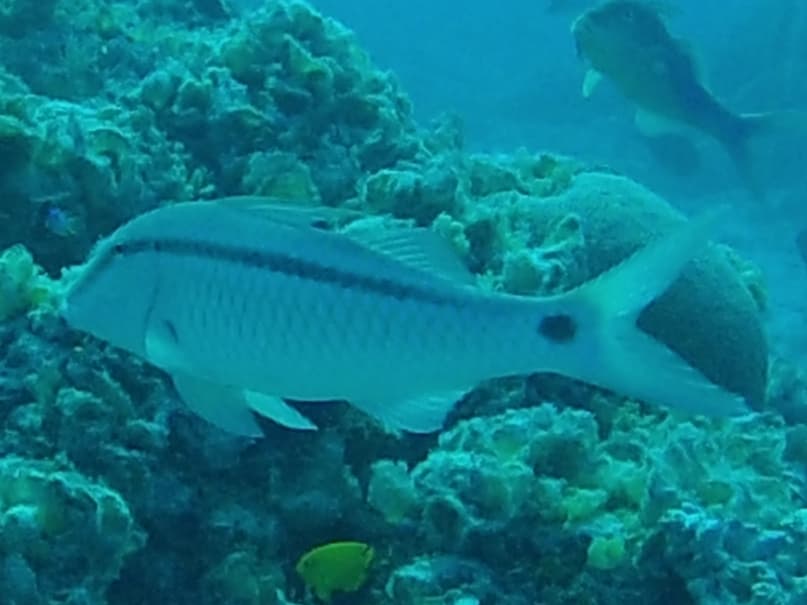
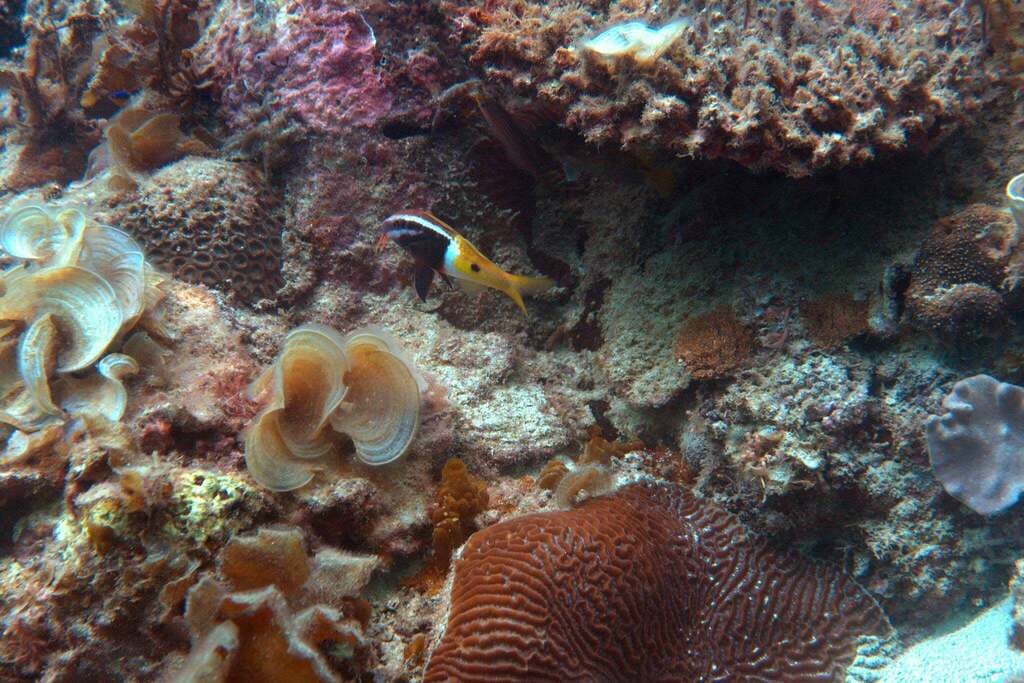
The Bicolor Goatfish is a strikingly patterned species that displays a dramatic two-toned color scheme, with the front half of the body being dark brown to maroon and the rear half transitioning to a contrasting pale white or cream color. This bold bicolor pattern makes it one of the most visually distinctive goatfish in the hobby. Like all goatfish, it possesses a pair of sensory barbels beneath the chin, which contain chemoreceptor cells used to probe the substrate and detect buried prey items with remarkable precision.
In the wild, the Bicolor Goatfish inhabits coral reefs and adjacent sandy areas throughout the Indo-Pacific, where it is most commonly found at depths between 5 and 30 meters. It is an active forager that spends much of the day methodically scanning the substrate with its barbels, rooting through sand and rubble for small crustaceans, worms, and other invertebrates. This constant probing behavior makes goatfish excellent natural sand-bed cleaners, though it can disturb carefully arranged aquascapes and upset burrowing tankmates.
Reaching about 10 inches in length, the Bicolor Goatfish requires an aquarium of at least 125 gallons with a generous sandy area for its natural foraging behavior. It is generally peaceful toward other fish but will readily consume ornamental shrimp, small crabs, and bristle worms found in the substrate. A deep sand bed of fine to medium grain size is preferred to accommodate its foraging style. The Bicolor Goatfish is a hardy and adaptable species that acclimates well to captivity, readily accepting a variety of frozen and prepared foods while continuing to supplement its diet through natural substrate foraging.
Feeding & Diet
Carnivore
Bicolor Goatfish are active bottom-feeding carnivores that use their chemosensory barbels to locate buried prey. Feed frozen mysis shrimp, enriched brine shrimp, chopped krill, squid, and sinking carnivore pellets. They will also forage for worms, small crustaceans, and uneaten food from the substrate. Feed two to three times daily to match their active metabolism.
Compatibility
bottom-feedersand-sifterinvertebrate-unsafeactive-swimmercommunity-safe
The Bicolor Goatfish is generally peaceful toward other fish but will consume small invertebrates and crustaceans found in the substrate. Best kept with medium to large community fish that will not be disturbed by its constant bottom-foraging. May upset burrowing species like jawfish with its substrate probing. Compatible with tangs, angelfish, wrasses, and other robust reef fish.
Check CompatibilityBreeding
Not bred in captivity
Bicolor Goatfish are pelagic spawners that release buoyant eggs into the water column. They have not been bred in home aquariums due to the difficulty of raising the tiny planktonic larvae and the species' need for large open water for natural spawning behavior.
Special Requirements
- Requires a deep sand bed for natural foraging behavior
- Will eat ornamental shrimp and small crustaceans
- Needs a tight-fitting lid as they can jump when startled
- Active foraging may disturb burrowing tankmates
- Open sandy areas needed alongside rockwork
Water Parameters
Temperature72–78°F
Specific Gravity1.02–1.025 sg
pH8.1–8.4
Alkalinity8–12 dKH
Coloration
brownmaroonwhitecream
Tags
bottom-feedersand-sifterinvertebrate-unsafeactive-swimmercommunity-safe