IntermediatePeacefulReef Safe with Caution
Aiptasia-Eating Filefish
Acreichthys tomentosus
Family: Monacanthidae · Filefish
Also known as: Bristletail Filefish, Matted Filefish, Seagrass Filefish
(c) 104623964081378888743, some rights reserved (CC BY-NC)
Max Size
4"
Min Tank
30 gal
Lifespan
3-5 years
Origin
Indo-Pacific, Western Pacific
Diet
Omnivore
Swims
Middle
About
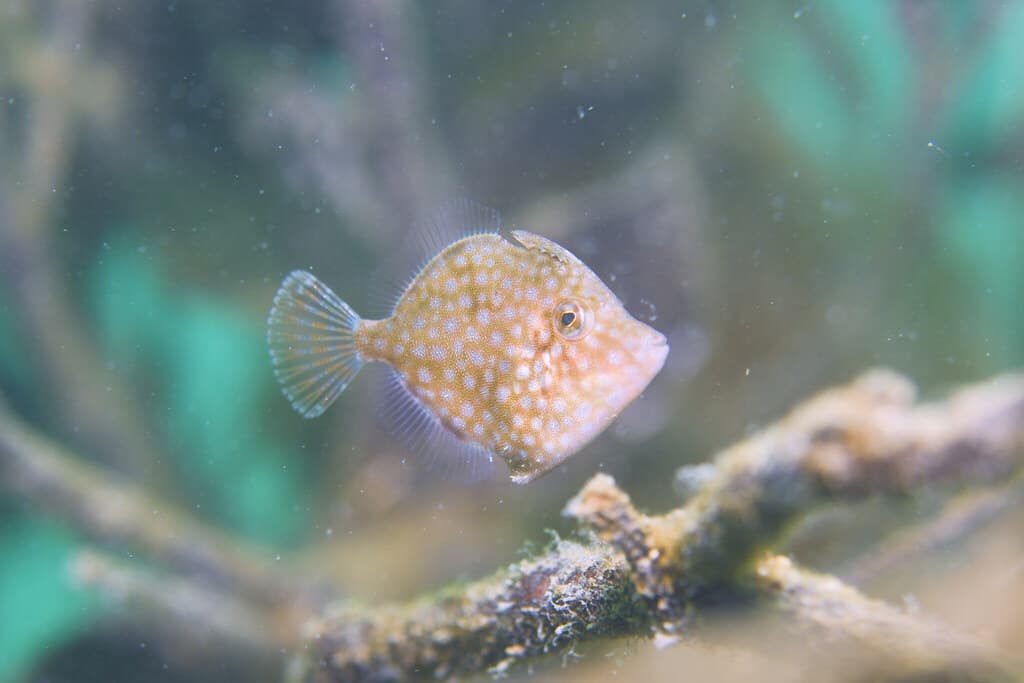
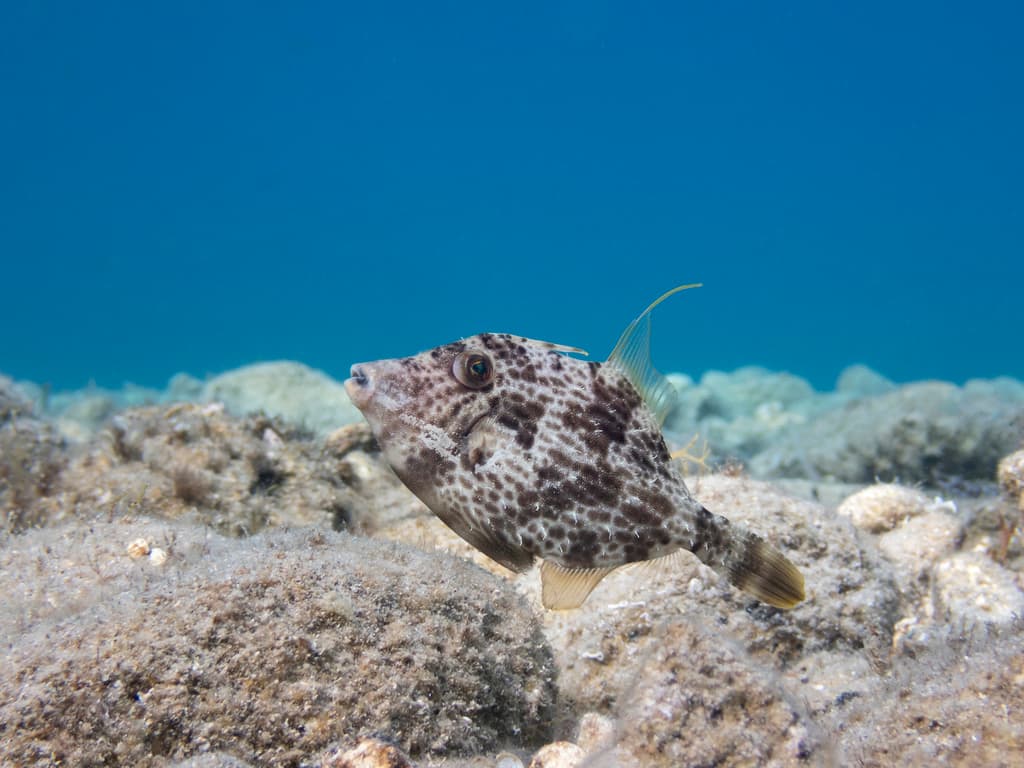
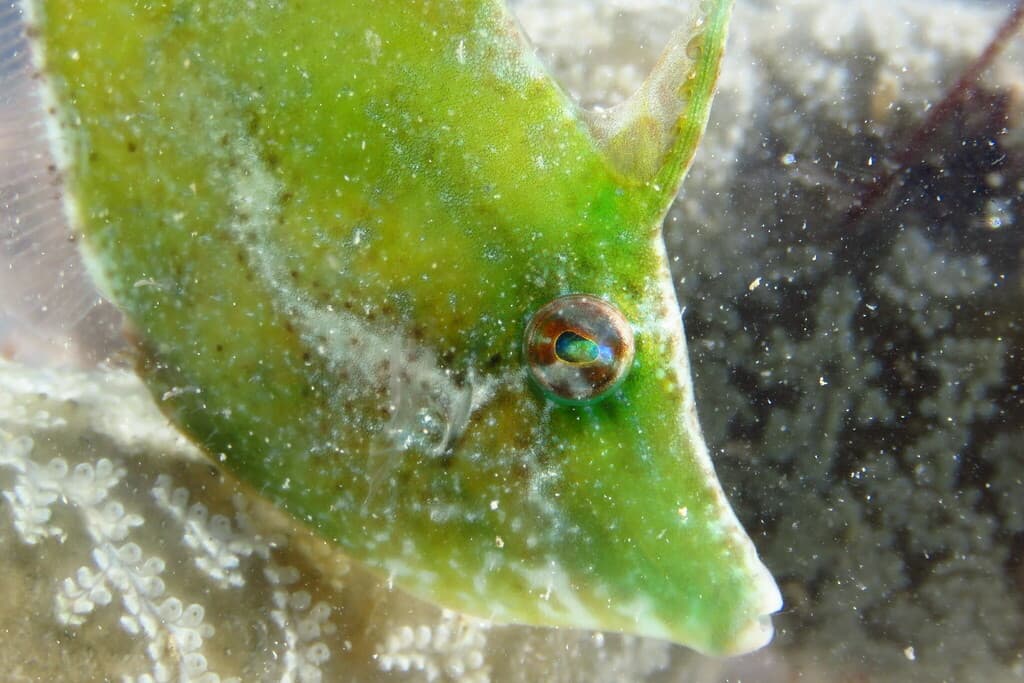
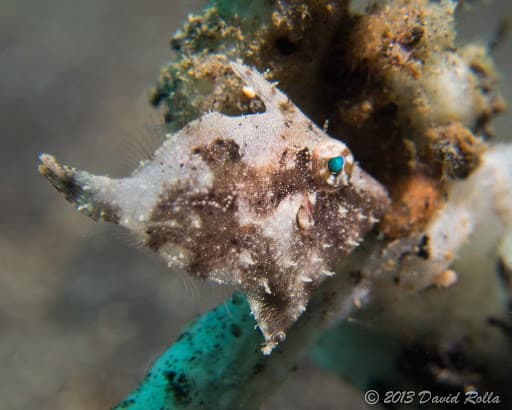
The Aiptasia-Eating Filefish has gained enormous popularity in the reef aquarium hobby for one primary reason: its appetite for Aiptasia pest anemones. This small, unassuming filefish is one of the most effective biological controls for these troublesome invertebrates that plague many reef aquariums. Its mottled tan, brown, and green coloration provides effective camouflage among seagrasses and rubble in its natural habitat.
This species has a laterally compressed body with rough, sandpaper-like skin characteristic of filefish. A small dorsal spine can be erected as a defense mechanism. The Aiptasia-Eating Filefish is generally shy and reserved when first introduced, often hiding among rockwork until it becomes comfortable. Once acclimated, it becomes bolder and will actively hunt Aiptasia throughout the aquarium.
The primary caveat with this species is that individual behavior can vary significantly. While many specimens will eagerly consume Aiptasia, some may show little interest in them and instead develop a taste for coral polyps, particularly zoanthids and LPS corals. For this reason, the species carries a cautious reef compatibility rating. It is best introduced when young and hungry, and some aquarists keep it as a temporary resident solely for pest control before rehoming it once the Aiptasia population is eliminated.
Feeding & Diet
Omnivore
Aiptasia-Eating Filefish are omnivores that feed on Aiptasia anemones, small invertebrates, and algae. In captivity, offer frozen mysis shrimp, brine shrimp, finely chopped seafood, and marine pellets. If kept for Aiptasia control, slightly underfeeding may encourage pest consumption. Feed two to three times daily.
Compatibility
reef-cautionpeacefulaiptasia-eatercommunity-safepest-control
The Aiptasia-Eating Filefish is peaceful toward other fish and coexists well with most community species. However, it may nip at coral polyps, particularly zoanthids and LPS, depending on individual temperament. Monitor closely in reef aquariums. Compatible with clownfish, tangs, wrasses, and other peaceful species.
Check CompatibilityBreeding
Difficult
Aiptasia-Eating Filefish have been bred in captivity on a limited basis. Pairs deposit eggs on substrate which are guarded by the male. Larvae are small and require specialized planktonic foods. Captive breeding is uncommon but has been documented.
Special Requirements
- Individual behavior varies - not all specimens eat Aiptasia
- May nip at coral polyps, zoanthids, or LPS corals
- Provide plenty of rockwork for hiding and grazing
- Monitor behavior closely in reef tanks
- Best introduced young for Aiptasia control
Water Parameters
Temperature74–80°F
Specific Gravity1.02–1.026 sg
pH8.1–8.4
Alkalinity8–12 dKH
Coloration
tanbrowngreenmottled
Tags
reef-cautionpeacefulaiptasia-eatercommunity-safepest-control