IntermediatePeacefulNot Reef Safe
Whitespotted Filefish
Cantherhines macrocerus
Family: Monacanthidae · Filefish
Also known as: American Whitespotted Filefish, Large-tailed Filefish, Dotterel Filefish
(c) Daniel J. Aguirre Howes, some rights reserved (CC BY-NC)
Max Size
18"
Min Tank
180 gal
Lifespan
8-12 years
Origin
Atlantic, Caribbean
Diet
Omnivore
Swims
Middle
About
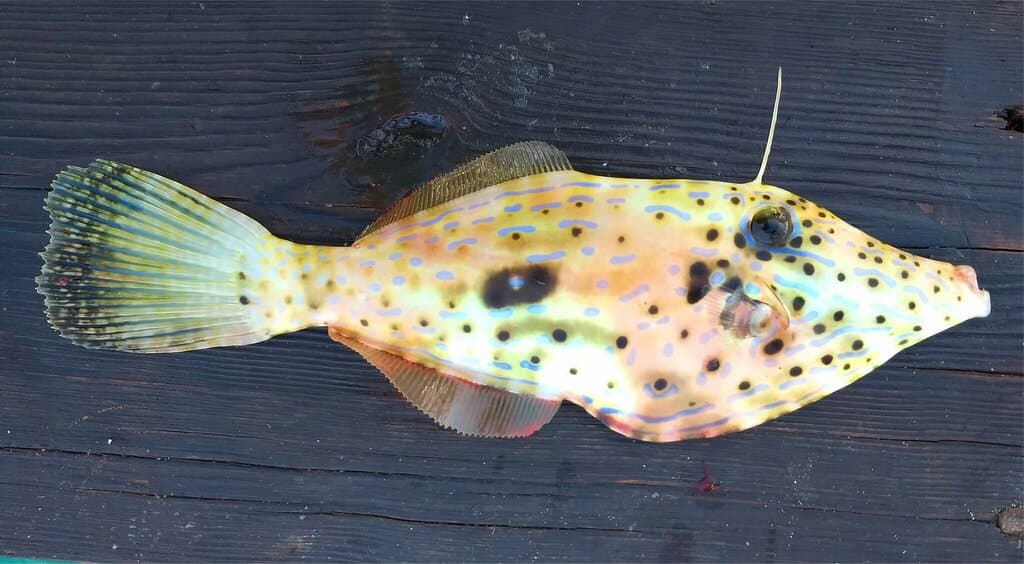
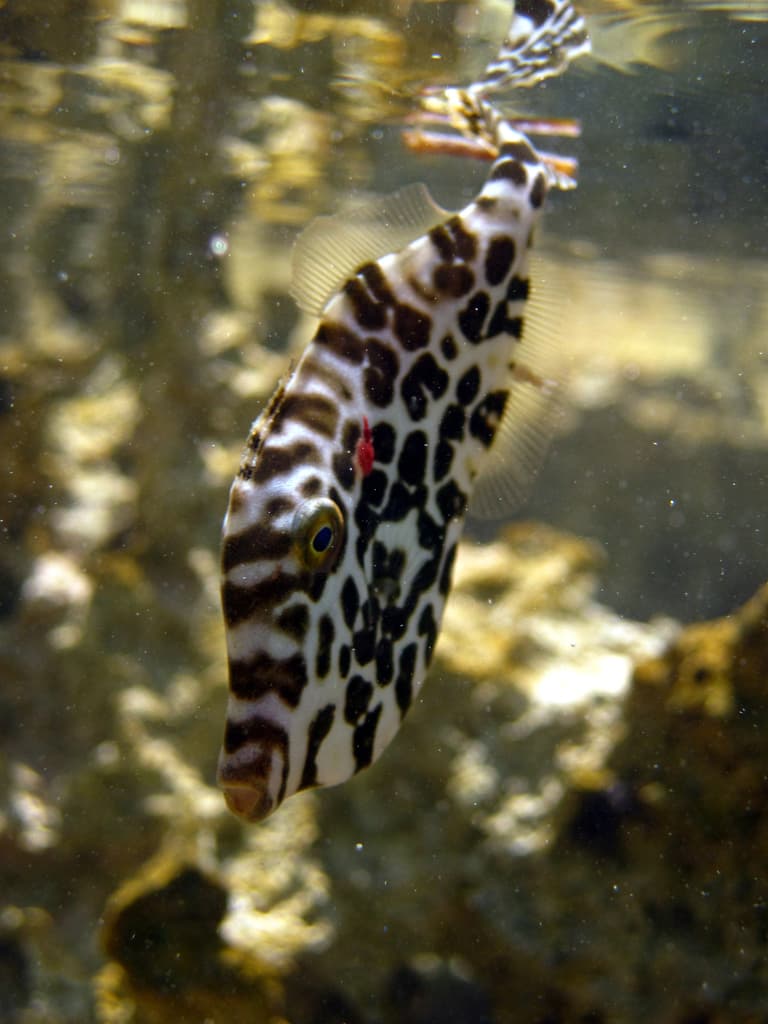
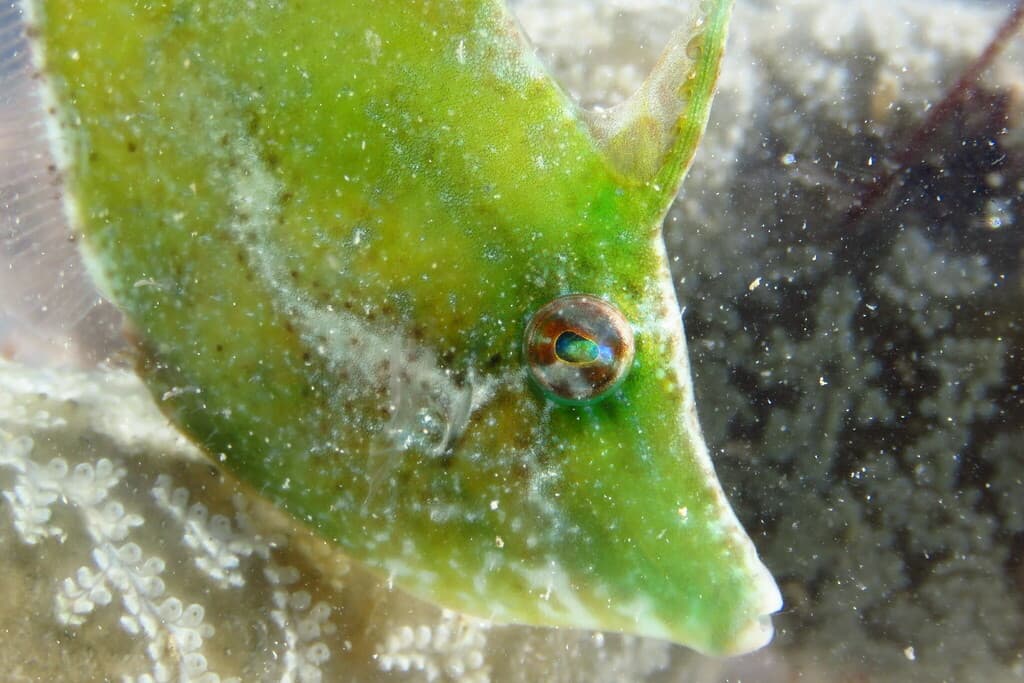
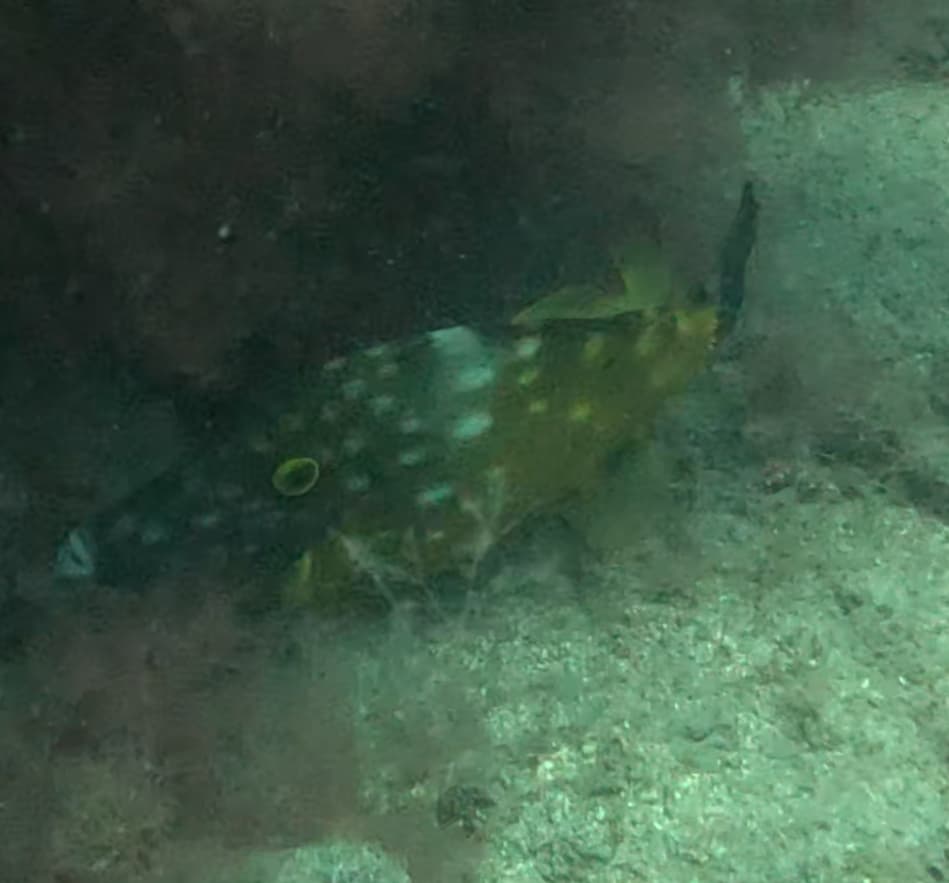
The Whitespotted Filefish is a large, handsome Atlantic species characterized by its deep, compressed body adorned with scattered white spots over an olive-brown to dark brown base. Two prominent pairs of spines are present near the tail base, and the first dorsal spine can be erected as a locking mechanism for wedging into crevices, a defensive behavior shared by all filefish. Its rough, leather-like skin gives it a distinctive texture that is characteristic of the Monacanthidae family.
In the wild, the Whitespotted Filefish inhabits coral reefs and rocky ledges throughout the western Atlantic, from Florida and the Bahamas through the Caribbean. It is often seen in pairs hovering near gorgonians, sponges, and coral heads, feeding on a wide variety of sessile invertebrates. This species is particularly fond of sponges, tunicates, gorgonians, and algae, making it a generalist feeder with a broad palate.
In the aquarium, the Whitespotted Filefish requires a large system due to its substantial adult size of up to 18 inches. It is a peaceful species that rarely bothers fish tankmates but will eagerly consume invertebrates of all kinds, making it completely unsuitable for reef aquariums. Its hardy constitution and willingness to accept a wide range of prepared and frozen foods make it relatively easy to maintain for aquarists with sufficiently large systems. This species does well in fish-only or FOWLR setups with other peaceful to moderately aggressive Atlantic species.
Feeding & Diet
Omnivore
Whitespotted Filefish are omnivores that consume sponges, tunicates, gorgonians, algae, and various invertebrates in the wild. In captivity, offer frozen mysis shrimp, krill, chopped squid, clam, sponge-based foods, marine pellets, and algae sheets. This large species requires substantial feeding. Feed two to three times daily.
Compatibility
not-reef-safepeacefullarge-speciesfish-onlyinvertebrate-eateratlantic-species
The Whitespotted Filefish is peaceful toward other fish and can be housed with a wide range of non-aggressive to moderately aggressive species. It will consume invertebrates including sponges, tunicates, gorgonians, and corals, making it unsuitable for reef tanks. Best kept in large fish-only or FOWLR setups. Pairs often coexist well in sufficiently large systems.
Check CompatibilityBreeding
Not bred in captivity
Whitespotted Filefish have not been commonly bred in captivity. In the wild, they are believed to form pairs for spawning, depositing eggs on substrate. The larval phase is pelagic and has not been successfully replicated in home aquariums. Pairs are sometimes collected together and may maintain their bond in captivity.
Special Requirements
- Very large aquarium required - grows to 18 inches
- Not suitable for reef aquariums
- Will consume sponges, gorgonians, and other invertebrates
- Provide ample rockwork for shelter and grazing
- Robust filtration needed for large bioload
- Pairs can be kept in very large systems
Water Parameters
Temperature72–78°F
Specific Gravity1.02–1.026 sg
pH8.1–8.4
Alkalinity8–12 dKH
Coloration
brownolivewhitetan
Tags
not-reef-safepeacefullarge-speciesfish-onlyinvertebrate-eateratlantic-species