IntermediatePeacefulNot Reef Safe
Bristletail Filefish
Acreichthys radiatus
Family: Monacanthidae · Filefish
Also known as: Radiated Filefish, Radial Filefish
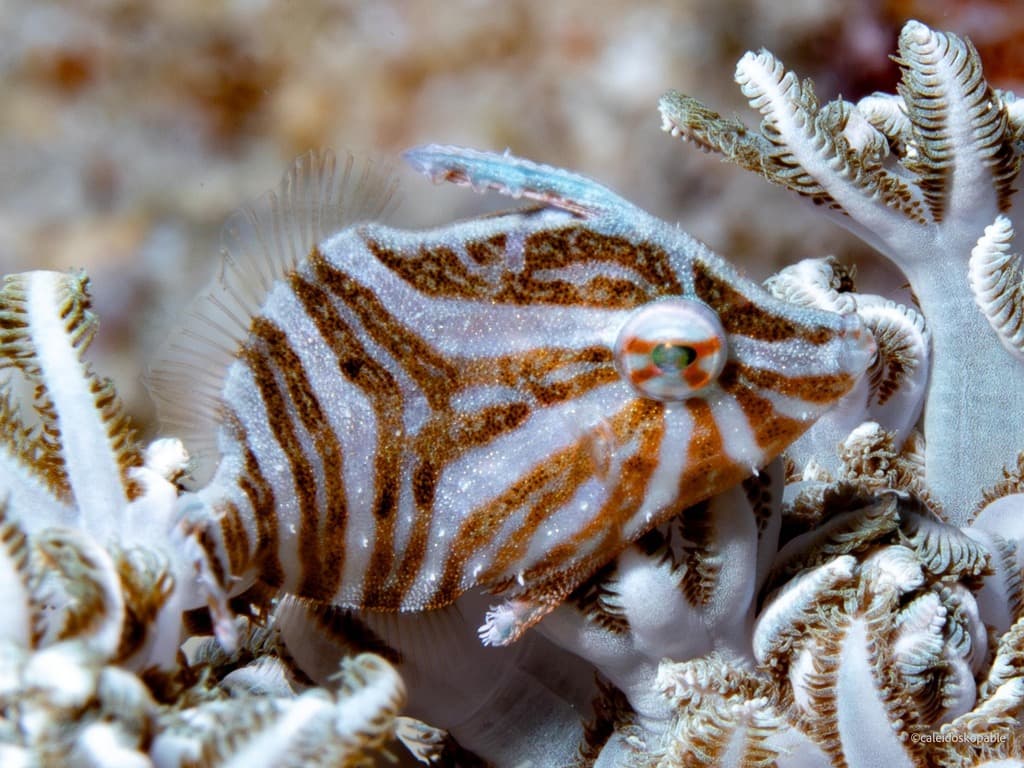
(c) caleidoskopable, some rights reserved (CC BY-NC)
Max Size
3.5"
Min Tank
30 gal
Lifespan
3-5 years
Origin
Indo-Pacific, Western Pacific
Diet
Omnivore
Swims
Middle
About
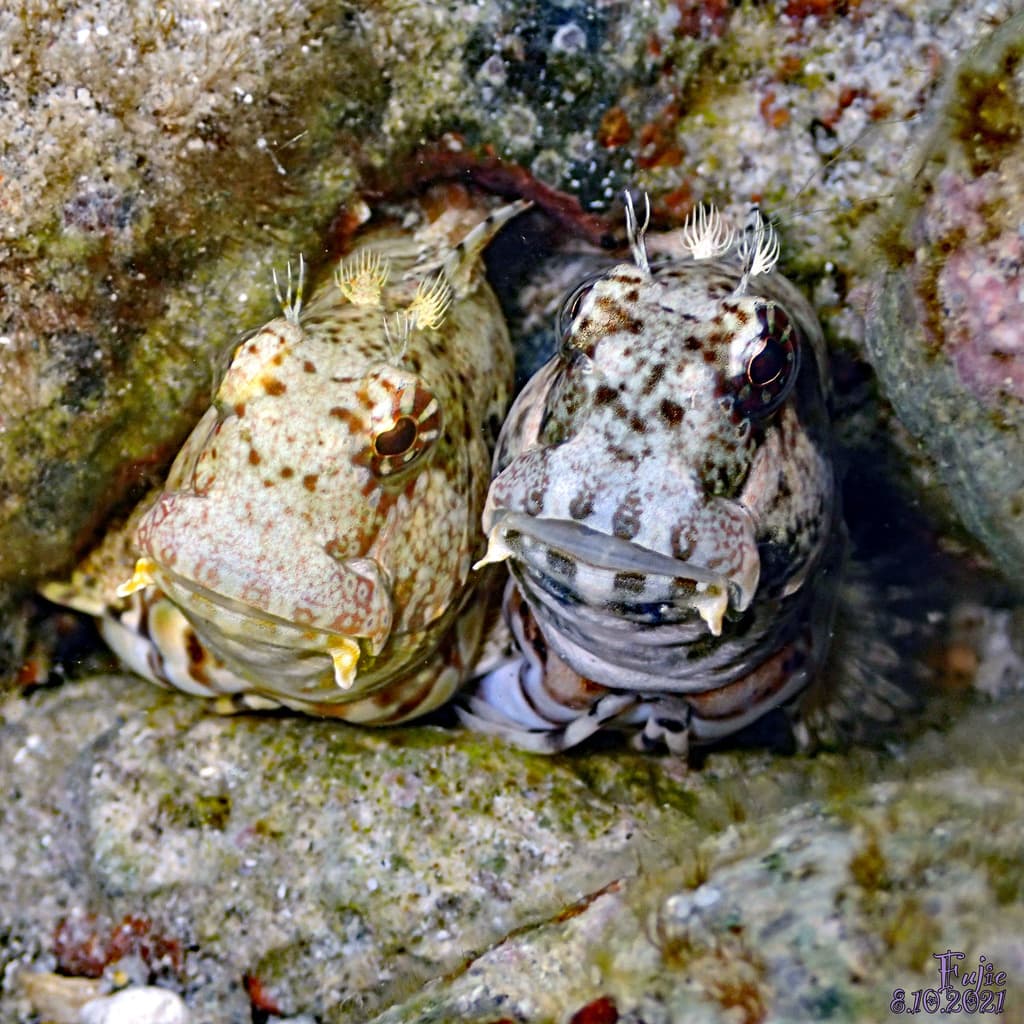
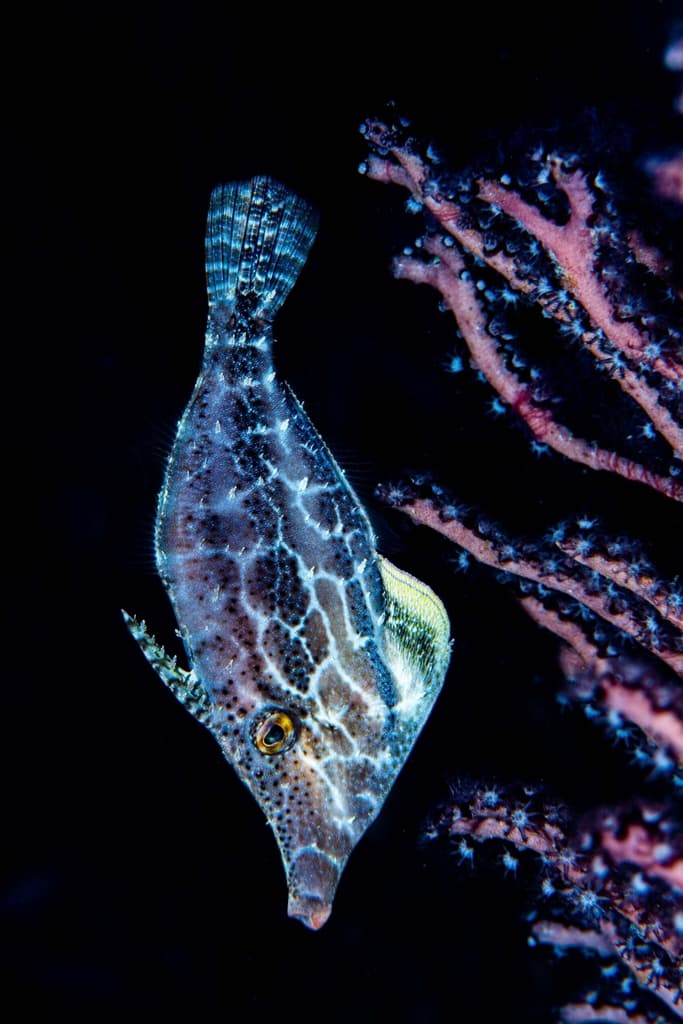
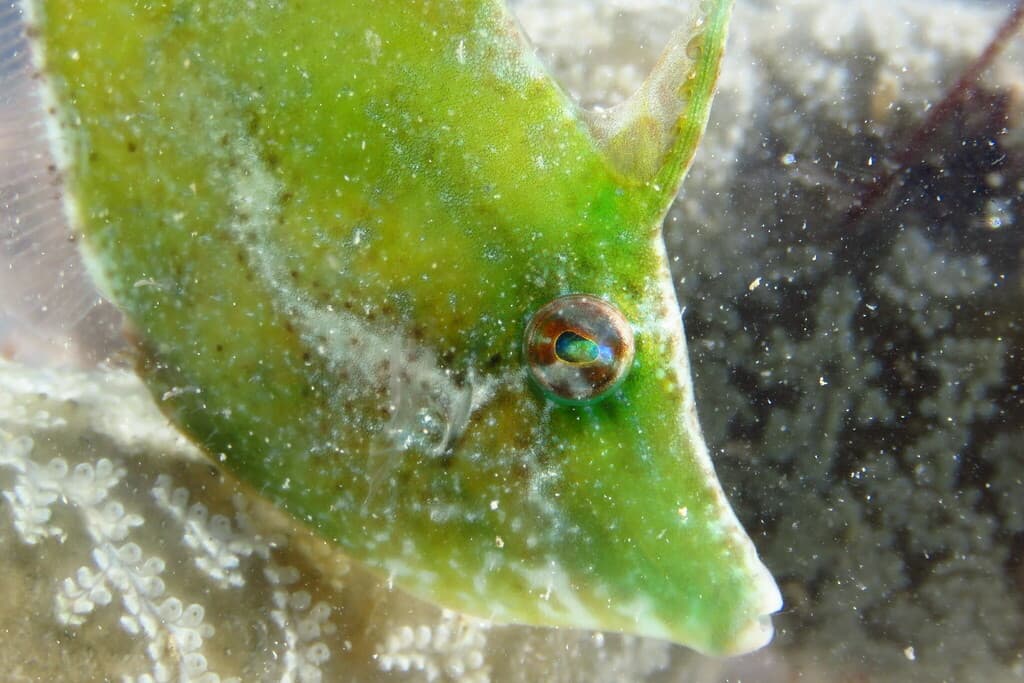
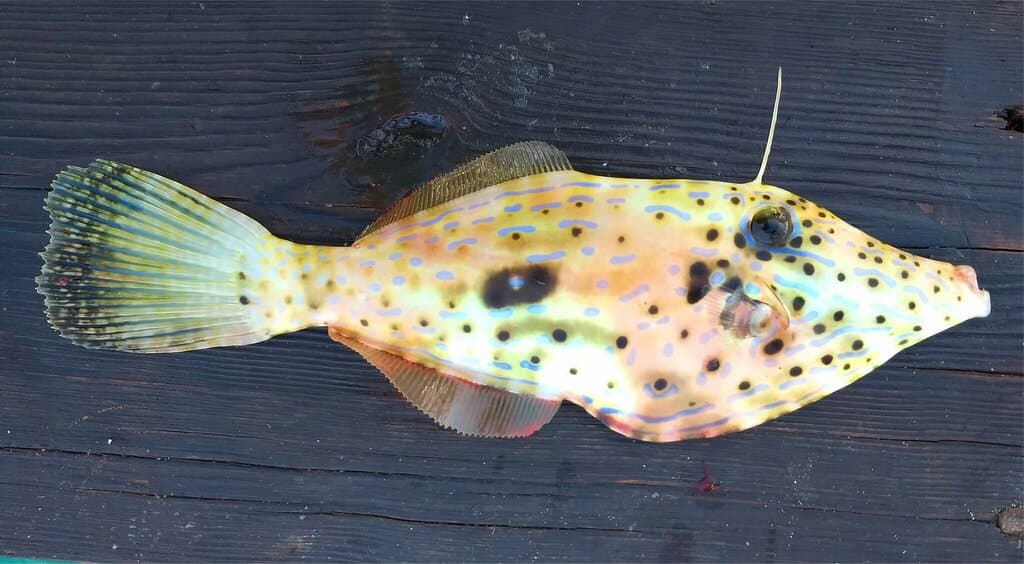
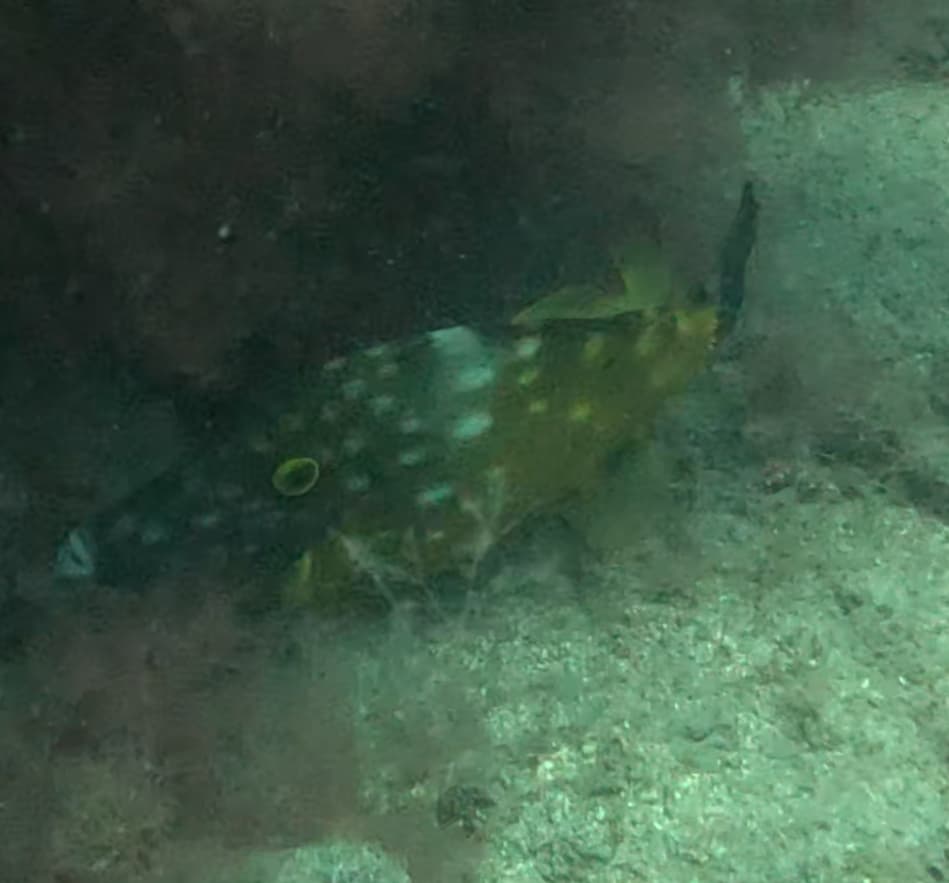
The Bristletail Filefish is a small, cryptic species prized by aquarists for its unusual appearance and manageable size. Its body is laterally compressed with rough, sandpaper-like skin typical of filefish, featuring a mottled pattern of browns, tans, and greens that allows it to blend seamlessly into seagrass beds and rubble zones in its native Indo-Pacific habitat. Radiating lines and markings on the body give this species its scientific name, and its distinctive bristle-like tail appendages make it instantly recognizable.
In the aquarium, the Bristletail Filefish is a shy, retiring species that prefers heavily decorated tanks with plenty of live rock, macroalgae, and hiding places. It moves slowly and deliberately, often hovering at unusual angles as it inspects rockwork for small invertebrates and algae to graze upon. This species acclimates best in calm, established aquariums with peaceful tankmates that will not outcompete it for food.
While relatively hardy once established, the Bristletail Filefish is not considered reef-safe due to its tendency to pick at small invertebrates, coral polyps, and tube worms. It may also consume ornamental shrimp and other desirable invertebrates. Its small adult size makes it suitable for moderately sized aquariums, and it can be an endearing and interactive pet once it becomes comfortable with its keeper.
Feeding & Diet
Omnivore
Bristletail Filefish are omnivores that feed on small invertebrates, algae, and detritus in the wild. In captivity, offer frozen mysis shrimp, brine shrimp, finely chopped seafood, and marine pellets. Supplement with algae sheets and spirulina-based foods. May also graze on live rock organisms. Feed two to three times daily in small amounts.
Compatibility
not-reef-safepeacefulcommunity-safeshyinvertebrate-picker
The Bristletail Filefish is peaceful toward other fish and poses no threat to tankmates of any size. However, it may pick at coral polyps, tube worms, and small invertebrates. Best kept in fish-only or FOWLR setups. Avoid housing with boisterous or aggressive species that may stress this shy fish. Compatible with gobies, blennies, and other peaceful community species.
Check CompatibilityBreeding
Difficult
Bristletail Filefish breeding in captivity is poorly documented. Like other filefish, they likely deposit eggs on substrate that are guarded by the male. Larvae are small and planktonic, requiring specialized foods. Captive breeding has not been widely reported in the hobby.
Special Requirements
- Provide plenty of rockwork and hiding spots
- Calm, established aquarium preferred
- May pick at coral polyps and invertebrates
- Shy species - avoid housing with aggressive feeders
- Benefits from macroalgae refugium or growths in tank
Water Parameters
Temperature74–80°F
Specific Gravity1.02–1.026 sg
pH8.1–8.4
Alkalinity8–12 dKH
Coloration
browntangreenmottled
Tags
not-reef-safepeacefulcommunity-safeshyinvertebrate-picker