AdvancedPeacefulReef Safe
Starry Dragonet
Synchiropus stellatus
Family: Callionymidae · Dragonets & Mandarinfish
Also known as: Stellate Dragonet, Red Scooter Dragonet, Starry Mandarin
(c) Shaha Hashim, some rights reserved (CC BY-NC)
Max Size
3"
Min Tank
30 gal
Lifespan
3-5 years
Origin
Indian Ocean, Western Pacific
Diet
Carnivore
Swims
Bottom
About
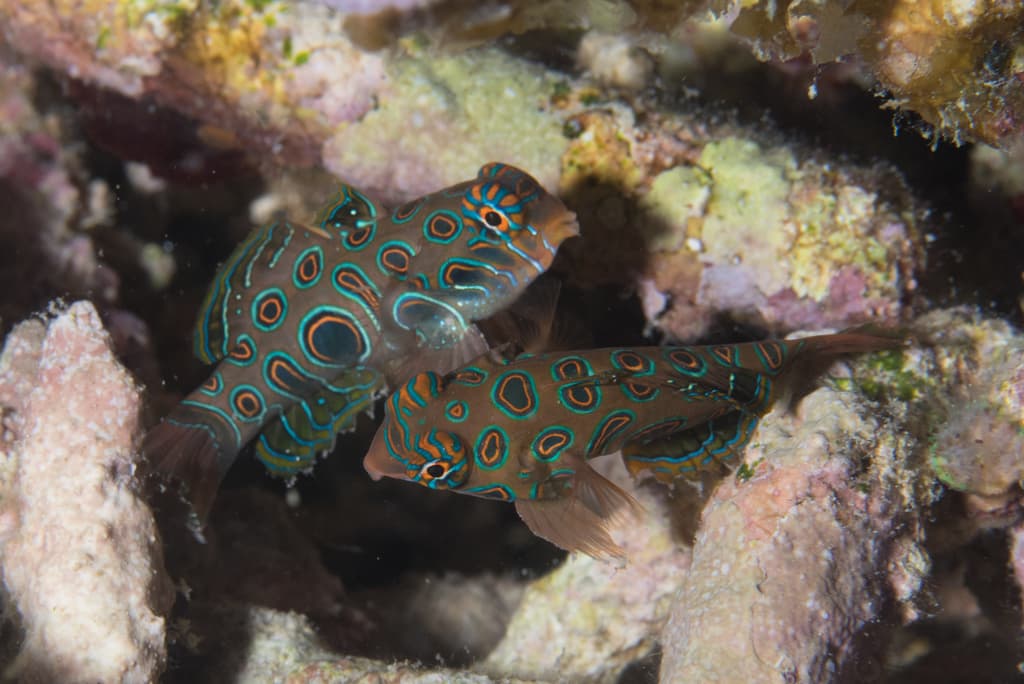
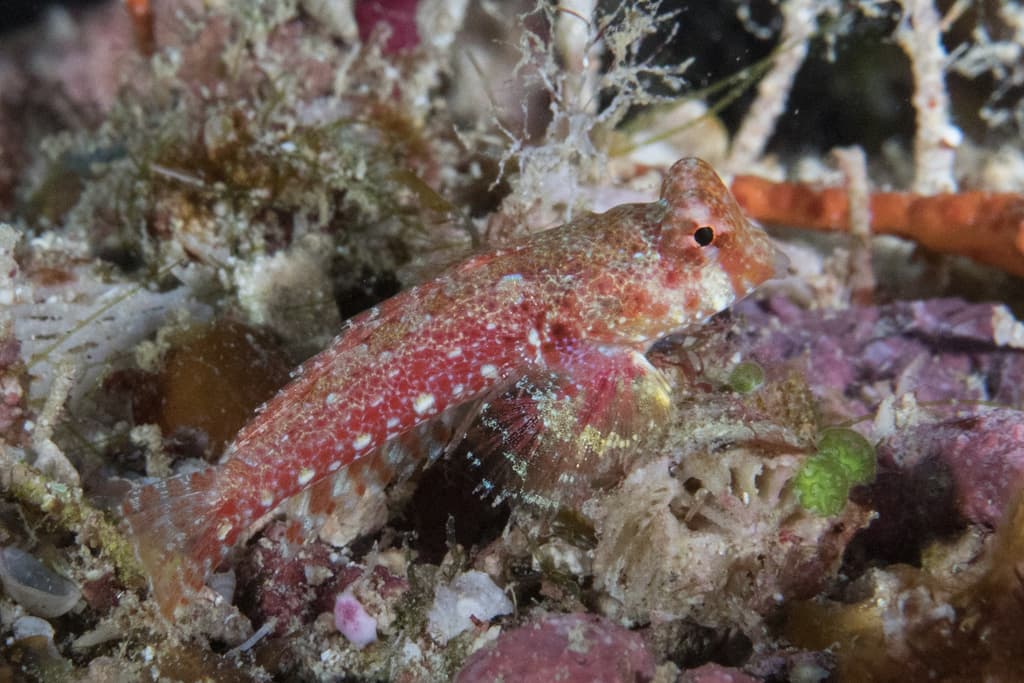
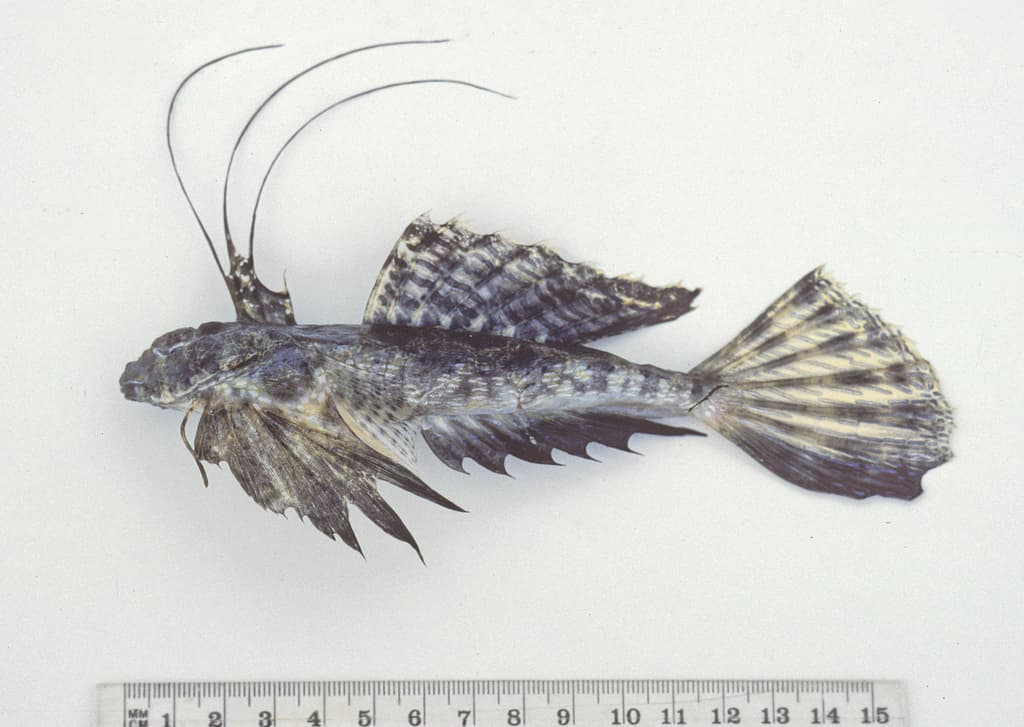
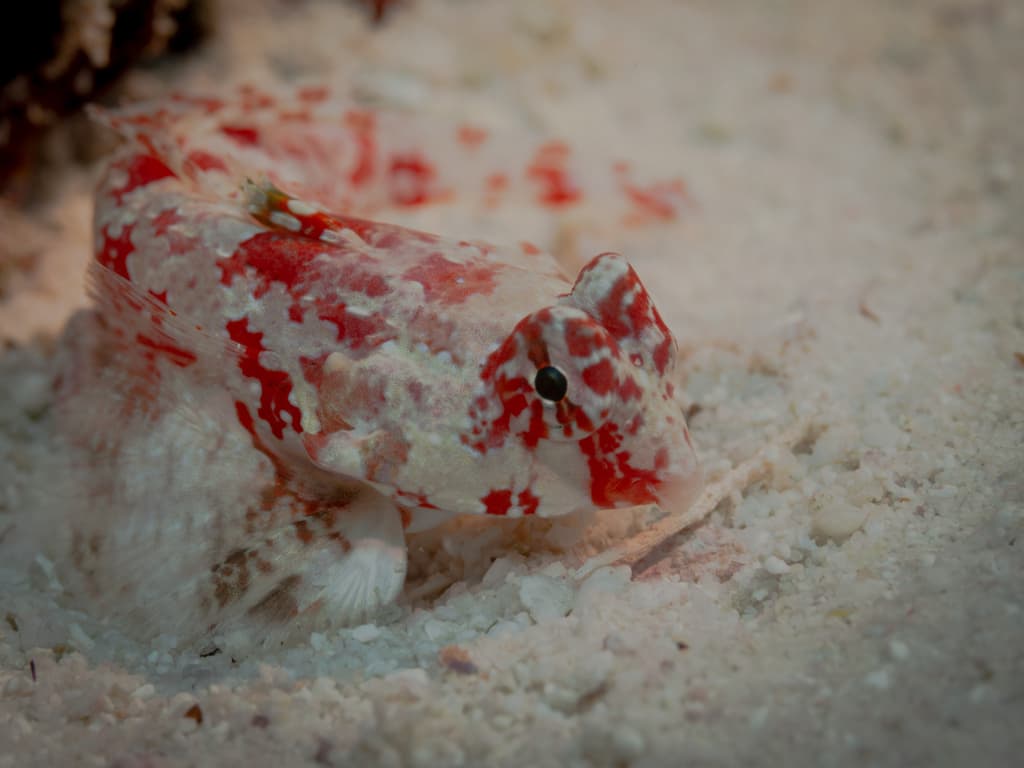
The Starry Dragonet is a beautifully patterned species that features a reddish-brown to orange-red body covered with an intricate constellation of bright blue spots and ocelli, reminiscent of a starry night sky, which gives this fish its evocative common name. Males are typically more vividly colored than females and possess an elongated first dorsal fin spine that they use in display behavior. At approximately 3 inches in maximum length, the Starry Dragonet is a small but visually captivating bottom-dwelling fish.
Like all members of the dragonet family, the Starry Dragonet is a specialized micro-predator that requires a well-established aquarium with a self-sustaining population of copepods and amphipods. It spends its days hopping methodically across live rock and substrate, picking at tiny organisms with its small, pointed mouth. A mature aquarium of at least six months old with plentiful live rock is critical to support the microfauna populations needed to keep this fish healthy. Without an adequate pod supply, the Starry Dragonet will slowly starve, often appearing healthy until it is too late to intervene.
The Starry Dragonet is completely reef-safe and makes an excellent inhabitant of a peaceful reef aquarium. It produces a protective mucus coating that provides some natural resistance to common marine parasites. A refugium connected to the main system is highly recommended to continuously replenish copepod populations. This species should not be housed with other dragonets unless the tank is very large and well-stocked with pods, as competition for this limited food source can lead to starvation. When its dietary needs are met, the Starry Dragonet is a hardy and long-lived aquarium inhabitant.
Feeding & Diet
Carnivore
Starry Dragonets are specialized micro-predators that feed primarily on tiny live copepods and amphipods. A well-established aquarium with healthy pod populations is essential. Supplement regularly with live copepod cultures such as Tisbe and Tigriopus species. Some individuals may accept frozen cyclops, baby brine shrimp, and finely minced mysis shrimp. A connected refugium to sustain pod production is highly beneficial. Multiple small feedings throughout the day are preferred.
Compatibility
reef-safepeacefullive-food-requireddisease-resistantbottom-dwellercommunity-safe
The Starry Dragonet is completely peaceful and will not bother any tankmates, corals, or invertebrates. Males are territorial toward other male dragonets and should be kept singly or as a male-female pair. Avoid housing with other pod-eating species like Mandarin Dragonets unless the tank is very large with a proven abundant pod supply. Keep with peaceful, slow-feeding species like gobies, firefish, and small cardinalfish.
Check CompatibilityBreeding
Difficult
Starry Dragonets follow the typical dragonet reproductive strategy of pelagic spawning at dusk. Pairs rise together from the substrate and release eggs and sperm at the apex of their ascent. Males can be identified by their larger first dorsal fin spine and more vivid coloration. Captive breeding has been attempted with limited success, as the larvae are extremely small and require specialized rearing techniques.
Special Requirements
- Requires mature, well-established aquarium (6+ months old) with abundant live rock
- Thriving copepod and amphipod population is essential for survival
- Refugium strongly recommended to sustain live food supply
- Only one male per tank - males will fight
- Slow feeder - avoid housing with aggressive eaters that compete for pods
- Mucus coating provides some natural disease resistance
- Will slowly starve without adequate pod population - monitor body condition carefully
Water Parameters
Temperature74–80°F
Specific Gravity1.02–1.026 sg
pH8.1–8.4
Alkalinity8–12 dKH
Coloration
redorangebluebrown
Tags
reef-safepeacefullive-food-requireddisease-resistantbottom-dwellercommunity-safe