AdvancedPeacefulReef Safe
Fingered Dragonet
Dactylopus dactylopus
Family: Callionymidae · Dragonets & Mandarinfish
Also known as: Finger Dragonet, Fingered Dragonette
(c) Ken Graham, some rights reserved (CC BY-NC)
Max Size
11.8"
Min Tank
75 gal
Lifespan
5-8 years
Origin
Indo-Pacific, Indonesia
Diet
Carnivore
Swims
Bottom
About
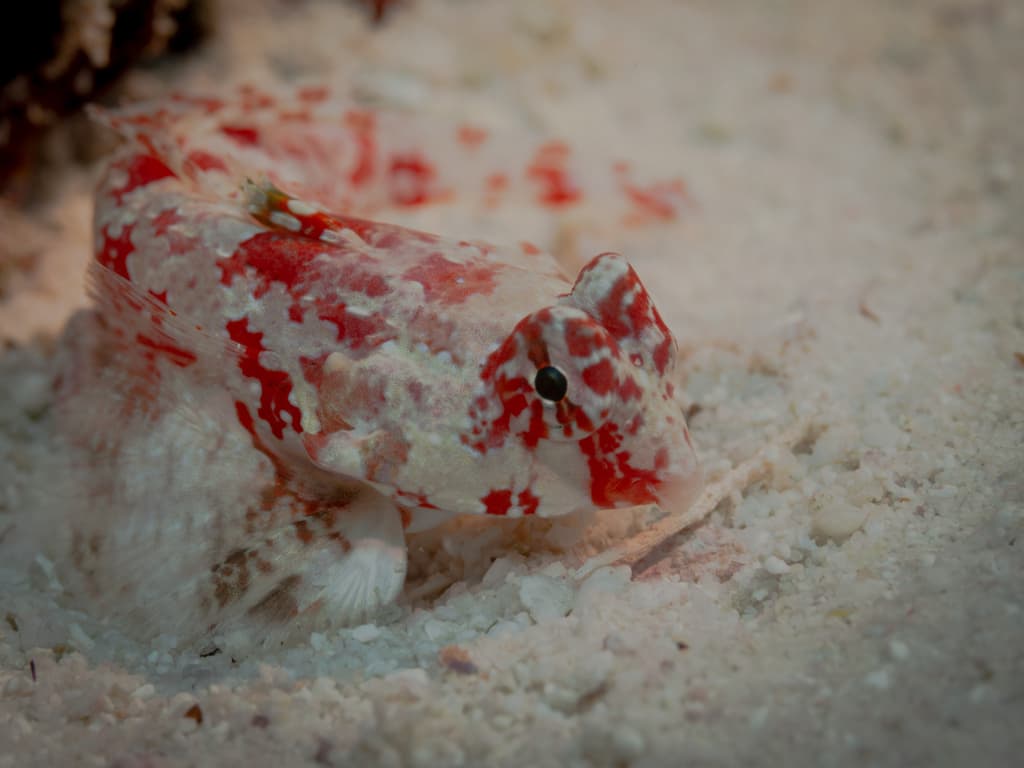
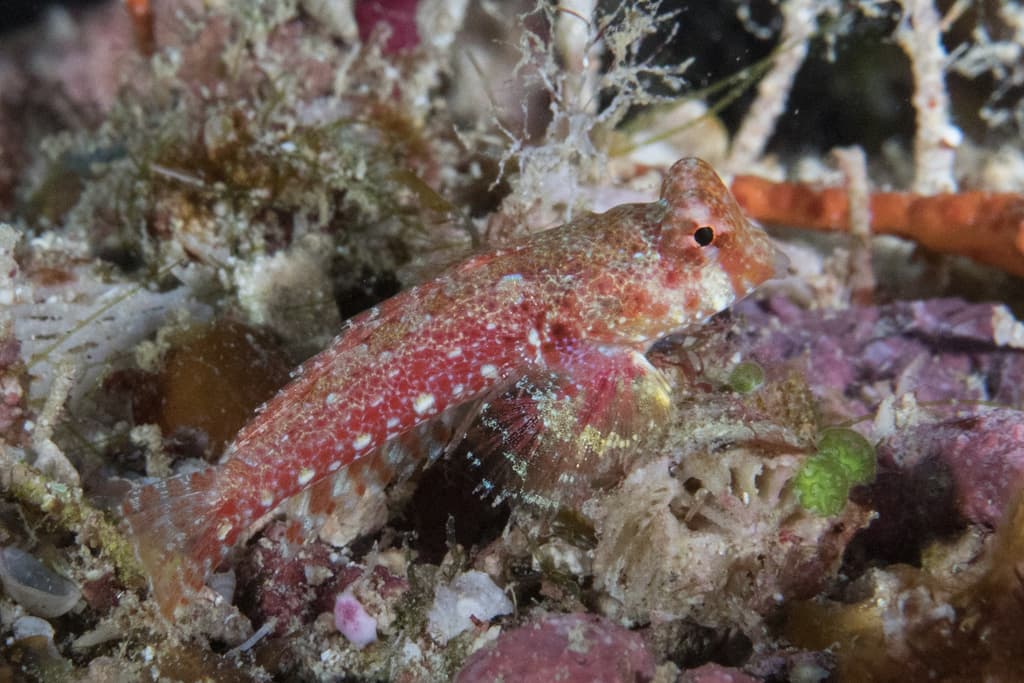
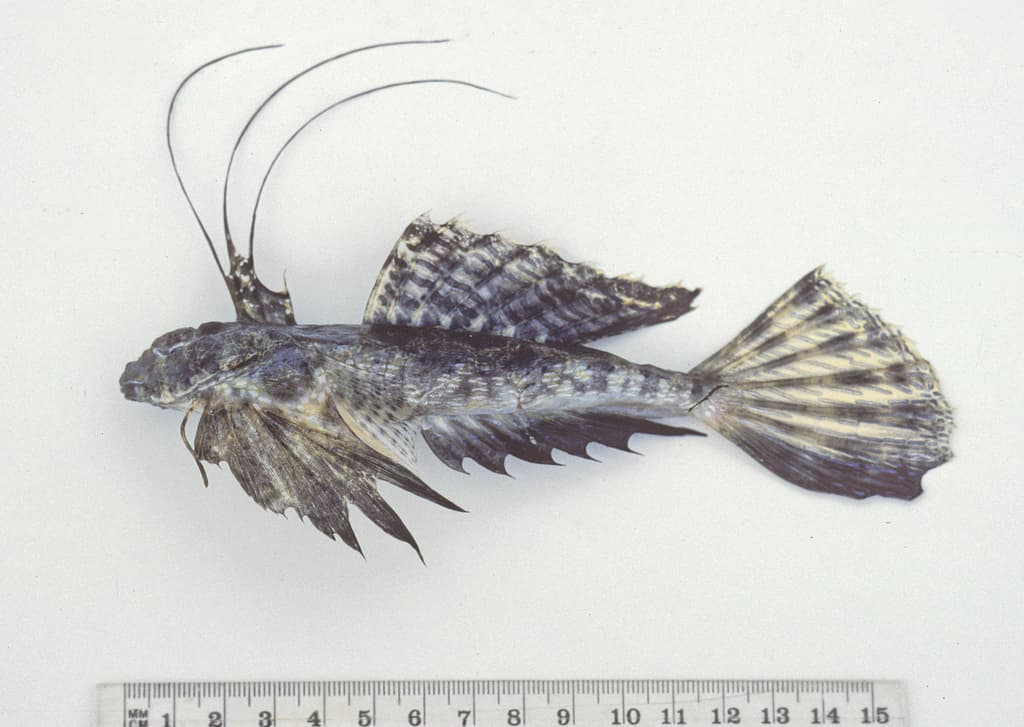
The Fingered Dragonet is the largest member of the dragonet family commonly kept in aquariums, reaching an impressive size of nearly 12 inches. This unusual species is named for its distinctive pectoral fins, which feature elongated, finger-like free rays that the fish uses to walk along the substrate in a remarkably deliberate, almost reptilian manner. The body is elongated and slightly flattened, with coloration that varies from mottled browns and tans to reddish hues, providing effective camouflage against sandy and rubble bottoms. The large, ornate dorsal fin of males features intricate patterns and can be raised in dramatic displays.
In the wild, Dactylopus dactylopus inhabits sandy flats, rubble zones, and seagrass beds across the Indo-Pacific, where it uses its finger-like fin rays to probe the substrate for food. It walks methodically across the bottom, pausing to investigate crevices and overturning small pieces of rubble in search of tiny crustaceans. This walking behavior is one of the most fascinating aspects of keeping this species, as it provides a uniquely entertaining and alien-like movement pattern rarely seen in other aquarium fish.
Keeping the Fingered Dragonet is an advanced undertaking due to its specialized feeding requirements. Like other dragonets, it feeds almost exclusively on tiny live copepods, amphipods, and other microfauna. However, its larger size means it requires a substantially greater volume of live food to sustain itself compared to smaller dragonets like the Mandarin. A very well-established aquarium of at least 75 gallons with extensive live rock and a productive refugium is essential. Despite its challenges, the Fingered Dragonet rewards dedicated aquarists with one of the most unique and captivating behavioral displays in the marine hobby.
Feeding & Diet
Carnivore
Fingered Dragonets are specialized micro-predators that feed on copepods, amphipods, and other tiny benthic crustaceans. An established tank with abundant live rock and a thriving pod population is essential. Due to its larger size compared to other dragonets, it requires a greater volume of live food. A productive refugium is highly recommended. Some specimens may learn to accept frozen mysis shrimp and enriched brine shrimp, but live copepod supplementation remains critical for long-term success.
Compatibility
reef-safepeacefullive-food-requiredbottom-dwellerunique-behavior
The Fingered Dragonet is completely peaceful and poses no threat to any tankmates, corals, or invertebrates. However, it should not be housed with aggressive feeders that will outcompete it for food. Avoid keeping with other large dragonets in the same tank, as food competition can lead to starvation. Ideal tankmates include other slow, peaceful species such as seahorses, pipefish, and small gobies. Its larger size provides some protection against being bullied by moderately assertive fish.
Check CompatibilityBreeding
Very Difficult
Fingered Dragonets are sexually dimorphic, with males typically displaying a larger and more ornate dorsal fin. Courtship involves the male raising his dorsal fin in display before the pair rises from the substrate to release pelagic eggs. Larvae are tiny and require specialized rearing with rotifers and copepod nauplii. Captive breeding has rarely been documented for this species.
Special Requirements
- Largest commonly kept dragonet - needs 75+ gallon established aquarium
- Thriving copepod and amphipod population essential for survival
- Productive refugium strongly recommended to sustain food supply
- Sandy substrate required for natural walking and foraging behavior
- Slow feeder - avoid housing with food-competitive species
- Mature aquarium of 6+ months with abundant live rock
- Finger-like pectoral fin rays used for walking on substrate
Water Parameters
Temperature72–80°F
Specific Gravity1.02–1.026 sg
pH8.1–8.4
Alkalinity8–12 dKH
Coloration
browntanredcreammottled
Tags
reef-safepeacefullive-food-requiredbottom-dwellerunique-behavior