AdvancedPeacefulReef Safe
LSD Mandarin
Synchiropus morrisoni
Family: Callionymidae · Dragonets & Mandarinfish
Also known as: Morrison's Dragonet, Psychedelic Mandarin, LSD Dragonet
(c) Mark Rosenstein, some rights reserved (CC BY-NC)
Max Size
2.4"
Min Tank
30 gal
Lifespan
4-8 years
Origin
Western Pacific, Australia
Diet
Carnivore
Swims
Bottom
About
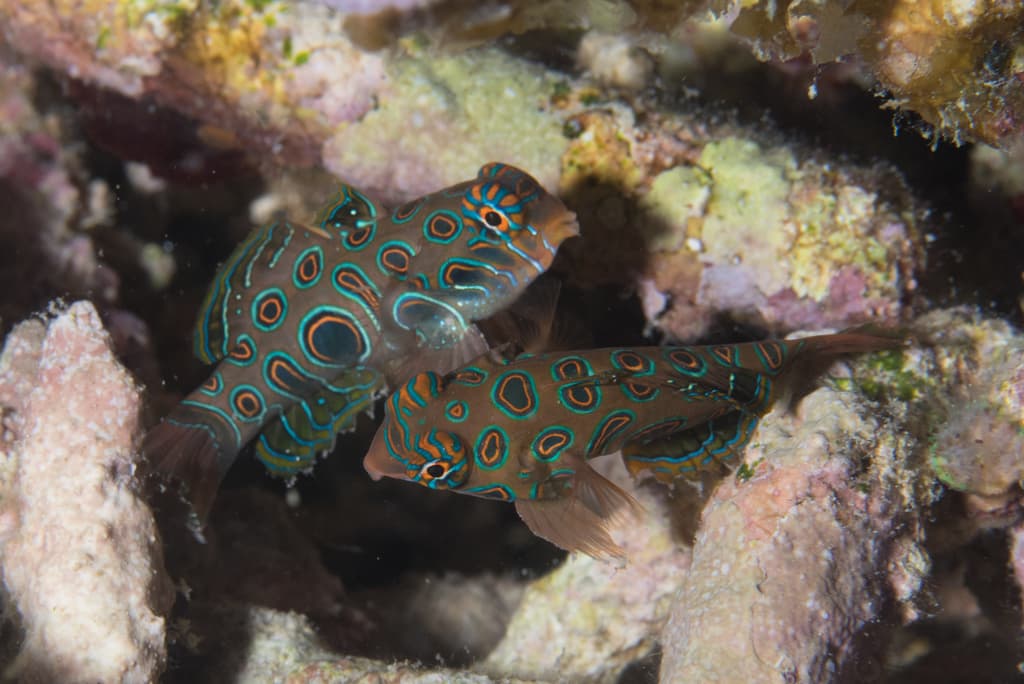
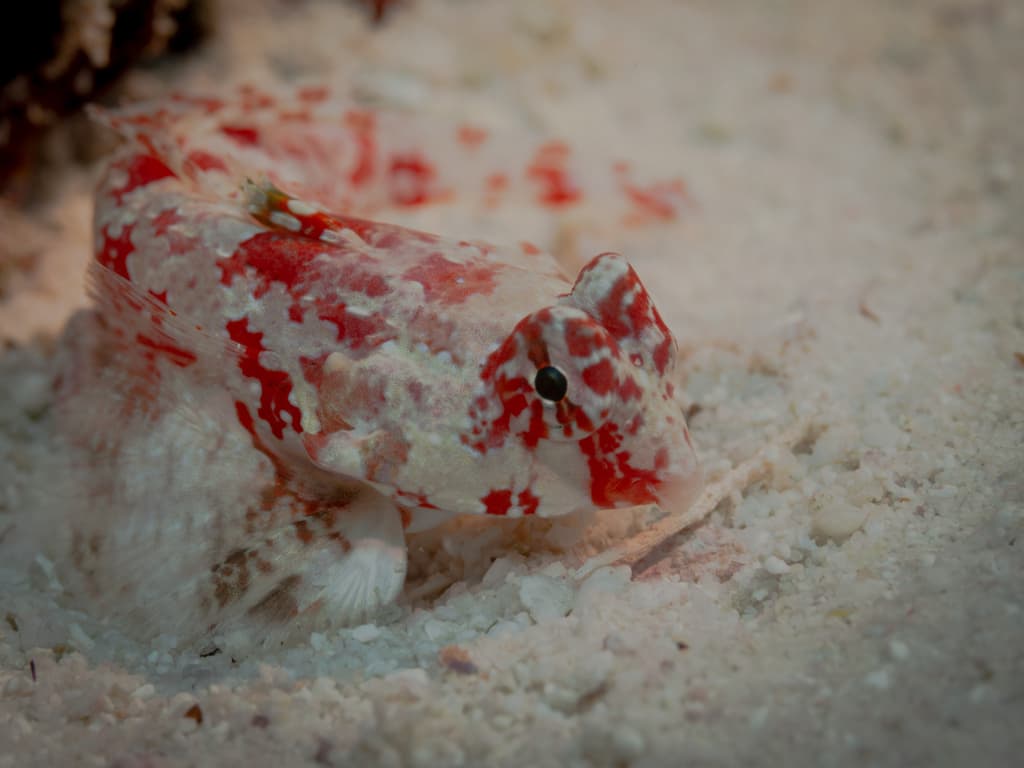
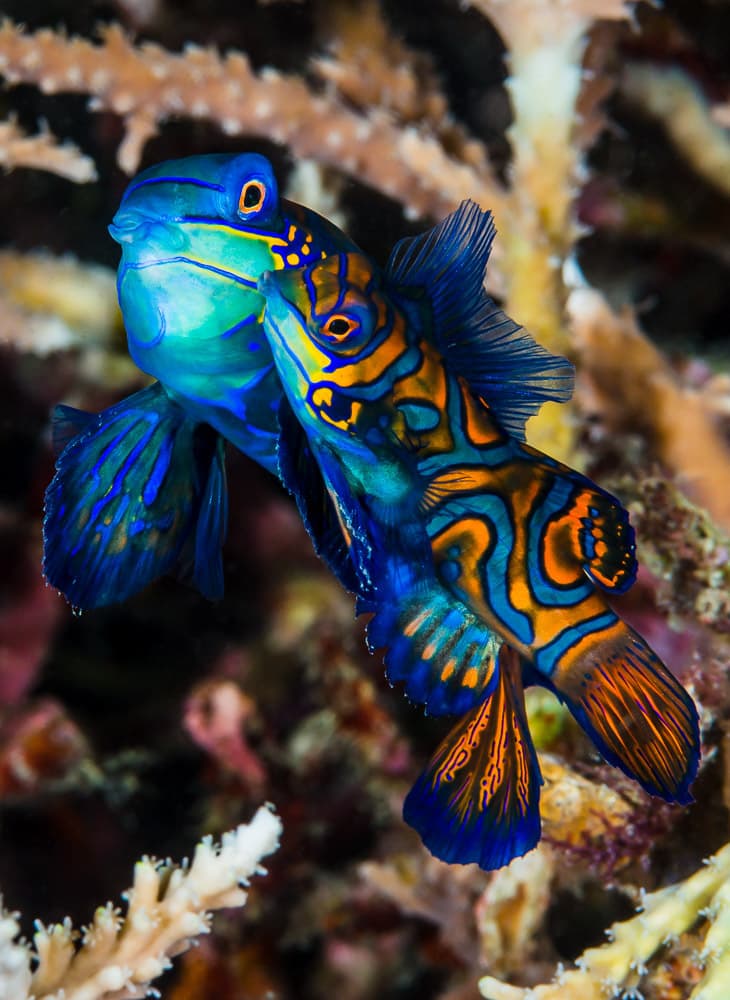
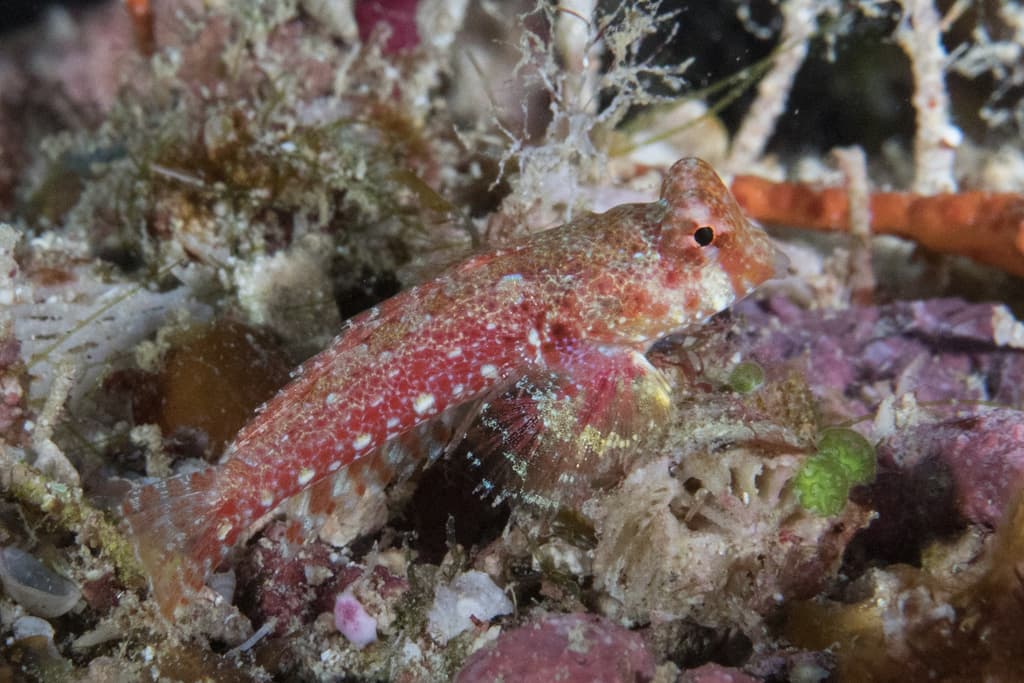
The LSD Mandarin is one of the most visually extraordinary fish in the marine aquarium hobby, adorned with a psychedelic riot of swirling patterns in vivid pinks, reds, oranges, and blues that seem almost impossibly bright for a living creature. The common name refers to the hallucinogenic quality of its coloration, with intricate maze-like patterns covering every surface of its compact body. At barely 2.5 inches in maximum size, this is one of the smallest dragonet species, but what it lacks in stature it more than compensates for with its jaw-dropping visual impact. Like other Synchiropus species, it secretes a protective mucus coating that provides natural resistance to common marine parasites.
In the wild, Synchiropus morrisoni is found across the Western Pacific, from the waters of Australia through Indonesia and Papua New Guinea. It inhabits sheltered lagoons, rubble zones, and coral patches at relatively shallow depths, where it methodically picks through the substrate and live rock for tiny copepods and amphipods. It is a rare species that is encountered far less frequently than the common Mandarin Dragonet, making wild-caught specimens uncommon and relatively expensive in the aquarium trade.
Keeping the LSD Mandarin is very challenging and recommended only for advanced aquarists with well-established reef systems. Like all dragonets, it feeds almost exclusively on live copepods and amphipods, and its tiny size means it requires a dense population of microfauna to sustain itself. A mature aquarium of at least 30 gallons with extensive live rock and a refugium producing a constant supply of pods is essential. The LSD Mandarin is an extremely slow, deliberate feeder that will be outcompeted by virtually any other fish for prepared foods, making a calm environment with non-competitive tankmates critical for its survival.
Feeding & Diet
Carnivore
LSD Mandarins are specialized micro-predators that feed almost exclusively on tiny live copepods and amphipods. A mature aquarium with a dense, self-sustaining pod population is essential. Supplement regularly with live copepod cultures such as Tisbe and Tigriopus. A refugium is highly recommended to maintain a constant food supply. Some specimens may learn to accept frozen cyclops or tiny mysis, but live food should remain the primary diet.
Compatibility
reef-safepeacefulexpert-onlylive-food-requireddisease-resistant
The LSD Mandarin is among the most peaceful marine fish and poses no threat to any tankmate, coral, or invertebrate. However, it is an extremely slow feeder that will be outcompeted by virtually any other fish for prepared foods. Avoid housing with aggressive feeders, active wrasses, dottybacks, or damsels. Only keep one male per tank, as males are territorial toward each other. Ideal tankmates include other very slow, peaceful species in a calm reef environment.
Check CompatibilityBreeding
Very Difficult
LSD Mandarins are sexually dimorphic, with males typically displaying a more elongated dorsal fin spine. Courtship follows the classic dragonet pattern, with pairs rising from the substrate at dusk to release pelagic eggs at the apex of their ascent. Larvae are extremely tiny and require rotifers and copepod nauplii. Captive breeding has not been commonly documented for this species due to its rarity.
Special Requirements
- Requires mature, well-established aquarium with abundant live rock
- Thriving copepod and amphipod population essential for survival
- Refugium strongly recommended to sustain live food supply
- Extremely slow feeder - avoid all food-competitive tankmates
- Very rare species - expect limited availability and higher prices
- Mucus coating provides natural disease resistance
- Only one male per tank - males will fight
Water Parameters
Temperature72–80°F
Specific Gravity1.02–1.026 sg
pH8.1–8.4
Alkalinity8–12 dKH
Coloration
pinkredorangebluegreenwhite
Tags
reef-safepeacefulexpert-onlylive-food-requireddisease-resistant