BeginnerSemi-AggressiveReef SafeCaptive-Bred Available
Orchid Dottyback
Pseudochromis fridmani
Family: Pseudochromidae · Dottybacks
Also known as: Fridman's Dottyback, Fridman's Pseudochromis
(c) Mark Rosenstein, some rights reserved (CC BY-NC)
Max Size
3"
Min Tank
30 gal
Lifespan
5-7 years
Origin
Red Sea
Diet
Carnivore
Swims
Middle
About
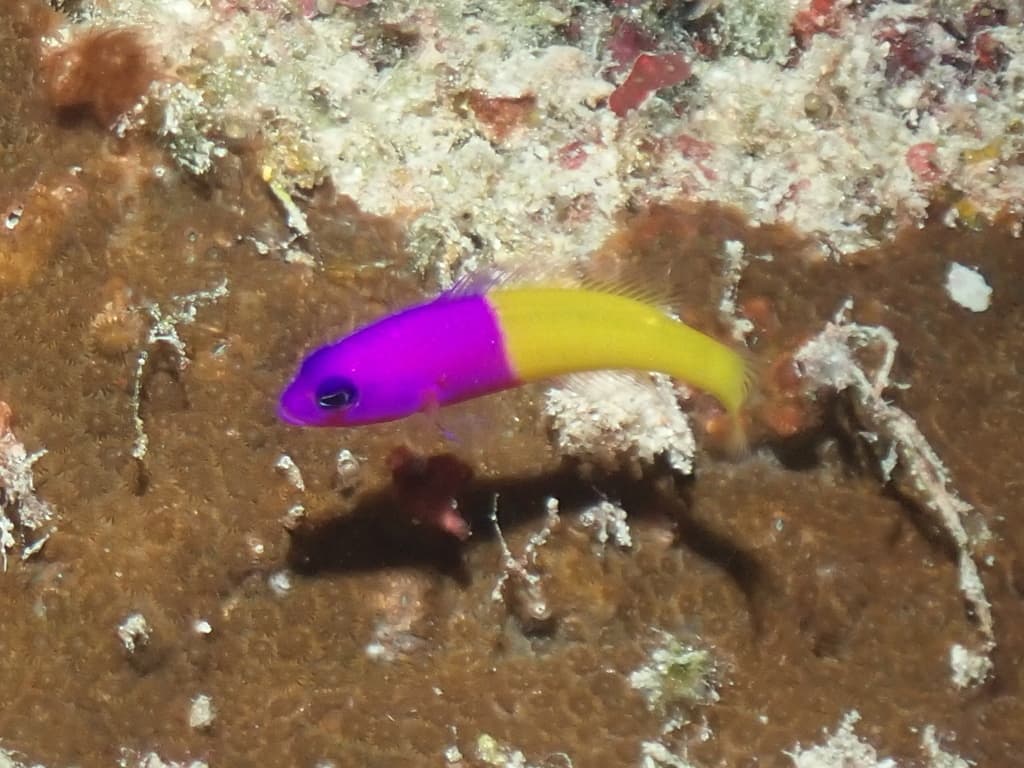
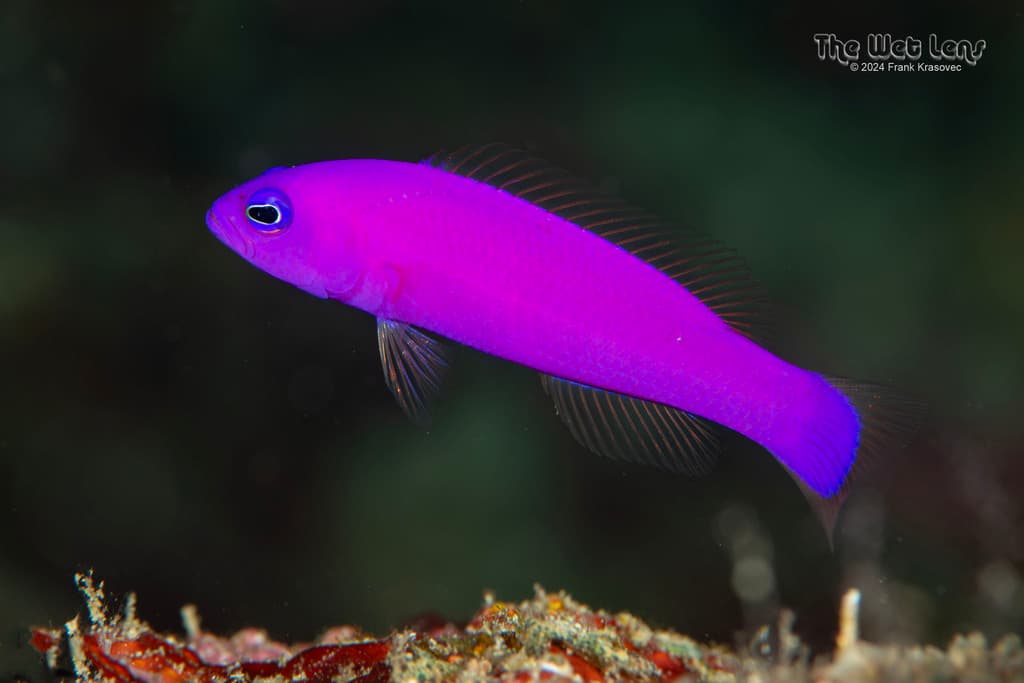
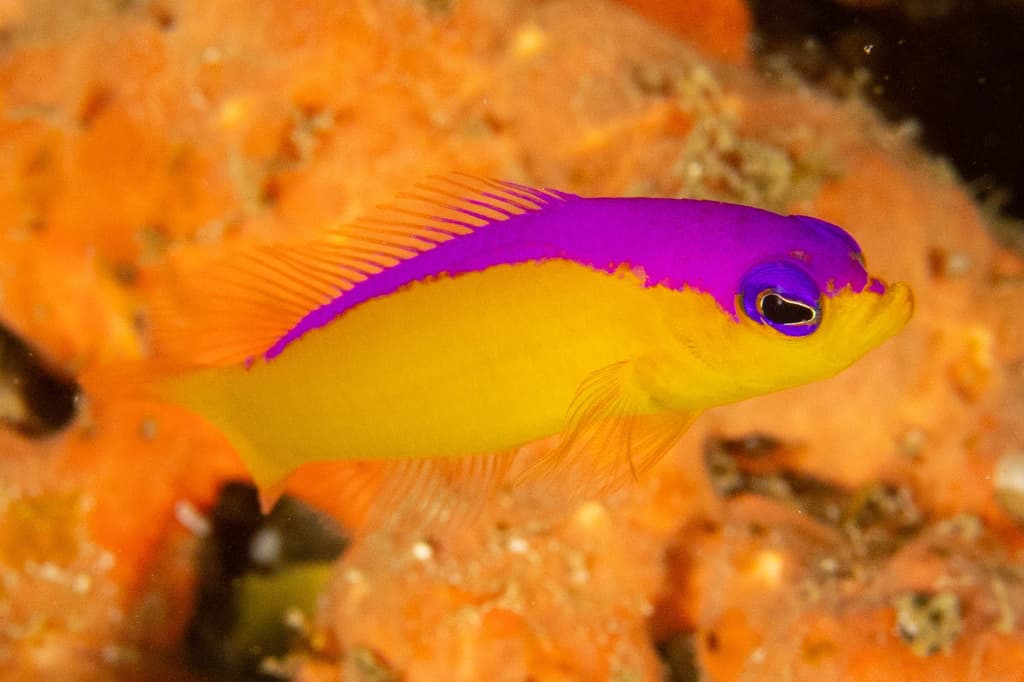
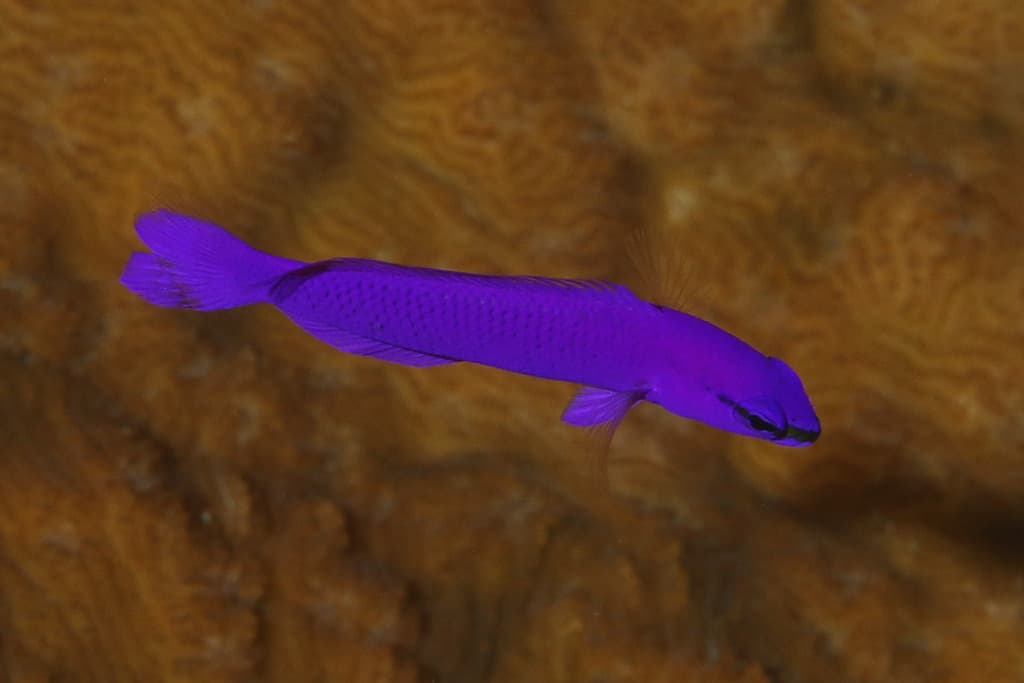
The Orchid Dottyback is a captivating species endemic to the Red Sea, prized for its stunning, uniform purple coloration that ranges from a rich magenta to a deep violet. This small but vibrant fish has become one of the most popular dottybacks in the marine hobby, in large part due to the wide availability of captive-bred specimens that are hardier and less aggressive than their wild-caught counterparts.
Unlike many dottybacks that can be highly territorial and aggressive, the Orchid Dottyback is considered one of the more manageable members of its family. While it can be semi-aggressive, particularly toward similar-looking or similarly-sized fish, its temperament is considerably milder than species like the Strawberry Dottyback. Captive-bred individuals are typically even more docile, making them a reasonable choice for community reef aquariums.
In the wild, Orchid Dottybacks inhabit vertical reef walls and overhangs, darting in and out of crevices as they hunt tiny crustaceans. In the aquarium, they appreciate plenty of rockwork with caves and hiding spots. They are hardy, disease-resistant, and readily accept prepared foods. As a bonus, they will actively hunt and consume small bristleworms, helping to control these pests in the reef aquarium.
Feeding & Diet
Carnivore
Orchid Dottybacks are carnivores that feed on small crustaceans, zooplankton, and bristleworms in the wild. In captivity, they readily accept frozen mysis shrimp, brine shrimp, marine pellets, and flake food. They are enthusiastic eaters that rarely refuse food. Feed two to three times daily.
Compatibility
reef-safesemi-aggressivebristleworm-eatercaptive-bred-availablebeginner-friendly
The Orchid Dottyback is one of the more peaceful dottybacks but can still be territorial, especially in smaller tanks. It may chase similar-sized fish with comparable colors. Best kept singly unless in a large tank. Compatible with most community reef fish. Will consume small bristleworms.
Check CompatibilityBreeding
Moderate
Orchid Dottybacks are commercially captive-bred and can be bred in home aquariums. They are protogynous hermaphrodites. Males guard egg clutches in caves. Larvae can be raised on rotifers and baby brine shrimp. Breeding pairs will spawn regularly once established.
Special Requirements
- Provide rockwork with caves and crevices
- Captive-bred specimens strongly recommended
- May be territorial toward similar-looking fish
- Best added before more timid species
Water Parameters
Temperature74–80°F
Specific Gravity1.02–1.026 sg
pH8.1–8.4
Alkalinity8–12 dKH
Coloration
purplemagentaviolet
Tags
reef-safesemi-aggressivebristleworm-eatercaptive-bred-availablebeginner-friendly