BeginnerSemi-AggressiveReef Safe
Yellow Damsel
Amblyglyphidodon aureus
Family: Pomacentridae · Damselfish
Also known as: Golden Damselfish, Golden Sergeant, Yellow Damselfish, Lemon Sergeant
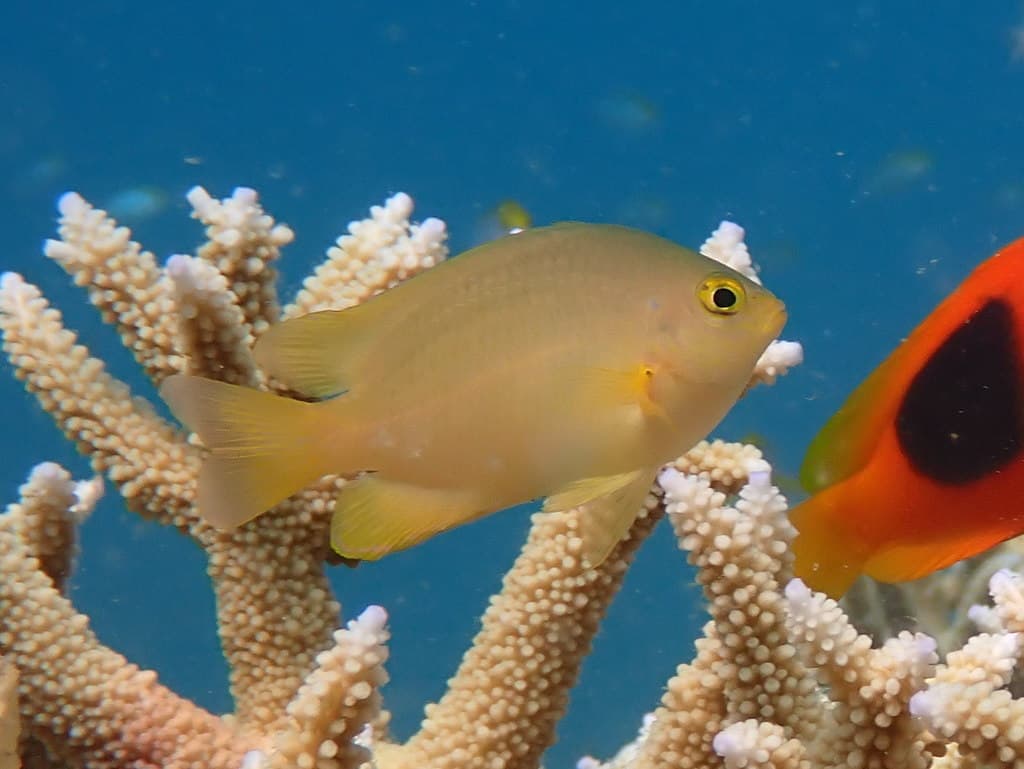
(c) Pauline Fey, some rights reserved (CC BY-NC)
Max Size
5"
Min Tank
30 gal
Lifespan
6-10 years
Origin
Western Pacific, Indonesia
Diet
Omnivore
Swims
All
About
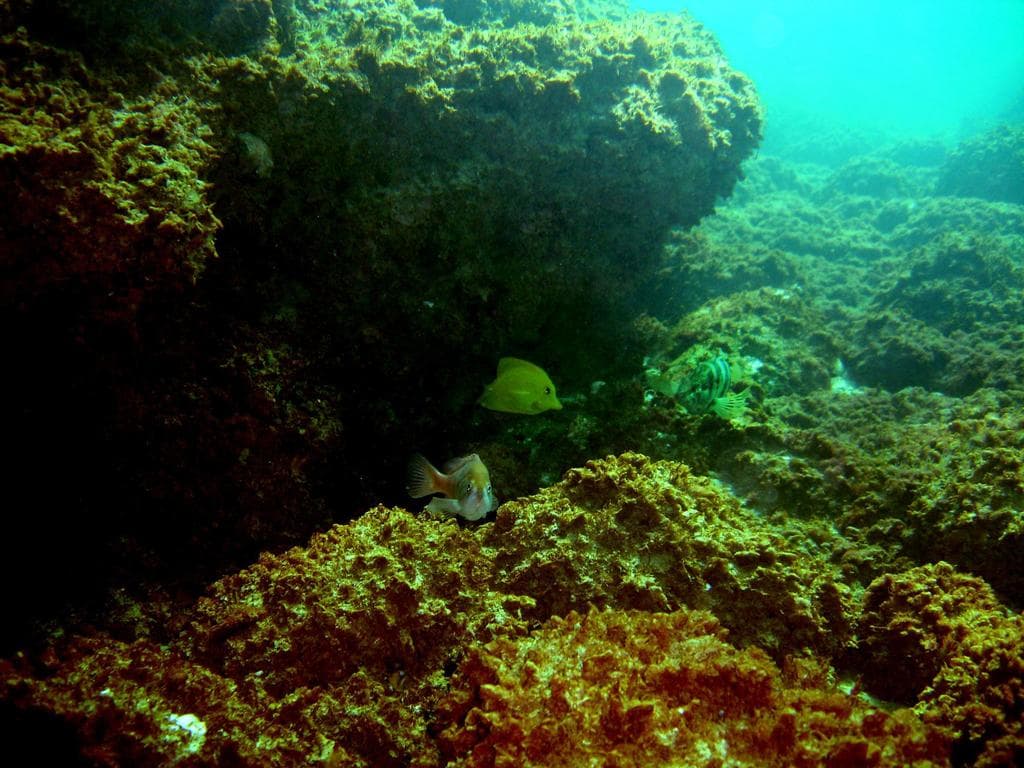
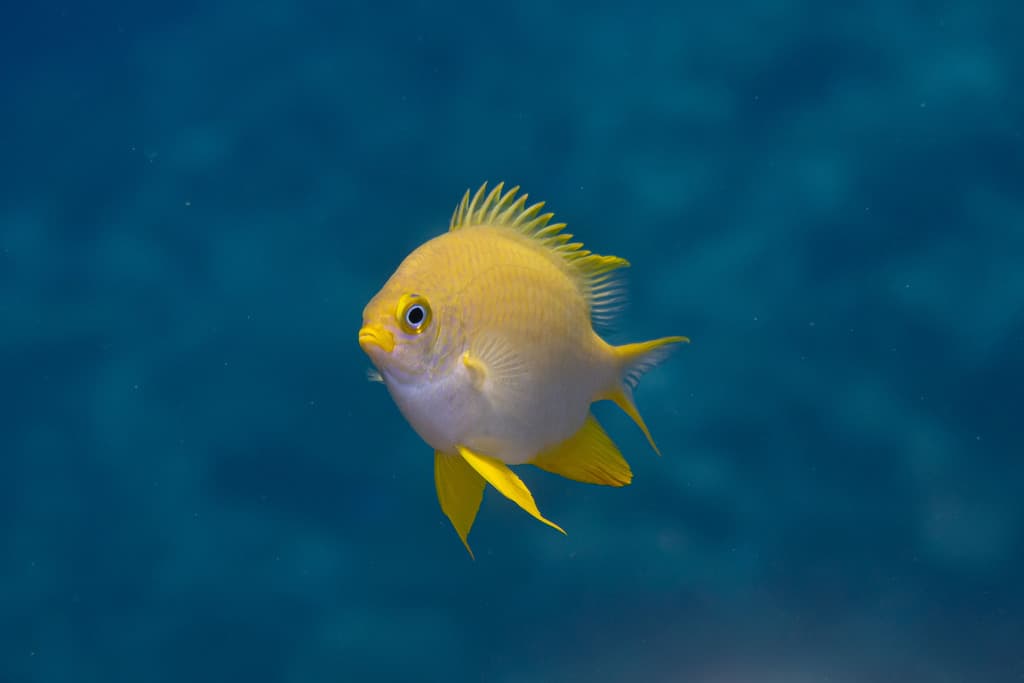
The Yellow Damsel is a handsome, moderately sized damselfish that displays a warm golden yellow coloration across its deep, laterally compressed body. Unlike the more intensely pigmented Lemon Damsel, the Yellow Damsel has a softer, more golden hue with subtle olive or green tones along the dorsal area, giving it a natural, warm appearance. Adults reach approximately 5 inches in length, making this species somewhat larger than many commonly kept damsels and requiring correspondingly more swimming space.
In the wild, Amblyglyphidodon aureus inhabits coral-rich reef slopes and lagoons throughout the Western Pacific, from Indonesia to Fiji. It is commonly associated with large branching coral formations, particularly Acropora thickets, where it feeds primarily on zooplankton drifting over the reef. Unlike many damselfish that are strongly benthic and territorial, the Yellow Damsel spends more time in the water column above its coral host, making it somewhat more pelagic in its feeding behavior. Small groups are commonly seen hovering above coral heads, picking off passing plankton.
The Yellow Damsel is one of the more manageable damselfish in terms of temperament, generally classified as semi-aggressive rather than truly belligerent. While it will establish and defend a loose territory, its aggression is considerably less intense than species in the Dascyllus or Stegastes genera. Its golden coloration, moderate size, and relatively peaceable nature make it a good choice for larger community reef aquariums. It is completely reef-safe and will not harm corals or invertebrates. A minimum tank size of 30 gallons is recommended due to its larger adult size compared to smaller Chrysiptera and Pomacentrus species.
Feeding & Diet
Omnivore
Yellow Damsels feed primarily on zooplankton in the wild, supplementing their diet with algae and small benthic organisms. In captivity, offer a varied diet of marine flakes, pellets, frozen mysis shrimp, enriched brine shrimp, cyclops, and finely chopped seafood. Include algae-based foods for balanced nutrition. Their slightly larger size means they benefit from regular, substantial feedings two to three times daily.
Compatibility
reef-safesemi-aggressivecommunity-safebeginner-friendly
The Yellow Damsel is moderately territorial but less aggressive than many damselfish species. It coexists well with a variety of community reef fish including clownfish, tangs, wrasses, and basslets. Its tendency to hover in the water column rather than strictly defending a bottom territory reduces conflicts with benthic species like gobies and blennies. Multiple specimens can be kept in larger systems with sufficient space. Completely reef-safe with all corals and invertebrates.
Check CompatibilityBreeding
Moderate
Yellow Damsels are substrate spawners that lay adhesive eggs on the underside of coral branches or rocky overhangs. The male guards the nest aggressively until hatching, which occurs in approximately 3-4 days. Larvae are pelagic and require microscopic foods including rotifers and phytoplankton. Spawning has been observed in captivity, but larval rearing remains challenging.
Special Requirements
- Provide branching coral or complex rockwork for shelter
- Moderate temperament for a damselfish
- Benefits from open swimming space above rockwork
- Can be kept singly or in small groups in larger tanks
Water Parameters
Temperature72–82°F
Specific Gravity1.02–1.026 sg
pH8.1–8.4
Alkalinity8–12 dKH
Coloration
yellowgoldolive
Tags
reef-safesemi-aggressivecommunity-safebeginner-friendly