BeginnerPeacefulReef Safe
Pretty-Fin Cardinalfish
Pristiapogon kallopterus
Family: Apogonidae · Cardinalfish
Also known as: Iridescent Cardinal, Kallopterus Cardinalfish, Pretty-Fin Cardinalfish
(c) Frank Krasovec, some rights reserved (CC BY-NC)
Max Size
6"
Min Tank
30 gal
Lifespan
5-8 years
Origin
Indo-Pacific, Red Sea
Diet
Carnivore
Swims
Middle
About
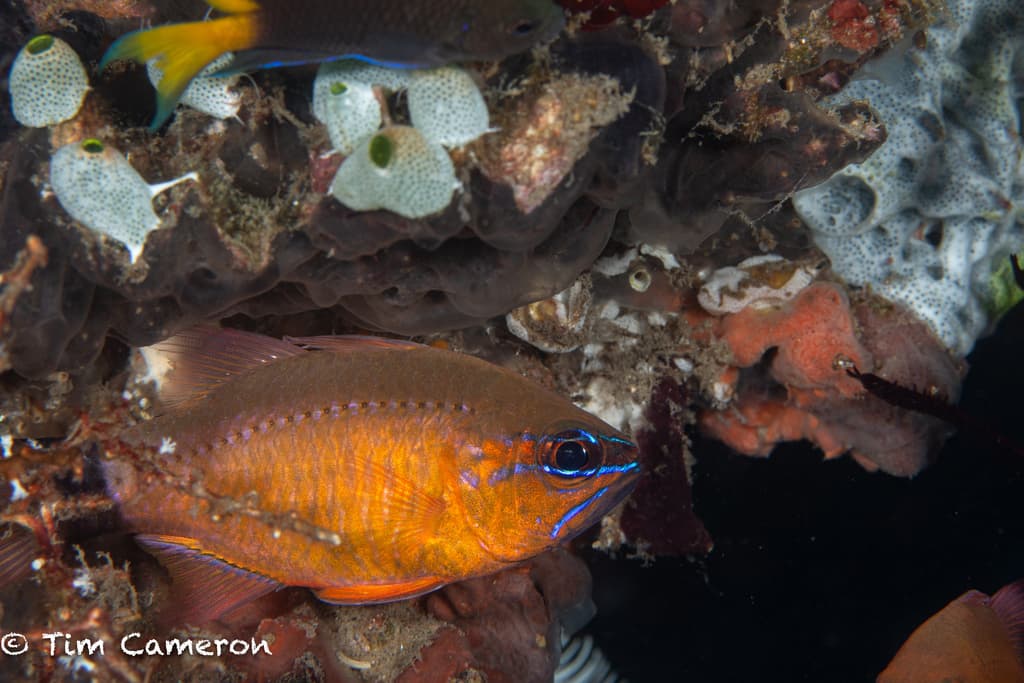
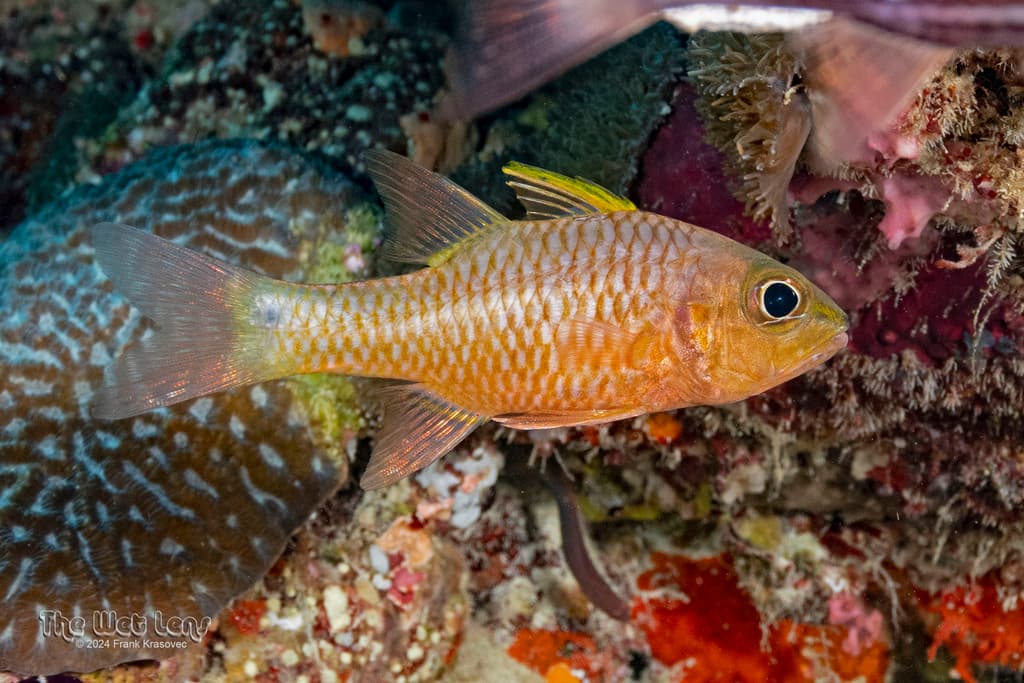
The Iridescent Cardinalfish (Pristiapogon kallopterus) is a larger and more robust species of cardinalfish than many of its relatives, reaching up to six inches in length. Its body displays a subtle but attractive iridescent blue-green sheen over a silvery base, with a distinctive dark bar running through the eye and a prominent dark spot at the base of the caudal peduncle. The combination of its shimmering coloration and larger size makes it an impressive representative of the cardinalfish family.
In the wild, this species is widely distributed across the Indo-Pacific, from the Red Sea and East African coast to the Great Barrier Reef and central Pacific islands. Unlike many cardinalfish that form tight schools, Pristiapogon kallopterus is often found singly or in small loose aggregations around coral heads, rocky outcrops, and pier pilings. It is a nocturnal species that shelters in caves and crevices during the day and emerges at dusk to hunt small crustaceans and zooplankton in the water column.
In the home aquarium, the Iridescent Cardinalfish is hardy and easy to care for, making it suitable for beginner marine aquarists. Its larger size compared to most cardinalfish means it can hold its own in community tanks with a wider range of tankmates. A tank of at least 30 gallons provides adequate space for this species. It is completely reef-safe and poses no threat to corals or invertebrates. Providing caves or overhangs for daytime shelter helps the fish feel secure and encourages natural behavior.
Feeding & Diet
Carnivore
The Iridescent Cardinalfish feeds on small crustaceans and zooplankton in the wild. In captivity, it readily accepts frozen mysis shrimp, brine shrimp, cyclops, marine pellets, and flake food. Its larger mouth allows it to take slightly bigger food items than smaller cardinalfish species. Feed two to three times daily.
Compatibility
reef-safepeacefulcommunity-friendlybeginner-friendlynocturnal
The Iridescent Cardinalfish is peaceful and compatible with most community reef fish. Its larger size means it is less vulnerable to bullying than smaller cardinalfish species. Compatible with clownfish, tangs, wrasses, gobies, blennies, and other peaceful to semi-aggressive fish. Avoid housing with large aggressive predators.
Check CompatibilityBreeding
Moderate
A paternal mouthbrooder like other cardinalfish. The male incubates the eggs in his mouth until hatching, during which time he does not eat. Fry are relatively large at release and can accept newly hatched Artemia nauplii. Breeding pairs may form in captivity but spawning is less commonly reported than with Banggai Cardinalfish.
Special Requirements
- Provide caves or overhangs for daytime shelter
- Nocturnal species - provide dim lighting areas for retreat
- Can be kept singly or in small groups
- Slow feeder - ensure food reaches it during feeding time
- Larger than most cardinalfish - plan tankmate sizing accordingly
Water Parameters
Temperature72–80°F
Specific Gravity1.02–1.026 sg
pH8.1–8.4
Alkalinity8–12 dKH
Coloration
silverbluegreeniridescent
Tags
reef-safepeacefulcommunity-friendlybeginner-friendlynocturnal