BeginnerPeacefulReef Safe
Oblique-banded Cardinalfish
Archamia bleekeri
Family: Apogonidae · Cardinalfish
Also known as: Bleeker's Cardinalfish, Oblique-Lined Cardinalfish
(c) Pranav Chandra Bose, some rights reserved (CC BY)
Max Size
3"
Min Tank
20 gal
Lifespan
3-5 years
Origin
Western Pacific, Indonesia
Diet
Carnivore
Swims
Middle
About
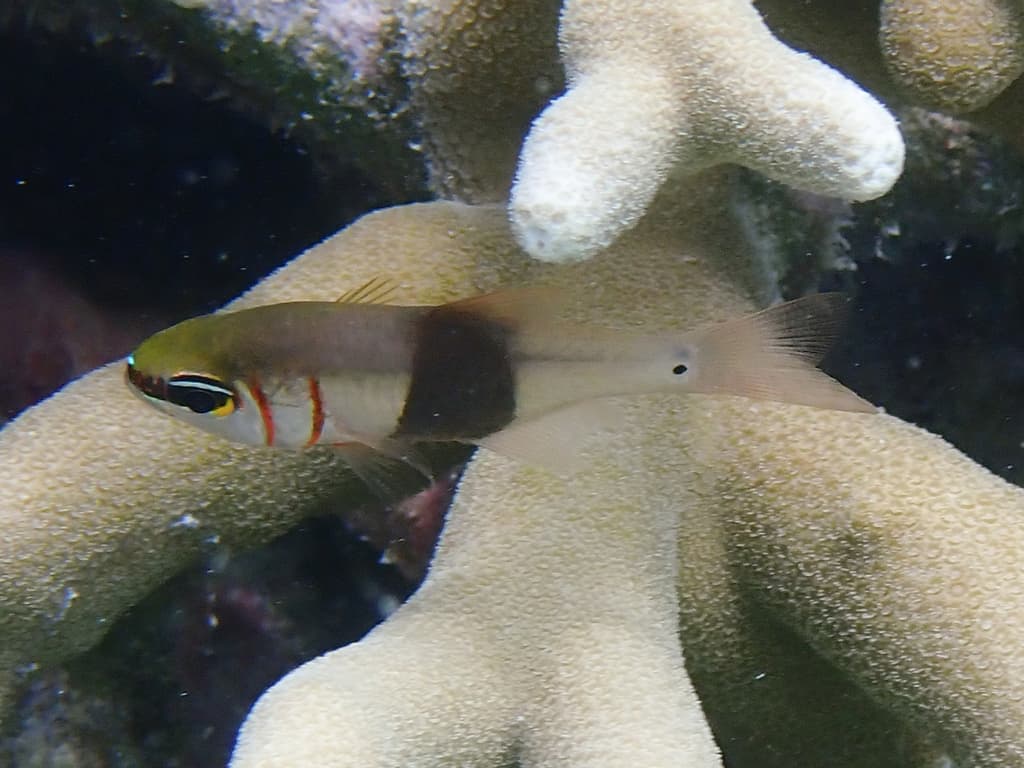
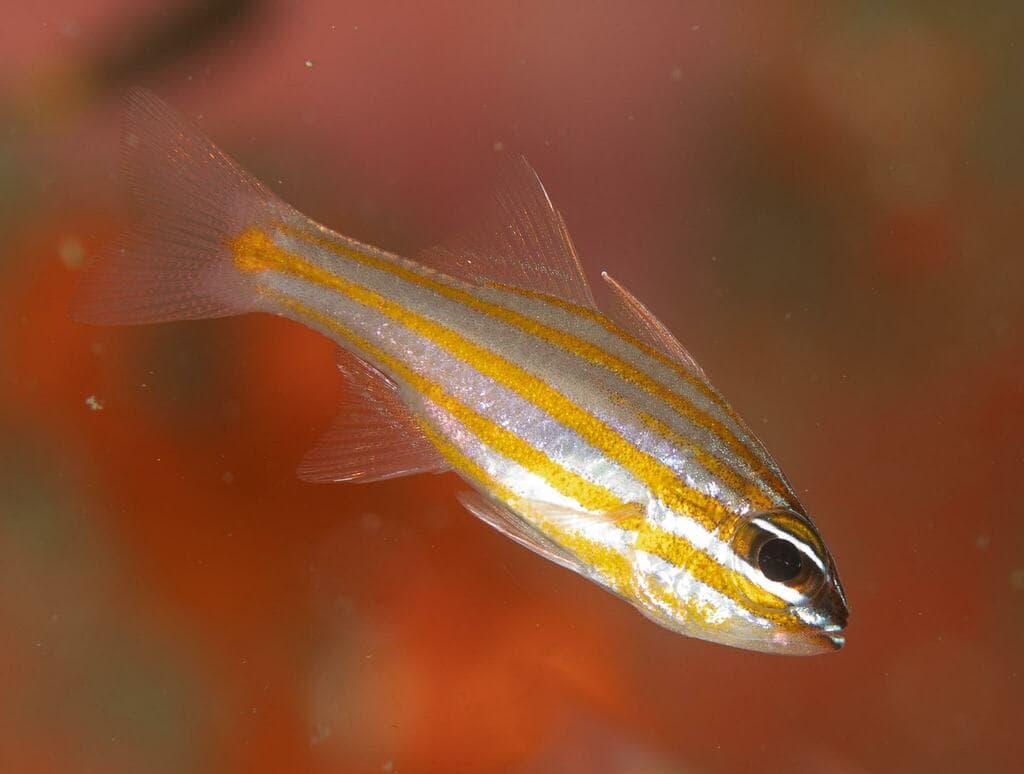
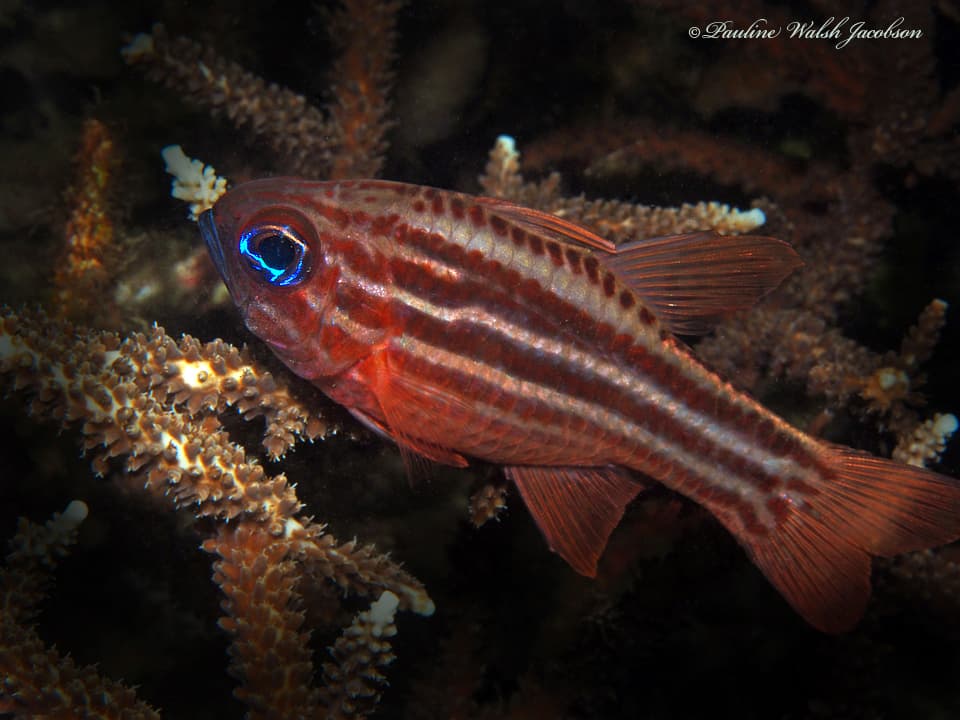
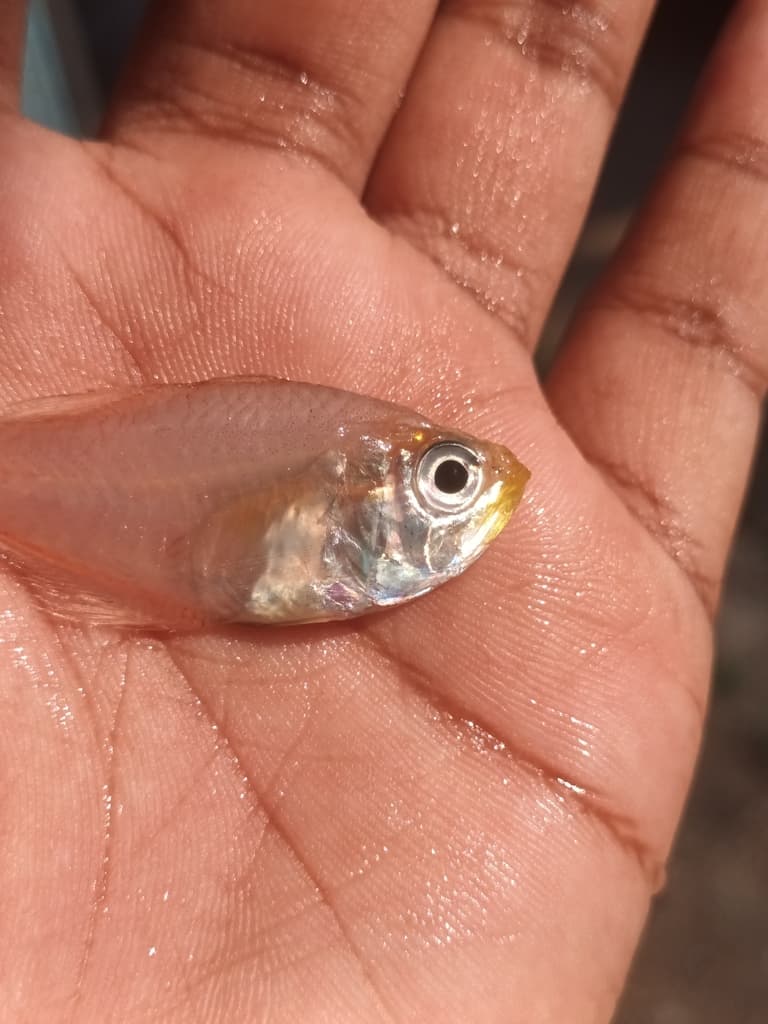
The Oblique-banded Cardinalfish is a charming and distinctive species recognized by its series of oblique dark bands that run diagonally across its semi-transparent body. These angled stripes, which give the species both its common name and its visual identity, create an unusual and eye-catching pattern that sets it apart from the more commonly seen horizontal or vertical striping found on other cardinalfish species. The body displays a warm golden to pinkish translucent base that allows the bands to stand out prominently.
In the wild, the Oblique-banded Cardinalfish is found throughout the Western Pacific, from Indonesia and the Philippines to Papua New Guinea and the Solomon Islands. It forms dense schools among branching corals, sheltered reef overhangs, and around pier pilings in protected lagoons and bays. Like other Archamia cardinalfish, it is a nocturnal species that shelters within the reef structure during the day and emerges at dusk to feed on small zooplankton in the water column. The tightly packed schooling behavior serves as protection from predators.
In the home aquarium, the Oblique-banded Cardinalfish is hardy and easy to care for. A group of five or more in a tank of at least 20 gallons creates a beautiful and natural schooling display. They are completely reef-safe and their small adult size means they are no threat to any corals or invertebrates. Their peaceful temperament makes them ideal candidates for community reef tanks, particularly nano reefs where their unique oblique banding pattern can be fully appreciated at close range.
Feeding & Diet
Carnivore
Oblique-banded Cardinalfish feed on tiny zooplankton and small crustaceans in the wild. In captivity, they accept frozen mysis shrimp, enriched brine shrimp, cyclops, and finely crushed marine pellets and flakes. Feed small portions two to three times daily.
Compatibility
reef-safepeacefulschooling-fishcommunity-friendlynano-suitable
Oblique-banded Cardinalfish are extremely peaceful and compatible with all non-aggressive reef community fish. They mix well with clownfish, gobies, blennies, firefish, and other small peaceful species. Their small size and gentle temperament means they should not be housed with large or aggressive fish.
Check CompatibilityBreeding
Moderate
A paternal mouthbrooder like other cardinalfish. The male incubates eggs in his mouth until hatching. Spawning may occur in established groups, but rearing the small larvae requires specialized live food cultures including rotifers and phytoplankton.
Special Requirements
- Best kept in groups of 5 or more for natural schooling behavior
- Provide branching coral or rocky overhangs for daytime shelter
- Small food particles required for their small mouths
- Avoid aggressive or boisterous tankmates
- Nocturnal species - consider evening feeding times
Water Parameters
Temperature72–80°F
Specific Gravity1.02–1.026 sg
pH8.1–8.4
Alkalinity8–12 dKH
Coloration
goldpinktransparentbrown
Tags
reef-safepeacefulschooling-fishcommunity-friendlynano-suitable