IntermediatePeacefulNot Reef Safe
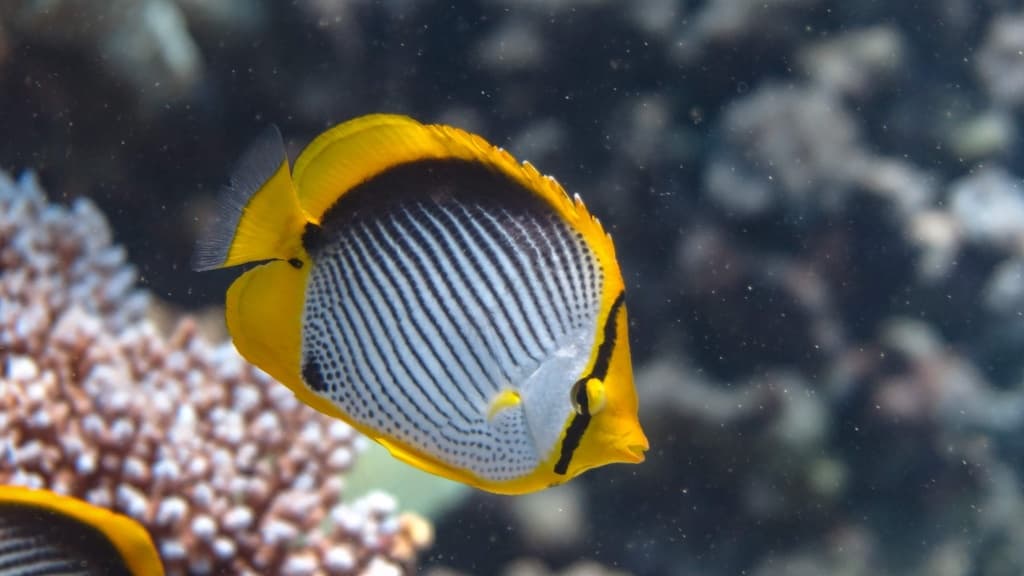
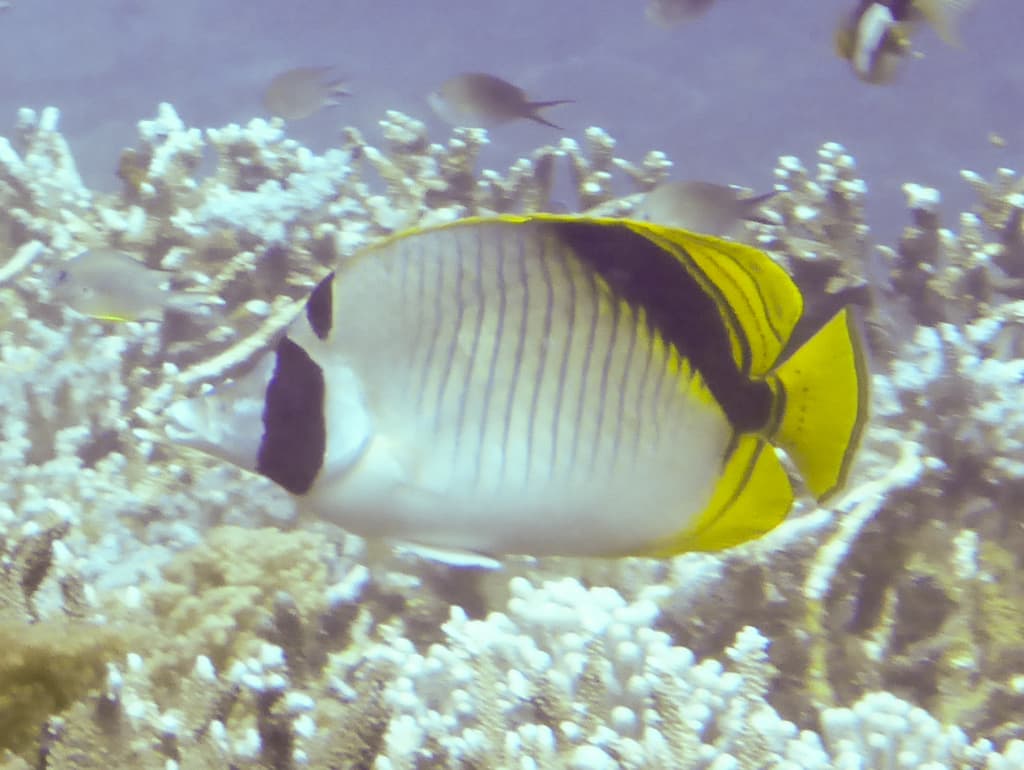
Spot-nape Butterflyfish
Chaetodon oxycephalus
Family: Chaetodontidae · Butterflyfish
Also known as: Spot Nape Butterflyfish, Pigface Butterflyfish, Lined Butterflyfish
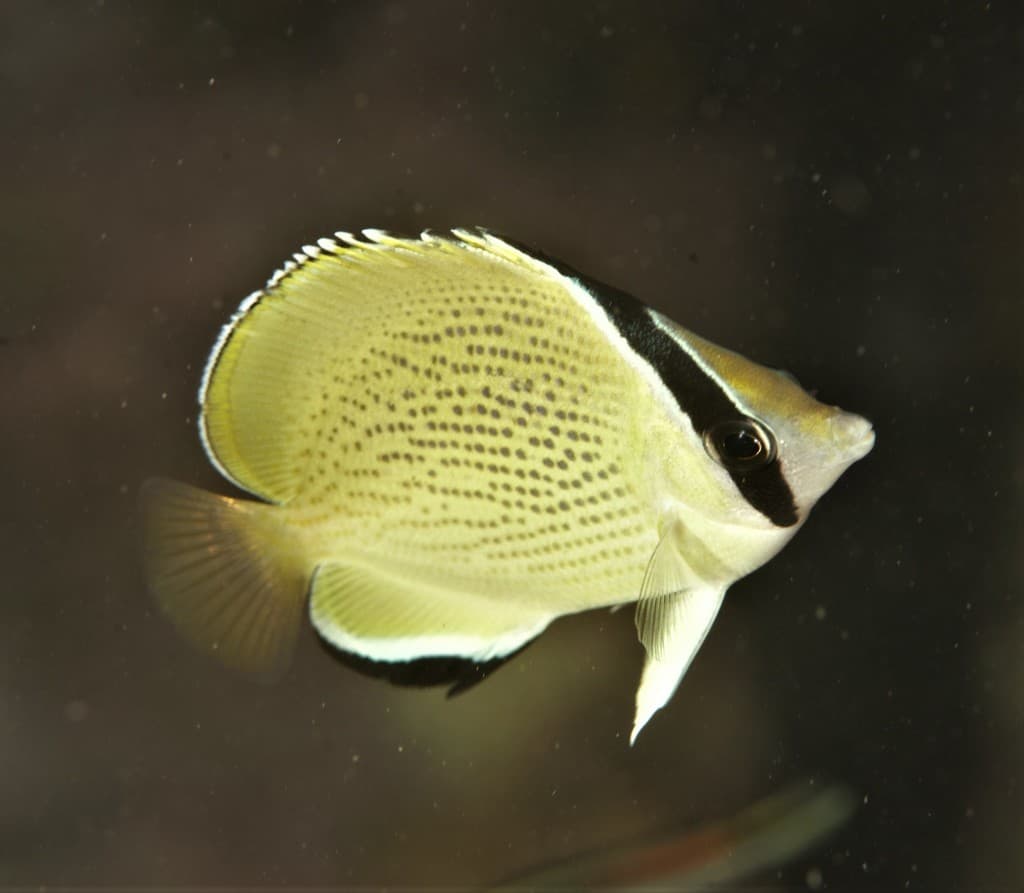
(c) Mark Rosenstein, some rights reserved (CC BY-NC)
Max Size
9"
Min Tank
75 gal
Lifespan
5-8 years
Origin
Indo-Pacific, Western Pacific
Diet
Omnivore
Swims
Middle
About
The Spot-nape Butterflyfish is a handsome Indo-Pacific species named for the distinctive dark spot located on the nape of its neck, just behind the head. Its body displays a pattern of fine diagonal lines over a silvery-white to pale yellow base, with a prominent dark eye band and yellow dorsal and anal fin margins. Growing to approximately nine inches, it is one of the larger butterflyfish species commonly encountered in the aquarium trade.
This species inhabits coral-rich reef areas in the wild where it feeds primarily on coral polyps and small benthic invertebrates. Its dependence on coral as a food source means it is not considered reef-safe and will readily pick at both hard and soft corals in the aquarium. However, it adapts reasonably well to captive diets when transitioned carefully with frozen foods and enriched preparations.
The Spot-nape Butterflyfish requires intermediate care and does best in a well-established fish-only or FOWLR aquarium with stable water parameters and ample swimming room. It is peaceful toward other fish and can be kept with a variety of community species. Like most butterflyfish, it is sensitive to poor water quality and rapid parameter changes, making consistent maintenance essential for long-term success with this attractive species.
Feeding & Diet
Omnivore
Spot-nape Butterflyfish are omnivores that primarily feed on coral polyps and small invertebrates in the wild. In captivity, they can be transitioned to frozen mysis shrimp, brine shrimp, chopped seafood, and marine pellets. Feed two to three times daily with varied protein-rich offerings.
Compatibility
peacefulnot-reef-safecommunity-safefish-onlypairs-well
The Spot-nape Butterflyfish is peaceful toward other fish and compatible with a wide range of community species in fish-only setups. Not reef-safe due to its coral-feeding habits. Avoid housing with overly aggressive tankmates. Can be kept singly or in pairs.
Check CompatibilityBreeding
Not bred in captivity
Spot-nape Butterflyfish are pelagic spawners that have not been successfully bred in home aquariums. Like most butterflyfish, they release eggs into the water column and larvae undergo an extended planktonic phase.
Special Requirements
- Not suitable for reef aquariums — will eat coral polyps
- Requires a well-established aquarium with stable water quality
- Provide ample swimming space due to larger adult size
- Best kept singly or as a mated pair
- Sensitive to poor water quality and parameter fluctuations
Water Parameters
Temperature72–80°F
Specific Gravity1.02–1.026 sg
pH8.1–8.4
Alkalinity8–12 dKH
Coloration
whiteyellowblacksilver
Tags
peacefulnot-reef-safecommunity-safefish-onlypairs-well