IntermediatePeacefulNot Reef Safe
Orangeface Butterflyfish
Chaetodon larvatus
Family: Chaetodontidae · Butterflyfish
Also known as: Orange-faced Butterflyfish, Hooded Butterflyfish, Red Sea Orange Butterflyfish
(c) CORDENOS Thierry, some rights reserved (CC BY-NC)
Max Size
5"
Min Tank
75 gal
Lifespan
5-8 years
Origin
Red Sea, Gulf of Aden
Diet
Omnivore
Swims
Middle
About
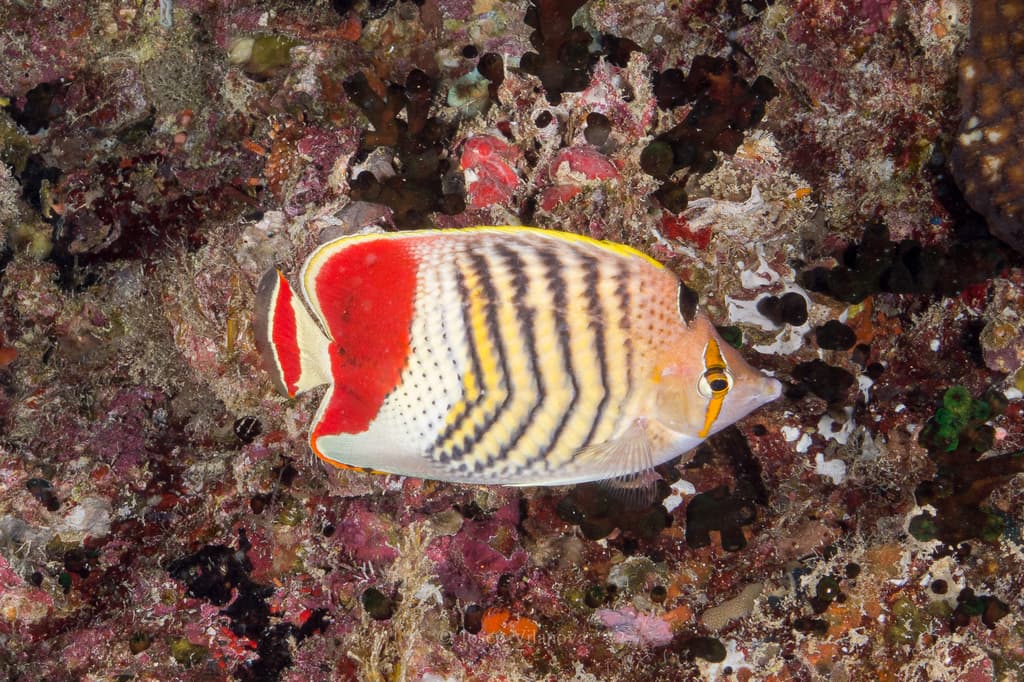
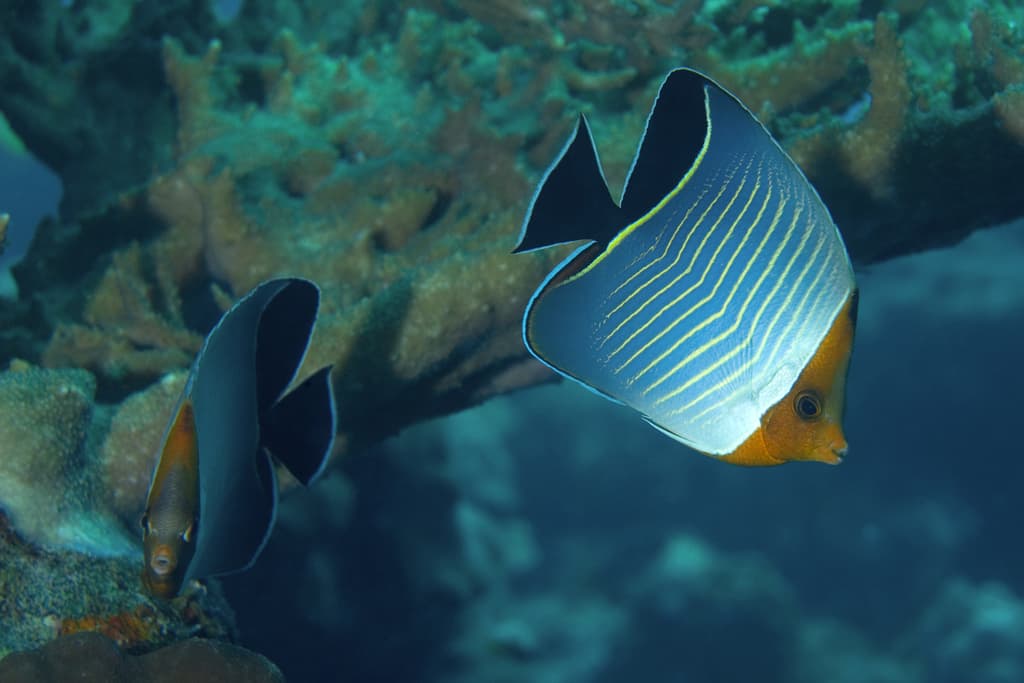
The Orangeface Butterflyfish is one of the most visually striking Red Sea endemic butterflyfish, instantly recognizable by its vivid orange face and head that contrasts dramatically with the blue-gray body marked by fine dark chevron lines. The boundary between the orange face and the darker body is sharply defined, creating a hood-like effect that gives rise to one of its alternate common names. This bold two-toned coloration makes it one of the most photographed and coveted butterflyfish species among marine aquarium enthusiasts.
Chaetodon larvatus inhabits the coral-rich reefs of the Red Sea and Gulf of Aden, where it feeds primarily on coral polyps, particularly from Acropora and Pocillopora colonies. While it is primarily a corallivore, it can sometimes be weaned onto prepared foods in captivity with patience and persistence. Its transition success rate is moderate compared to strict obligate corallivores, making it a possibility for experienced aquarists willing to invest time in diet training.
This species is peaceful and does well in community fish-only setups. It is not reef-safe due to its coral-feeding habits. The Orangeface Butterflyfish should be kept singly or as a mated pair in a well-established aquarium with abundant live rock. As a Red Sea species, it may tolerate slightly warmer water temperatures. Its stunning appearance and moderate availability from Red Sea collectors make it a prized addition for dedicated butterflyfish keepers.
Feeding & Diet
Omnivore
Orangeface Butterflyfish feed primarily on coral polyps in the wild, especially Acropora and Pocillopora. In captivity, weaning onto prepared foods requires patience. Offer frozen mysis shrimp, enriched brine shrimp, finely chopped clam and mussel, and high-quality marine pellets. Live brine shrimp can help initiate feeding. Feed small portions three times daily.
Compatibility
community-safenot-reef-safepeacefulfish-onlyred-sea-endemic
The Orangeface Butterflyfish is peaceful with most community fish including tangs, wrasses, clownfish, and gobies. Avoid housing with aggressive species that may intimidate it during its acclimation period. Not suitable for reef tanks as it actively feeds on coral polyps. Should not be housed with other butterflyfish in tanks under 150 gallons.
Check CompatibilityBreeding
Not bred in captivity
Orangeface Butterflyfish are pelagic spawners that have not been bred in home aquariums. They follow the typical butterflyfish reproductive pattern with paired dusk spawning and extended planktonic larval development.
Special Requirements
- Not suitable for reef aquariums
- Red Sea endemic — may prefer slightly warmer water
- Well-established aquarium with mature live rock
- May require live foods initially to encourage feeding
- Best kept singly or as a mated pair
- Stable water parameters are essential
Water Parameters
Temperature75–82°F
Specific Gravity1.02–1.026 sg
pH8.1–8.4
Alkalinity8–12 dKH
Coloration
orangegrayblueblackwhite
Tags
community-safenot-reef-safepeacefulfish-onlyred-sea-endemic