IntermediatePeacefulNot Reef Safe
Four-Eye Butterflyfish
Chaetodon capistratus
Family: Chaetodontidae · Butterflyfish
Also known as: Foureye Butterflyfish, Four-Eyed Butterflyfish
(c) Maria Mitchell Association, some rights reserved (CC BY-NC)
Max Size
6"
Min Tank
75 gal
Lifespan
5-10 years
Origin
Caribbean, Western Atlantic
Diet
Omnivore
Swims
Middle
About
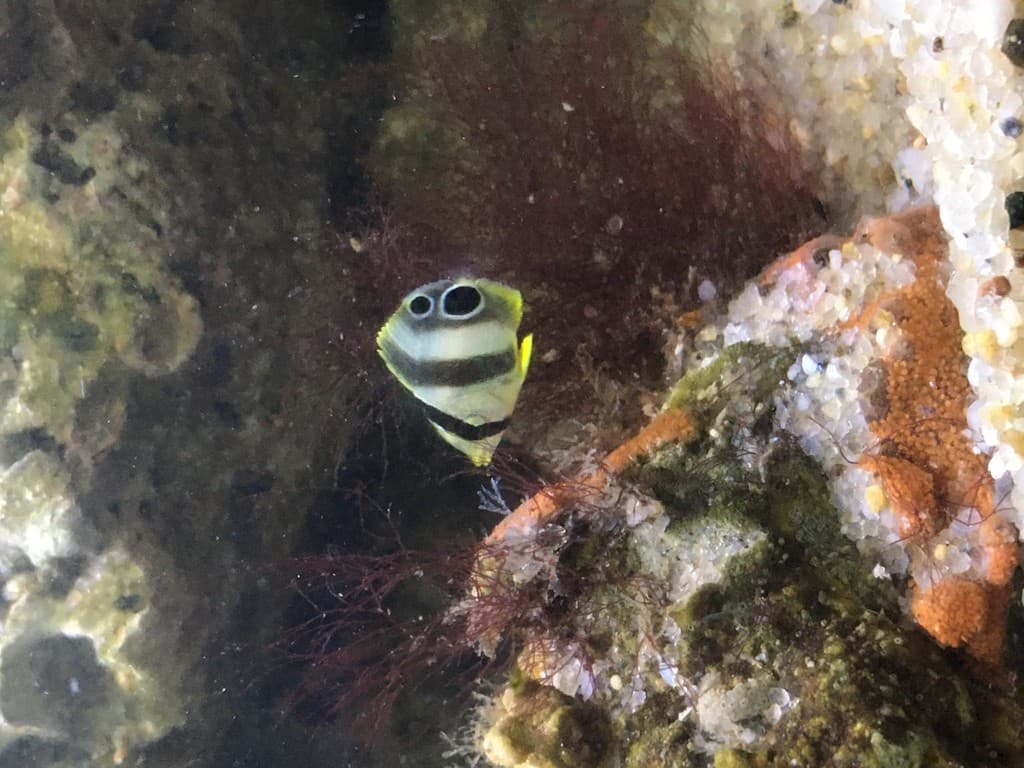
The Four-Eye Butterflyfish is one of the most recognizable and commonly encountered butterflyfish species in the Caribbean and Western Atlantic. Its most distinctive feature is a large, dark false eyespot ringed in white near the base of the tail, which serves to confuse predators about the fish's orientation and direction of travel. The body is pale gray to yellowish with a series of fine dark chevron lines radiating outward from the center, and a true black eye band passes through the actual eye.
This species is a moderate-difficulty aquarium fish that can be successfully maintained with proper care and a well-established system. It typically adapts to captive conditions better than many butterflyfish, especially when provided with ample live rock and a varied diet. Newly imported specimens may be hesitant to feed initially, but most can be enticed with live brine shrimp or blackworms before transitioning to frozen preparations.
The Four-Eye Butterflyfish is not reef safe and will readily pick at coral polyps, anemones, tube worms, and other sessile invertebrates. It thrives in fish-only or FOWLR setups and is best kept singly, as it can be territorial toward conspecifics and other butterflyfish. Despite its coral-nipping habits, this is a peaceful species that coexists well with most community fish.
Feeding & Diet
Omnivore
Four-Eye Butterflyfish are omnivores that feed on coral polyps, gorgonians, zoanthids, polychaete worms, and algae in the wild. In captivity, offer frozen mysis shrimp, enriched brine shrimp, finely chopped seafood, spirulina, and high-quality marine flakes or pellets. Feed two to three times daily.
Compatibility
community-safepeacefulnot-reef-safefish-only-tankmay-nip-corals
The Four-Eye Butterflyfish is peaceful with most community tankmates but will consume coral polyps, gorgonians, and small invertebrates. Avoid housing with other butterflyfish unless the system is very large. Best suited for fish-only or FOWLR setups.
Check CompatibilityBreeding
Not bred in captivity
Four-Eye Butterflyfish have not been bred in home aquariums. Like other butterflyfish, they are pelagic spawners with an extended larval phase that is extremely difficult to replicate under captive conditions.
Special Requirements
- Well-established aquarium with live rock for grazing
- Not suitable for reef aquariums
- Best kept singly or as a mated pair
- May need live foods initially to encourage feeding
- Stable water parameters essential for acclimation
Water Parameters
Temperature72–80°F
Specific Gravity1.02–1.026 sg
pH8.1–8.4
Alkalinity8–12 dKH
Coloration
grayyellowblackwhite
Tags
community-safepeacefulnot-reef-safefish-only-tankmay-nip-corals